VS

BMW 3 Series Touring vs Audi A5 Avant comparison

Compare performance (530 HP vs 639 HP), boot space and price (41,100 £ vs 41,600 £ ) at a glance. Find out which car is the better choice for you – BMW 3 Series Touring or Audi A5 Avant?

BMW 3 Series Touring vs Audi A5 Avant: Key differences

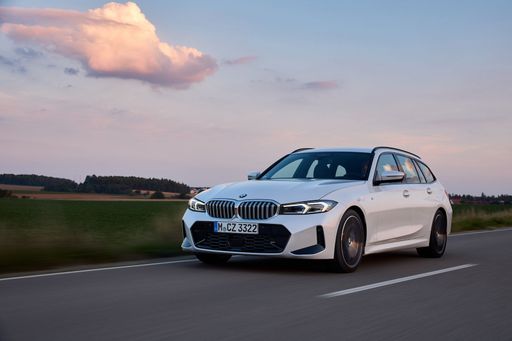
BMW 3 Series Touring

4.3 (1 Reviews)
rate
  • barely cheaper
  • barely quicker 0–100 km/h
  • only slightly lighter
  • clearly more trunk space
details

Audi A5 Avant

4.4 (1 Reviews)
rate
  • somewhat more power
  • slightly more efficient
  • a bit more electric range
details

All details on performance, efficiency, range and trunk space can be found in the technical comparison below – including user reviews for both models.

By Achim Sedelmaier

3 Series Touring

Direct comparison: Audi A5 Avant vs BMW 3 Series Touring

The Audi A5 Avant and the BMW 3 Series Touring address the same practical brief but from different starting points: the A5 Avant is engineered as a quiet, design‑forward grand tourer, while the 3 Series Touring prioritises driver engagement and everyday utility. Audi sells calm confidence — insulated cabin, long‑range diesel options and high‑tech touches — whereas BMW sells precise control, sharper feedback and clever cargo details. That split shapes everything from option choices to how each car feels on a long motorway run or a tight supermarket car park. Read on to see which trade‑offs matter for your daily route and family needs.
A5 Avant

Driving character and dynamics

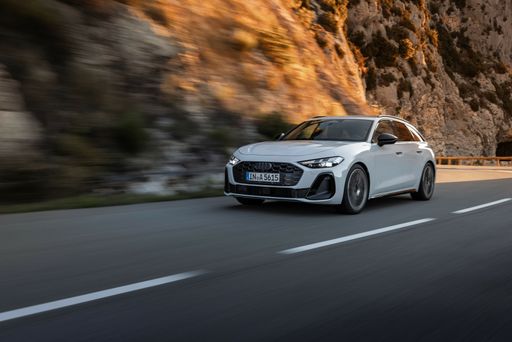
The Audi A5 Avant leans toward composed, neutral handling: steering is accurate but subdued, and the overall setup favours stability over drama. The BMW 3 Series Touring, by contrast, delivers much more direct steering and a tauter balance that rewards active drivers and makes lane changes and B‑road cornering feel confident. That means the A5 Avant is easier to live with when covering long motorway miles or towing calm mates, while the 3 Series Touring is more satisfying if you relish involvement and sharper directional cues. If you opt for sportier suspension on either, expect firmer ride consequences — but the BMW will keep more of its communicative edge where the Audi becomes simply firmer rather than livelier.

3 Series Touring

Comfort and long‑distance behavior

On endurance runs the Audi A5 Avant is the calmer companion: its seats, sound insulation and suspension tuning combine to make motorway hours less fatiguing. The BMW 3 Series Touring is equally capable at speed but feels more focused — its ride can be firmer on poor surfaces, especially with larger wheels, though its seats and low‑noise character still support long trips. Audi’s setup masks outside noise and soothes harsh high‑speed inputs, whereas BMW trades a touch of plushness for sharper body control and feedback. For mixed driving — cities and motorways — the BMW’s PHEV option also offers silent electric urban miles, while the A5’s diesel variants extend range between stops for fewer refuelling interruptions.

A5 Avant

Practicality and cargo usability

In day‑to‑day cargo work the BMW 3 Series Touring is the more liberal partner: lower loading sill, useful underfloor storage and a separately opening tailgate glass make awkward jobs easier. The Audi A5 Avant keeps a stylish silhouette but compromises some usable volume and has a higher internal lip that makes heavy or bulky loading slightly more awkward. Both offer split‑folding rear seats for versatility, yet the BMW more consistently wins on volumetric practicality and easier access for larger items. If you regularly carry prams, dog crates or building supplies, the 3 Series Touring’s luggage ergonomics will feel more thoughtful than the A5 Avant’s sleeker but tighter load bay.

3 Series Touring

Cabin feel, controls and perceived quality

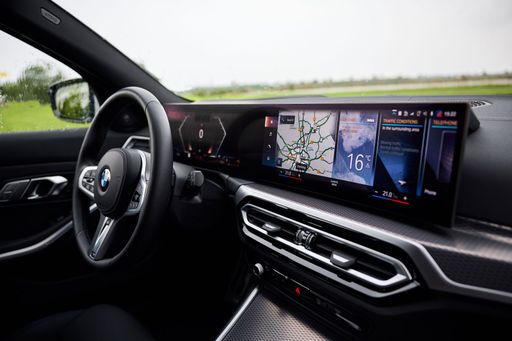
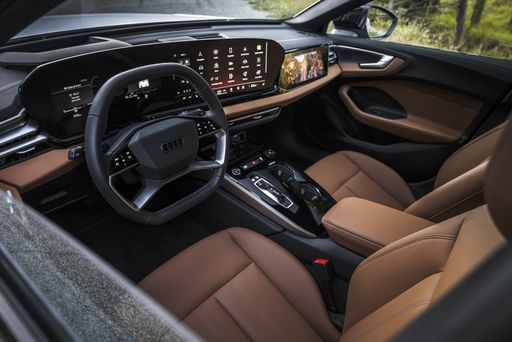
The Audi A5 Avant presents a modern, clean interior look with advanced displays and optional passenger‑facing screens that score high on visual polish. However, its reliance on touch surfaces and compact steering‑wheel controls can feel fiddly in daily use, and a few trim details have been called out as less substantive. The BMW 3 Series Touring provides a more tactile environment: the iDrive controller and physical interfaces give clearer feedback, and the materials and assembly typically read as robust and enduring. In short, the A5 Avant impresses at first sight and on tech features, while the 3 Series Touring rewards hands‑on use and long‑term confidence in buttons and finishes.

A5 Avant

Buyer fit and the trade‑offs that decide the purchase

Choose the Audi A5 Avant if you prioritise a serene cabin, design presence and long motorway stints with minimal fuss — it suits commuters and image‑minded buyers who want comfort and tech over raw cargo volume. Pick the BMW 3 Series Touring if you want a more engaging drive, friendlier loading, and a cabin that rewards tactile control; it’s the better fit for someone who uses their car for mixed duties and values driver feedback. Both cars climb the option ladder quickly, so weigh which trade‑offs — ride comfort versus agility, visual polish versus tactile ergonomics, or compact elegance versus load practicality — matter more to your week. The technical comparison that follows will unpack those trade‑offs in detail so you can match specs to real‑world needs.

Here’s where it gets real: The technical differences in detail

3 Series Touring

Costs and Efficiency:

Price and efficiency are key factors when choosing a car – and this is often where the real differences emerge.

BMW 3 Series Touring is barely cheaper – starting at 41,100 £ , while the Audi A5 Avant costs 41,600 £ . That’s a price difference of around 557 £.

Fuel consumption also shows a difference: the Audi A5 Avant uses 2.1 L/100km and is slightly more efficient than the BMW 3 Series Touring with 2.5 L/100km. The difference is about 0.4 L/100km.

As for electric range, the Audi A5 Avant offers a bit more range – reaching up to 108 km, about 11 km more than the BMW 3 Series Touring.

A5 Avant

Engine and Performance:

Power, torque and acceleration are the classic benchmarks for car enthusiasts – and here, some clear differences start to show.

When it comes to engine power, the Audi A5 Avant offers somewhat more power – delivering 639 HP compared to 530 HP. That’s roughly 109 HP more horsepower.

When accelerating from 0 to 100 km/h, the BMW 3 Series Touring is barely quicker – completing the sprint in 3.6 s, while the Audi A5 Avant takes 3.7 s. That’s about 0.1 s quicker.

There’s also a difference in torque: the Audi A5 Avant delivers slightly more torque with 825 Nm compared to 700 Nm. That’s about 125 Nm more.

3 Series Touring

Space and Everyday Use:

Beyond pure performance, interior space and usability matter most in daily life. This is where you see which car is more practical and versatile.

Both vehicles offer seating for 5 people.

In terms of curb weight, BMW 3 Series Touring is only slightly lighter – 1,650 kg compared to 1,785 kg. The difference is around 135 kg.

Looking at boot space, the BMW 3 Series Touring offers clearly more boot space – 500 L compared to 361 L. That’s a difference of about 139 L.

When it comes to payload, the Audi A5 Avant carries very slightly more – 535 kg compared to 520 kg. That’s a difference of about 15 kg.

Who wins the race in the data check?

The Audi A5 Avant is far ahead overall in the objective data comparison.
This result only shows which model scores more points on paper – not which of the two cars feels right for you.

from £41,600
A5 Avant

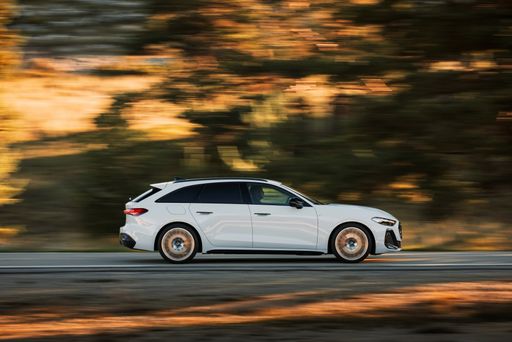
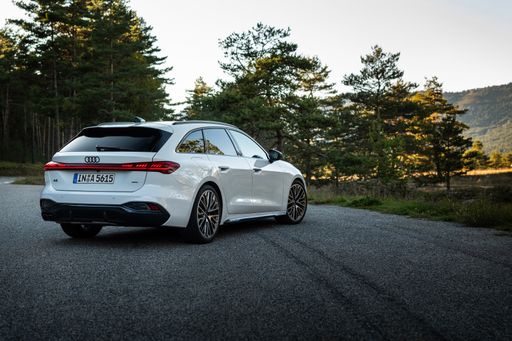
Audi A5 Avant

  • Engine Type : Plugin Hybrid, Petrol, Diesel MHEV, Petrol MHEV
  • Transmission : Automatic
  • Drive Type : All-Wheel Drive, Front-Wheel Drive
  • Power HP : 150 - 639 HP
  • Consumption L/100km : 2.1 - 7.7 L/100km
  • Electric Range : 83 - 108 km
BMW 3 Series Touring
Audi A5 Avant

Costs and Consumption

View detailed analysis

Engine and Performance

View detailed analysis

Dimensions and Body

View detailed analysis

BMW 3 Series Touring

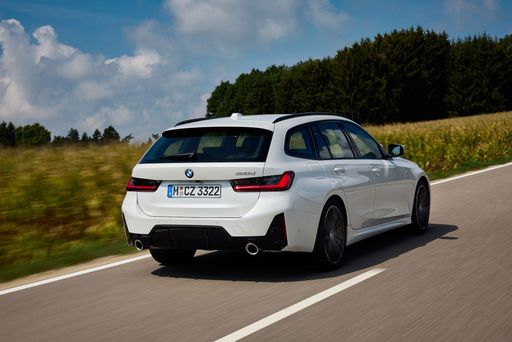
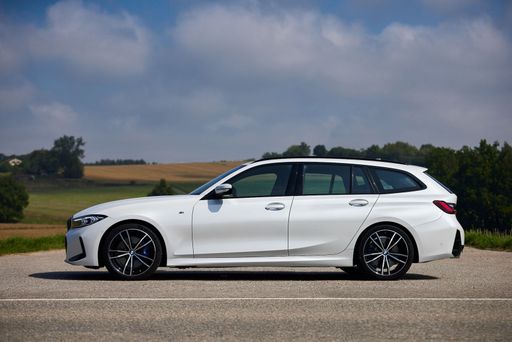
The BMW 3 Series Touring blends sporting poise with everyday practicality, wrapping sharp handling and a premium cabin into a wagon that actually makes errands feel enjoyable. It’s the kind of car that hides a family-hauler’s sense of duty beneath a driver's-car attitude — useful, classy, and just cheeky enough to make you smile on the open road.

details

Audi A5 Avant

The Audi A5 Avant dresses like a sleek coupe but carries like a sensible estate, offering buyers a rare blend of glamour and everyday practicality. Inside, the cabin feels beautifully sorted and the drive is composed and engaging, making routine errands feel a touch more enjoyable than they have any right to be.

details
BMW 3 Series Touring
Audi A5 Avant

Costs and Consumption

Price
41,100 - 91,900 £
Price
41,600 - 92,400 £
Consumption L/100km
2.5 - 10.3 L/100km
Consumption L/100km
2.1 - 7.7 L/100km
Consumption kWh/100km
-
Consumption kWh/100km
-
Electric Range
91 - 97 km
Electric Range
83 - 108 km
Battery Capacity
-
Battery Capacity
-
co2
57 - 233 g/km
co2
47 - 175 g/km
Fuel tank capacity
-
Fuel tank capacity
-

Dimensions and Body

Body Type
Estate
Body Type
Estate
Seats
5
Seats
5
Doors
-
Doors
-
Curb weight
1,650 - 2,025 kg
Curb weight
1,785 - 2,445 kg
Trunk capacity
410 - 500 L
Trunk capacity
361 L
Length
-
Length
-
Width
1,827 - 1,903 mm
Width
1,860 - 1,952 mm
Height
-
Height
-
Max trunk capacity
-
Max trunk capacity
-
Payload
430 - 520 kg
Payload
480 - 535 kg

Engine and Performance

Engine Type
Diesel MHEV, Petrol, Petrol MHEV, Plugin Hybrid
Engine Type
Plugin Hybrid, Petrol, Diesel MHEV, Petrol MHEV
Transmission
Automatic
Transmission
Automatic
Transmission Detail
Automatic Gearbox
Transmission Detail
Dual-Clutch Automatic, Automatic Gearbox
Drive Type
Rear-Wheel Drive, All-Wheel Drive
Drive Type
All-Wheel Drive, Front-Wheel Drive
Power HP
150 - 530 HP
Power HP
150 - 639 HP
Acceleration 0-100km/h
3.6 - 8.8 s
Acceleration 0-100km/h
3.7 - 9.8 s
Max Speed
-
Max Speed
-
Torque
250 - 700 Nm
Torque
280 - 825 Nm
Number of Cylinders
4 - 6
Number of Cylinders
4 - 6
Power kW
110 - 390 kW
Power kW
110 - 470 kW
Engine capacity
1,995 - 2,998 cm3
Engine capacity
1,968 - 2,995 cm3

General

Model Year
2,024 - 2,025
Model Year
2,025 - 2,026
CO2 Efficiency Class
D, E, F, G, B
CO2 Efficiency Class
B, E, F, D
Brand
BMW
Brand
Audi
DriveDuel uses data analysis and artificial intelligence to evaluate vehicle data and create content. Content is regularly reviewed and improved. The displayed prices are estimates based on German list prices, adjusted to the respective country’s VAT. Country-specific registration taxes are not included. This information is not legally binding.