
 Deutschland
 France
 Nederland
 Great Britain
 Sverige
 Norge
Norge Danmark
 Suomi
Suomi Italia
 Polska
 España
VS
BMW i7 vs Mercedes G Class – Which model is better for everyday use?
i7
@ BMW Group Press
Costs and Efficiency:
Price and efficiency are key factors when choosing a car – and this is often where the real differences emerge.
BMW i7 has a barely noticeable advantage in terms of price – it starts at 99200 £, while the Mercedes G Class costs 106600 £. That’s a price difference of around 7419 £.
In terms of energy consumption, the advantage goes to the BMW i7: with 18.50 kWh per 100 km, it’s decisively more efficient than the Mercedes G Class with 28 kWh. That’s a difference of about 9.50 kWh.
As for range, the BMW i7 performs evident better – achieving up to 624 km, about 156 km more than the Mercedes G Class.
G Class
@ Mercedes-Benz Group Media
Engine and Performance:
Under the bonnet, it becomes clear which model is tuned for sportiness and which one takes the lead when you hit the accelerator.
When it comes to engine power, the BMW i7 has a hardly perceptible edge – offering 659 HP compared to 605 HP. That’s roughly 54 HP more horsepower.
In acceleration from 0 to 100 km/h, the BMW i7 is somewhat quicker – completing the sprint in 3.70 s, while the Mercedes G Class takes 4.40 s. That’s about 0.70 s faster.
In terms of top speed, the BMW i7 performs slightly better – reaching 250 km/h, while the Mercedes G Class tops out at 220 km/h. The difference is around 30 km/h.
There’s also a difference in torque: Mercedes G Class pulls barely noticeable stronger with 1164 Nm compared to 1100 Nm. That’s about 64 Nm difference.
i7
@ BMW Group Press
Space and Everyday Use:
Whether family car or daily driver – which one offers more room, flexibility and comfort?
Both vehicles offer seating for 5 people.
In curb weight, Mercedes G Class is minimal lighter – 2485 kg compared to 2595 kg. The difference is around 110 kg.
In terms of boot space, the Mercedes G Class offers evident more room – 640 L compared to 500 L. That’s a difference of about 140 L.
When it comes to payload, Mercedes G Class noticeable takes the win – 715 kg compared to 535 kg. That’s a difference of about 180 kg.
Who comes out on top?
Overall, the BMW i7 shows itself to be dominates this comparison and secures the title of DriveDuel Champion.
It convinces with the more balanced overall package and proves to be the more versatile choice for everyday use.
BMW i7
Mercedes G Class
Costs and Consumption
View detailed analysis
View detailed analysis
Engine and Performance
View detailed analysis
View detailed analysis
Dimensions and Body
View detailed analysis
View detailed analysis
from about £99,200
 @ BMW Group Press
BMW i7
BMW i7
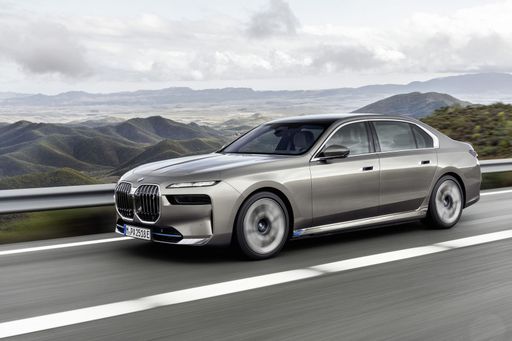
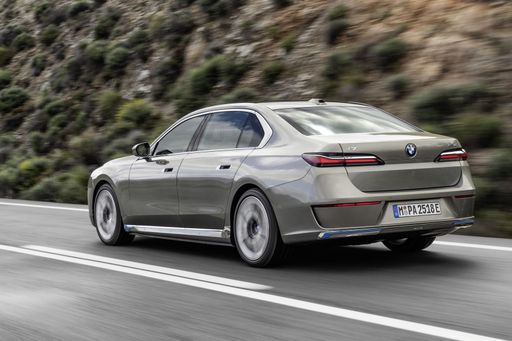
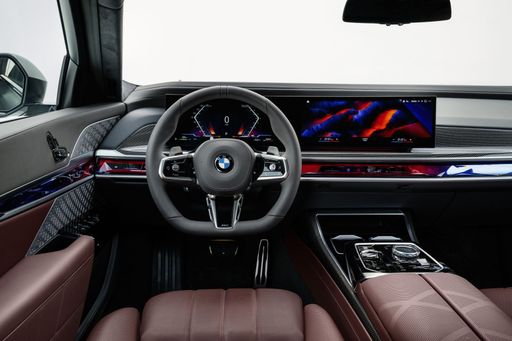
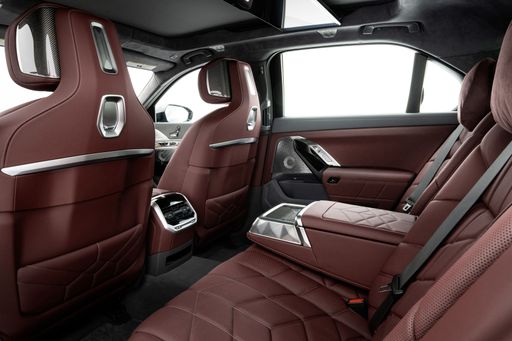
The new BMW i7 epitomises luxury and innovation, seamlessly blending advanced technology with elegant design. Its interior offers an unparalleled experience, with premium materials and cutting-edge features that create a tranquil yet engaging atmosphere for both driver and passengers. The i7's performance is both dynamic and efficient, demonstrating BMW's commitment to sustainable driving without compromising on the exhilarating drive the brand is known for.
details
@ BMW Group Press
 @ BMW Group Press
 @ BMW Group Press
 @ BMW Group Press
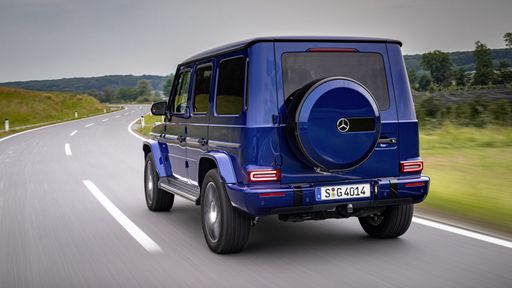
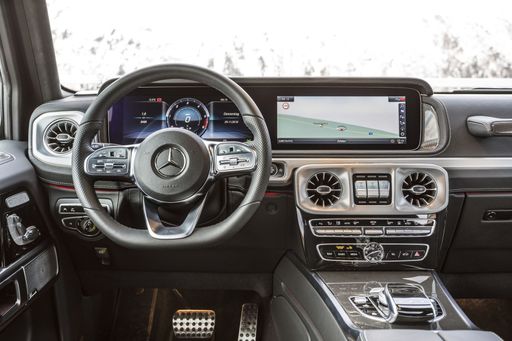
Mercedes G Class
The G-Class, often called the G‑Wagen, is a blocky icon that blends unapologetic off-road prowess with a plush, modern cabin, announcing your arrival before you even step out. It’s equally at home crawling over rocks or cruising city streets, and owning one feels like adopting a very expensive, very capable personality.
details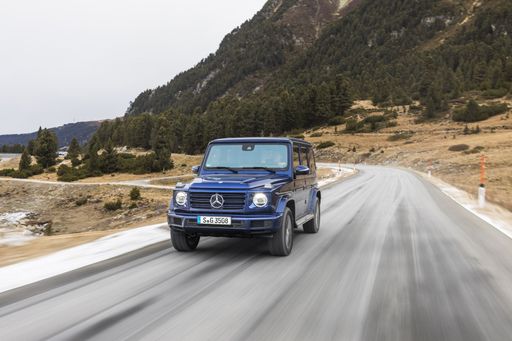 @ Mercedes-Benz Group Media
 @ Mercedes-Benz Group Media
 @ Mercedes-Benz Group Media
BMW i7
Mercedes G Class
|
@ BMW Group Press
|
@ Mercedes-Benz Group Media
|
|
|
|
Costs and Consumption |
|
|---|---|
|
Price
99200 - 157000 £
|
Price
106600 - 171000 £
|
|
Consumption L/100km
-
|
Consumption L/100km
8.7 - 14.7 L
|
|
Consumption kWh/100km
18.5 - 20.8 kWh
|
Consumption kWh/100km
28 kWh
|
|
Electric Range
559 - 624 km
|
Electric Range
468 km
|
|
Battery Capacity
101.70 kWh
|
Battery Capacity
116 kWh
|
|
co2
0 g/km
|
co2
0 - 336 g/km
|
|
Fuel tank capacity
-
|
Fuel tank capacity
100 L
|
Dimensions and Body |
|
|---|---|
|
Body Type
Sedan
|
Body Type
Off-Roader
|
|
Seats
5
|
Seats
5
|
|
Doors
4
|
Doors
5
|
|
Curb weight
2595 - 2770 kg
|
Curb weight
2485 - 3085 kg
|
|
Trunk capacity
500 L
|
Trunk capacity
620 - 640 L
|
|
Length
5391 mm
|
Length
4624 - 4873 mm
|
|
Width
1950 mm
|
Width
1931 - 1984 mm
|
|
Height
1544 mm
|
Height
1973 - 1983 mm
|
|
Max trunk capacity
-
|
Max trunk capacity
1990 - 2010 L
|
|
Payload
480 - 535 kg
|
Payload
415 - 715 kg
|
Engine and Performance |
|
|---|---|
|
Engine Type
Electric
|
Engine Type
Electric, Petrol MHEV, Diesel MHEV
|
|
Transmission
Automatic
|
Transmission
Automatic
|
|
Transmission Detail
Reduction Gearbox
|
Transmission Detail
Reduction Gearbox, Automatic Gearbox
|
|
Drive Type
Rear-Wheel Drive, All-Wheel Drive
|
Drive Type
All-Wheel Drive
|
|
Power HP
455 - 659 HP
|
Power HP
387 - 605 HP
|
|
Acceleration 0-100km/h
3.7 - 5.5 s
|
Acceleration 0-100km/h
4.4 - 5.8 s
|
|
Max Speed
205 - 250 km/h
|
Max Speed
180 - 220 km/h
|
|
Torque
650 - 1100 Nm
|
Torque
760 - 1164 Nm
|
|
Number of Cylinders
-
|
Number of Cylinders
6 - 8
|
|
Power kW
335 - 485 kW
|
Power kW
285 - 445 kW
|
|
Engine capacity
-
|
Engine capacity
2989 - 3982 cm3
|
General |
|
|---|---|
|
Model Year
2022 - 2023
|
Model Year
2024 - 2025
|
|
CO2 Efficiency Class
A
|
CO2 Efficiency Class
A, G
|
|
Brand
BMW
|
Brand
Mercedes-Benz
|
Is the BMW i7 offered with different drivetrains?
Available configurations include Rear-Wheel Drive or All-Wheel Drive.
The prices and data displayed are estimates based on German list prices and may vary by country. This information is not legally binding.