VS

BMW X2 vs VW Tayron comparison

Compare performance (300 HP vs 272 HP), boot space and price (41,700 £ vs 40,200 £ ) at a glance. Find out which car is the better choice for you – BMW X2 or VW Tayron?

BMW X2 vs VW Tayron: Key differences

BMW X2

4.6 (1 Reviews)
rate
  • very slightly more power
  • a bit quicker 0–100 km/h
  • barely lighter
details

VW Tayron

4.5 (6 Reviews)
rate
  • only slightly cheaper
  • significantly more efficient
  • noticeably more trunk space
details

All details on performance, efficiency, range and trunk space can be found in the technical comparison below – including user reviews for both models.

By Achim Sedelmaier

X2

The Battle of the SUVs: BMW X2 vs. VW Tayron

In the ever-competitive market of SUVs, the BMW X2 and the VW Tayron stand tall as formidable contenders. With both models boasting advanced technology and engineering, this comparison delves into their technical prowess, efficiency, and innovative features. Let’s explore what each vehicle offers to potential buyers searching for sportiness and practicality.
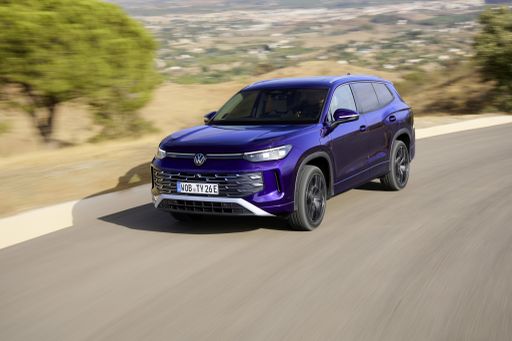
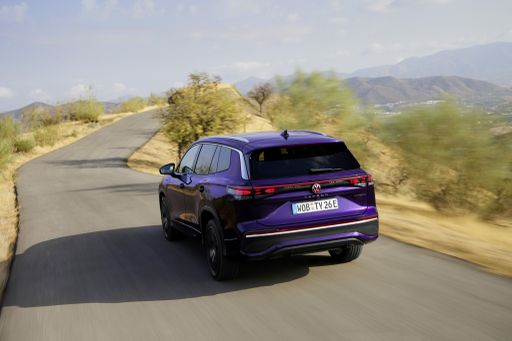
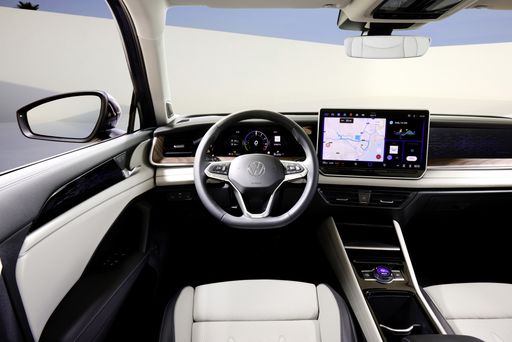
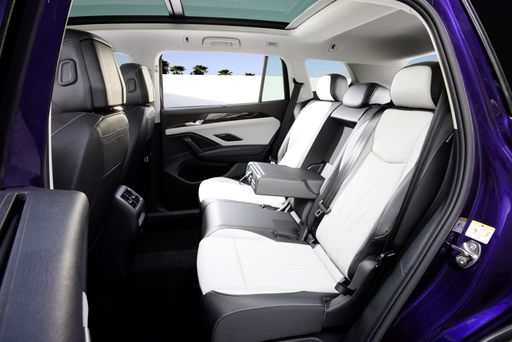
Tayron

Powertrain and Performance

The BMW X2 offers a variety of engine options, ranging from Diesel to Petrol MHEV, all paired with a dual-clutch automatic transmission. The most powerful variant is the 300 HP Petrol engine, accelerating from 0 to 100 km/h in 5.4 seconds, making it a compelling choice for those seeking performance. The X2 also offers a choice between front-wheel drive and all-wheel drive, adding versatility for different driving conditions.

In contrast, the VW Tayron provides an eclectic mix of Petrol MHEV and Plugin Hybrid options. Notably, the Tayron's top-end 272 HP engine achieves a brisk 7.3-second sprint to 100 km/h. Its Plugin Hybrid variant, with an electric range of up to 126 km, is a nod to eco-friendliness without compromising power. Like the X2, Tayron employs a dual-clutch automatic transmission, ensuring smooth gear changes.

X2

Fuel Efficiency and Environmental Impact

When considering fuel consumption, the BMW X2 offers various levels of efficiency depending on the model, with a low of 4.6 L/100km for its Diesel MHEV version. However, the highest-performance variant peaks at 7.9 L/100km. CO2 emissions are reflective of these figures, with ratings spread across different efficiency classes, from D to G.

The Tayron emphasizes efficiency, especially with its Plugin Hybrid model consuming as little as 0.4 L/100km, thanks to its 19.7 kWh battery. For traditional engines, consumption ranges from 5.4 to 7.8 L/100km. The Tayron's CO2 emissions also vary, but the Plugin Hybrid shines with a commendable rating of 9 g/km, highlighting VW's push for sustainable driving solutions.

Tayron

Design and Dimensions

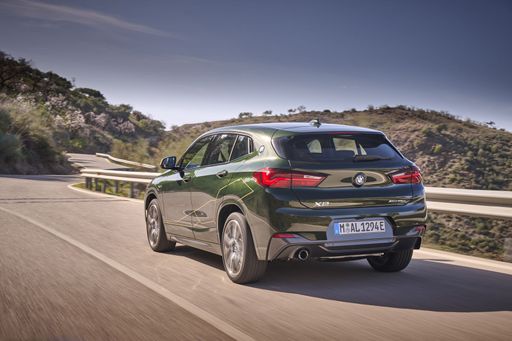
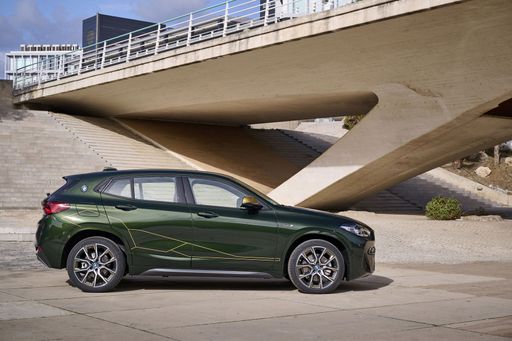
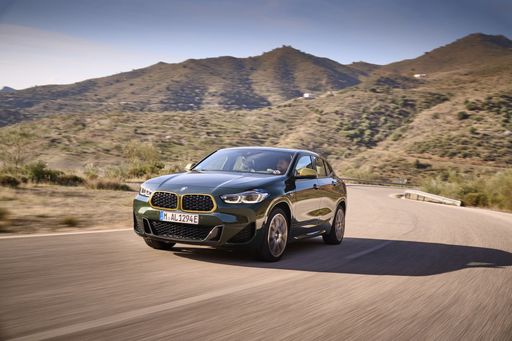
Visually, the BMW X2 is crafted as a compact SUV, with a length of approximately 4560 mm and a width of 1845 mm, encapsulating its sporty demeanor. Its lower height of around 1580 mm accentuates the X2's athletic stance. Inside, a trunk capacity of up to 560 L offers practical storage for daily needs.

Comparatively, the VW Tayron flaunts a longer build at 4792 mm in length and slightly wider stance with a width of 1853 mm. The Tayron's height stands at 1668 mm, presenting a more substantial SUV presence. A significant advantage is its trunk capacity, which extends to 885 L, accommodating larger cargo with ease.

X2

Conclusion: Choosing Between Two Titans

The decision between the BMW X2 and VW Tayron boils down to individual preferences and priorities. The BMW X2 appeals to drivers who crave performance and agile handling, wrapped in a compact and stylish design. Meanwhile, the VW Tayron is ideal for those valuing efficiency, space, and the environmental benefits of a Plugin Hybrid.

Ultimately, both SUVs excel in their domains, providing cutting-edge technology and performance that cater to diverse lifestyles and driving philosophies. Whether it's the spirited BMW X2 or the versatile VW Tayron, each model is a testament to automotive innovation and engineering excellence.

Here’s where it gets real: The technical differences in detail

X2

Costs and Efficiency:

Price and efficiency are key factors when choosing a car – and this is often where the real differences emerge.

VW Tayron is only slightly cheaper – starting at 40,200 £ , while the BMW X2 costs 41,700 £ . That’s a price difference of around 1,436 £.

Fuel consumption also shows a difference: the VW Tayron uses 1.5 L/100km and is significantly more efficient than the BMW X2 with 4.5 L/100km. The difference is about 3 L/100km.

Tayron

Engine and Performance:

Under the bonnet, it becomes clear which model is tuned for sportiness and which one takes the lead when you hit the accelerator.

When it comes to engine power, the BMW X2 offers very slightly more power – delivering 300 HP compared to 272 HP. That’s roughly 28 HP more horsepower.

When accelerating from 0 to 100 km/h, the BMW X2 is a bit quicker – completing the sprint in 5.4 s, while the VW Tayron takes 6.1 s. That’s about 0.7 s quicker.

Both models offer the same torque – 400 Nm.

X2

Space and Everyday Use:

Cabin size, boot volume and payload all play a role in everyday practicality. Here, comfort and flexibility make the difference.

Both vehicles offer seating for 5 people.

In terms of curb weight, BMW X2 is barely lighter – 1,645 kg compared to 1,682 kg. The difference is around 37 kg.

Looking at boot space, the VW Tayron offers noticeably more boot space – 885 L compared to 560 L. That’s a difference of about 325 L.

When it comes to payload, the VW Tayron carries slightly more – 573 kg compared to 510 kg. That’s a difference of about 63 kg.

Who wins the race in the data check?

The VW Tayron is decisively ahead in the objective data comparison.
This result only shows which model scores more points on paper – not which of the two cars feels right for you.

from £40,200
Tayron

VW Tayron

  • Engine Type Petrol MHEV, Diesel, Petrol, Plugin Hybrid
  • Transmission Automatic
  • Drive Type Front-Wheel Drive, All-Wheel Drive
  • Power HP 150 - 272 HP
  • Consumption L/100km 1.5 - 8.5 L/100km
  • Electric Range 116 - 123 km
BMW X2
VW Tayron

Costs and Consumption

View detailed analysis

Engine and Performance

View detailed analysis

Dimensions and Body

View detailed analysis

BMW X2

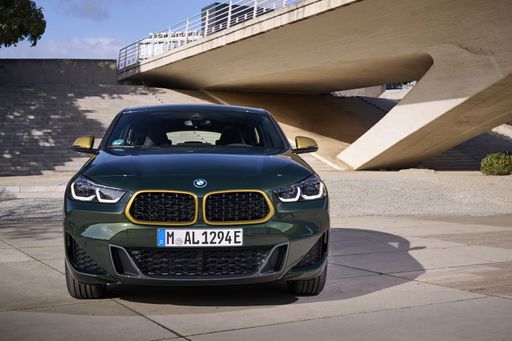
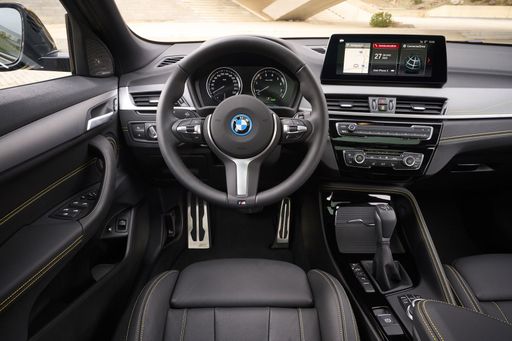
The BMW X2 feels like a sporty coupe dressed as an SUV, with sharp styling and a cheeky, youthful attitude that stands out in traffic. Inside it's driver-focused and compact but smartly packaged, perfect for city life and buyers who want BMW flair without the usual SUV bulk.

details

VW Tayron

The VW Tayron combines a roomy, practical interior with a composed, comfortable ride that suits both daily commuting and longer journeys. With a restrained, modern design and a focus on straightforward tech and safety, it’s a sensible choice for buyers who want Volkswagen refinement without unnecessary flash.

details
BMW X2
VW Tayron

Costs and Consumption

Price
41,700 - 59,600 £
Price
40,200 - 56,000 £
Consumption L/100km
4.5 - 7.7 L/100km
Consumption L/100km
1.5 - 8.5 L/100km
Consumption kWh/100km
-
Consumption kWh/100km
-
Electric Range
-
Electric Range
116 - 123 km
Battery Capacity
-
Battery Capacity
-
co2
118 - 174 g/km
co2
33 - 192 g/km
Fuel tank capacity
-
Fuel tank capacity
-

Dimensions and Body

Body Type
SUV
Body Type
SUV
Seats
5
Seats
5
Doors
-
Doors
-
Curb weight
1,645 - 1,780 kg
Curb weight
1,682 - 1,948 kg
Trunk capacity
515 - 560 L
Trunk capacity
705 - 885 L
Length
-
Length
-
Width
1,845 mm
Width
1,853 - 1,866 mm
Height
-
Height
-
Max trunk capacity
-
Max trunk capacity
-
Payload
495 - 510 kg
Payload
497 - 573 kg

Engine and Performance

Engine Type
Diesel MHEV, Petrol MHEV, Diesel, Petrol
Engine Type
Petrol MHEV, Diesel, Petrol, Plugin Hybrid
Transmission
Automatic
Transmission
Automatic
Transmission Detail
Dual-Clutch Automatic
Transmission Detail
Dual-Clutch Automatic
Drive Type
Front-Wheel Drive, All-Wheel Drive
Drive Type
Front-Wheel Drive, All-Wheel Drive
Power HP
150 - 300 HP
Power HP
150 - 272 HP
Acceleration 0-100km/h
5.4 - 8.9 s
Acceleration 0-100km/h
6.1 - 9.7 s
Max Speed
-
Max Speed
-
Torque
280 - 400 Nm
Torque
250 - 400 Nm
Number of Cylinders
3 - 4
Number of Cylinders
4
Power kW
110 - 221 kW
Power kW
110 - 200 kW
Engine capacity
1,499 - 1,998 cm3
Engine capacity
1,498 - 1,984 cm3

General

Model Year
2024
Model Year
2,025 - 2,026
CO2 Efficiency Class
D, F
CO2 Efficiency Class
E, F, B, G
Brand
BMW
Brand
VW
DriveDuel uses data analysis and artificial intelligence to evaluate vehicle data and create content. Content is regularly reviewed and improved. The displayed prices are estimates based on German list prices, adjusted to the respective country’s VAT. Country-specific registration taxes are not included. This information is not legally binding.