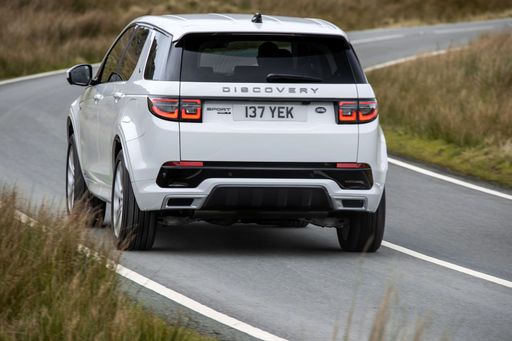
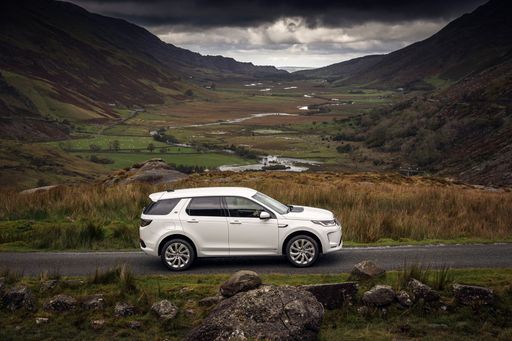
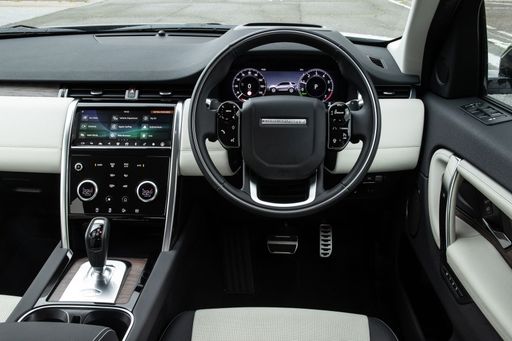
VS

BMW X3 vs Land Rover Discovery Sport comparison

Compare performance (398 HP vs 269 HP), boot space and price (51,300 £ vs 46,500 £ ) at a glance. Find out which car is the better choice for you – BMW X3 or Land Rover Discovery Sport?

BMW X3 vs Land Rover Discovery Sport: Key differences

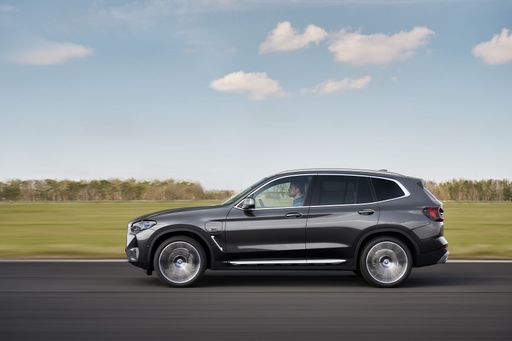
BMW X3

4.6 (1 Reviews)
rate
  • visibly more power
  • substantially more efficient
  • clearly more electric range
  • significantly quicker 0–100 km/h
  • very slightly lighter

Land Rover Discovery Sport

4.9 (2 Reviews)
rate
  • a bit cheaper
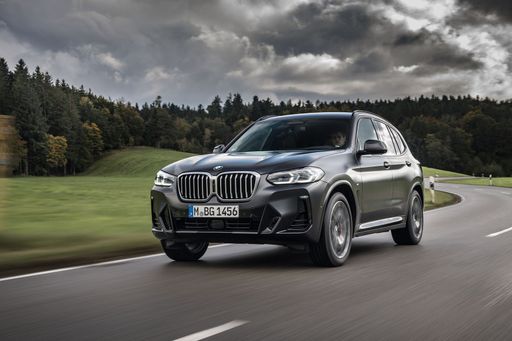
X3

BMW X3 vs Land Rover Discovery Sport: The Ultimate SUV Showdown

In the realm of luxury SUVs, few brands command more respect and admiration than BMW and Land Rover. Renowned for their robust engineering, cutting-edge technology, and elegant design, the BMW X3 and the Land Rover Discovery Sport represent two distinct philosophies in the luxury compact SUV segment. With the latest model year offerings, these vehicles promise to elevate the driving experience even further. Let's dive into their technical specifications and innovative features to determine which one comes out on top.
Discovery Sport

Performance and Powertrains

The BMW X3 offers a multitude of engine options, ensuring that there is a variant for every kind of driver. With power levels ranging from 184 HP to a formidable 510 HP, sourced from a variety of engine types including diesel MHEV, petrol MHEV, and plugin hybrid, it provides a versatile performance palette. Coupled with an automatic gearbox and all-wheel drive, the X3 delivers a seamless driving experience, reaching a maximum speed of up to 250 km/h.

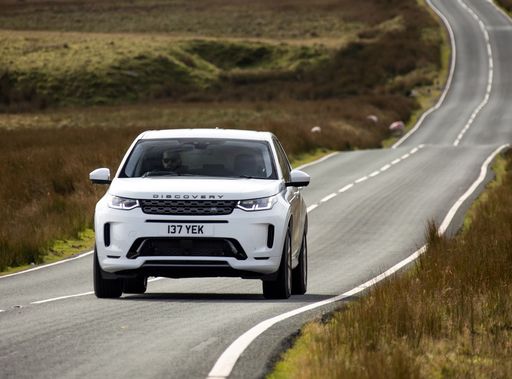
In contrast, the Land Rover Discovery Sport leans towards efficiency with its diesel MHEV and plugin hybrid options. Producing between 163 HP and 269 HP, it’s ideal for those who prioritize a balance of power and environmental friendliness. Its top speed hovers around 209 km/h, aligning closely with the demands of urban and country driving. Acceleration from 0-100 km/h is achieved in a respectable range of 7.4 to 10.2 seconds depending on the engine choice.

X3

Fuel Efficiency and Emissions

Environmental consciousness is increasingly pivotal in automobile design, and both SUVs make strides in this aspect. The BMW X3 offers fuel consumption figures as low as 0.9 L/100km with its plugin hybrid variant, showcasing an impressive blend of performance and efficiency. This model also offers an electric range of up to 90 km, thanks to its 19.7 kWh battery, significantly reducing its carbon footprint.

The Discovery Sport, with a plugin hybrid electric range of 60 km and a fuel consumption stat that can drop to 1.7 L/100km, offers competitive efficiency. Land Rover also provides commendable CO2 efficiency, with emissions as low as 38 g/km in its hybrid model.

Discovery Sport

Dimensions and Space

Spatially aware customers will appreciate the trunk capacity of the Land Rover Discovery Sport, which stands at an impressive 780 liters, providing ample room for luggage and gear. Despite its considerable interior space, the Discovery Sport maintains a manageable length of 4597 mm, making it adept at navigating both cities and terrains.

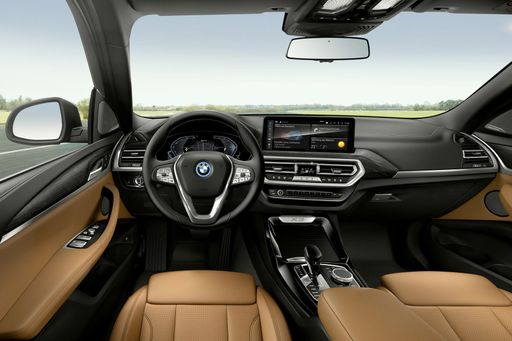
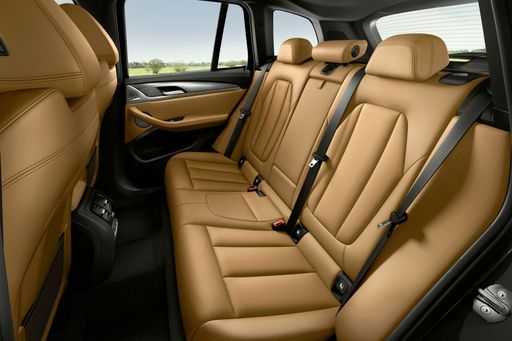
The BMW X3 strikes an excellent balance of space and dynamism with its trunk capacity ranging up to 570 liters and an overall length of 4716 mm. Its interior is meticulously crafted to accommodate up to five passengers comfortably, ensuring luxury does not compromise utility.

X3

Technological Innovations

Both vehicles boast a suite of technological advancements. The BMW X3 incorporates the latest in driving assistance systems, including adaptive cruise control and advanced navigation integration. Moreover, its hybrid models harness state-of-the-art battery technology to deliver not just efficiency, but also enhanced performance metrics.

The Land Rover Discovery Sport is no slouch in tech either. Offering sophisticated off-road capabilities, it is equipped with Land Rover's Terrain Response system, which intelligently adjusts to various driving conditions. Seamless connectivity and modern infotainment systems ensure occupants stay connected, entertained, and informed.

Discovery Sport

Conclusion: Which SUV Stands Out?

Deciding between the BMW X3 and the Land Rover Discovery Sport hinges on what you value most in an SUV. If performance variety and cutting-edge hybrid technology take precedence, the BMW X3 may lean in your favor. However, if a focus on efficient off-road capabilities and generous interior space is paramount, the Land Rover Discovery Sport could be your ideal match.

Ultimately, both vehicles deliver superior engineering and comfort, defining the luxury compact SUV market with excellence and style. The choice boils down to personal preference and specific needs, making either option a compelling investment.

Here’s where it gets real: The technical differences in detail

X3

Costs and Efficiency:

Price and efficiency are key factors when choosing a car – and this is often where the real differences emerge.

Land Rover Discovery Sport is a bit cheaper – starting at 46,500 £ , while the BMW X3 costs 51,300 £ . That’s a price difference of around 4,800 £.

Fuel consumption also shows a difference: the BMW X3 uses 2.8 L/100km and is substantially more efficient than the Land Rover Discovery Sport with 4.2 L/100km. The difference is about 1.4 L/100km.

As for electric range, the BMW X3 offers clearly more range – reaching up to 88 km, about 30 km more than the Land Rover Discovery Sport.

Discovery Sport

Engine and Performance:

Under the bonnet, it becomes clear which model is tuned for sportiness and which one takes the lead when you hit the accelerator.

When it comes to engine power, the BMW X3 offers visibly more power – delivering 398 HP compared to 269 HP. That’s roughly 129 HP more horsepower.

When accelerating from 0 to 100 km/h, the BMW X3 is significantly quicker – completing the sprint in 4.6 s, while the Land Rover Discovery Sport takes 7.4 s. That’s about 2.8 s quicker.

There’s also a difference in torque: the BMW X3 delivers somewhat more torque with 670 Nm compared to 540 Nm. That’s about 130 Nm more.

X3

Space and Everyday Use:

Beyond pure performance, interior space and usability matter most in daily life. This is where you see which car is more practical and versatile.

Both vehicles offer seating for 5 people.

In terms of curb weight, BMW X3 is very slightly lighter – 1,930 kg compared to 1,949 kg. The difference is around 19 kg.

When it comes to payload, the Land Rover Discovery Sport carries slightly more – 641 kg compared to 570 kg. That’s a difference of about 71 kg.

Who wins the race in the data check?

The BMW X3 is decisively ahead in the objective data comparison.
This result only shows which model scores more points on paper – not which of the two cars feels right for you.

from £51,300
X3

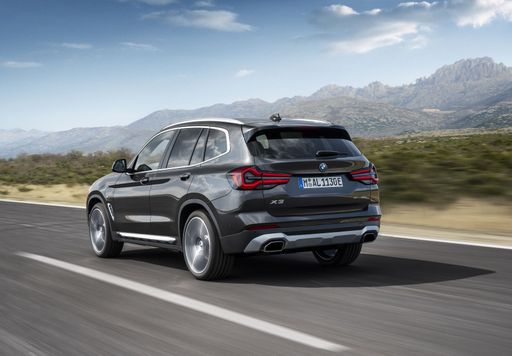
BMW X3

  • Engine Type : Petrol MHEV, Diesel MHEV, Plugin Hybrid
  • Transmission : Automatic
  • Drive Type : All-Wheel Drive
  • Power HP : 197 - 398 HP
  • Consumption L/100km : 2.8 - 7.7 L/100km
  • Electric Range : 88 km
BMW X3
Land Rover Discovery Sport

Costs and Consumption

View detailed analysis

Engine and Performance

View detailed analysis

Dimensions and Body

View detailed analysis

BMW X3

The BMW X3 mixes Bavarian poise with everyday practicality, delivering a composed ride and a cabin that feels both premium and lived-in. It’s the sort of SUV that lets you enjoy sporty handling without sacrificing family-friendly space, so you get fun and sense in one neat package.

details

Land Rover Discovery Sport

Discovery Sport wears Land Rover’s rugged badge with compact poise, blending a comfortable, well-crafted cabin and genuine off-road confidence for buyers who want versatility without showroom bluster. It settles smoothly on the road with composed manners and a cheeky British charm, making it an appealing pick for families who crave practicality with a hint of adventure.

details
BMW X3
Land Rover Discovery Sport

Costs and Consumption

Price
51,300 - 72,400 £
Price
46,500 - 65,700 £
Consumption L/100km
2.8 - 7.7 L/100km
Consumption L/100km
4.2 - 7.1 L/100km
Consumption kWh/100km
-
Consumption kWh/100km
-
Electric Range
88 km
Electric Range
58 km
Battery Capacity
-
Battery Capacity
-
co2
64 - 175 g/km
co2
95 - 187 g/km
Fuel tank capacity
60 - 65 L
Fuel tank capacity
-

Dimensions and Body

Body Type
SUV
Body Type
SUV
Seats
5
Seats
5
Doors
5
Doors
-
Curb weight
1,930 - 2,140 kg
Curb weight
1,949 - 2,168 kg
Trunk capacity
460 - 570 L
Trunk capacity
-
Length
4,755 mm
Length
-
Width
1,920 mm
Width
1,894 mm
Height
1,660 mm
Height
-
Max trunk capacity
1,700 L
Max trunk capacity
-
Payload
570 kg
Payload
582 - 641 kg

Engine and Performance

Engine Type
Petrol MHEV, Diesel MHEV, Plugin Hybrid
Engine Type
Diesel MHEV, Plugin Hybrid
Transmission
Automatic
Transmission
Automatic
Transmission Detail
Automatic Gearbox
Transmission Detail
Automatic Gearbox
Drive Type
All-Wheel Drive
Drive Type
All-Wheel Drive
Power HP
197 - 398 HP
Power HP
163 - 269 HP
Acceleration 0-100km/h
4.6 - 7.8 s
Acceleration 0-100km/h
7.4 - 10.2 s
Max Speed
215 - 250 km/h
Max Speed
-
Torque
330 - 670 Nm
Torque
380 - 540 Nm
Number of Cylinders
4 - 6
Number of Cylinders
3 - 4
Power kW
145 - 293 kW
Power kW
120 - 198 kW
Engine capacity
1,995 - 2,998 cm3
Engine capacity
1,498 - 1,998 cm3

General

Model Year
2,024 - 2,025
Model Year
2,025
CO2 Efficiency Class
F, E, B
CO2 Efficiency Class
G, B
Brand
BMW
Brand
Land Rover
DriveDuel uses data analysis and artificial intelligence to evaluate vehicle data and create content. Content is regularly reviewed and improved. The displayed prices are estimates based on German list prices, adjusted to the respective country’s VAT. Country-specific registration taxes are not included. This information is not legally binding.