@ BMW Group Press
@ Dr. Ing. h.c. F. Porsche AG
VS

BMW X7 vs Porsche Cayenne – Differences & prices compared

Compare performance, boot capacity, efficiency and price at a glance.
Find out which car is the better choice for you – BMW X7 or Porsche Cayenne?

X7 @ BMW Group Press

Battle of Luxurious Titans: BMW X7 vs. Porsche Cayenne

As the SUV segment continues to reign supreme in the automotive industry, the competition between luxury automakers grows more intense. Today, we delve into two legendary contenders that epitomize power, innovation, and luxury: the BMW X7 and the Porsche Cayenne. Both vehicles are celebrated for their prodigious performance capabilities, exquisite craftsmanship, and groundbreaking technology. However, each has its unique flair and characteristics that suit different driving preferences. Let’s explore the finer details of these automotive masterpieces to see how they stack up against each other.
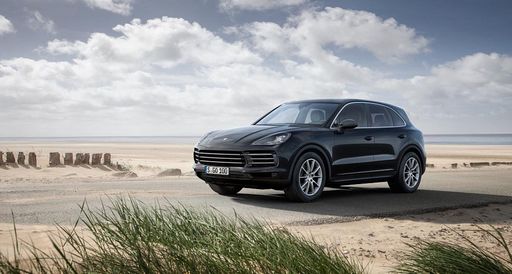
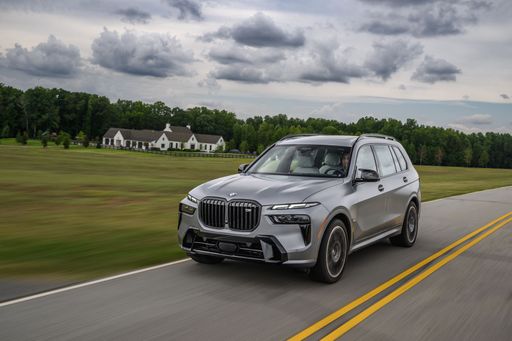
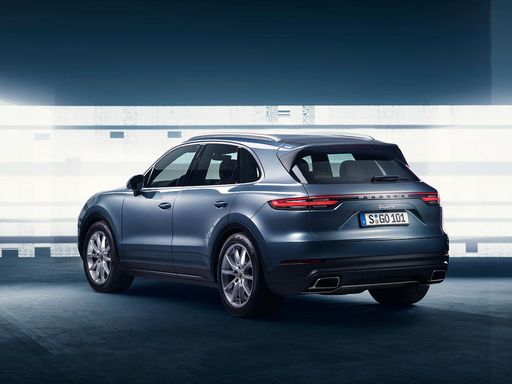
Cayenne @ Dr. Ing. h.c. F. Porsche AG

Performance and Powertrains

Under the hood, the BMW X7 offers a range of engines featuring diesel and petrol mild hybrid electric vehicles (MHEV) configurations. The power output varies significantly, with options generating between 352 and 530 horsepower, and the torque ranging from 520 to 750 Nm. The X7 can accelerate from 0 to 100 km/h in as fast as 4.7 seconds, which is impressive for its size. Its automatic gearbox ensures a seamless ride.

Meanwhile, the Porsche Cayenne stands as a versatile powerhouse with a broader spectrum of engine choices. It boasts plug-in hybrid and petrol options, producing between 353 and 739 horsepower, and torque between 500 and an astonishing 950 Nm. The acceleration of the Cayenne ranges up to an electrifying 3.6 seconds from 0 to 100 km/h. Efficiency is key, with its plug-in hybrid versions offering an electric range of up to 78 km, thanks to a 21.8 kWh battery.

X7 @ BMW Group Press

Dimensions and Design

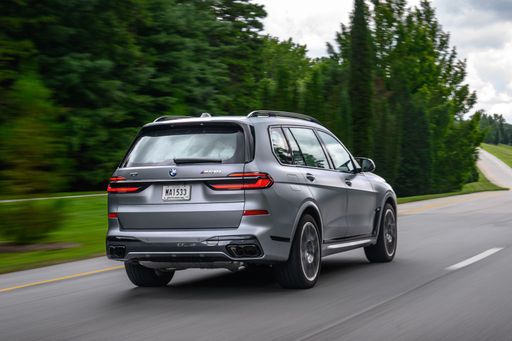
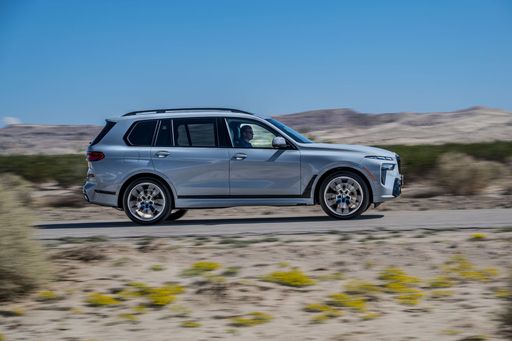
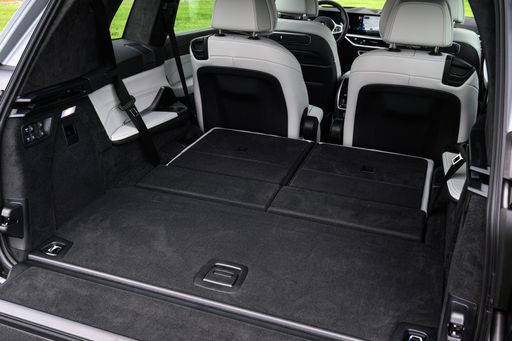
When it comes to size, the BMW X7 is the larger contender, measuring 5181 mm in length, 2000 mm in width, and 1835 mm in height. It offers a commanding road presence and a spacious interior that accommodates seven passengers comfortably, making it ideal for family trips.

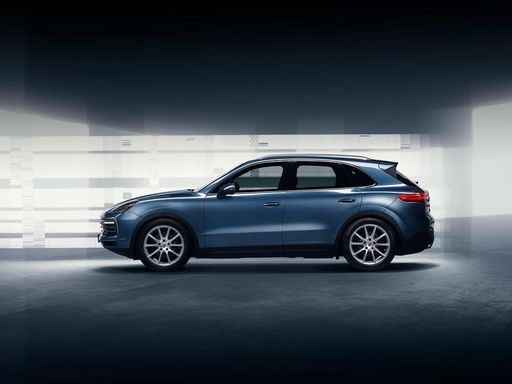
Conversely, the Porsche Cayenne adopts a more compact, sport-oriented stance with a length of 4930 mm and a width slightly under 2000 mm. Its height varies slightly depending on the model, maintaining a sleek and aerodynamic profile that complements its performance nature. This SUV fits up to five passengers, emphasizing a sporty yet luxurious vibe.

Cayenne @ Dr. Ing. h.c. F. Porsche AG

Innovations and Technology

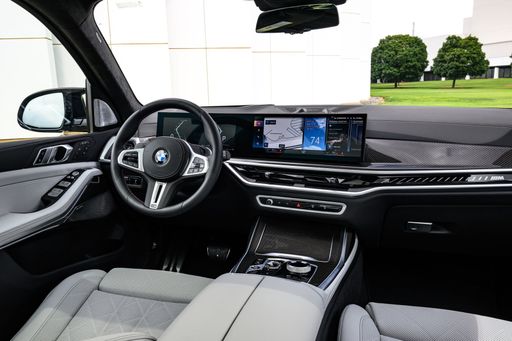
BMW's X7 is equipped with an array of state-of-the-art features, including advanced all-wheel-drive systems meant to tackle various terrains with poise. The inclusion of modern assistive technologies ensures both safety and convenience, with features like adaptive cruise control, lane-keeping assist, and a high-definition infotainment system.

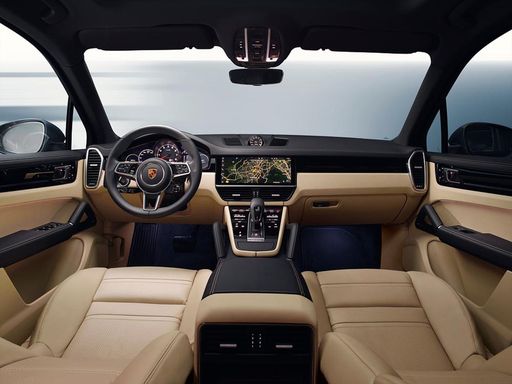
On the other hand, the Porsche Cayenne doesn't hold back on innovation either. It integrates cutting-edge driver-assistance technologies, and its infotainment system is tailored for a high-tech experience. The hybrids offer real-time analytics on battery usage and energy recuperation, ensuring drivers stay informed about their vehicle's performance at all times.

X7 @ BMW Group Press

Conclusion

The BMW X7 and Porsche Cayenne offer two distinct paths to luxury SUV ownership. The X7 is tailored for those seeking space, comfort, and versatile powertrain options, while the Cayenne attracts buyers looking for sporty performance, innovative hybrid technologies, and a slightly more compact design.

Ultimately, the choice between these two titans boils down to personal preferences and lifestyle needs. Whether you prioritize family-friendly features or crave high-speed adventures with eco-conscious options, both the BMW X7 and Porsche Cayenne symbolize the pinnacle of luxury driving experiences.

Here’s where it gets real: The technical differences in detail

Cayenne @ Dr. Ing. h.c. F. Porsche AG

Costs and Efficiency:

When it comes to price and running costs, the biggest differences usually appear. This is often where you see which car fits your budget better in the long run.

Porsche Cayenne has a hardly perceptible advantage in terms of price – it starts at 87000 £, while the BMW X7 costs 90800 £. That’s a price difference of around 3771 £.

Fuel consumption also shows a difference: Porsche Cayenne manages with 4 L and is therefore convincingly more efficient than the BMW X7 with 8 L. The difference is about 4 L per 100 km.

X7 @ BMW Group Press

Engine and Performance:

Power, torque and acceleration are the classic benchmarks for car enthusiasts – and here, some clear differences start to show.

When it comes to engine power, the Porsche Cayenne has a clearly perceptible edge – offering 739 HP compared to 530 HP. That’s roughly 209 HP more horsepower.

In acceleration from 0 to 100 km/h, the Porsche Cayenne is evident quicker – completing the sprint in 3.60 s, while the BMW X7 takes 4.70 s. That’s about 1.10 s faster.

In terms of top speed, the Porsche Cayenne performs a bit better – reaching 305 km/h, while the BMW X7 tops out at 250 km/h. The difference is around 55 km/h.

There’s also a difference in torque: Porsche Cayenne pulls clearly perceptible stronger with 950 Nm compared to 750 Nm. That’s about 200 Nm difference.

Cayenne @ Dr. Ing. h.c. F. Porsche AG

Space and Everyday Use:

Cabin size, boot volume and payload all play a role in everyday practicality. Here, comfort and flexibility make the difference.

Seats: BMW X7 offers clearly perceptible more seating capacity – 7 vs 5.

In curb weight, Porsche Cayenne is somewhat lighter – 2130 kg compared to 2490 kg. The difference is around 360 kg.

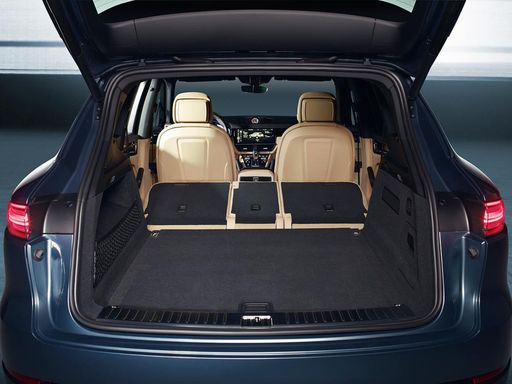
In terms of boot space, the Porsche Cayenne offers slight more room – 772 L compared to 750 L. That’s a difference of about 22 L.

In maximum load capacity, the BMW X7 performs somewhat better – up to 2120 L, which is about 412 L more than the Porsche Cayenne.

When it comes to payload, BMW X7 slight takes the win – 760 kg compared to 705 kg. That’s a difference of about 55 kg.

Who comes out on top?

Overall, the Porsche Cayenne shows itself to be dominates this comparison and secures the title of DriveDuel Champion.
It convinces with the more balanced overall package and proves to be the more versatile choice for everyday use.

from about £87,000
Cayenne @ Dr. Ing. h.c. F. Porsche AG

Porsche Cayenne

  • Engine Type : Petrol, Plugin Hybrid
  • Transmission : Automatic
  • Drive Type : All-Wheel Drive
  • Power HP : 353 - 739 HP
  • Consumption L/100km : 4 - 12.2 L
  • Electric Range : 74 - 83 km

BMW X7

The BMW X7 stands as a remarkable testament to luxury and performance within the SUV market. Its design seamlessly blends elegance with a robust presence, ensuring a commanding stance on the road. Inside, it offers a lavish interior adorned with premium materials and cutting-edge technology to enhance the driving experience.

details

Porsche Cayenne

Few SUVs blend athletic poise and Teutonic precision like the Porsche Cayenne, putting genuine sports‑car feeling into a roomy, everyday package. If you want a practical family hauler that still makes you grin every time you merge, the Cayenne delivers — turning errands into an excuse for a spirited drive.

details
BMW X7
Porsche Cayenne
X7 @ BMW Group Press
Cayenne @ Dr. Ing. h.c. F. Porsche AG

Costs and Consumption

Price
90800 - 117500 £
Price
87000 - 186400 £
Consumption L/100km
8 - 12.1 L
Consumption L/100km
4 - 12.2 L
Consumption kWh/100km
-
Consumption kWh/100km
-
Electric Range
-
Electric Range
74 - 83 km
Battery Capacity
-
Battery Capacity
21.80 kWh
co2
210 - 274 g/km
co2
90 - 277 g/km
Fuel tank capacity
80 - 83 L
Fuel tank capacity
70 - 90 L

Dimensions and Body

Body Type
SUV
Body Type
SUV
Seats
7
Seats
4 - 5
Doors
5
Doors
5
Curb weight
2490 - 2675 kg
Curb weight
2130 - 2670 kg
Trunk capacity
750 L
Trunk capacity
434 - 772 L
Length
5181 mm
Length
4930 mm
Width
2000 mm
Width
1983 - 1989 mm
Height
1835 mm
Height
1652 - 1698 mm
Max trunk capacity
2120 L
Max trunk capacity
1344 - 1708 L
Payload
680 - 760 kg
Payload
365 - 705 kg

Engine and Performance

Engine Type
Petrol MHEV, Diesel MHEV
Engine Type
Petrol, Plugin Hybrid
Transmission
Automatic
Transmission
Automatic
Transmission Detail
Automatic Gearbox
Transmission Detail
Automatic Gearbox
Drive Type
All-Wheel Drive
Drive Type
All-Wheel Drive
Power HP
352 - 530 HP
Power HP
353 - 739 HP
Acceleration 0-100km/h
4.7 - 5.9 s
Acceleration 0-100km/h
3.6 - 6 s
Max Speed
245 - 250 km/h
Max Speed
248 - 305 km/h
Torque
520 - 750 Nm
Torque
500 - 950 Nm
Number of Cylinders
6 - 8
Number of Cylinders
6 - 8
Power kW
259 - 390 kW
Power kW
260 - 544 kW
Engine capacity
2993 - 4395 cm3
Engine capacity
2995 - 3996 cm3

General

Model Year
2025
Model Year
2025
CO2 Efficiency Class
G
CO2 Efficiency Class
G, B, C
Brand
BMW
Brand
Porsche
What drivetrain options does the BMW X7 have?

The BMW X7 is available as All-Wheel Drive.

The prices and data displayed are estimates based on German list prices and may vary by country. This information is not legally binding.