VS

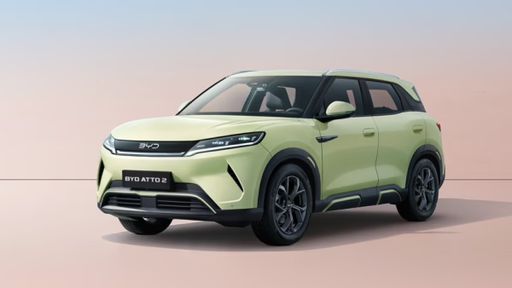
BYD Atto 2 vs Nissan Qashqai comparison

Compare performance (212 HP vs 205 HP), boot space and price (27,400 £ vs 29,600 £ ) at a glance. Find out which car is the better choice for you – BYD Atto 2 or Nissan Qashqai?

BYD Atto 2 vs Nissan Qashqai: Key differences

BYD Atto 2

4.9 (4 Reviews)
rate
  • marginally cheaper
  • very slightly more power
  • only slightly quicker 0–100 km/h
details

Nissan Qashqai

4.9 (3 Reviews)
rate
  • only slightly lighter
  • a bit more trunk space
details

All details on performance, efficiency, range and trunk space can be found in the technical comparison below – including user reviews for both models.

By Achim Sedelmaier

Atto 2

In the ever-evolving automotive landscape, SUVs are becoming more than just family vehicles; they represent the intersection of utility, technology, and style. Two contenders carving their niche in this segment are the Nissan Qashqai and the BYD Atto 2. With distinct offerings in design, technology, and performance, let's dive into how these vehicles compare against each other.

Qashqai

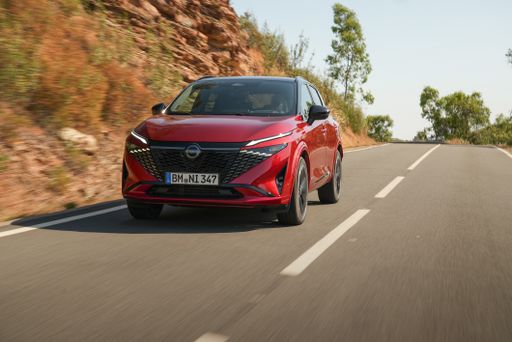
Nissan Qashqai: Performance and Versatility

The 2024 Nissan Qashqai showcases an impressive range of engine options, from petrol mild hybrid (MHEV) to full hybrid variants. With horsepower ranging between 140 to 190 hp and torque peaking at 330 Nm, the Qashqai delivers a robust performance suited for both urban commutes and adventurous road trips.

Available with both manual and automatic transmissions, and configurations for front-wheel drive or all-wheel drive, the Qashqai is designed to cater to diverse driving preferences. The acceleration from 0 to 100 km/h ranges from 7.9 seconds for the most powerful variant to 10.2 seconds for the entry-level, showcasing its versatility.

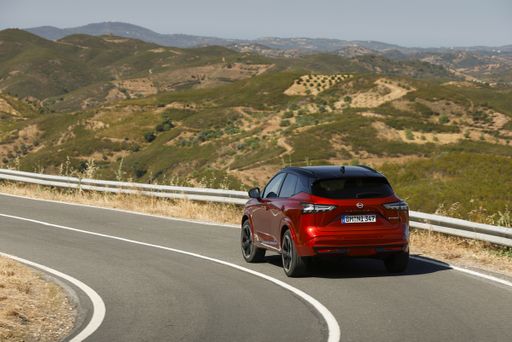
With a fuel consumption of approximately 5.1 to 6.8 L/100km and a maximum speed of up to 206 km/h, it competes favorably in its class. The vehicle's dimensions, measuring 4425 mm in length, 1835 mm in width, and 1625 mm in height, provide ample cabin space, making it a practical choice for families.

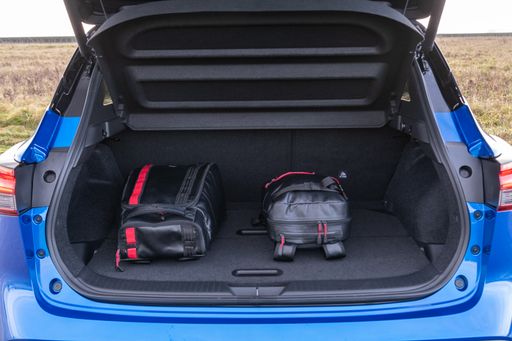
One of the standout features of the Qashqai is its trunk capacity, offering between 479 to 504 liters, which is generous for hauling luggage or groceries. Additionally, a maximum payload of up to 520 kg allows for heavy-duty use.


Atto 2

BYD Atto 2: The New Wave of Electric Mobility

The BYD Atto 2, set to be released in 2025, embodies the future of sustainable travel with its fully electric powertrain. Producing 177 hp and 290 Nm of torque, it offers a seamless driving experience that allows for rapid acceleration, achieving 0 to 100 km/h in just 7.9 seconds.

With an energy consumption rate of just 16 kWh/100km and an electric range of 312 km, the Atto 2 positions itself as an eco-friendly alternative in the SUV sector. Its maximum speed is capped at 160 km/h, making it suitable for city drives and leisurely highway travel.

Dimensions of the Atto 2 include a length of 4310 mm, width of 1830 mm, and height of 1675 mm. While slightly smaller than the Qashqai, it still provides comfortable seating for five and a trunk capacity of 400 liters. The payload capacity stands at 410 kg, which, while lower than the Qashqai, is still impressive for an electric vehicle.

Qashqai

Technological Innovations: A Sharp Contrast

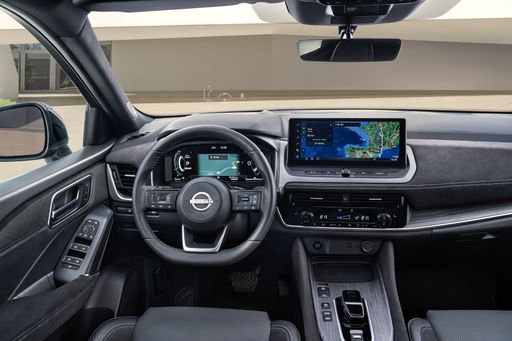
When it comes to technology, both vehicles offer distinct advantages. The Nissan Qashqai integrates hybrid technology that enhances fuel efficiency without compromising performance. It features advanced driver-assistance systems, connectivity options, and a user-friendly infotainment interface that elevates driving experiences.

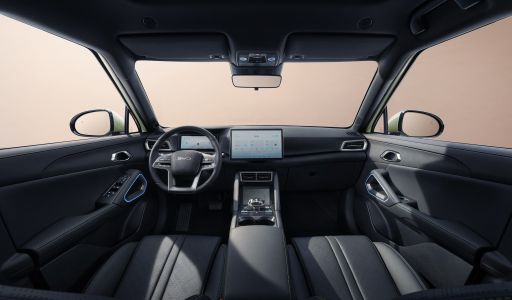
On the other hand, the BYD Atto 2 is a testament to cutting-edge electric vehicle technology. Its innovative battery management system ensures optimal performance and longevity, while smart connectivity features further enhance the user experience, showcasing a commitment to modern mobility solutions.

Conclusion: Choosing Your Ideal SUV

The Nissan Qashqai and BYD Atto 2 each represent unique offerings in the SUV market. The Qashqai delivers a proven track record with versatile performance and practicality, ideal for those who value traditional fuel options with hybrid efficiency. Conversely, the Atto 2 is perfect for forward-thinking buyers looking to embrace electric mobility without compromising on performance.

Ultimately, the choice between these two vehicles will hinge on individual preferences—whether you prioritize the familiarity and versatility of an established brand like Nissan or the innovative approach of BYD in the realm of electric vehicles.

Here’s where it gets real: The technical differences in detail

Atto 2

Costs and Efficiency:

Price and efficiency are often the first things buyers look at. Here it becomes clear which model has the long-term edge – whether at the pump, the plug, or in purchase price.

BYD Atto 2 is marginally cheaper – starting at 27,400 £ , while the Nissan Qashqai costs 29,600 £ . That’s a price difference of around 2,185 £.

Qashqai

Engine and Performance:

Power, torque and acceleration are the classic benchmarks for car enthusiasts – and here, some clear differences start to show.

When it comes to engine power, the BYD Atto 2 offers very slightly more power – delivering 212 HP compared to 205 HP. That’s roughly 7 HP more horsepower.

When accelerating from 0 to 100 km/h, the BYD Atto 2 is only slightly quicker – completing the sprint in 7.5 s, while the Nissan Qashqai takes 7.6 s. That’s about 0.1 s quicker.

There’s also a difference in torque: the Nissan Qashqai delivers marginally more torque with 330 Nm compared to 310 Nm. That’s about 20 Nm more.

Atto 2

Space and Everyday Use:

Beyond pure performance, interior space and usability matter most in daily life. This is where you see which car is more practical and versatile.

Both vehicles offer seating for 5 people.

In terms of curb weight, Nissan Qashqai is only slightly lighter – 1,420 kg compared to 1,510 kg. The difference is around 90 kg.

Looking at boot space, the Nissan Qashqai offers a bit more boot space – 504 L compared to 450 L. That’s a difference of about 54 L.

When it comes to payload, the Nissan Qashqai carries barely more – 520 kg compared to 490 kg. That’s a difference of about 30 kg.

Who wins the race in the data check?

The BYD Atto 2 holds a decisive overall lead in the objective data comparison.
This result only shows which model scores more points on paper – not which of the two cars feels right for you.

from £27,400
Atto 2

BYD Atto 2

  • Engine Type : Electric, Plugin Hybrid
  • Transmission : Automatic
  • Drive Type : Front-Wheel Drive
  • Power HP : 166 - 212 HP
  • Consumption kWh/100km : 15.8 - 16 kWh/100km
  • Electric Range : 40 - 430 km
BYD Atto 2
Nissan Qashqai

Costs and Consumption

View detailed analysis

Engine and Performance

View detailed analysis

Dimensions and Body

View detailed analysis

BYD Atto 2

The Atto 2 is making waves in the electric vehicle market with its sleek design and impressive range. This innovative model combines cutting-edge technology with captivating aesthetics, making it a standout choice for eco-conscious drivers. With its spacious interior and advanced features, the Atto 2 offers both comfort and convenience for everyday use.

details

Nissan Qashqai

The Nissan Qashqai blends practical, family-friendly packaging with SUV styling that refuses to shout, making it a sensible and dependable choice for everyday life. It’s comfortable to live with, economical on the road, and neatly equipped enough to feel modern without ever feeling precious — perfect if you want crossover versatility without the drama.

details
BYD Atto 2
Nissan Qashqai

Costs and Consumption

Price
27,400 - 36,000 £
Price
29,600 - 39,900 £
Consumption L/100km
-
Consumption L/100km
4.5 - 6.8 L/100km
Consumption kWh/100km
15.8 - 16 kWh/100km
Consumption kWh/100km
-
Electric Range
40 - 430 km
Electric Range
-
Battery Capacity
-
Battery Capacity
-
co2
0 - 41 g/km
co2
102 - 154 g/km
Fuel tank capacity
-
Fuel tank capacity
55 L

Dimensions and Body

Body Type
SUV
Body Type
SUV
Seats
5
Seats
5
Doors
-
Doors
5
Curb weight
1,510 - 1,720 kg
Curb weight
1,420 - 1,665 kg
Trunk capacity
400 - 450 L
Trunk capacity
479 - 504 L
Length
-
Length
4,425 mm
Width
1,830 mm
Width
1,835 mm
Height
-
Height
1,625 mm
Max trunk capacity
-
Max trunk capacity
1,422 - 1,447 L
Payload
260 - 490 kg
Payload
466 - 520 kg

Engine and Performance

Engine Type
Electric, Plugin Hybrid
Engine Type
Petrol MHEV, Full Hybrid
Transmission
Automatic
Transmission
Manuel, Automatic
Transmission Detail
Reduction Gearbox, Automatic Gearbox
Transmission Detail
Manual Gearbox, CVT, Reduction Gearbox
Drive Type
Front-Wheel Drive
Drive Type
Front-Wheel Drive, All-Wheel Drive
Power HP
166 - 212 HP
Power HP
140 - 205 HP
Acceleration 0-100km/h
7.5 - 9.1 s
Acceleration 0-100km/h
7.6 - 10.2 s
Max Speed
-
Max Speed
170 - 206 km/h
Torque
290 - 310 Nm
Torque
240 - 330 Nm
Number of Cylinders
4
Number of Cylinders
3 - 4
Power kW
122 - 156 kW
Power kW
103 - 151 kW
Engine capacity
1,498 cm3
Engine capacity
1,332 - 1,498 cm3

General

Model Year
2,025 - 2,026
Model Year
2,025 - 2,026
CO2 Efficiency Class
A, B
CO2 Efficiency Class
E, C
Brand
BYD
Brand
Nissan
DriveDuel uses data analysis and artificial intelligence to evaluate vehicle data and create content. Content is regularly reviewed and improved. The displayed prices are estimates based on German list prices, adjusted to the respective country’s VAT. Country-specific registration taxes are not included. This information is not legally binding.