
 Deutschland
 France
 Nederland
 Great Britain
 Sverige
 Norge
Norge Danmark
 Suomi
Suomi Italia
 Polska
 España
VS
BYD Han vs Kia EV6 – Which one offers the better deal?
Two cars, one duel: BYD Han meets Kia EV6.
Which one wins in performance, efficiency and value for money? Find out now!
Han
@ BYD Auto / BYD Global Media
Costs and Efficiency:
When it comes to price and running costs, the biggest differences usually appear. This is often where you see which car fits your budget better in the long run.
Kia EV6 has a significantly advantage in terms of price – it starts at 38600 £, while the BYD Han costs 59200 £. That’s a price difference of around 20598 £.
In terms of energy consumption, the advantage goes to the Kia EV6: with 15.90 kWh per 100 km, it’s to a small extent more efficient than the BYD Han with 18.50 kWh. That’s a difference of about 2.60 kWh.
As for range, the Kia EV6 performs a bit better – achieving up to 582 km, about 61 km more than the BYD Han.
EV6
@ Kia Corporation
Engine and Performance:
Under the bonnet, it becomes clear which model is tuned for sportiness and which one takes the lead when you hit the accelerator.
When it comes to engine power, the Kia EV6 has a slightly edge – offering 609 HP compared to 517 HP. That’s roughly 92 HP more horsepower.
In acceleration from 0 to 100 km/h, the Kia EV6 is slightly quicker – completing the sprint in 3.50 s, while the BYD Han takes 3.90 s. That’s about 0.40 s faster.
In terms of top speed, the Kia EV6 performs evident better – reaching 260 km/h, while the BYD Han tops out at 180 km/h. The difference is around 80 km/h.
There’s also a difference in torque: Kia EV6 pulls slight stronger with 770 Nm compared to 700 Nm. That’s about 70 Nm difference.
Han
@ BYD Auto / BYD Global Media
Space and Everyday Use:
Cabin size, boot volume and payload all play a role in everyday practicality. Here, comfort and flexibility make the difference.
Both vehicles offer seating for 5 people.
In curb weight, Kia EV6 is a bit lighter – 1955 kg compared to 2325 kg. The difference is around 370 kg.
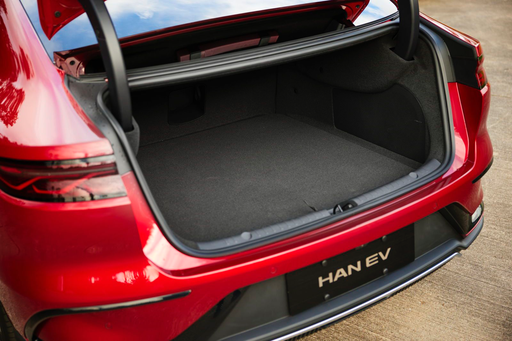
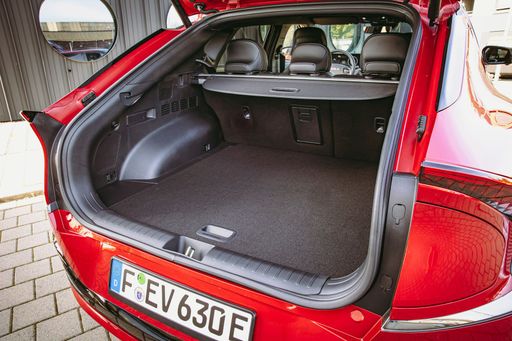
In terms of boot space, the Kia EV6 offers a bit more room – 490 L compared to 410 L. That’s a difference of about 80 L.
When it comes to payload, Kia EV6 clearly perceptible takes the win – 450 kg compared to 335 kg. That’s a difference of about 115 kg.
Who wins the race?
The Kia EV6 proves to be wins the duel decisively and therefore becomes our DriveDuel Champion!
Kia EV6 is the better all-rounder in this comparison.
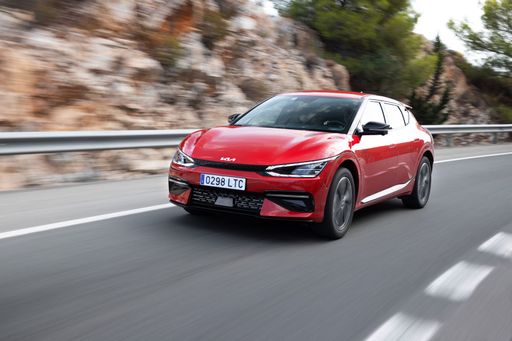
from about £38,600
 @ Kia Corporation
Kia EV6
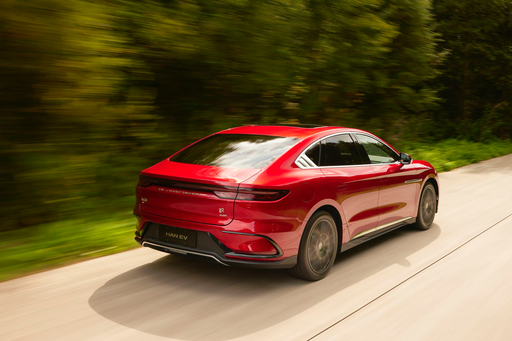
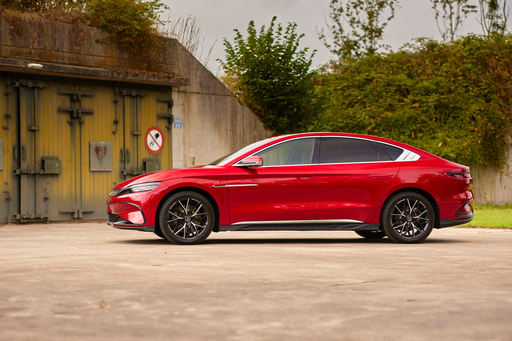
BYD Han
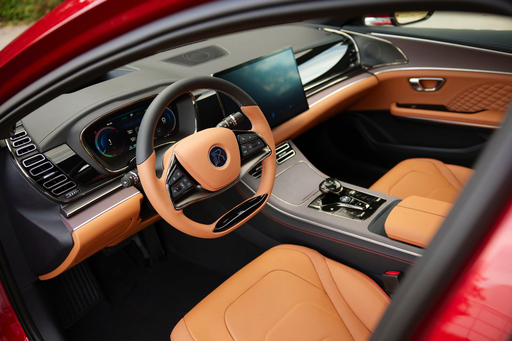
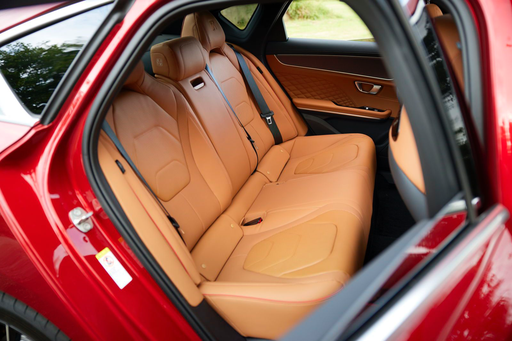
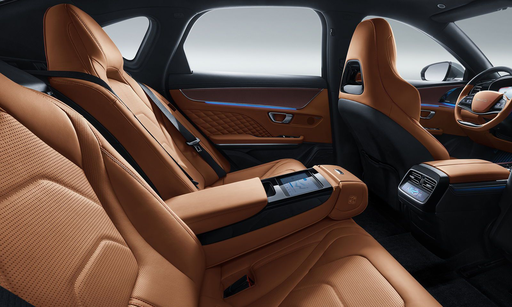
The BYD Han is a sleek electric vehicle that elegantly combines innovation and style. Its design features smooth lines and a sophisticated interior that highlight modern luxury. With advanced technology and impressive performance, it represents a significant step forward in the world of electric cars.
details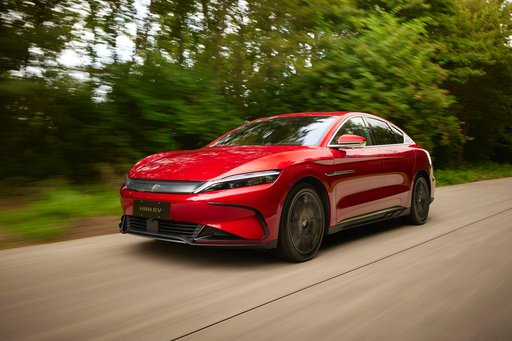 @ BYD Auto / BYD Global Media
 @ BYD Auto / BYD Global Media
 @ BYD Auto / BYD Global Media
 @ BYD Auto / BYD Global Media
 @ BYD Auto / BYD Global Media
 @ BYD Auto / BYD Global Media
 @ BYD Auto / BYD Global Media
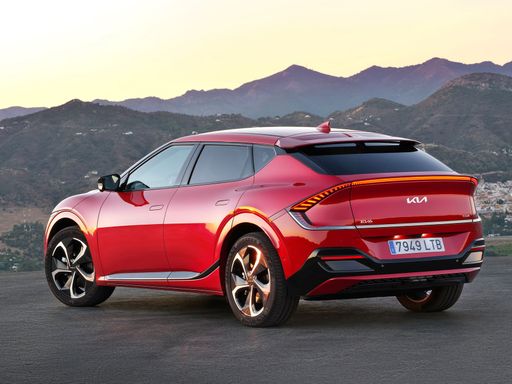
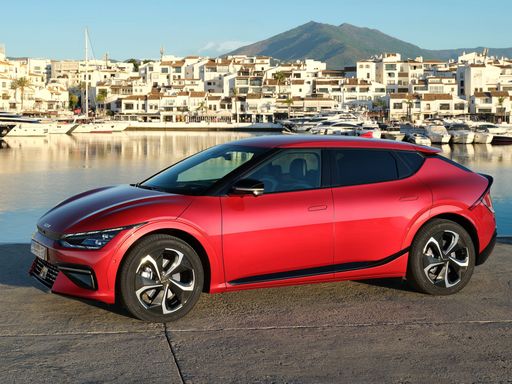
Kia EV6
The Kia EV6 looks like it sprinted off a concept stage, its bold, futuristic lines wrapping a surprisingly spacious and grown-up cabin. On the road it delivers crisp, immediate thrust and composed handling, with enough everyday practicality and slick tech to make ditching petrol feel like an upgrade rather than a compromise.
details
@ Kia Corporation
 @ Kia Corporation
 @ Kia Corporation
 @ Kia Corporation
 @ Kia Corporation
BYD Han
Kia EV6
|
@ BYD Auto / BYD Global Media
|
@ Kia Corporation
|
|
|
|
Costs and Consumption |
|
|---|---|
|
Price
59200 - 62200 £
|
Price
38600 - 60000 £
|
|
Consumption L/100km
-
|
Consumption L/100km
-
|
|
Consumption kWh/100km
18.50 kWh
|
Consumption kWh/100km
15.9 - 20.9 kWh
|
|
Electric Range
521 km
|
Electric Range
428 - 582 km
|
|
Battery Capacity
-
|
Battery Capacity
63 - 84 kWh
|
|
co2
0 g/km
|
co2
0 g/km
|
|
Fuel tank capacity
-
|
Fuel tank capacity
-
|
Dimensions and Body |
|
|---|---|
|
Body Type
Sedan
|
Body Type
SUV
|
|
Seats
5
|
Seats
5
|
|
Doors
4
|
Doors
5
|
|
Curb weight
2325 kg
|
Curb weight
1955 - 2220 kg
|
|
Trunk capacity
410 L
|
Trunk capacity
480 - 490 L
|
|
Length
4995 mm
|
Length
4695 mm
|
|
Width
1910 mm
|
Width
1880 - 1890 mm
|
|
Height
1495 mm
|
Height
1545 - 1550 mm
|
|
Max trunk capacity
-
|
Max trunk capacity
1250 - 1290 L
|
|
Payload
335 kg
|
Payload
440 - 450 kg
|
Engine and Performance |
|
|---|---|
|
Engine Type
Electric
|
Engine Type
Electric
|
|
Transmission
Automatic
|
Transmission
Automatic
|
|
Transmission Detail
-
|
Transmission Detail
Reduction Gearbox
|
|
Drive Type
All-Wheel Drive
|
Drive Type
Rear-Wheel Drive, All-Wheel Drive
|
|
Power HP
517 HP
|
Power HP
170 - 609 HP
|
|
Acceleration 0-100km/h
3.90 s
|
Acceleration 0-100km/h
3.5 - 8.7 s
|
|
Max Speed
180 km/h
|
Max Speed
185 - 260 km/h
|
|
Torque
700 Nm
|
Torque
350 - 770 Nm
|
|
Number of Cylinders
-
|
Number of Cylinders
-
|
|
Power kW
380 kW
|
Power kW
125 - 448 kW
|
|
Engine capacity
-
|
Engine capacity
-
|
General |
|
|---|---|
|
Model Year
2023
|
Model Year
2024 - 2025
|
|
CO2 Efficiency Class
A
|
CO2 Efficiency Class
A
|
|
Brand
BYD
|
Brand
Kia
|
What drivetrain options does the BYD Han have?
Available configurations include All-Wheel Drive.
The prices and data displayed are estimates based on German list prices and may vary by country. This information is not legally binding.