VS

BYD Seal U vs Citroen C5 Aircross comparison

Compare performance (324 HP vs 225 HP), boot space and price (34,300 £ vs 29,100 £ ) at a glance. Find out which car is the better choice for you – BYD Seal U or Citroen C5 Aircross?

BYD Seal U vs Citroen C5 Aircross: Key differences

BYD Seal U

4.1 (8 Reviews)
rate
  • visibly more power
  • substantially more efficient
  • substantially quicker 0–100 km/h
details

Citroen C5 Aircross

4 (6 Reviews)
rate
  • slightly cheaper
  • only slightly more electric range
  • slightly lighter
  • barely more trunk space
details

All details on performance, efficiency, range and trunk space can be found in the technical comparison below – including user reviews for both models.

By Achim Sedelmaier

Seal U

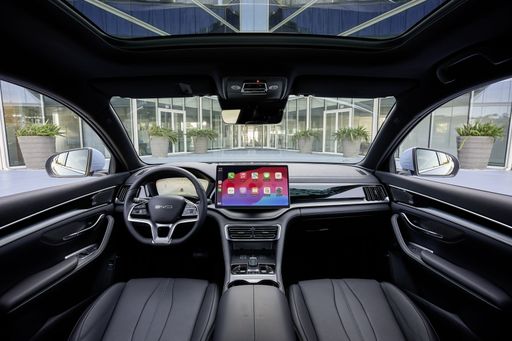
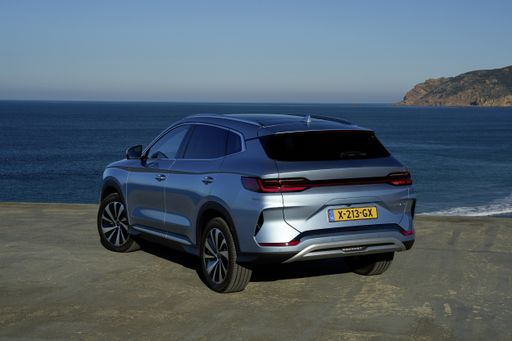
When it comes to choosing an SUV that balances performance, innovation, and practicality, the comparison between the BYD Seal U and the Citroën C5 Aircross is compelling. Both vehicles offer an assortment of features and performance dynamics that cater to different consumer needs. This article delves into the technical specifications, innovations, and unique characteristics of both models.
C5 Aircross

Design and Dimensions

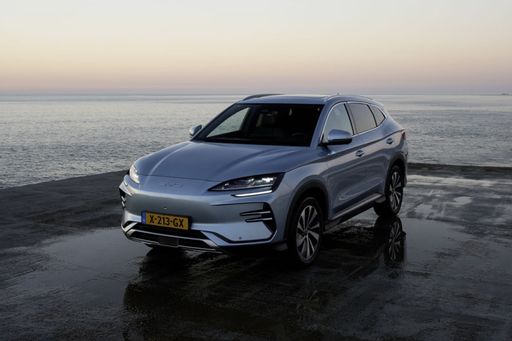
The BYD Seal U displays a modern and edgy design typical of contemporary SUVs, stretching to a length of 4775 mm and a width of 1890 mm, featuring a height of 1670 mm. This spacious body design allows for a roomy cabin that comfortably seats five passengers.

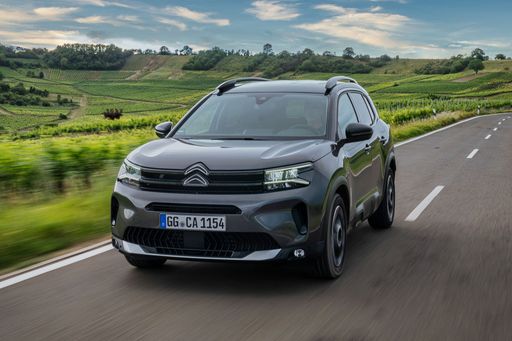
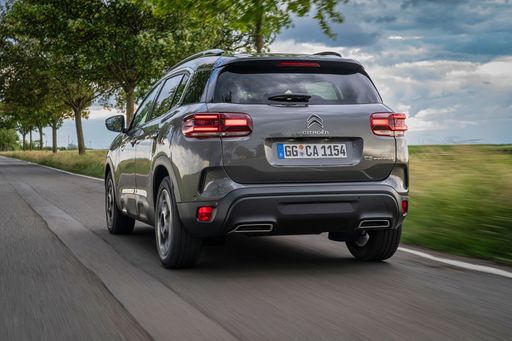
On the other hand, the Citroën C5 Aircross is slightly more compact, measuring 4500 mm in length and 1859 mm in width, with a height of 1688 mm. It also accommodates five passengers, with a roomy interior that is designed to focus on comfort and relaxational features.

Seal U

Performance Specifications

The performance of the BYD Seal U is impressive, offering options between plug-in hybrid and electric engines. It boasts a power output ranging from 218 HP to 324 HP, with torque figures reaching up to 550 Nm. Acceleration from 0-100 km/h takes as little as 5.9 seconds in its most powerful configuration, while the electric range reaches up to 500 km, making it suitable for long journeys.

In contrast, the Citroën C5 Aircross offers a blend of petrol, diesel, and plug-in hybrid powertrains, with outputs between 131 HP and 224 HP. The most potent variant can accelerate from 0-100 km/h in 8.9 seconds. However, the electric range is limited to just 58 km, which may affect its appeal for those looking for comprehensive electric capabilities.

C5 Aircross

Fuel Efficiency and Environmental Impact

The BYD Seal U excels in fuel efficiency, with a consumption rate of as low as 0.9 L/100km for its plug-in hybrid variant and an impressive efficiency of 19.9 kWh/100 km when in electric mode. The CO2 emissions range markedly from 0 g/km for its electric option to 20 g/km for hybrid configurations.

On the flip side, the C5 Aircross records a fuel consumption of around 5.5 L/100 km for its diesel variant, while its plug-in hybrid option can reduce consumption to just 1.4 L/100 km. CO2 emissions are higher, with outputs ranging from 32 g/km to 144 g/km depending on the engine choice.

Seal U

Technology and Innovations

Innovation takes center stage in the BYD Seal U, which is equipped with advanced features such as a comprehensive infotainment system, regenerative braking, and cutting-edge safety technologies. These enhancements not only improve driving experience but also promote energy conservation, particularly in electric mode.

The Citroën C5 Aircross incorporates numerous driver-assist systems and a user-friendly touchscreen interface, which elevates the overall driving experience. However, while it is well-equipped with modern technology, it may not match the high-tech prowess employed in BYD's latest offerings.

C5 Aircross

Comfort and Versatility

In terms of comfort, the BYD Seal U offers a well-designed interior with ample space and user-centric design. The trunk capacity of 425 to 552 L complements its passenger comfort, adding a layer of practicality for everyday use.

The C5 Aircross arguably takes comfort to a higher level with its plush materials and ergonomic seating, along with a trunk capacity of up to 580 L, making it ideal for families or long trips. The adjustable rear seats add versatility to the SUV, allowing for an improved optimization of cargo space.

Conclusion: Which One to Choose?

In the battle of the BYD Seal U versus Citroën C5 Aircross, the decision hinges largely on the buyer's preferences and lifestyle. If you're seeking a high-performance electric SUV with exceptional efficiency, the BYD Seal U stands out as an innovative choice. However, if comfort and traditional versatility in a compact structure are paramount, the Citroën C5 Aircross presents an appealing proposition.

Ultimately, both vehicles encapsulate unique attributes that cater to varying driver needs. It is essential for potential buyers to assess their primary requirements regarding power, efficiency, and comfort before making a decision.

Here’s where it gets real: The technical differences in detail

Seal U

Costs and Efficiency:

Looking at overall running costs, both models reveal some interesting differences in everyday economy.

Citroen C5 Aircross is slightly cheaper – starting at 29,100 £ , while the BYD Seal U costs 34,300 £ . That’s a price difference of around 5,143 £.

In terms of energy consumption, the BYD Seal U is substantially more efficient: consuming 12.1 kWh/100km compared to 17 kWh/100km for the Citroen C5 Aircross. That’s a difference of about 4.9 kWh/100km.

As for electric range, the Citroen C5 Aircross offers only slightly more range – reaching up to 520 km, about 20 km more than the BYD Seal U.

C5 Aircross

Engine and Performance:

Under the bonnet, it becomes clear which model is tuned for sportiness and which one takes the lead when you hit the accelerator.

When it comes to engine power, the BYD Seal U offers visibly more power – delivering 324 HP compared to 225 HP. That’s roughly 99 HP more horsepower.

When accelerating from 0 to 100 km/h, the BYD Seal U is substantially quicker – completing the sprint in 5.9 s, while the Citroen C5 Aircross takes 8.3 s. That’s about 2.4 s quicker.

There’s also a difference in torque: the BYD Seal U delivers considerably more torque with 550 Nm compared to 300 Nm. That’s about 250 Nm more.

Seal U

Space and Everyday Use:

Cabin size, boot volume and payload all play a role in everyday practicality. Here, comfort and flexibility make the difference.

Both vehicles offer seating for 5 people.

In terms of curb weight, Citroen C5 Aircross is slightly lighter – 1,629 kg compared to 1,940 kg. The difference is around 311 kg.

Looking at boot space, the Citroen C5 Aircross offers barely more boot space – 565 L compared to 552 L. That’s a difference of about 13 L.

When it comes to payload, the Citroen C5 Aircross carries a bit more – 471 kg compared to 410 kg. That’s a difference of about 61 kg.

Who wins the race in the data check?

The BYD Seal U holds a decisive overall lead in the objective data comparison.
This result only shows which model scores more points on paper – not which of the two cars feels right for you.

from £34,300
Seal U

BYD Seal U

  • Engine Type Electric, Plugin Hybrid
  • Transmission Automatic
  • Drive Type Front-Wheel Drive, All-Wheel Drive
  • Power HP 218 - 324 HP
  • Consumption kWh/100km 12.1 - 20.5 kWh/100km
  • Electric Range 70 - 500 km
BYD Seal U
Citroen C5 Aircross

Costs and Consumption

View detailed analysis

Engine and Performance

View detailed analysis

Dimensions and Body

View detailed analysis

BYD Seal U

The BYD Seal U is a sleek electric fastback that blends sporty styling with a roomy, tech-focused interior, making it an appealing choice for buyers who want electric performance without sacrificing comfort. It delivers a smooth, composed ride and intuitive features, positioning it as a practical yet modern option in the EV market.

details

Citroen C5 Aircross

The Citroën C5 Aircross feels like a sofa on wheels, delivering a calm, floaty ride and clever packaging that makes life with luggage and kids noticeably easier. Quirky French styling and a supremely practical, family-focused cabin mean it quietly wins hearts by prioritising comfort over showroom bravado.

details
BYD Seal U
Citroen C5 Aircross

Costs and Consumption

Price
34,300 - 39,800 £
Price
29,100 - 43,000 £
Consumption L/100km
-
Consumption L/100km
2.5 - 5.4 L/100km
Consumption kWh/100km
12.1 - 20.5 kWh/100km
Consumption kWh/100km
17 kWh/100km
Electric Range
70 - 500 km
Electric Range
81 - 520 km
Battery Capacity
-
Battery Capacity
-
co2
0 - 71 g/km
co2
0 - 121 g/km
Fuel tank capacity
-
Fuel tank capacity
-

Dimensions and Body

Body Type
SUV
Body Type
SUV
Seats
5
Seats
5
Doors
-
Doors
-
Curb weight
1,940 - 2,147 kg
Curb weight
1,629 - 2,184 kg
Trunk capacity
425 - 552 L
Trunk capacity
565 L
Length
-
Length
-
Width
1,890 mm
Width
1,870 mm
Height
-
Height
-
Max trunk capacity
-
Max trunk capacity
-
Payload
410 kg
Payload
446 - 471 kg

Engine and Performance

Engine Type
Electric, Plugin Hybrid
Engine Type
Petrol MHEV, Electric, Plugin Hybrid
Transmission
Automatic
Transmission
Automatic
Transmission Detail
Reduction Gearbox, Automatic Gearbox
Transmission Detail
Dual-Clutch Automatic, Reduction Gearbox
Drive Type
Front-Wheel Drive, All-Wheel Drive
Drive Type
Front-Wheel Drive
Power HP
218 - 324 HP
Power HP
145 - 225 HP
Acceleration 0-100km/h
5.9 - 9.6 s
Acceleration 0-100km/h
8.3 - 11.2 s
Max Speed
-
Max Speed
-
Torque
300 - 550 Nm
Torque
230 - 300 Nm
Number of Cylinders
4
Number of Cylinders
3 - 4
Power kW
160 - 238 kW
Power kW
107 - 165 kW
Engine capacity
1,497 - 1,498 cm3
Engine capacity
1,199 - 1,598 cm3

General

Model Year
2,024 - 2,026
Model Year
2,025 - 2,026
CO2 Efficiency Class
A, B
CO2 Efficiency Class
D, A, B
Brand
BYD
Brand
Citroen
DriveDuel uses data analysis and artificial intelligence to evaluate vehicle data and create content. Content is regularly reviewed and improved. The displayed prices are estimates based on German list prices, adjusted to the respective country’s VAT. Country-specific registration taxes are not included. This information is not legally binding.