VS

BYD Seal U vs Honda CR-V comparison

Compare performance (324 HP vs 184 HP), boot space and price (34,300 £ vs 42,800 £ ) at a glance. Find out which car is the better choice for you – BYD Seal U or Honda CR-V?

BYD Seal U vs Honda CR-V: Key differences

BYD Seal U

4.1 (7 Reviews)
rate
  • visibly cheaper
  • substantially more power
  • clearly more electric range
  • significantly quicker 0–100 km/h

Honda CR-V

4.8 (2 Reviews)
rate
  • marginally lighter
  • a bit more trunk space

All details on performance, efficiency, range and trunk space can be found in the technical comparison below – including user reviews for both models.

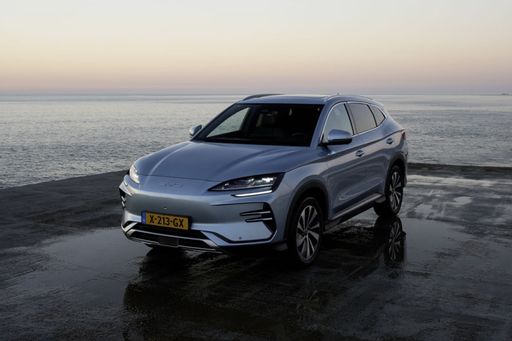
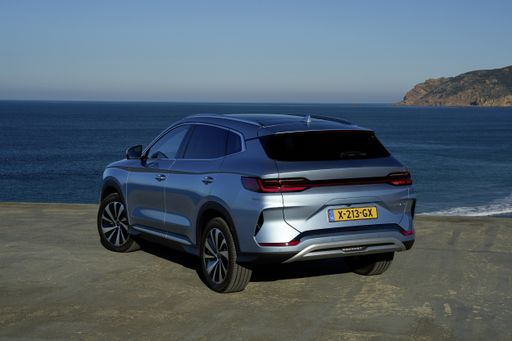
Seal U

A Game of Innovation: BYD Seal U vs. Honda CR-V

In the ever-evolving automotive landscape, two SUVs stand out for their groundbreaking innovations and technical prowess: the BYD Seal U and the Honda CR-V. Both vehicles are packed with advanced features, offering a perfect blend of performance, efficiency, and practicality. In this comparison, we delve into the technical aspects and groundbreaking innovations that define these two contenders.
CR-V

Power and Performance

The BYD Seal U and Honda CR-V each cater to distinct driving preferences. The BYD Seal U offers both plug-in hybrid and electric options, with power outputs ranging from 218 to 324 horsepower and torque figures reaching up to a striking 550 Nm. This power is distributed through either a front-wheel or all-wheel-drive system, accommodating diverse driving conditions.

On the other hand, the Honda CR-V showcases a full hybrid and plug-in hybrid system with a maximum power output of 184 horsepower and torque of 335 Nm. While marginally less powerful than its counterpart, the CR-V compensates with refined efficiency, maintaining a smooth and responsive drive through its all-wheel or front-wheel-drive options.

Seal U

Efficiency and Range

Efficiency is at the heart of both models, but they approach it uniquely. The BYD Seal U impresses with its low fuel consumption, ranging from 0.9 to 1.2 L/100km and an electric consumption of 19.9 to 20.5 kWh/100km. Its electric range varies significantly, with top figures reaching up to 500 km, perfect for drivers seeking extensive all-electric travel capability.

Meanwhile, the Honda CR-V offers an equally competitive fuel consumption rate of 6 to 6.7 L/100km for its hybrid models and 0.8 L/100km in plug-in hybrid mode. It provides a notable electric range of 79 km, catering well to daily commutes while offering the flexibility of hybrid power for longer trips.

CR-V

Design and Dimensions

Both SUVs exhibit distinct dimensions and design philosophies. The BYD Seal U measures between 4775 to 4785 mm in length, with a width of 1890 mm, and it stands at around 1668 to 1670 mm in height. It provides a modern aesthetic with a spacious interior, accommodating up to five passengers comfortably.

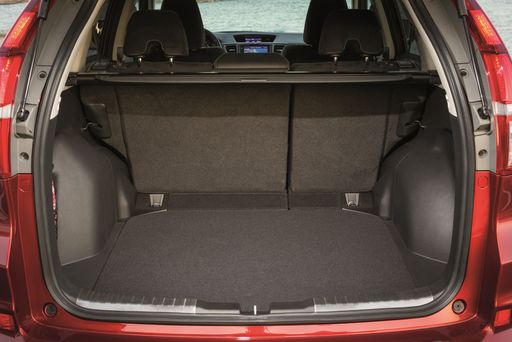
The Honda CR-V, slightly more compact, stretches up to 4706 mm in length, 1866 mm in width, and stands at 1673 to 1684 mm in height. It optimizes interior space with a commendable trunk capacity, ranging from 579 to 617 liters, ensuring ample storage for various lifestyle needs.

Seal U

Innovations in Technology

BYD's Seal U is synonymous with technological sophistication. Utilizing a cutting-edge CVT or Reduction Gearbox, it promises seamless power delivery and enhanced driving dynamics. The car's CO2 efficiency class ranges from A to B, showcasing its commitment to eco-friendly motoring.

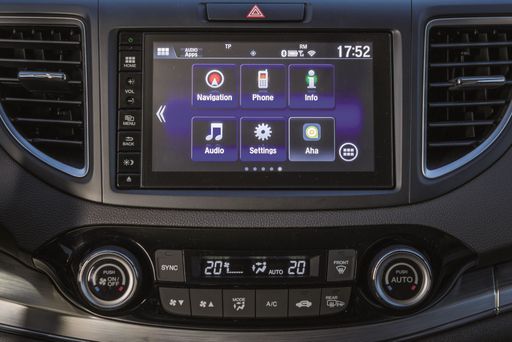
The Honda CR-V brings its own set of innovations to the table, featuring advanced hybrid technology and an intuitive CVT transmission. It ensures driver convenience and safety with a suite of intelligent features, maintaining its position as a beloved family-oriented SUV.

CR-V

Conclusion

Choosing between the BYD Seal U and Honda CR-V ultimately depends on personal preference and driving priorities. The BYD Seal U appeals to those seeking a blend of high electric range and formidable power, while the Honda CR-V caters to drivers favoring efficiency, practicality, and advanced hybrid technology. Both SUVs exemplify the future of automotive design, each making a compelling case in the competitive landscape of modern SUVs.

Here’s where it gets real: The technical differences in detail

Seal U

Costs and Efficiency:

Price and efficiency are key factors when choosing a car – and this is often where the real differences emerge.

BYD Seal U is visibly cheaper – starting at 34,300 £ , while the Honda CR-V costs 42,800 £ . That’s a price difference of around 8,494 £.

As for electric range, the BYD Seal U offers clearly more range – reaching up to 500 km, about 422 km more than the Honda CR-V.

CR-V

Engine and Performance:

Under the bonnet, it becomes clear which model is tuned for sportiness and which one takes the lead when you hit the accelerator.

When it comes to engine power, the BYD Seal U offers substantially more power – delivering 324 HP compared to 184 HP. That’s roughly 140 HP more horsepower.

When accelerating from 0 to 100 km/h, the BYD Seal U is significantly quicker – completing the sprint in 5.9 s, while the Honda CR-V takes 9 s. That’s about 3.1 s quicker.

There’s also a difference in torque: the BYD Seal U delivers markedly more torque with 550 Nm compared to 335 Nm. That’s about 215 Nm more.

Seal U

Space and Everyday Use:

Whether family car or daily driver – which one offers more room, flexibility and comfort?

Both vehicles offer seating for 5 people.

In terms of curb weight, Honda CR-V is marginally lighter – 1,821 kg compared to 1,940 kg. The difference is around 119 kg.

Looking at boot space, the Honda CR-V offers a bit more boot space – 617 L compared to 552 L. That’s a difference of about 65 L.

When it comes to payload, the Honda CR-V carries slightly more – 475 kg compared to 410 kg. That’s a difference of about 65 kg.

Who wins the race in the data check?

The BYD Seal U is far ahead overall in the objective data comparison.
This result only shows which model scores more points on paper – not which of the two cars feels right for you.

from £34,300
Seal U

BYD Seal U

  • Engine Type : Electric, Plugin Hybrid
  • Transmission : Automatic
  • Drive Type : Front-Wheel Drive, All-Wheel Drive
  • Power HP : 218 - 324 HP
  • Consumption kWh/100km : 12.1 - 20.5 kWh/100km
  • Electric Range : 70 - 500 km
BYD Seal U
Honda CR-V

Costs and Consumption

View detailed analysis

Engine and Performance

View detailed analysis

Dimensions and Body

View detailed analysis

BYD Seal U

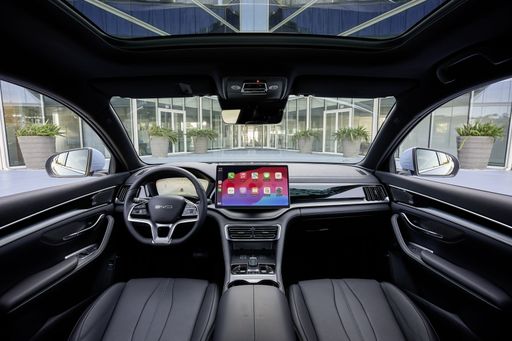
The BYD Seal U pairs a sleek fastback silhouette with a surprisingly roomy, tech-rich cabin, giving electric chic without the showroom pretension. It's a smart pick for buyers after confident handling, sensible practicality and standout value — all wrapped up with a cheeky grin when you put your foot down.

details

Honda CR-V

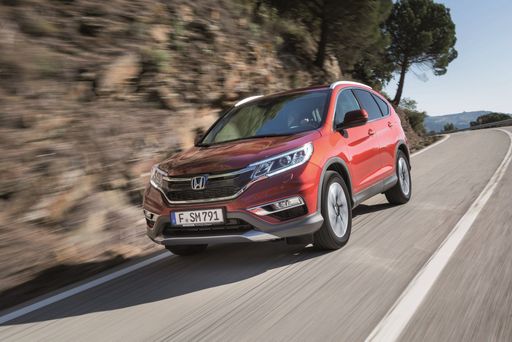
The Honda CR-V blends sensible practicality with a polished feel, offering roomy interiors and a confident ride that keeps commutes and weekend escapes equally comfortable. Its unshowy styling and reliable reputation make it a smart, low‑drama choice for buyers who want versatility without fuss — the kind of car that quietly makes everyday life a little easier.

details
BYD Seal U
Honda CR-V

Costs and Consumption

Price
34,300 - 39,800 £
Price
42,800 - 52,100 £
Consumption L/100km
-
Consumption L/100km
2.6 - 6.7 L/100km
Consumption kWh/100km
12.1 - 20.5 kWh/100km
Consumption kWh/100km
-
Electric Range
70 - 500 km
Electric Range
78 km
Battery Capacity
-
Battery Capacity
-
co2
0 - 71 g/km
co2
59 - 152 g/km
Fuel tank capacity
-
Fuel tank capacity
-

Dimensions and Body

Body Type
SUV
Body Type
SUV
Seats
5
Seats
5
Doors
5
Doors
-
Curb weight
1,940 - 2,147 kg
Curb weight
1,821 - 1,988 kg
Trunk capacity
425 - 552 L
Trunk capacity
579 - 617 L
Length
4,785 mm
Length
-
Width
1,890 mm
Width
1,866 mm
Height
1,668 mm
Height
-
Max trunk capacity
1,440 L
Max trunk capacity
-
Payload
410 kg
Payload
439 - 475 kg

Engine and Performance

Engine Type
Electric, Plugin Hybrid
Engine Type
Full Hybrid, Plugin Hybrid
Transmission
Automatic
Transmission
Automatic
Transmission Detail
Reduction Gearbox, Automatic Gearbox
Transmission Detail
CVT
Drive Type
Front-Wheel Drive, All-Wheel Drive
Drive Type
Front-Wheel Drive, All-Wheel Drive
Power HP
218 - 324 HP
Power HP
184 HP
Acceleration 0-100km/h
5.9 - 9.6 s
Acceleration 0-100km/h
9 - 9.5 s
Max Speed
175 km/h
Max Speed
-
Torque
300 - 550 Nm
Torque
335 Nm
Number of Cylinders
4
Number of Cylinders
4
Power kW
160 - 238 kW
Power kW
135 kW
Engine capacity
1,497 - 1,498 cm3
Engine capacity
1,993 cm3

General

Model Year
2,024 - 2,026
Model Year
2,025
CO2 Efficiency Class
A, B
CO2 Efficiency Class
D, E, B
Brand
BYD
Brand
Honda
DriveDuel uses data analysis and artificial intelligence to evaluate vehicle data and create content. Content is regularly reviewed and improved. The displayed prices are estimates based on German list prices, adjusted to the respective country’s VAT. Country-specific registration taxes are not included. This information is not legally binding.