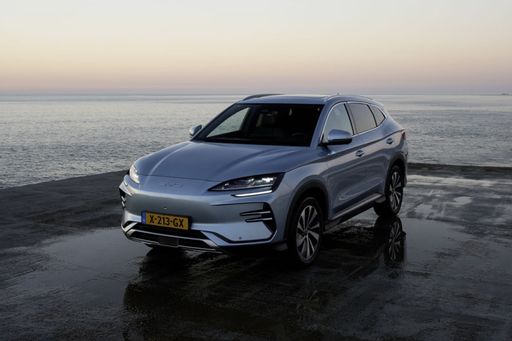
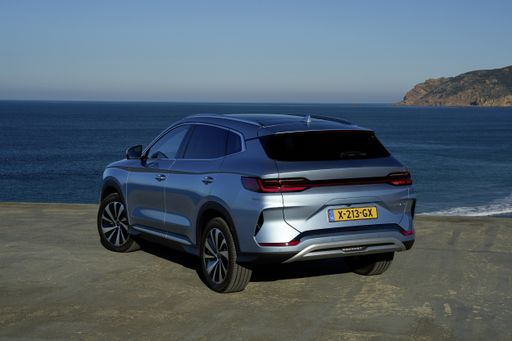
@ BYD Auto / BYD Global Media
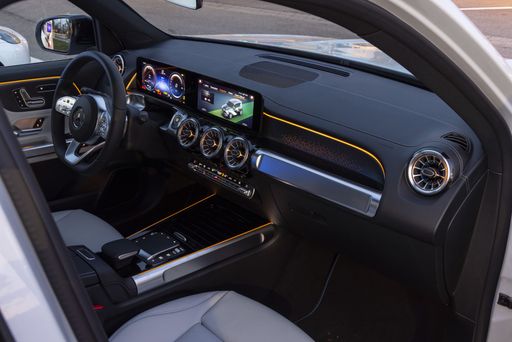
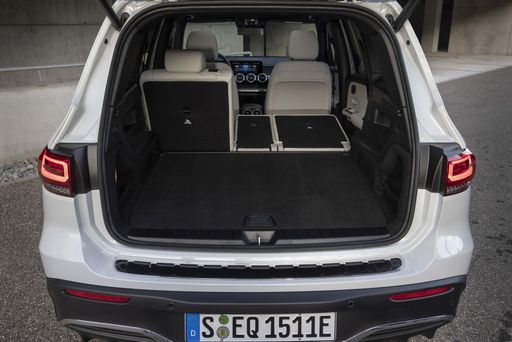
@ Mercedes-Benz Group Media
VS

BYD Seal U vs Mercedes EQB – Differences & prices compared

Everyday use, family trips or long-distance drives – here’s where the differences show.
Discover whether BYD Seal U or Mercedes EQB fits your lifestyle better.

BYD Seal U

5 (2 Reviews)
rate

Mercedes EQB

3 (1 Reviews)
rate

You can find all user reviews further down on this page.

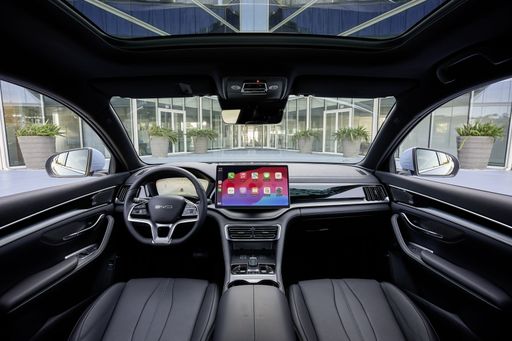
Seal U @ BYD Auto / BYD Global Media

Battle of the Green Giants: BYD Seal U VS Mercedes EQB

In the ever-evolving landscape of electric and hybrid vehicles, two contenders stand out in the SUV category: the BYD Seal U and the Mercedes EQB. Both model-year 2024/2025 vehicles present impressive features and deliver a unique driving experience, but which one truly reigns supreme when it comes to innovation, performance, and practicality? Let's delve into the technical details and innovations of these eco-friendly giants.
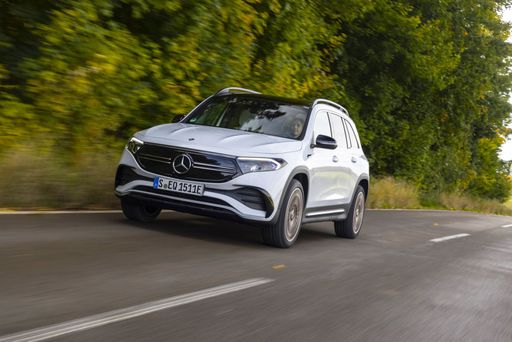
EQB @ Mercedes-Benz Group Media

Performance and Power

The BYD Seal U offers versatility with its plug-in hybrid and fully electric versions. The plug-in hybrid brings a commendable engine capacity of 1498 cm3 and outputs power ranging from 218 to 324 HP. Enthusiasts can enjoy an acceleration from 0 to 100 km/h in an impressive 5.9 seconds for the top version. The Seal U also boasts a range of torque settings between 300 to 550 Nm, providing varying power delivery styles suited to different driving preferences.

On the other hand, the Mercedes EQB is a pure electric vehicle with power output options spanning from 190 to 292 HP. The EQB delivers swift acceleration, with the fastest model reaching 100 km/h from standstill in just 6.2 seconds. With torque options between 385 and 520 Nm, it assures a robust driving experience, all while maintaining environmental sustainability with zero CO2 emissions.

Seal U @ BYD Auto / BYD Global Media

Range and Efficiency

The BYD Seal U combines the best of both worlds, offering fuel consumption as low as 1.2 L/100 km and electric consumption of around 19.9 kWh/100 km. The electric range varies from 70 to 500 km, depending on the version, enabling flexibility for short city commutes and longer road trips alike.

Mercedes' EQB stands out with its pure electric range, stretching from 445 to 533 km thanks to a sizeable 70.5 kWh battery capacity. This ensures fewer stops and longer journeys, making it a compelling option for those prioritizing extensive travel without compromising the environment.

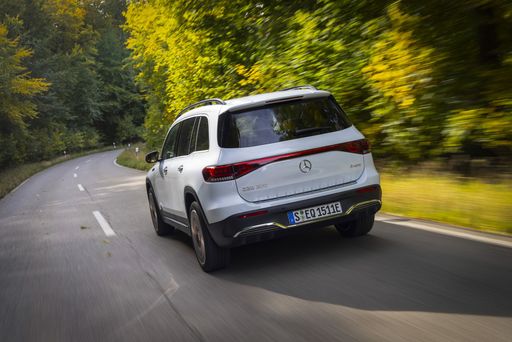
EQB @ Mercedes-Benz Group Media

Innovations and Features

Both SUVs emphasize sustainability, not just through their engines but also within the overall vehicle design. BYD has incorporated advanced aerodynamics and a user-friendly interior design, featuring a notable trunk capacity of up to 552 liters, making it ideal for family adventures.

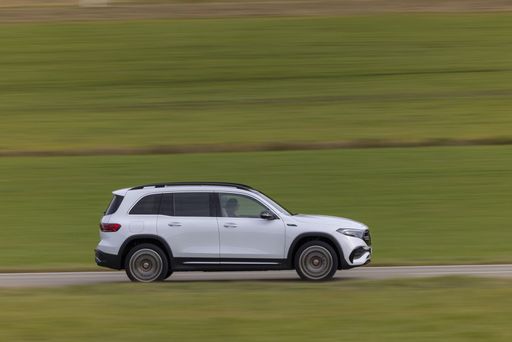
Mercedes brings luxury and innovation into the EQB with features including automatic transmissions with a reduction gearbox. It provides a generous trunk storage capacity of 495 liters, emphasizing practicality without sacrificing style or comfort. The added bonus of all-wheel drive gives the EQB a leading edge in drive stability and control.

Seal U @ BYD Auto / BYD Global Media

Conclusion

Choosing between the BYD Seal U and the Mercedes EQB comes down to individual priorities. The Seal U is highly versatile with its hybrid and electric offerings, combining power with efficiency. Conversely, the EQB provides a luxury experience matched with a pure electric ethos. Both vehicles signify a significant step towards greener motoring, with each providing distinct advantages tailored to different kinds of drivers.

Here’s where it gets real: The technical differences in detail

EQB @ Mercedes-Benz Group Media

Costs and Efficiency:

When it comes to price and running costs, the biggest differences usually appear. This is often where you see which car fits your budget better in the long run.

BYD Seal U has a noticeable advantage in terms of price – it starts at 34300 £, while the Mercedes EQB costs 45900 £. That’s a price difference of around 11592 £.

In terms of energy consumption, the advantage goes to the Mercedes EQB: with 15.20 kWh per 100 km, it’s noticeable more efficient than the BYD Seal U with 19.90 kWh. That’s a difference of about 4.70 kWh.

As for range, the Mercedes EQB performs hardly perceptible better – achieving up to 535 km, about 35 km more than the BYD Seal U.

Engine and Performance:

Under the bonnet, it becomes clear which model is tuned for sportiness and which one takes the lead when you hit the accelerator.

When it comes to engine power, the BYD Seal U has a barely noticeable edge – offering 324 HP compared to 292 HP. That’s roughly 32 HP more horsepower.

In acceleration from 0 to 100 km/h, the BYD Seal U is slight quicker – completing the sprint in 5.90 s, while the Mercedes EQB takes 6.20 s. That’s about 0.30 s faster.

In terms of top speed, the BYD Seal U performs a bit better – reaching 180 km/h, while the Mercedes EQB tops out at 160 km/h. The difference is around 20 km/h.

There’s also a difference in torque: BYD Seal U pulls hardly perceptible stronger with 550 Nm compared to 520 Nm. That’s about 30 Nm difference.

Space and Everyday Use:

Beyond pure performance, interior space and usability matter most in daily life. This is where you see which car is more practical and versatile.

Both vehicles offer seating for 5 people.

In curb weight, BYD Seal U is minimal lighter – 1940 kg compared to 2105 kg. The difference is around 165 kg.

In terms of boot space, the BYD Seal U offers to a small extent more room – 552 L compared to 495 L. That’s a difference of about 57 L.

In maximum load capacity, the Mercedes EQB performs to a small extent better – up to 1710 L, which is about 245 L more than the BYD Seal U.

When it comes to payload, Mercedes EQB hardly perceptible takes the win – 435 kg compared to 410 kg. That’s a difference of about 25 kg.

Who comes out on top?

Overall, the BYD Seal U shows itself to be shows small but notable strengths and secures the title of DriveDuel Champion.
It convinces with the more balanced overall package and proves to be the more versatile choice for everyday use.

BYD Seal U
Mercedes EQB

Costs and Consumption

View detailed analysis

Engine and Performance

View detailed analysis

Dimensions and Body

View detailed analysis
from about £34,300
Seal U @ BYD Auto / BYD Global Media

BYD Seal U

  • Engine Type : Plugin Hybrid, Electric
  • Transmission : Automatic
  • Drive Type : Front-Wheel Drive, All-Wheel Drive
  • Power HP : 218 - 324 HP
  • Consumption L/100km : 0.4 - 1.2 L
  • Consumption kWh/100km : 19.9 - 20.5 kWh
  • Electric Range : 70 - 500 km

BYD Seal U

5 (2 Reviews)
rate

The BYD Seal U pairs a sleek fastback silhouette with a surprisingly roomy, tech-rich cabin, giving electric chic without the showroom pretension. It's a smart pick for buyers after confident handling, sensible practicality and standout value — all wrapped up with a cheeky grin when you put your foot down.

details

Mercedes EQB

3 (1 Reviews)
rate

The Mercedes EQB is an electric compact SUV that dresses Mercedes' premium feel in practical clothing, with flexible seating and a serene, composed ride that turns everyday errands into a small luxury. It won't thrill the enthusiast, but for buyers who want a smart, spacious and well-made EV with tasteful tech and real-world usability, the EQB is a sensible, slightly buttoned-up choice that impresses without shouting.

details
BYD Seal U
Mercedes EQB
Seal U @ BYD Auto / BYD Global Media
EQB @ Mercedes-Benz Group Media

Costs and Consumption

Price
34300 - 39800 £
Price
45900 - 58900 £
Consumption L/100km
0.4 - 1.2 L
Consumption L/100km
-
Consumption kWh/100km
19.9 - 20.5 kWh
Consumption kWh/100km
15.2 - 17.2 kWh
Electric Range
70 - 500 km
Electric Range
468 - 535 km
Battery Capacity
-
Battery Capacity
70.50 kWh
co2
0 - 26 g/km
co2
0 g/km
Fuel tank capacity
60 L
Fuel tank capacity
-

Dimensions and Body

Body Type
SUV
Body Type
SUV
Seats
5
Seats
5
Doors
5
Doors
5
Curb weight
1940 - 2147 kg
Curb weight
2105 - 2170 kg
Trunk capacity
425 - 552 L
Trunk capacity
495 L
Length
4775 - 4785 mm
Length
4684 mm
Width
1890 mm
Width
1834 mm
Height
1668 - 1670 mm
Height
1654 - 1689 mm
Max trunk capacity
1440 - 1465 L
Max trunk capacity
1710 L
Payload
410 kg
Payload
435 kg

Engine and Performance

Engine Type
Plugin Hybrid, Electric
Engine Type
Electric
Transmission
Automatic
Transmission
Automatic
Transmission Detail
CVT, Reduction Gearbox
Transmission Detail
Reduction Gearbox
Drive Type
Front-Wheel Drive, All-Wheel Drive
Drive Type
Front-Wheel Drive, All-Wheel Drive
Power HP
218 - 324 HP
Power HP
190 - 292 HP
Acceleration 0-100km/h
5.9 - 9.6 s
Acceleration 0-100km/h
6.2 - 8.9 s
Max Speed
170 - 180 km/h
Max Speed
160 km/h
Torque
300 - 550 Nm
Torque
385 - 520 Nm
Number of Cylinders
4
Number of Cylinders
-
Power kW
160 - 238 kW
Power kW
140 - 215 kW
Engine capacity
1497 - 1498 cm3
Engine capacity
-

General

Model Year
2024
Model Year
2024 - 2025
CO2 Efficiency Class
B, A
CO2 Efficiency Class
A
Brand
BYD
Brand
Mercedes-Benz
What drive types are available for the BYD Seal U?

The BYD Seal U is available as Front-Wheel Drive or All-Wheel Drive.

The prices and data displayed are estimates based on German list prices and may vary by country. This information is not legally binding.