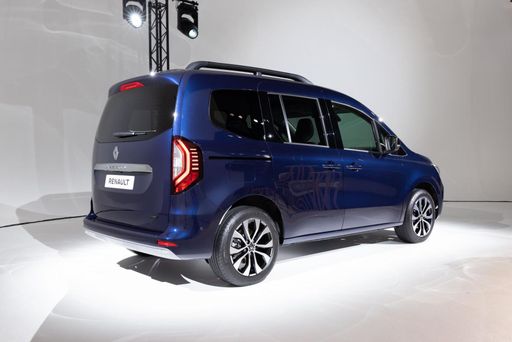
VS

Citroen Berlingo vs Renault Kangoo Compact Van comparison

Compare performance (136 HP vs 122 HP), boot space and price (20,300 £ vs 25,200 £ ) at a glance. Find out which car is the better choice for you – Citroen Berlingo or Renault Kangoo Compact Van?

Citroen Berlingo vs Renault Kangoo Compact Van: Key differences

Citroen Berlingo

  • clearly cheaper
  • slightly more power
  • slightly more efficient
  • moderately more electric range
  • marginally quicker 0–100 km/h
  • moderately lighter
details

Renault Kangoo Compact Van

details

By Achim Sedelmaier

Berlingo

In the competitive realm of compact commercial vehicles, the Citroen Berlingo and Renault Kangoo Kleintransporter stand out as popular choices among businesses and individual users alike. Both models offer a blend of practicality, efficiency, and innovative features tailored for transporting goods and people. In this article, we'll dive into a detailed comparison, shedding light on their technical specifications, innovations, and overall value.
Kangoo Compact Van

Design and Dimensions

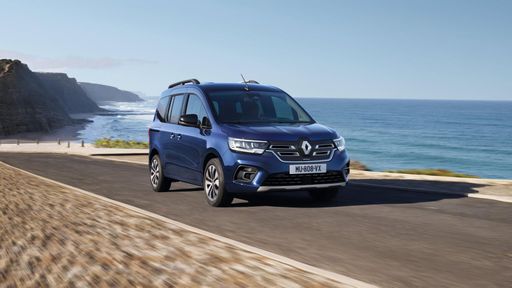
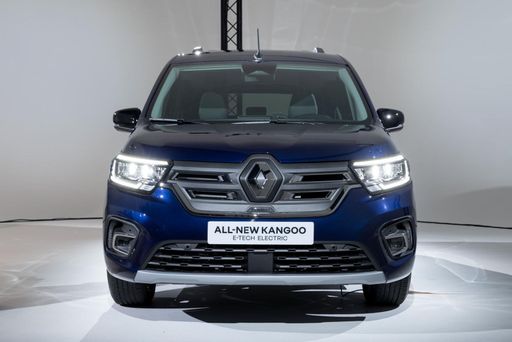
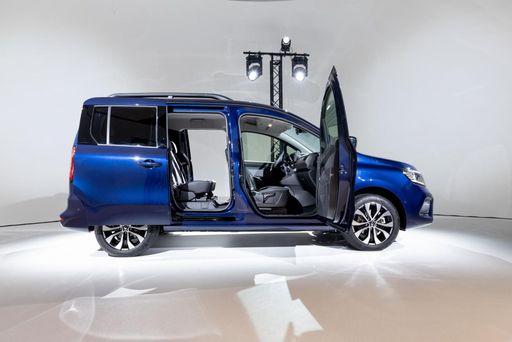
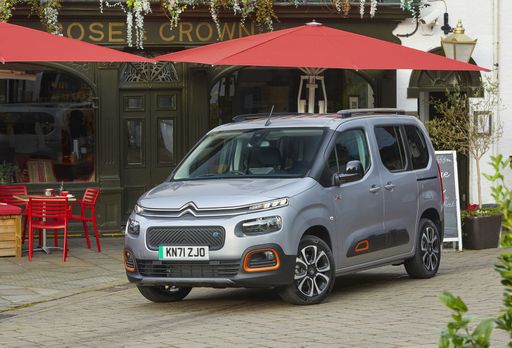
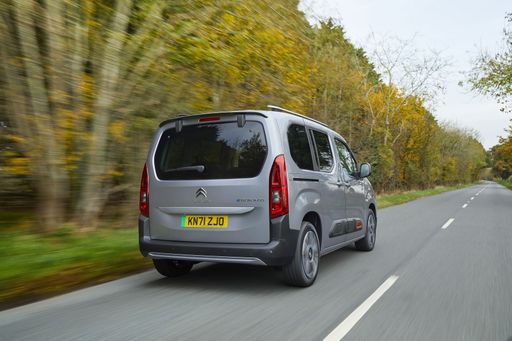
The Citroen Berlingo presents itself as a high-roofed wagon with a versatile body type, featuring dimensions of 4403mm in length and 1844mm in height. On the other hand, the Renault Kangoo Kleintransporter adopts a more traditional cargo van shape, stretching to a greater length of 4486mm and standing slightly taller at 1864mm. Both vehicles prioritize practicality, but the Berlingo’s height enhances its interior space, making it an excellent choice for carrying larger items.

Berlingo

Engine and Performance

Under the hood, the Berlingo offers a wide array of engine options including Diesel, Petrol, and Electric, with power outputs ranging from 102 to 136 HP. The integration of both manual and automatic transmissions enhances user choice, allowing for a tailored driving experience. The Kangoo Kleintransporter mirrors this versatility with similarly varied engine types, producing power levels from 75 to 130 HP. With slightly higher torque figures, the Kangoo tends to deliver a more robust performance under load, a crucial factor for commercial users.

Kangoo Compact Van

Fuel Efficiency and Emissions

Fuel consumption is a significant consideration for any commercial vehicle. The Citroen Berlingo exhibits impressive efficiency with figures as low as 5.3 L/100km for diesel variants, while its electric version can achieve up to 345 km on a single charge with a battery capacity of 46 kWh. The Renault Kangoo Kleintransporter shows slightly higher figures, with a best consumption of 4.9 L/100km and an electric range of up to 293 km with its 44 kWh battery. Both vehicles demonstrate compliance with modern emission standards, appealing to eco-conscious consumers.

Berlingo

Interior and Cargo Space

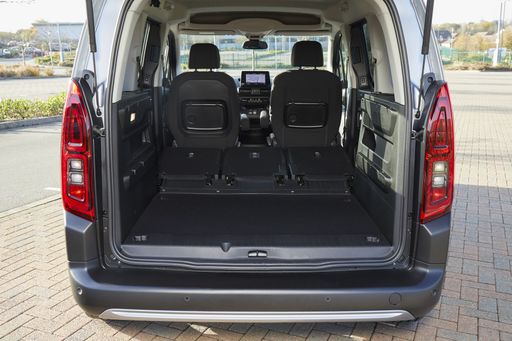
The interior configuration of the Berlingo allows it to seat up to 5 passengers, making it a family-friendly option in addition to its commercial uses. The cargo space is generous with a trunk capacity that can reach 1050 liters, ideal for transporting larger items. Conversely, the Kangoo Kleintransporter, designed primarily as a two-seater cargo van, offers a functional payload capacity ranging from 508 kg to as high as 748 kg. In terms of practicality, the Berlingo shines, but for heavy-duty work, the Kangoo might be the preferable choice due to its focus on cargo capabilities.

Kangoo Compact Van

Innovations and Technology

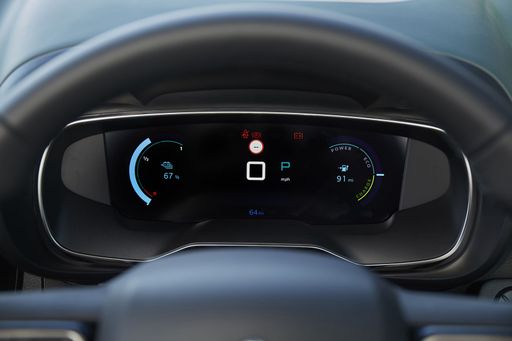
Both models come packed with innovative technologies aimed at enhancing the user experience. The Citroen Berlingo includes advanced infotainment systems with smartphone integration and safety features such as advanced braking systems and rear-view cameras. Additionally, the model year 2024 ushers in improved driving dynamics and user interfaces. Meanwhile, the Renault Kangoo Kleintransporter highlights its smart load management systems and offers features like a dual-clutch automatic transmission for seamless gear shifts. Innovations in both vehicles reflect the manufacturers' commitment to modernizing the driving experience within this segment.

Berlingo

Conclusion

Choosing between the Citroen Berlingo and the Renault Kangoo Kleintransporter fundamentally depends on specific user needs. For those requiring a versatile van with spacious seating and advanced technologies, the Berlingo stands out. However, businesses focused on maximizing payload capacity and requiring robust performance may find the Kangoo to be the better fit. Ultimately, both vehicles present compelling options, cementing their spots as top contenders in the compact commercial vehicle market.

Here’s where it gets real: The technical differences in detail

Berlingo

Costs and Efficiency:

When it comes to price and running costs, the biggest differences usually appear. This is often where you see which car fits your budget better in the long run.

Citroen Berlingo is clearly cheaper – starting at 20,300 £ , while the Renault Kangoo Compact Van costs 25,200 £ . That’s a price difference of around 4,842 £.

Both cars consume an average of 5.3 L/100km – no difference here.

In terms of energy consumption, the Citroen Berlingo is slightly more efficient: consuming 18 kWh/100km compared to 20.5 kWh/100km for the Renault Kangoo Compact Van. That’s a difference of about 2.5 kWh/100km.

As for electric range, the Citroen Berlingo offers moderately more range – reaching up to 343 km, about 59 km more than the Renault Kangoo Compact Van.

Kangoo Compact Van

Engine and Performance:

Power, torque and acceleration are the classic benchmarks for car enthusiasts – and here, some clear differences start to show.

When it comes to engine power, the Citroen Berlingo offers slightly more power – delivering 136 HP compared to 122 HP. That’s roughly 14 HP more horsepower.

When accelerating from 0 to 100 km/h, the Citroen Berlingo is marginally quicker – completing the sprint in 11.2 s, while the Renault Kangoo Compact Van takes 12.3 s. That’s about 1.1 s quicker.

There’s also a difference in torque: the Citroen Berlingo delivers only slightly more torque with 300 Nm compared to 270 Nm. That’s about 30 Nm more.

Berlingo

Space and Everyday Use:

Cabin size, boot volume and payload all play a role in everyday practicality. Here, comfort and flexibility make the difference.

Seats: Citroen Berlingo offers more seats – 7 vs 5.

In terms of curb weight, Citroen Berlingo is moderately lighter – 1,476 kg compared to 1,639 kg. The difference is around 163 kg.

When it comes to payload, the Renault Kangoo Compact Van carries barely more – 901 kg compared to 840 kg. That’s a difference of about 61 kg.

Who wins the race in the data check?

The Citroen Berlingo holds a decisive overall lead in the objective data comparison.
This result only shows which model scores more points on paper – not which of the two cars feels right for you.

from £20,300
Berlingo

Citroen Berlingo

  • Engine Type Electric, Diesel, Petrol
  • Transmission Automatic, Manuel
  • Drive Type Front-Wheel Drive
  • Power HP 102 - 136 HP
  • Consumption L/100km 5.3 - 6.3 L/100km
  • Consumption kWh/100km 18 - 18.7 kWh/100km
  • Electric Range 334 - 343 km
Citroen Berlingo
Renault Kangoo Compact Van

Costs and Consumption

View detailed analysis

Engine and Performance

View detailed analysis

Dimensions and Body

View detailed analysis

Citroen Berlingo

The Citroën Berlingo is a charming, practical MPV that blends everyday versatility with a comfy ride and clever storage tricks that make life easier for families and small businesses. It won’t star in a sports-car ad, but its sensible layout, enormous load flexibility and friendly demeanor mean it often wins on plain common sense — perfect for school runs, weekend escapes and the odd IKEA mission.

details

Renault Kangoo Compact Van

The Renault Kangoo is a practical, no-nonsense compact van that turns urban deliveries and weekend DIY runs into a surprisingly easy chore. Roomy for its size, comfortable to drive and brimming with smart storage solutions, it’s a sensible pick for anyone who needs honest utility without drama.

details
Citroen Berlingo
Renault Kangoo Compact Van

Costs and Consumption

Price
20,300 - 34,900 £
Price
25,200 - 37,000 £
Consumption L/100km
5.3 - 6.3 L/100km
Consumption L/100km
5.3 - 5.5 L/100km
Consumption kWh/100km
18 - 18.7 kWh/100km
Consumption kWh/100km
20.5 - 20.6 kWh/100km
Electric Range
334 - 343 km
Electric Range
279 - 284 km
Battery Capacity
-
Battery Capacity
-
co2
0 - 151 g/km
co2
0 - 151 g/km
Fuel tank capacity
-
Fuel tank capacity
-

Dimensions and Body

Body Type
High Roof Estate
Body Type
Cargo Van
Seats
5 - 7
Seats
2 - 5
Doors
-
Doors
-
Curb weight
1,476 - 1,922 kg
Curb weight
1,639 - 1,910 kg
Trunk capacity
775 - 1,050 L
Trunk capacity
-
Length
-
Length
-
Width
1,848 mm
Width
1,860 mm
Height
-
Height
-
Max trunk capacity
-
Max trunk capacity
-
Payload
509 - 840 kg
Payload
670 - 901 kg

Engine and Performance

Engine Type
Electric, Diesel, Petrol
Engine Type
Diesel, Electric
Transmission
Automatic, Manuel
Transmission
Manuel, Automatic
Transmission Detail
Reduction Gearbox, Manual Gearbox, Automatic Gearbox
Transmission Detail
Manual Gearbox, Dual-Clutch Automatic, Reduction Gearbox
Drive Type
Front-Wheel Drive
Drive Type
Front-Wheel Drive
Power HP
102 - 136 HP
Power HP
95 - 122 HP
Acceleration 0-100km/h
11.2 - 14.3 s
Acceleration 0-100km/h
12.3 - 14.4 s
Max Speed
-
Max Speed
-
Torque
205 - 300 Nm
Torque
245 - 270 Nm
Number of Cylinders
3 - 4
Number of Cylinders
4
Power kW
75 - 100 kW
Power kW
70 - 90 kW
Engine capacity
1,199 - 1,499 cm3
Engine capacity
1,461 cm3

General

Model Year
2,024 - 2,026
Model Year
2024
CO2 Efficiency Class
A, E
CO2 Efficiency Class
E, A
Brand
Citroen
Brand
Renault
DriveDuel uses data analysis and artificial intelligence to evaluate vehicle data and create content. Content is regularly reviewed and improved. The displayed prices are estimates based on German list prices, adjusted to the respective country’s VAT. Country-specific registration taxes are not included. This information is not legally binding.