VS

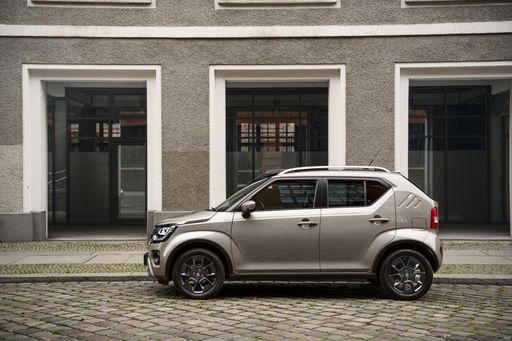
Citroen C3 Aircross vs Suzuki Ignis comparison

Compare performance (145 HP vs 83 HP), boot space and price (16,200 £ vs 15,600 £ ) at a glance. Find out which car is the better choice for you – Citroen C3 Aircross or Suzuki Ignis?

Citroen C3 Aircross vs Suzuki Ignis: Key differences

Citroen C3 Aircross

4.4 (1 Reviews)
rate
  • considerably more power
  • barely quicker 0–100 km/h
  • substantially more trunk space
details

Suzuki Ignis

4.7 (1 Reviews)
rate
  • very slightly cheaper
  • only slightly more efficient
  • substantially lighter
details

By Achim Sedelmaier

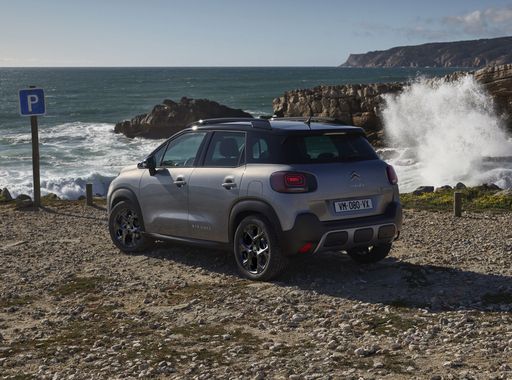
C3 Aircross

Comparing Urban Adventurers: Citroën C3 Aircross vs Suzuki Ignis

In the modern automotive landscape, compact crossovers and SUVs have carved out a niche for urban dwellers looking for versatility without compromising on style or efficiency. Among the many contenders, the Citroën C3 Aircross and the Suzuki Ignis stand out by offering a mix of practicality, innovation, and design. But how do they stack up against each other? Let’s dive into a detailed comparison of these two exciting models.
Ignis

Dimensions and Design

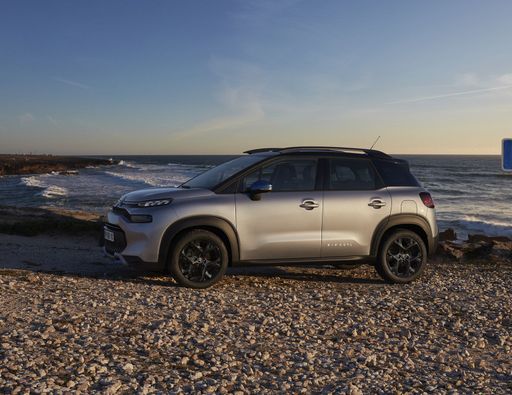
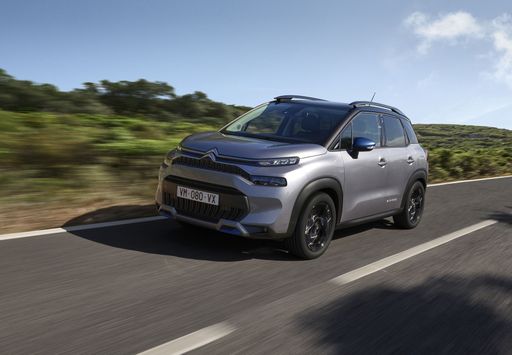
The Citroën C3 Aircross, with a length of 4,395 mm, width of 1,795 mm, and height of 1,660 mm, embodies an SUV presence that feels both robust and modern. Its design is characterized by expressive lines and a higher driving position that ensures excellent visibility.

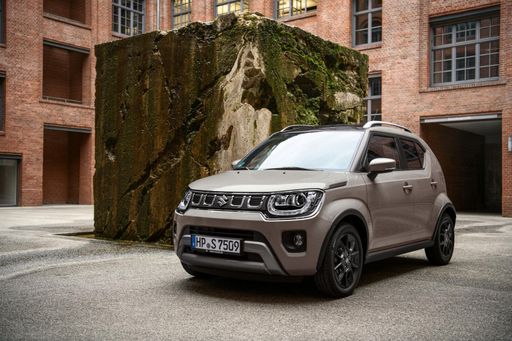
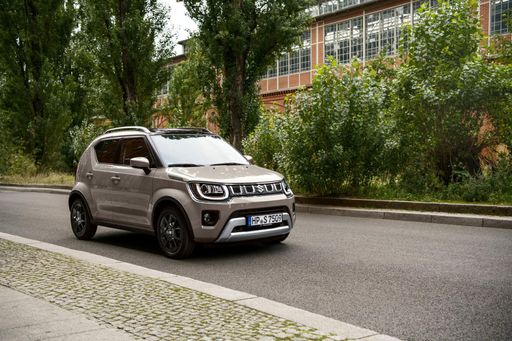
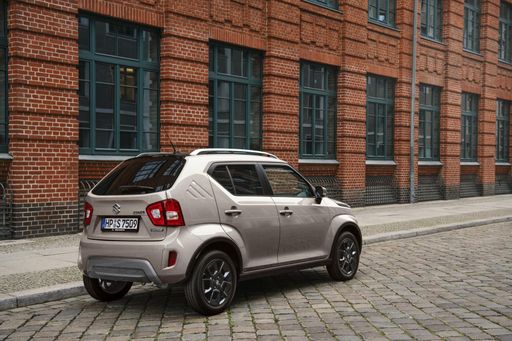
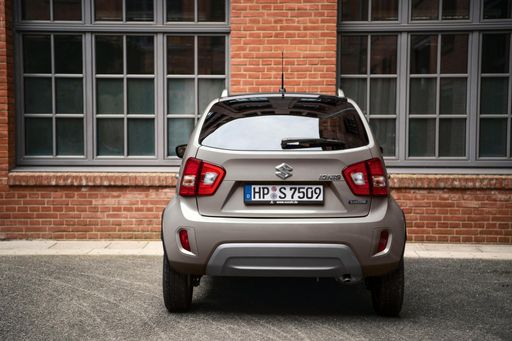
On the other hand, the Suzuki Ignis is more compact, measuring 3,700 mm in length, 1,690 mm in width, and 1,605 mm in height. While smaller in stature, the Ignis showcases a quirky, youthful design that appeals to a different demographic. Its compact form is perfect for city driving and parking, making it a strong candidate for urban use.

C3 Aircross

Performance and Powertrains

When it comes to performance, the Citroën C3 Aircross offers a range of engine options, including a petrol MHEV (Mild Hybrid Electric Vehicle) variant with outputs up to 136 HP. With an automatic dual-clutch transmission option available, the Aircross can accelerate from 0 to 100 km/h in as little as 11 seconds, making it relatively brisk for its class.

In comparison, the Suzuki Ignis is equipped with a petrol MHEV engine producing 83 HP, with an acceleration time of approximately 12.7 seconds. While not as powerful as the C3 Aircross, the Ignis compensates with an impressive fuel consumption of between 4.9 to 5.4 L/100km, showcasing its efficiency in urban environments.

Ignis

Technology and Innovations

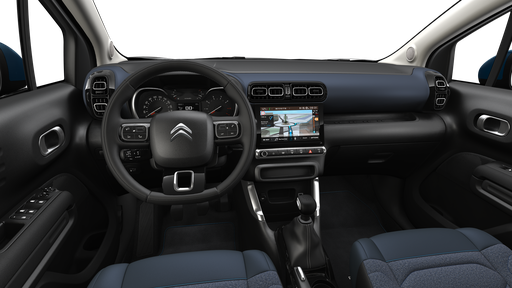
The Citroën C3 Aircross incorporates modern technology with its infotainment system featuring a touchscreen interface, smartphone connectivity, and available driver assistance systems. Its innovative approach extends to the comfort features, which include customizable interior configurations and ample trunk space of 460 liters, ideal for family outings or weekend adventures.

In contrast, the Suzuki Ignis may not have all the bells and whistles of its Citroën counterpart, but it houses a practical infotainment system and smart safety features suited for daily commutes. Its trunk space ranges from 204 to 267 liters depending on configuration, which while less than the C3 Aircross, still reflects the model's emphasis on maximizing utility in a smaller package.

C3 Aircross

Driving Experience and Comfort

The driving experience in the Citroën C3 Aircross offers a higher ride comfort with its well-tuned suspension that smooths out road imperfections, making it ideal for longer drives out of the city. Its spacious cabin ensures that both front and rear passengers have a comfortable experience, thanks to five-seat capacity.

Meanwhile, the Suzuki Ignis, with its lighter curb weight ranging from 935 to 995 kg, feels agile around the city. The nimble handling and compact dimensions allow for effortless maneuvering in tight spaces, though the comfort level may not match the C3 Aircross during longer journeys due to its smaller setup.

Ignis

Environmental Impact and Efficiency

Both models take steps toward environmental responsibility. The Citroën C3 Aircross showcases a respectable CO2 efficiency class ranging from A to E, depending on engine choice, with emissions between 125 to 139 g/km. Its electric variant also boasts a range of around 303 to 306 km for drivers seeking sustainable options.

The Suzuki Ignis also stands out for its eco-friendliness, with lower CO2 emissions rated between 110 and 122 g/km, making it a great choice for eco-conscious consumers. Its lower fuel tank capacity of 30 to 32 liters, coupled with excellent fuel efficiency, ensures fewer trips to the pump.

C3 Aircross

Conclusion: Choosing the Right SUV

Ultimately, the choice between the Citroën C3 Aircross and the Suzuki Ignis boils down to individual priorities. If you’re looking for a versatile SUV that can handle family trips with ample cargo space and luxurious comfort, the C3 Aircross is an excellent choice. However, if urban agility, efficiency, and a quirky character are at the forefront of your requirements, the Suzuki Ignis has its own compelling advantages.

Both models represent an appealing balance between practicality and style, ensuring that whether you lean towards the C3 Aircross or the Ignis, you’ll be well-equipped for the adventures that lie ahead.

Here’s where it gets real: The technical differences in detail

C3 Aircross

Costs and Efficiency:

When it comes to price and running costs, the biggest differences usually appear. This is often where you see which car fits your budget better in the long run.

Suzuki Ignis is very slightly cheaper – starting at 15,600 £ , while the Citroen C3 Aircross costs 16,200 £ . That’s a price difference of around 583 £.

Fuel consumption also shows a difference: the Suzuki Ignis uses 4.9 L/100km and is only slightly more efficient than the Citroen C3 Aircross with 5.3 L/100km. The difference is about 0.4 L/100km.

Ignis

Engine and Performance:

Power, torque and acceleration say a lot about how a car feels on the road. This is where you see which model delivers more driving dynamics.

When it comes to engine power, the Citroen C3 Aircross offers considerably more power – delivering 145 HP compared to 83 HP. That’s roughly 62 HP more horsepower.

When accelerating from 0 to 100 km/h, the Citroen C3 Aircross is barely quicker – completing the sprint in 12.3 s, while the Suzuki Ignis takes 12.7 s. That’s about 0.4 s quicker.

There’s also a difference in torque: the Citroen C3 Aircross delivers significantly more torque with 230 Nm compared to 107 Nm. That’s about 123 Nm more.

C3 Aircross

Space and Everyday Use:

Cabin size, boot volume and payload all play a role in everyday practicality. Here, comfort and flexibility make the difference.

Both vehicles offer seating for 5 people.

In terms of curb weight, Suzuki Ignis is substantially lighter – 935 kg compared to 1,312 kg. The difference is around 377 kg.

Looking at boot space, the Citroen C3 Aircross offers substantially more boot space – 460 L compared to 267 L. That’s a difference of about 193 L.

When it comes to payload, the Citroen C3 Aircross carries somewhat more – 462 kg compared to 395 kg. That’s a difference of about 67 kg.

Who wins the race in the data check?

The Citroen C3 Aircross is far ahead overall in the objective data comparison.
This result only shows which model scores more points on paper – not which of the two cars feels right for you.

from £16,200
C3 Aircross

Citroen C3 Aircross

  • Engine Type : Electric, Petrol, Petrol MHEV
  • Transmission : Automatic, Manuel
  • Drive Type : Front-Wheel Drive
  • Power HP : 101 - 145 HP
  • Consumption L/100km : 5.3 - 5.9 L/100km
  • Consumption kWh/100km : 16.1 - 18.1 kWh/100km
  • Electric Range : 307 - 400 km
Citroen C3 Aircross
Suzuki Ignis

Costs and Consumption

View detailed analysis

Engine and Performance

View detailed analysis

Dimensions and Body

View detailed analysis

Citroen C3 Aircross

The Citroën C3 Aircross is a cheeky compact SUV that trades bland conformity for playful French character and clever practicality, ideal if you want a car with personality. It soaks up city life with a comfortable ride, inventive cabin tricks and a look that turns heads without asking for attention.

details

Suzuki Ignis

The Suzuki Ignis is a cheeky compact crossover that turns city chores into cheerful adventures, with chunky styling and a surprisingly practical cabin. It won't pretend to be a sports car, but its nimble manners, low running costs and ample personality make it an ideal pick for urban buyers who want fun without pretension.

details
Citroen C3 Aircross
Suzuki Ignis

Costs and Consumption

Price
16,200 - 28,900 £
Price
15,600 - 19,500 £
Consumption L/100km
5.3 - 5.9 L/100km
Consumption L/100km
4.9 - 5.4 L/100km
Consumption kWh/100km
16.1 - 18.1 kWh/100km
Consumption kWh/100km
-
Electric Range
307 - 400 km
Electric Range
-
Battery Capacity
-
Battery Capacity
-
co2
0 - 134 g/km
co2
110 - 122 g/km
Fuel tank capacity
-
Fuel tank capacity
30 - 32 L

Dimensions and Body

Body Type
SUV
Body Type
SUV
Seats
5
Seats
4 - 5
Doors
-
Doors
5
Curb weight
1,312 - 1,608 kg
Curb weight
935 - 995 kg
Trunk capacity
460 L
Trunk capacity
204 - 267 L
Length
-
Length
3,700 mm
Width
1,795 mm
Width
1,690 mm
Height
-
Height
1,605 mm
Max trunk capacity
-
Max trunk capacity
1,086 - 1,100 L
Payload
407 - 462 kg
Payload
335 - 395 kg

Engine and Performance

Engine Type
Electric, Petrol, Petrol MHEV
Engine Type
Petrol MHEV
Transmission
Automatic, Manuel
Transmission
Manuel, Automatic
Transmission Detail
Reduction Gearbox, Manual Gearbox, Dual-Clutch Automatic
Transmission Detail
Manual Gearbox, CVT
Drive Type
Front-Wheel Drive
Drive Type
Front-Wheel Drive, All-Wheel Drive
Power HP
101 - 145 HP
Power HP
83 HP
Acceleration 0-100km/h
12.3 - 13 s
Acceleration 0-100km/h
12.7 - 12.8 s
Max Speed
-
Max Speed
155 - 165 km/h
Torque
125 - 230 Nm
Torque
107 Nm
Number of Cylinders
3
Number of Cylinders
4
Power kW
74 - 107 kW
Power kW
61 kW
Engine capacity
1,199 cm3
Engine capacity
1,197 cm3

General

Model Year
2,024 - 2,026
Model Year
2020
CO2 Efficiency Class
A, D
CO2 Efficiency Class
C, D
Brand
Citroen
Brand
Suzuki
DriveDuel uses data analysis and artificial intelligence to evaluate vehicle data and create content. Content is regularly reviewed and improved. The displayed prices are estimates based on German list prices, adjusted to the respective country’s VAT. Country-specific registration taxes are not included. This information is not legally binding.