VS

Citroen C3 vs Fiat 500 comparison

Compare performance (113 HP vs 118 HP), boot space and price (13,700 £ vs 17,100 £ ) at a glance. Find out which car is the better choice for you – Citroen C3 or Fiat 500?

Citroen C3 vs Fiat 500: Key differences

Citroen C3

4.9 (2 Reviews)
rate
  • noticeably cheaper
  • only slightly more efficient
  • substantially more trunk space
details

Fiat 500

3.7 (1 Reviews)
rate
  • very slightly more power
  • visibly more efficient
  • very slightly more electric range
  • moderately quicker 0–100 km/h
  • barely lighter
details

All details on performance, efficiency, range and trunk space can be found in the technical comparison below – including user reviews for both models.

By Achim Sedelmaier

C3

Citroen C3 vs Fiat 500: A Clash of Stylish Efficiency

In the ever-evolving automotive world, the demand for compact, efficient, and stylish vehicles is at an all-time high. Two contenders that perfectly fit this mold are the Citroen C3 and the Fiat 500. These vehicles cater to modern drivers who prioritize practicality without sacrificing style. But how do they stack up against each other in terms of technical aspects and innovations? Let's take a closer look.
500

Powertrain and Performance

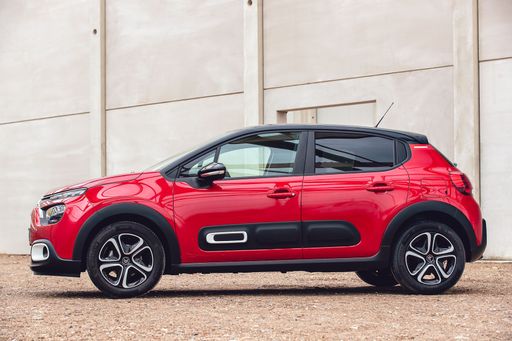
The Citroen C3 is an SUV that offers a variety of engine types, including petrol, electric, and a petrol mild hybrid. With a maximum power of 113 HP and the ability to accelerate from 0-100 km/h in just 9.9 seconds, the C3 strikes a balance between performance and efficiency. It's equipped with a front-wheel-drive system and offers both manual and dual-clutch automatic transmissions.

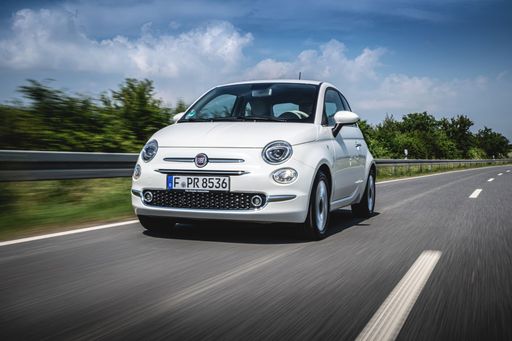
In contrast, the Fiat 500 is a purely electric hatchback, available in different power variants up to 118 HP, with an impressively quick 0-100 km/h acceleration of 9 seconds. It features a singular automatic transmission type—a reduction gearbox—and also uses a front-wheel-drive system. The compact nature of the 500 does not detract from its performance, showcasing a maximum speed of up to 150 km/h.

C3

Efficiency and Range

For eco-conscious drivers, the Citroen C3’s electric variant offers an electric range of up to 326 km, with energy consumption figures hovering around 17.1 kWh/100km. Its petrol version also offers reasonable efficiency with consumptions of 5.5 L/100km and CO2 emissions of 123 g/km, achieving a respectable balance between power and economy.

The Fiat 500, on the other hand, excels in energy efficiency with consumption rates as low as 13 kWh/100km and a capable electric range of up to 321 km. Its fully electric nature means it produces zero emissions, earning an A in CO2 efficiency class. For dedicated green drivers, the Fiat 500 stands out as a top contender in the urban vehicle segment.

500

Design and Dimensions

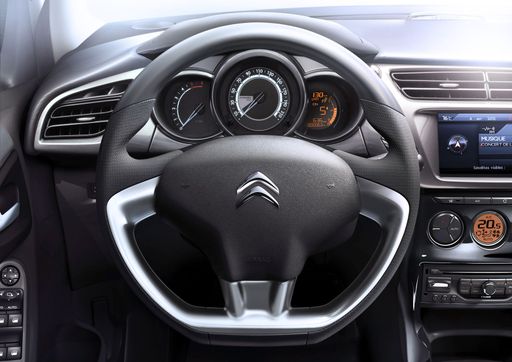
Standing at a length of 4015 mm, the Citroen C3's SUV stature offers spacious interiors with seating for up to five, and a trunk capacity of 310 liters, making it ideal for small families or those needing extra cargo space. Its modern design aesthetic runs through both the exterior and interior, providing a comfortable and stylish drive.

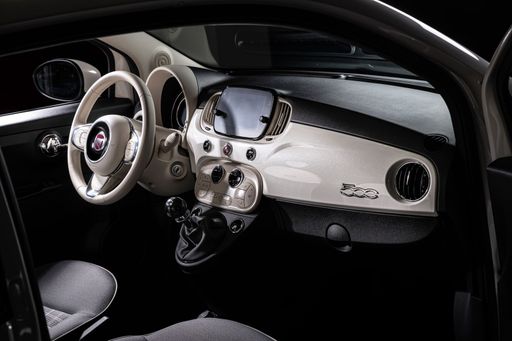
Conversely, the Fiat 500 is quintessentially compact with a length of 3632 mm and designed for maneuverability in tight urban spaces. Although it seats only four, its charm lies in its retro-inspired, chic design and agility. Its smaller trunk capacity of 185 liters speaks to its focus on optimizing passenger comfort over cargo space.

C3

Final Verdict

Both the Citroen C3 and the Fiat 500 have forged their niches within the automotive market. The C3 is an excellent choice for those requiring flexibility with petrol and electric options, more space, and versatility often sought by urban families. Meanwhile, the Fiat 500 caters to drivers looking for a stylish, eco-friendly, and compact solution for city living, where ease of parking and efficiency reign supreme.

Ultimately, choosing between the two will depend on individual lifestyle and preferences. Whether it's the Citroen C3's all-around practicality or the Fiat 500's iconic design and eco-efficiency, both cars represent the future of modern urban driving.

Here’s where it gets real: The technical differences in detail

C3

Costs and Efficiency:

Price and efficiency are often the first things buyers look at. Here it becomes clear which model has the long-term edge – whether at the pump, the plug, or in purchase price.

Citroen C3 is noticeably cheaper – starting at 13,700 £ , while the Fiat 500 costs 17,100 £ . That’s a price difference of around 3,429 £.

Fuel consumption also shows a difference: the Citroen C3 uses 5 L/100km and is only slightly more efficient than the Fiat 500 with 5.2 L/100km. The difference is about 0.2 L/100km.

In terms of energy consumption, the Fiat 500 is visibly more efficient: consuming 13 kWh/100km compared to 16.7 kWh/100km for the Citroen C3. That’s a difference of about 3.7 kWh/100km.

As for electric range, the Fiat 500 offers very slightly more range – reaching up to 331 km, about 6 km more than the Citroen C3.

500

Engine and Performance:

Power, torque and acceleration are the classic benchmarks for car enthusiasts – and here, some clear differences start to show.

When it comes to engine power, the Fiat 500 offers very slightly more power – delivering 118 HP compared to 113 HP. That’s roughly 5 HP more horsepower.

When accelerating from 0 to 100 km/h, the Fiat 500 is moderately quicker – completing the sprint in 9 s, while the Citroen C3 takes 9.9 s. That’s about 0.9 s quicker.

There’s also a difference in torque: the Fiat 500 delivers barely more torque with 220 Nm compared to 205 Nm. That’s about 15 Nm more.

C3

Space and Everyday Use:

Cabin size, boot volume and payload all play a role in everyday practicality. Here, comfort and flexibility make the difference.

Seats: Citroen C3 offers more seats – 5 vs 4.

In terms of curb weight, Fiat 500 is barely lighter – 1,130 kg compared to 1,226 kg. The difference is around 96 kg.

Looking at boot space, the Citroen C3 offers substantially more boot space – 310 L compared to 185 L. That’s a difference of about 125 L.

When it comes to payload, the Citroen C3 carries noticeably more – 423 kg compared to 325 kg. That’s a difference of about 98 kg.

Who wins the race in the data check?

The Citroen C3 is far ahead overall in the objective data comparison.
This result only shows which model scores more points on paper – not which of the two cars feels right for you.

from £13,700
C3

Citroen C3

  • Engine Type : Electric, Petrol, Petrol MHEV
  • Transmission : Automatic, Manuel
  • Drive Type : Front-Wheel Drive
  • Power HP : 101 - 113 HP
  • Consumption L/100km : 5 - 5.6 L/100km
  • Consumption kWh/100km : 16.7 - 17.2 kWh/100km
  • Electric Range : 212 - 325 km
Citroen C3
Fiat 500

Costs and Consumption

View detailed analysis

Engine and Performance

View detailed analysis

Dimensions and Body

View detailed analysis

Citroen C3

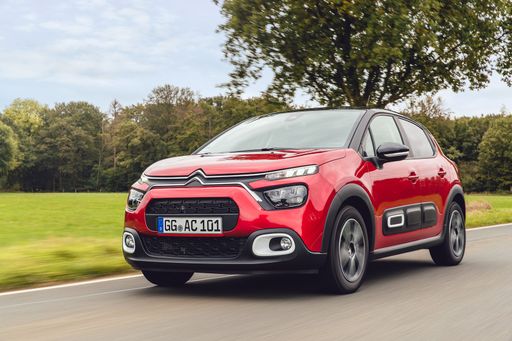
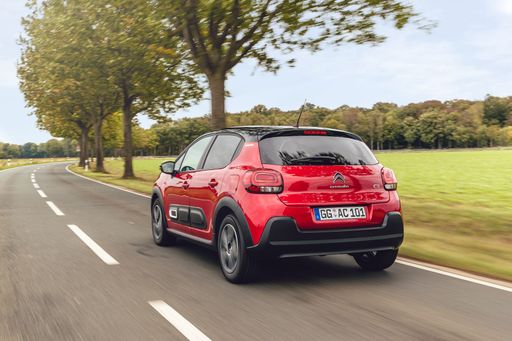
The Citroën C3 is a cheeky little city car that turns heads with its bold, quirky styling and a surprisingly comfy, well-thought-out interior. It’s an ideal companion for urban life — easy to park, friendly to drive and built to make everyday trips feel a bit more fun without breaking the bank.

details

Fiat 500

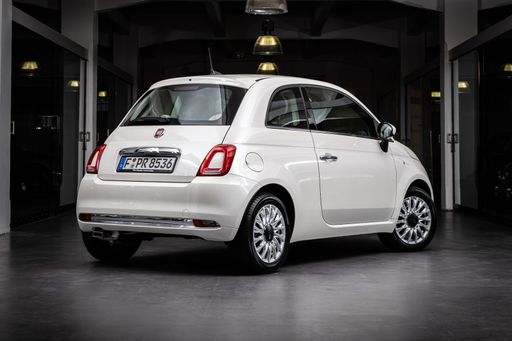
The Fiat 500 is a cheeky, retro‑styled city car that turns heads with its iconic looks and playful personality. Perfect for weaving through tight streets and easing into tiny parking spots, it’s aimed at buyers who want style and character more than grand touring prowess.

details
Citroen C3
Fiat 500

Costs and Consumption

Price
13,700 - 24,600 £
Price
17,100 - 27,400 £
Consumption L/100km
5 - 5.6 L/100km
Consumption L/100km
5.2 - 5.3 L/100km
Consumption kWh/100km
16.7 - 17.2 kWh/100km
Consumption kWh/100km
13 - 14.7 kWh/100km
Electric Range
212 - 325 km
Electric Range
190 - 331 km
Battery Capacity
-
Battery Capacity
-
co2
0 - 126 g/km
co2
0 - 121 g/km
Fuel tank capacity
-
Fuel tank capacity
-

Dimensions and Body

Body Type
SUV
Body Type
Hatchback
Seats
2 - 5
Seats
4
Doors
-
Doors
-
Curb weight
1,226 - 1,518 kg
Curb weight
1,130 - 1,475 kg
Trunk capacity
310 L
Trunk capacity
183 - 185 L
Length
-
Length
-
Width
1,755 mm
Width
1,683 - 1,684 mm
Height
-
Height
-
Max trunk capacity
-
Max trunk capacity
-
Payload
227 - 423 kg
Payload
250 - 325 kg

Engine and Performance

Engine Type
Electric, Petrol, Petrol MHEV
Engine Type
Electric, Petrol MHEV
Transmission
Automatic, Manuel
Transmission
Automatic, Manuel
Transmission Detail
Reduction Gearbox, Manual Gearbox, Dual-Clutch Automatic
Transmission Detail
Reduction Gearbox, Manual Gearbox
Drive Type
Front-Wheel Drive
Drive Type
Front-Wheel Drive
Power HP
101 - 113 HP
Power HP
65 - 118 HP
Acceleration 0-100km/h
9.9 - 12 s
Acceleration 0-100km/h
9 - 16.2 s
Max Speed
-
Max Speed
-
Torque
120 - 205 Nm
Torque
92 - 220 Nm
Number of Cylinders
3
Number of Cylinders
3
Power kW
74 - 83 kW
Power kW
48 - 87 kW
Engine capacity
1,199 cm3
Engine capacity
999 cm3

General

Model Year
2,024 - 2,026
Model Year
2025
CO2 Efficiency Class
A, D, C
CO2 Efficiency Class
A, D
Brand
Citroen
Brand
Fiat
DriveDuel uses data analysis and artificial intelligence to evaluate vehicle data and create content. Content is regularly reviewed and improved. The displayed prices are estimates based on German list prices, adjusted to the respective country’s VAT. Country-specific registration taxes are not included. This information is not legally binding.