@ Citroën / Stellantis Media
VS

Citroen C4 vs Citroen C5 Aircross – Which model is better for everyday use?

Both models have their strengths – but which one suits you more?
Compare performance, efficiency, price and space directly: Citroen C4 or Citroen C5 Aircross?

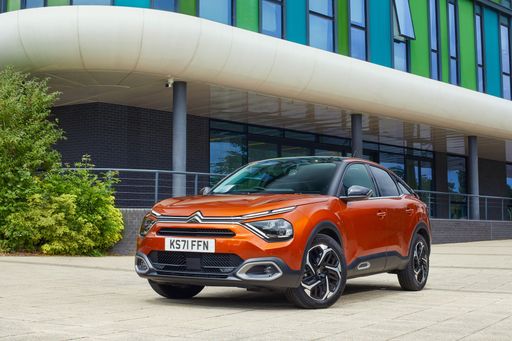
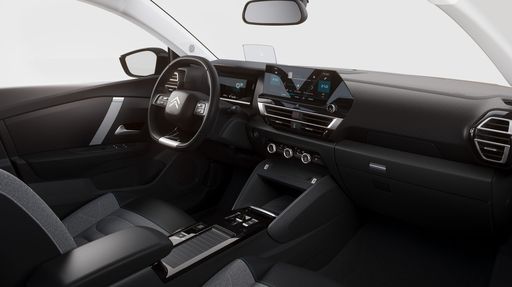
C4 @ Citroën / Stellantis Media

An Engaging Showdown: Citroën C4 vs Citroën C5 Aircross

In today’s car market, the distinction between different models often comes down to more than just aesthetics; technology and innovation play a pivotal role in swaying consumer preference. Citroën, a brand known for its creativity and boldness, offers two notable SUVs: the Citroën C4 and the slightly larger Citroën C5 Aircross. Let’s dive into the technical details and innovations that distinguish these models.

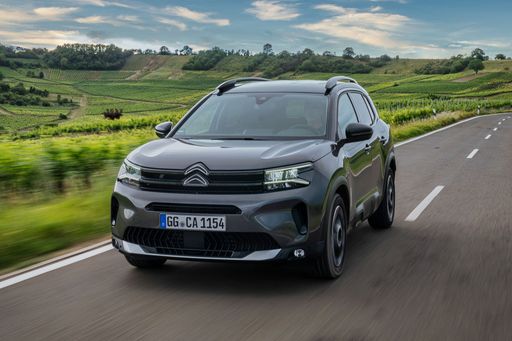
C5 Aircross @ Citroën / Stellantis Media

Engine Options and Performance

The Citroën C4 offers a versatile lineup, including petrol, mild hybrid (MHEV), and electric powertrains. With power outputs ranging from 101 HP in petrol variants to 156 HP in its electrified versions, the C4 caters to a variety of driving preferences. The C4 can accelerate from 0 to 100 km/h in as little as 8 seconds, and has a top speed reaching up to 206 km/h, making it quite the performer among compact SUVs.

The C5 Aircross, on the other hand, presents a diverse engine selection with offers including diesel, petrol MHEV, and a plug-in hybrid variant. The most powerful among these options churns out 224 HP, enabling a peppy 0-100 km/h acceleration time of 8.9 seconds and reaching a maximum speed of 225 km/h.

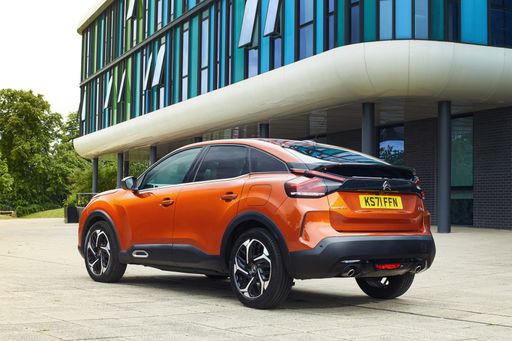
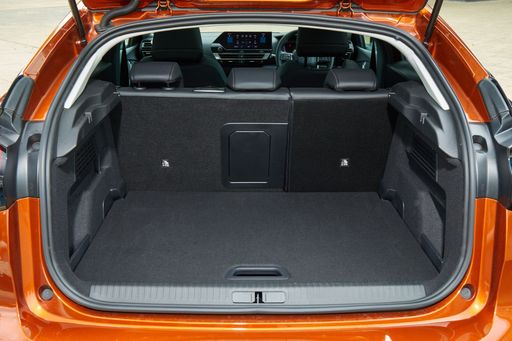
C4 @ Citroën / Stellantis Media

Fuel Efficiency and Eco-Friendliness

When it comes to consumption, the C4 shines with an impressive efficiency in its electric model, boasting an electric range of up to 427 km and a consumption as low as 14.5 kWh/100km. Petrol variants maintain a competitive efficiency, with figures starting from 4.7 L/100km, enhancing its appeal for eco-conscious drivers.

The C5 Aircross does not lag behind in its hybrid model either, offering a consumption of 1.4 L/100km and an electric-only range of 58 km, ideal for urban driving and reducing carbon footprint significantly. The hybrid model’s CO2 emissions are as low as 32 g/km.

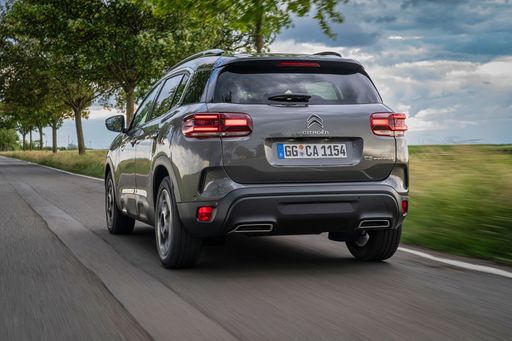
C5 Aircross @ Citroën / Stellantis Media

Dimensions and Practicality

In terms of size, the C4 is a more compact option with a length of up to 4580 mm. Despite its smaller stature, it efficiently utilizes its space, offering a trunk capacity of up to 510 liters and a payload capacity reaching 411 kg. With a curb weight starting from 1353 kg, it provides a balanced driving experience.

Conversely, the C5 Aircross stands out with its generous dimensions of 4500 mm in length and a wider stance at 1859 mm. It comfortably accommodates five passengers with ample cargo space of 580 liters and a payload capacity of up to 465 kg, making it an excellent choice for families.

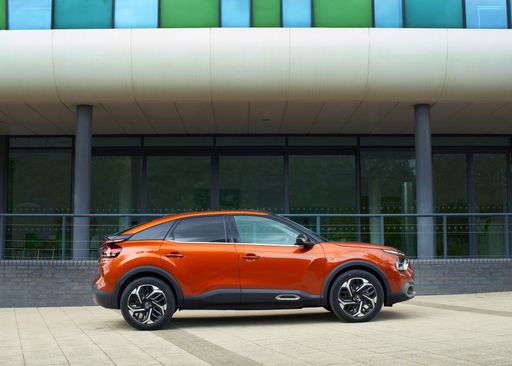
C4 @ Citroën / Stellantis Media

Driving Experience and Comfort

Both the C4 and C5 Aircross emphasize driver comfort and state-of-the-art innovation. Citroën’s Advanced Comfort technology is featured in both models, ensuring a smooth ride no matter the terrain. The C4 might appeal to drivers seeking a more agile vehicle for city commuting, while the C5 Aircross promises a more robust drive suitable for longer journeys and family adventures.

C5 Aircross @ Citroën / Stellantis Media

Final Considerations

Choosing between the Citroën C4 and the C5 Aircross depends greatly on personal requirements, such as the need for space or preference for electric driving. The C4 offers an excellent balance of performance and efficiency, particularly in its electric format, whereas the C5 Aircross delivers a larger frame with the versatility of a hybrid powertrain.

Both models encapsulate Citroën’s dedication to innovative design and practical functionality, offering drivers the choice between compact agility and spacious luxury without sacrificing performance or comfort.

Here’s where it gets real: The technical differences in detail

C4 @ Citroën / Stellantis Media

Costs and Efficiency:

Looking at overall running costs, both models reveal some interesting differences in everyday economy.

Citroen C4 has a decisively advantage in terms of price – it starts at 20600 £, while the Citroen C5 Aircross costs 29100 £. That’s a price difference of around 8572 £.

Fuel consumption also shows a difference: Citroen C5 Aircross manages with 2.50 L and is therefore clearly more efficient than the Citroen C4 with 4.70 L. The difference is about 2.20 L per 100 km.

In terms of energy consumption, the advantage goes to the Citroen C4: with 14.50 kWh per 100 km, it’s a bit more efficient than the Citroen C5 Aircross with 17 kWh. That’s a difference of about 2.50 kWh.

As for range, the Citroen C5 Aircross performs a bit better – achieving up to 520 km, about 93 km more than the Citroen C4.

C5 Aircross @ Citroën / Stellantis Media

Engine and Performance:

Power, torque and acceleration say a lot about how a car feels on the road. This is where you see which model delivers more driving dynamics.

When it comes to engine power, the Citroen C5 Aircross has a evident edge – offering 210 HP compared to 156 HP. That’s roughly 54 HP more horsepower.

In acceleration from 0 to 100 km/h, the Citroen C4 is hardly perceptible quicker – completing the sprint in 8 s, while the Citroen C5 Aircross takes 8.30 s. That’s about 0.30 s faster.

In terms of top speed, the Citroen C5 Aircross performs hardly perceptible better – reaching 220 km/h, while the Citroen C4 tops out at 210 km/h. The difference is around 10 km/h.

There’s also a difference in torque: Citroen C5 Aircross pulls hardly perceptible stronger with 300 Nm compared to 270 Nm. That’s about 30 Nm difference.

C4 @ Citroën / Stellantis Media

Space and Everyday Use:

Whether family car or daily driver – which one offers more room, flexibility and comfort?

Both vehicles offer seating for 5 people.

In curb weight, Citroen C4 is somewhat lighter – 1403 kg compared to 1629 kg. The difference is around 226 kg.

In terms of boot space, the Citroen C5 Aircross offers barely noticeable more room – 565 L compared to 510 L. That’s a difference of about 55 L.

In maximum load capacity, the Citroen C5 Aircross performs to a small extent better – up to 1668 L, which is about 308 L more than the Citroen C4.

When it comes to payload, Citroen C5 Aircross somewhat takes the win – 471 kg compared to 406 kg. That’s a difference of about 65 kg.

Who wins the race?

The Citroen C5 Aircross proves to be leaves the rival little chance and therefore becomes our DriveDuel Champion!
Citroen C5 Aircross is the better all-rounder in this comparison.

from about £29,100
C5 Aircross @ Citroën / Stellantis Media

Citroen C5 Aircross

  • Engine Type : Petrol MHEV, Electric, Plugin Hybrid
  • Transmission : Automatic
  • Drive Type : Front-Wheel Drive
  • Power HP : 145 - 210 HP
  • Consumption L/100km : 2.5 - 5.4 L
  • Consumption kWh/100km : 17 kWh
  • Electric Range : 81 - 520 km

Citroen C4

5 (1)
rate

Citroën C4 wears its French eccentricity with confidence, pairing bold, sculpted styling with a supremely comfortable ride that turns mundane commutes into a gentler affair. If you value relaxed comfort, clever practicality and a car with personality rather than pretence, the C4 is a charming, sensible choice — and it won't make you miss the usual hot‑hatch theatrics.

details

Citroen C5 Aircross

The Citroën C5 Aircross feels like a sofa on wheels, delivering a calm, floaty ride and clever packaging that makes life with luggage and kids noticeably easier. Quirky French styling and a supremely practical, family-focused cabin mean it quietly wins hearts by prioritising comfort over showroom bravado.

details
Citroen C4
Citroen C5 Aircross
C4 @ Citroën / Stellantis Media
C5 Aircross @ Citroën / Stellantis Media

Costs and Consumption

Price
20600 - 32000 £
Price
29100 - 41600 £
Consumption L/100km
4.7 - 4.8 L
Consumption L/100km
2.5 - 5.4 L
Consumption kWh/100km
14.5 - 15.3 kWh
Consumption kWh/100km
17 kWh
Electric Range
354 - 427 km
Electric Range
81 - 520 km
Battery Capacity
46 - 51 kWh
Battery Capacity
17.8 - 73 kWh
co2
0 - 108 g/km
co2
0 - 121 g/km
Fuel tank capacity
44 - 50 L
Fuel tank capacity
55 L

Dimensions and Body

Body Type
SUV
Body Type
SUV
Seats
5
Seats
5
Doors
4 - 5
Doors
5
Curb weight
1403 - 1659 kg
Curb weight
1629 - 2184 kg
Trunk capacity
380 - 510 L
Trunk capacity
565 L
Length
4350 - 4580 mm
Length
4650 mm
Width
1800 - 1834 mm
Width
1870 mm
Height
1520 - 1525 mm
Height
1695 mm
Max trunk capacity
1250 - 1360 L
Max trunk capacity
1668 L
Payload
381 - 406 kg
Payload
446 - 471 kg

Engine and Performance

Engine Type
Electric, Petrol MHEV
Engine Type
Petrol MHEV, Electric, Plugin Hybrid
Transmission
Automatic
Transmission
Automatic
Transmission Detail
Reduction Gearbox, Dual-Clutch Automatic
Transmission Detail
Dual-Clutch Automatic, Reduction Gearbox
Drive Type
Front-Wheel Drive
Drive Type
Front-Wheel Drive
Power HP
110 - 156 HP
Power HP
145 - 210 HP
Acceleration 0-100km/h
8 - 10.8 s
Acceleration 0-100km/h
8.3 - 11.2 s
Max Speed
150 - 210 km/h
Max Speed
170 - 220 km/h
Torque
205 - 270 Nm
Torque
230 - 300 Nm
Number of Cylinders
3
Number of Cylinders
3 - 4
Power kW
81 - 115 kW
Power kW
107 - 157 kW
Engine capacity
1199 cm3
Engine capacity
1199 - 1598 cm3

General

Model Year
2025
Model Year
2025
CO2 Efficiency Class
A, C
CO2 Efficiency Class
D, A, B
Brand
Citroen
Brand
Citroen
What drivetrain options does the Citroen C4 have?

The Citroen C4 is offered with Front-Wheel Drive.

The prices and data displayed are estimates based on German list prices and may vary by country. This information is not legally binding.