@ Citroën / Stellantis Media
@ Volkswagen AG / VW Media
VS

Citroen C5 Aircross vs VW Tiguan – Which model is better for everyday use?

Both models have their strengths – but which one suits you more?
Compare performance, efficiency, price and space directly: Citroen C5 Aircross or VW Tiguan?

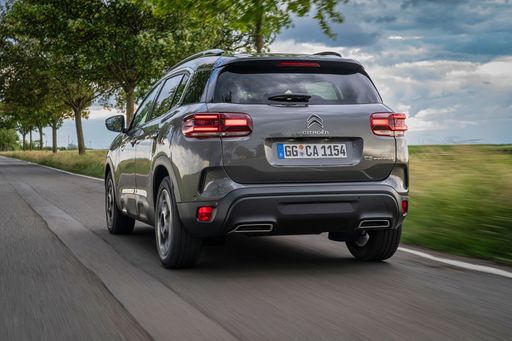
C5 Aircross @ Citroën / Stellantis Media

Head-to-Head: Citroen C5 Aircross vs. VW Tiguan

In the ever-evolving world of SUVs, two names consistently resonate with consumers seeking style, comfort, and innovation: the Citroen C5 Aircross and the VW Tiguan. Both models feature intriguing advancements and specifications, making the choice between them as challenging as it is exciting. In this comparison, we will delve into their technical details and innovations, helping you to make an informed decision.
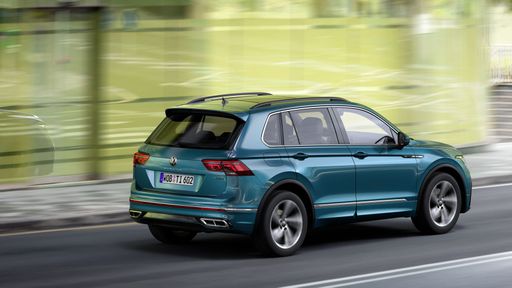
Tiguan @ Volkswagen AG / VW Media

Exterior and Design

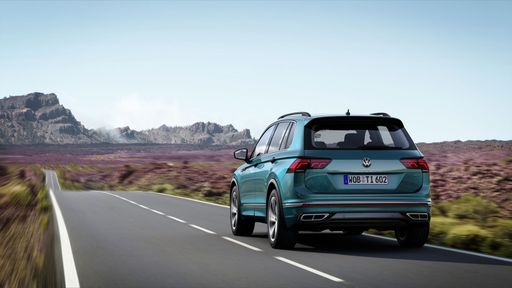
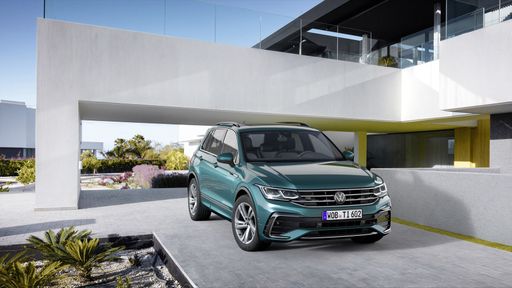
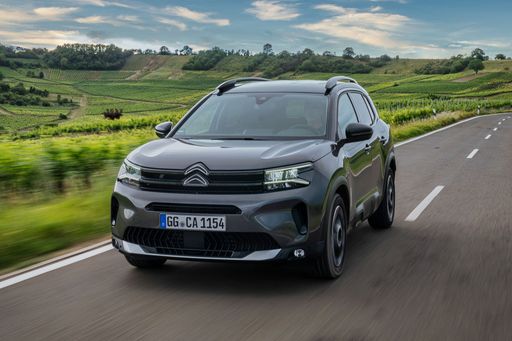
The Citroen C5 Aircross, with its distinctive French flair, boasts a unique design that emphasizes comfort and practicality. Measuring 4500mm in length, 1859mm in width, and 1688mm in height, it presents a robust yet elegant silhouette. On the other hand, the VW Tiguan exudes a classic European elegance, slightly longer at 4539mm, with varying widths and a slightly lower height of 1658mm, which may appeal to those inclined towards a more traditionally styled SUV.

C5 Aircross @ Citroën / Stellantis Media

Performance and Powertrain

Under the hood, the Citroen C5 Aircross offers a wide range of options: diesel, petrol mild-hybrid (MHEV), and plug-in hybrid variants. Power outputs vary from 131 to 224 HP, providing a versatile spectrum for different driving preferences. Front-wheel drive is standard across the board, with an automatic transmission ensuring a smooth drive.

The VW Tiguan provides even more variety, including petrol MHEV, plug-in hybrid, diesel, and petrol engines with both FWD and AWD variants. The power spectrum ranges wider, from 130 to a commanding 272 HP, with dual-clutch automatic transmissions enhancing driving dynamics. Options for higher torque with the Tiguan could appeal to those seeking a bit more muscle.

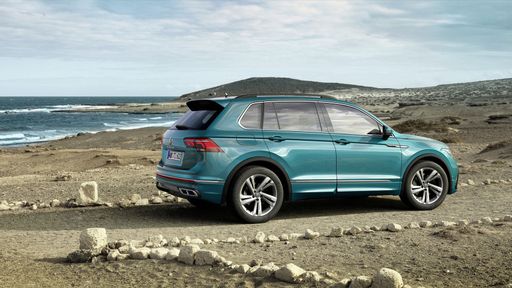
Tiguan @ Volkswagen AG / VW Media

Efficiency and Range

When it comes to efficiency, the Citroen C5 Aircross plug-in hybrid achieves a remarkable 1.4 L/100km, buoyed by a 12.9 kWh battery delivering an electric range of 58 km. The more conventional engines are efficient too, with fuel consumption figures hovering around 5.5-5.6 L/100km.

The VW Tiguan’s plugin hybrid shines with an impressive 0.4-0.5 L/100km consumption and a larger 19.7 kWh battery, offering an extended electric range of up to 113 km. The additional range and slightly better efficiency might appeal to those with longer commuting needs.

C5 Aircross @ Citroën / Stellantis Media

Interior and Cargo Space

Both contenders offer spacious interiors, with comfortable seating for five passengers. The Citroen C5 Aircross provides a trunk capacity of 580 liters, making it more than capable of handling familial cargo needs.

The VW Tiguan, however, overshoots this with a trunk capacity of 652 liters, giving it the edge for larger storage needs. Combined with a slightly more substantial payload capacity, the Tiguan makes a compelling case for those who frequently travel with heavy loads.

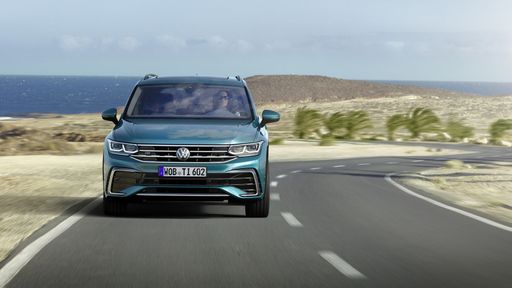
Tiguan @ Volkswagen AG / VW Media

Innovation and Technology

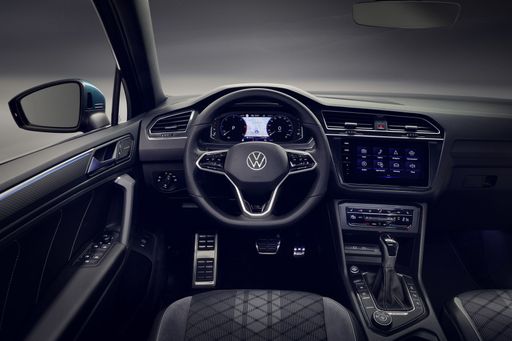
Citroen has integrated an array of comfort-focused technologies into the C5 Aircross, including their signature Progressive Hydraulic Cushions®, ensuring a smooth ride. As for the VW Tiguan, it stands out with advanced digital cockpit options, gesture control functionality, and expansive connectivity features, catering to tech-savvy drivers.

C5 Aircross @ Citroën / Stellantis Media

Conclusion

Deciding between the Citroen C5 Aircross and the VW Tiguan depends largely on individual priorities. If you value unique design, comfort innovations, and solid fuel efficiency, the Citroen C5 Aircross is a brilliant choice. Alternatively, if you prioritize versatility in powertrains, impressive range, and cutting-edge technology, the VW Tiguan might be your SUV of choice.

In conclusion, both models excel in their domains, offering compelling features and innovations tailored to different tastes and needs. Whichever you choose, both the Citroen C5 Aircross and VW Tiguan promise an enriching driving experience in the realm of modern SUVs.

Here’s where it gets real: The technical differences in detail

Tiguan @ Volkswagen AG / VW Media

Costs and Efficiency:

Price and efficiency are often the first things buyers look at. Here it becomes clear which model has the long-term edge – whether at the pump, the plug, or in purchase price.

Citroen C5 Aircross has a to a small extent advantage in terms of price – it starts at 29100 £, while the VW Tiguan costs 32800 £. That’s a price difference of around 3651 £.

Fuel consumption also shows a difference: VW Tiguan manages with 1.40 L and is therefore clearly more efficient than the Citroen C5 Aircross with 2.50 L. The difference is about 1.10 L per 100 km.

As for range, the Citroen C5 Aircross performs clearly better – achieving up to 520 km, about 394 km more than the VW Tiguan.

Engine and Performance:

Under the bonnet, it becomes clear which model is tuned for sportiness and which one takes the lead when you hit the accelerator.

When it comes to engine power, the VW Tiguan has a noticeable edge – offering 272 HP compared to 210 HP. That’s roughly 62 HP more horsepower.

In acceleration from 0 to 100 km/h, the VW Tiguan is decisively quicker – completing the sprint in 5.90 s, while the Citroen C5 Aircross takes 8.30 s. That’s about 2.40 s faster.

In terms of top speed, the VW Tiguan performs hardly perceptible better – reaching 242 km/h, while the Citroen C5 Aircross tops out at 220 km/h. The difference is around 22 km/h.

There’s also a difference in torque: VW Tiguan pulls noticeable stronger with 400 Nm compared to 300 Nm. That’s about 100 Nm difference.

Space and Everyday Use:

Cabin size, boot volume and payload all play a role in everyday practicality. Here, comfort and flexibility make the difference.

Both vehicles offer seating for 5 people.

In curb weight, VW Tiguan is barely noticeable lighter – 1599 kg compared to 1629 kg. The difference is around 30 kg.

In terms of boot space, the VW Tiguan offers somewhat more room – 652 L compared to 565 L. That’s a difference of about 87 L.

In maximum load capacity, the Citroen C5 Aircross performs hardly perceptible better – up to 1668 L, which is about 18 L more than the VW Tiguan.

When it comes to payload, VW Tiguan slightly takes the win – 533 kg compared to 471 kg. That’s a difference of about 62 kg.

Who wins the race?

The VW Tiguan proves to be outperforms in nearly all aspects and therefore becomes our DriveDuel Champion!
VW Tiguan is the better all-rounder in this comparison.

from about £32,800
Tiguan @ Volkswagen AG / VW Media

VW Tiguan

  • Engine Type : Petrol, Petrol MHEV, Diesel, Plugin Hybrid
  • Transmission : Automatic
  • Drive Type : All-Wheel Drive, Front-Wheel Drive
  • Power HP : 130 - 272 HP
  • Consumption L/100km : 1.4 - 8.4 L
  • Electric Range : 118 - 126 km

Citroen C5 Aircross

The Citroën C5 Aircross feels like a sofa on wheels, delivering a calm, floaty ride and clever packaging that makes life with luggage and kids noticeably easier. Quirky French styling and a supremely practical, family-focused cabin mean it quietly wins hearts by prioritising comfort over showroom bravado.

details

VW Tiguan

3.3 (3)
rate

The VW Tiguan blends sensible family practicality with a dash of German polish, delivering a calm, reassuring ride and a cabin that never feels like an afterthought. For buyers who want an SUV that’s easy to live with yet still nicely dressed, the Tiguan is the grown‑up choice that keeps a cheeky wink in reserve.

details
Citroen C5 Aircross
VW Tiguan
C5 Aircross @ Citroën / Stellantis Media
Tiguan @ Volkswagen AG / VW Media

Costs and Consumption

Price
29100 - 41600 £
Price
32800 - 51900 £
Consumption L/100km
2.5 - 5.4 L
Consumption L/100km
1.4 - 8.4 L
Consumption kWh/100km
17 kWh
Consumption kWh/100km
-
Electric Range
81 - 520 km
Electric Range
118 - 126 km
Battery Capacity
17.8 - 73 kWh
Battery Capacity
19.70 kWh
co2
0 - 121 g/km
co2
32 - 190 g/km
Fuel tank capacity
55 L
Fuel tank capacity
45 - 58 L

Dimensions and Body

Body Type
SUV
Body Type
SUV
Seats
5
Seats
5
Doors
5
Doors
5
Curb weight
1629 - 2184 kg
Curb weight
1599 - 1890 kg
Trunk capacity
565 L
Trunk capacity
490 - 652 L
Length
4650 mm
Length
4539 mm
Width
1870 mm
Width
1842 - 1859 mm
Height
1695 mm
Height
1656 - 1658 mm
Max trunk capacity
1668 L
Max trunk capacity
1486 - 1650 L
Payload
446 - 471 kg
Payload
460 - 533 kg

Engine and Performance

Engine Type
Petrol MHEV, Electric, Plugin Hybrid
Engine Type
Petrol, Petrol MHEV, Diesel, Plugin Hybrid
Transmission
Automatic
Transmission
Automatic
Transmission Detail
Dual-Clutch Automatic, Reduction Gearbox
Transmission Detail
Dual-Clutch Automatic
Drive Type
Front-Wheel Drive
Drive Type
All-Wheel Drive, Front-Wheel Drive
Power HP
145 - 210 HP
Power HP
130 - 272 HP
Acceleration 0-100km/h
8.3 - 11.2 s
Acceleration 0-100km/h
5.9 - 10.6 s
Max Speed
170 - 220 km/h
Max Speed
198 - 242 km/h
Torque
230 - 300 Nm
Torque
220 - 400 Nm
Number of Cylinders
3 - 4
Number of Cylinders
4
Power kW
107 - 157 kW
Power kW
96 - 200 kW
Engine capacity
1199 - 1598 cm3
Engine capacity
1498 - 1984 cm3

General

Model Year
2025
Model Year
2024 - 2025
CO2 Efficiency Class
D, A, B
CO2 Efficiency Class
G, D, E, F, B
Brand
Citroen
Brand
VW
What drive types are available for the Citroen C5 Aircross?

The Citroen C5 Aircross is available as Front-Wheel Drive.

The prices and data displayed are estimates based on German list prices and may vary by country. This information is not legally binding.