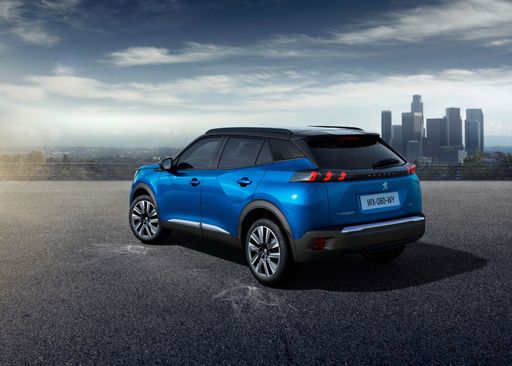
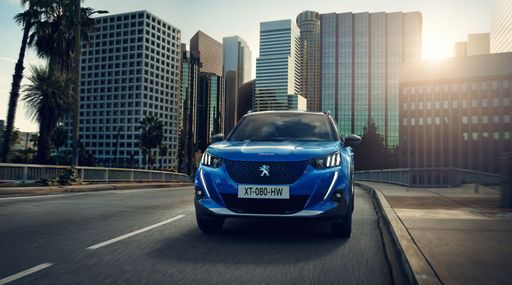
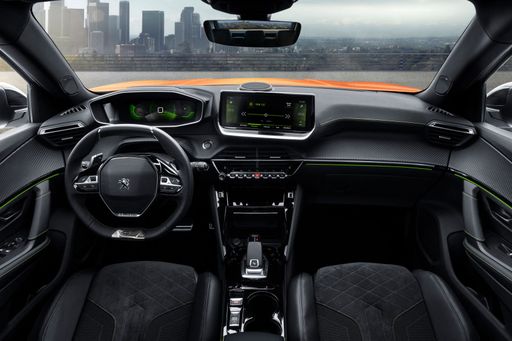
VS

CUPRA Formentor vs Peugeot 2008 comparison

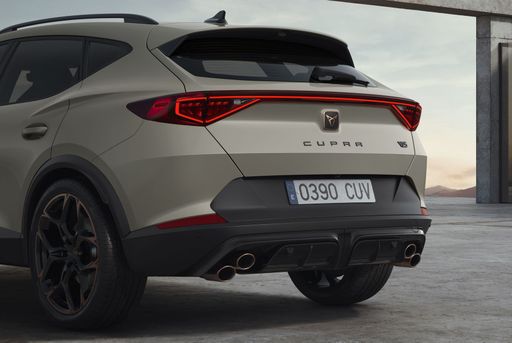
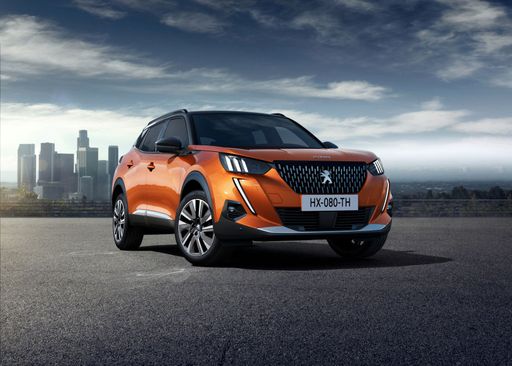
Compare performance (390 HP vs 156 HP), boot space and price (35,800 £ vs 24,800 £ ) at a glance. Find out which car is the better choice for you – CUPRA Formentor or Peugeot 2008?

CUPRA Formentor vs Peugeot 2008: Key differences

CUPRA Formentor

4.8 (3 Reviews)
rate
  • considerably more power
  • significantly more efficient
  • clearly quicker 0–100 km/h
  • marginally more trunk space
details

Peugeot 2008

4.4 (2 Reviews)
rate
  • substantially cheaper
  • considerably more electric range
  • slightly lighter
details

All details on performance, efficiency, range and trunk space can be found in the technical comparison below – including user reviews for both models.

Formentor

Quick head-to-head: CUPRA Formentor VS Peugeot 2008

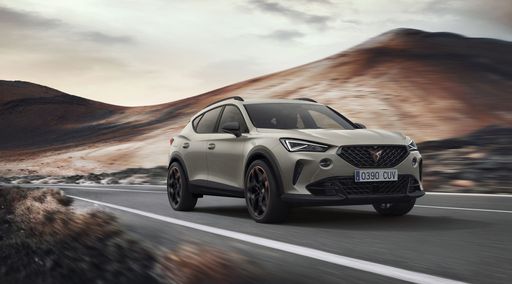
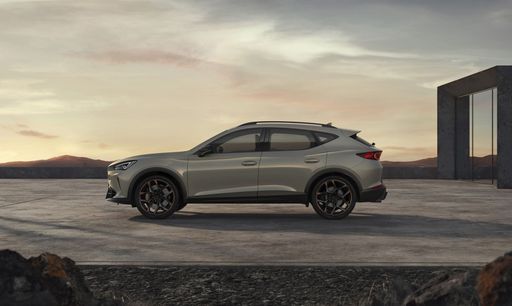
CUPRA Formentor VS Peugeot 2008 sets up a clear personality clash: the Formentor pushes sporty, driver-focused crossover energy while the Peugeot 2008 pitches a design-forward, comfort-minded B‑SUV. This piece teases out how those characters translate into everyday life — steering feel, cabin ambience, practicality and running costs. Expect concrete trade-offs rather than abstract praise: more engagement often costs decibels and space, while more calm often costs sharpness. Read on to understand which car will fit your daily routine better before we dive into the figures.
2008

Character and driving feel

The CUPRA Formentor feels taut and eager — direct steering, firm damping and a setup that rewards someone who wants to hustle through corners or feel connected on fast A-roads. The Peugeot 2008 responds in a softer, more forgiving way: lighter steering, more body roll and an emphasis on composed progress rather than theatrics. In everyday driving that means the Formentor makes commutes and country lanes feel entertaining but can be fidgety or noisy at motorway speeds, while the Peugeot soaks up distance more serenely. Choose the Formentor if you want engagement and sharper responses; pick the Peugeot if you prefer predictable, relaxed manners.

Formentor

Comfort, cabin feel and perceived quality

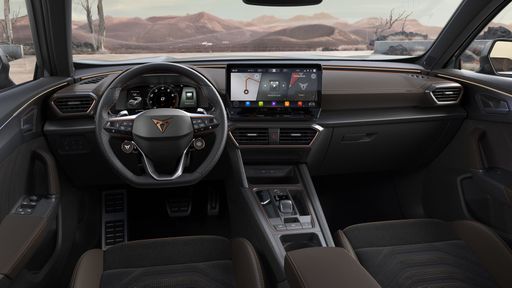
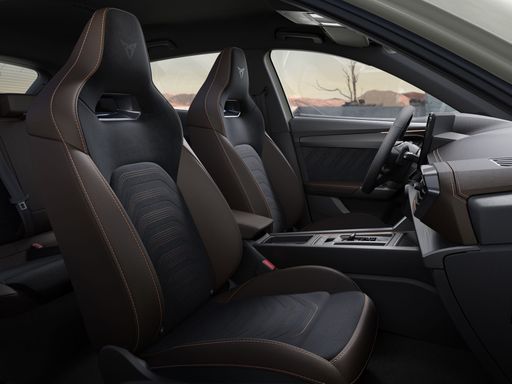
Inside, the Peugeot 2008 leans on materials and mood to feel more premium — surfaces, layout and a quieter ambience make long motorway miles less tiring. The CUPRA Formentor trades some of that lounge quality for firm, supportive sports seats that keep you planted on spirited drives but expose you to tyre and wind noise on the motorway. Both cars use touchscreen-heavy controls and neither is immune to usability gripes, yet the Formentor’s updated sliders help a bit while the 2008’s compact i‑Cockpit can be divisive for taller drivers. If cabin polish and tranquillity top your list, the Peugeot will likely feel cosier; if you prize sporty seating and tactile driver engagement, the Formentor will feel more honest.

2008

Practicality and everyday usability

When luggage and family practicality matter, the Peugeot 2008 (in ICE or hybrid guises) typically offers the more straightforward boot and clever packaging like a two‑level floor that makes loading simple. The CUPRA Formentor’s cargo room depends more heavily on engine choice — performance, AWD or PHEV variants eat into usable volume — but it compensates with higher towing and payload capability if you need to haul weight. Rear-seat space is broadly acceptable in both, though the Formentor’s sporty seats can make the back feel slightly snugger. For routine school runs and regular luggage, the Peugeot is the safer, more predictable pick; for mixed duties that include towing or heavier loads, the Formentor has the edge.

Formentor

City life, running costs and efficiency

The Peugeot 2008 is easier to live with in tight urban patterns: compact manners, light steering and generally lower purchase cost make it the cheaper daily tool. The CUPRA Formentor is pricier up front, but its PHEV option has become more usable with faster charging, so buyers with a home or office charger can cut fuel bills markedly. Conversely, Formentor petrol engines can be thirstier if you drive it hard, while Peugeot’s mild‑hybrid and ICE options are tuned for predictable, efficient operation. If low running costs and city‑friendliness matter most, the Peugeot is the practical choice; if you can charge regularly and value punch/performance, the Formentor’s plug‑in option changes the calculus.

2008

Buyer fit and trade-offs before the specs

Put simply: choose the CUPRA Formentor if you want a crossover that feels sporty, wears striking design and offers high‑performance variants or a more usable PHEV for those who can charge. Opt for the Peugeot 2008 if you prioritise interior refinement, calm long‑distance cruising and the most straightforward, family‑friendly practicality at a lower entry cost. Both have touchscreen quirks and require a test drive to see how their ergonomics fit your body and habits, but the differences are real and directional. Next up is the technical comparison so you can translate these lifestyle choices into the specific numbers that matter for ownership.

Here’s where it gets real: The technical differences in detail

Formentor

Costs and Efficiency:

When it comes to price and running costs, the biggest differences usually appear. This is often where you see which car fits your budget better in the long run.

Peugeot 2008 is substantially cheaper – starting at 24,800 £ , while the CUPRA Formentor costs 35,800 £ . That’s a price difference of around 10,989 £.

Fuel consumption also shows a difference: the CUPRA Formentor uses 1.4 L/100km and is significantly more efficient than the Peugeot 2008 with 4.9 L/100km. The difference is about 3.5 L/100km.

As for electric range, the Peugeot 2008 offers considerably more range – reaching up to 405 km, about 279 km more than the CUPRA Formentor.

2008

Engine and Performance:

Power, torque and acceleration say a lot about how a car feels on the road. This is where you see which model delivers more driving dynamics.

When it comes to engine power, the CUPRA Formentor offers considerably more power – delivering 390 HP compared to 156 HP. That’s roughly 234 HP more horsepower.

When accelerating from 0 to 100 km/h, the CUPRA Formentor is clearly quicker – completing the sprint in 4.2 s, while the Peugeot 2008 takes 8.3 s. That’s about 4.1 s quicker.

There’s also a difference in torque: the CUPRA Formentor delivers significantly more torque with 480 Nm compared to 270 Nm. That’s about 210 Nm more.

Formentor

Space and Everyday Use:

Cabin size, boot volume and payload all play a role in everyday practicality. Here, comfort and flexibility make the difference.

Both vehicles offer seating for 5 people.

In terms of curb weight, Peugeot 2008 is slightly lighter – 1,263 kg compared to 1,434 kg. The difference is around 171 kg.

Looking at boot space, the CUPRA Formentor offers marginally more boot space – 450 L compared to 434 L. That’s a difference of about 16 L.

When it comes to payload, the CUPRA Formentor carries slightly more – 526 kg compared to 447 kg. That’s a difference of about 79 kg.

Who wins the race in the data check?

The CUPRA Formentor stands well ahead of its rival in the objective data comparison.
This result only shows which model scores more points on paper – not which of the two cars feels right for you.

from £35,800
Formentor

CUPRA Formentor

  • Engine Type Petrol, Petrol MHEV, Diesel, Plug-in Hybrid
  • Transmission Automatic, Manual
  • Drive Type Front-Wheel Drive, All-Wheel Drive
  • Power HP 150 - 390 HP
  • Consumption L/100km 1.4 - 10.1 L/100km
  • Electric Range 117 - 126 km
CUPRA Formentor
Peugeot 2008

Costs and Consumption

View detailed analysis

Engine and Performance

View detailed analysis

Dimensions and Body

View detailed analysis

CUPRA Formentor

The CUPRA Formentor blends sporty driving dynamics with crossover practicality, delivering sharp handling and an engaging character that makes it fun on twisty roads as well as in daily driving. Inside, it pairs a driver-focused cabin and premium materials with clever practicality, offering a confident, distinctive alternative to conventional SUVs.

details

Peugeot 2008

The Peugeot 2008 is a compact crossover that blends sharp French styling with a practical, high-riding layout, giving it more presence and versatility than a typical small hatchback. Inside it offers a clever, user-friendly cabin with sensible storage and modern infotainment, while a composed ride and efficient powertrains make it well suited to both city errands and longer journeys.

details
CUPRA Formentor
Peugeot 2008

Costs and Consumption

Price
35,800 - 62,500 £
Price
24,800 - 40,400 £
Consumption L/100km
1.4 - 10.1 L/100km
Consumption L/100km
4.9 - 5.7 L/100km
Consumption kWh/100km
-
Consumption kWh/100km
15.3 kWh/100km
Electric Range
117 - 126 km
Electric Range
405 km
Battery Capacity
-
Battery Capacity
-
co2
32 - 229 g/km
co2
0 - 129 g/km
Fuel tank capacity
-
Fuel tank capacity
-

Dimensions and Body

Body Type
SUV
Body Type
SUV
Seats
5
Seats
5
Doors
-
Doors
-
Curb weight
1,434 - 1,742 kg
Curb weight
1,263 - 1,623 kg
Trunk capacity
345 - 450 L
Trunk capacity
434 L
Length
-
Length
-
Width
1,839 - 1,852 mm
Width
1,770 mm
Height
-
Height
-
Max trunk capacity
-
Max trunk capacity
-
Payload
439 - 526 kg
Payload
407 - 447 kg

Engine and Performance

Engine Type
Petrol, Petrol MHEV, Diesel, Plug-in Hybrid
Engine Type
Petrol MHEV, Electric, Petrol
Transmission
Automatic, Manual
Transmission
Automatic, Manual
Transmission Detail
Dual-Clutch Automatic, Manual Gearbox
Transmission Detail
Dual-Clutch Automatic, Reduction Gearbox, Manual Gearbox
Drive Type
Front-Wheel Drive, All-Wheel Drive
Drive Type
Front-Wheel Drive
Power HP
150 - 390 HP
Power HP
101 - 156 HP
Acceleration 0-100km/h
4.2 - 9 s
Acceleration 0-100km/h
8.3 - 10.9 s
Max Speed
-
Max Speed
-
Torque
250 - 480 Nm
Torque
205 - 270 Nm
Number of Cylinders
4 - 5
Number of Cylinders
3
Power kW
110 - 287 kW
Power kW
74 - 115 kW
Engine capacity
1,498 - 2,480 cm3
Engine capacity
1,199 cm3

General

Model Year
2,024 - 2,026
Model Year
2,025 - 2,026
CO2 Efficiency Class
G, E, D, F, B
CO2 Efficiency Class
C, A, D
Brand
CUPRA
Brand
Peugeot
DriveDuel uses data analysis and artificial intelligence to evaluate vehicle data and create content. Content is regularly reviewed and improved. The displayed prices are estimates based on German list prices, adjusted to the respective country’s VAT. Country-specific registration taxes are not included. This information is not legally binding.