
 Deutschland
 France
 Nederland
 Great Britain
 Sverige
 Norge
Norge Danmark
 Suomi
Suomi Italia
 Polska
 España
VS
CUPRA Tavascan vs Lynk & Co 08 - Differences and prices compared
Tavascan
@ CUPRA / SEAT S.A.
Costs and Efficiency:
Looking at overall running costs, both models reveal some interesting differences in everyday economy.
CUPRA Tavascan has a minimal advantage in terms of price – it starts at 45700 £, while the Lynk & Co 08 costs 48000 £. That’s a price difference of around 2275 £.
As for range, the CUPRA Tavascan performs convincingly better – achieving up to 553 km, about 353 km more than the Lynk & Co 08.
Tavascan
@ CUPRA / SEAT S.A.
Engine and Performance:
Power, torque and acceleration are the classic benchmarks for car enthusiasts – and here, some clear differences start to show.
When it comes to engine power, the Lynk & Co 08 has a barely noticeable edge – offering 349 HP compared to 340 HP. That’s roughly 9 HP more horsepower.
In acceleration from 0 to 100 km/h, the CUPRA Tavascan is noticeable quicker – completing the sprint in 5.50 s, while the Lynk & Co 08 takes 7.70 s. That’s about 2.20 s faster.
In terms of top speed, the Lynk & Co 08 performs hardly perceptible better – reaching 200 km/h, while the CUPRA Tavascan tops out at 180 km/h. The difference is around 20 km/h.
Tavascan
@ CUPRA / SEAT S.A.
Space and Everyday Use:
Whether family car or daily driver – which one offers more room, flexibility and comfort?
Seats: offers more seating capacity – vs .
In terms of boot space, the CUPRA Tavascan offers convincingly more room – 540 L compared to 0 L. That’s a difference of about 540 L.
Who wins the race?
The CUPRA Tavascan proves to be leaves the rival little chance and therefore becomes our DriveDuel Champion!
CUPRA Tavascan is the better all-rounder in this comparison.
from about £45,700
 @ CUPRA / SEAT S.A.
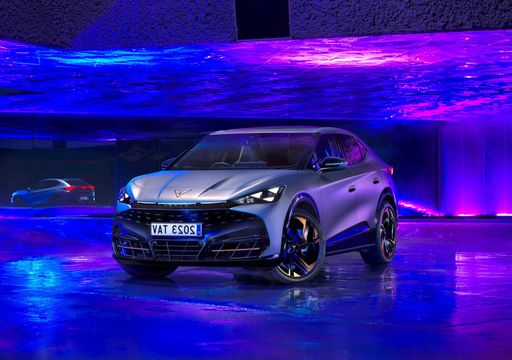
CUPRA Tavascan
CUPRA Tavascan
Lynk & Co 08
Costs and Consumption
View detailed analysis
View detailed analysis
Engine and Performance
View detailed analysis
View detailed analysis
Dimensions and Body
View detailed analysis
View detailed analysis
CUPRA Tavascan
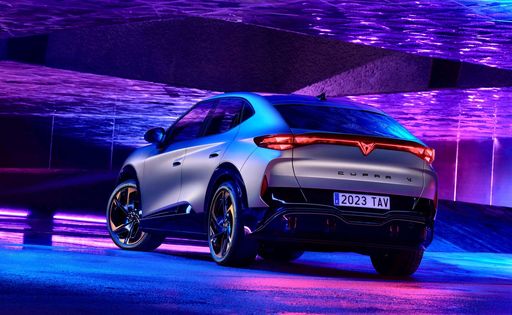
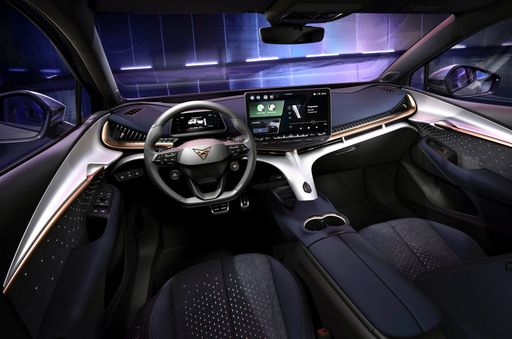
The CUPRA Tavascan is a striking electric crossover that blends aggressive, sporty design with surprising everyday practicality, pairing a coupe-like silhouette with SUV versatility. It feels lively and engaging on the road while offering premium touches inside, making it a compelling choice for buyers who want attitude without sacrificing comfort.
details
@ CUPRA / SEAT S.A.
 @ CUPRA / SEAT S.A.
 @ CUPRA / SEAT S.A.
Lynk & Co 08
The Lynk & Co 08 represents a bold leap in automotive design, merging a sleek and modern exterior with a spacious and tech-savvy interior that caters to the needs of contemporary drivers. Its innovative approach to connectivity and user experience sets it apart in a crowded market, offering drivers an unparalleled level of interaction and customization. With a strong focus on sustainability, this model features advanced hybrid technology, underscoring Lynk & Co's commitment to eco-friendly driving solutions.
details
CUPRA Tavascan
Lynk & Co 08
|
@ CUPRA / SEAT S.A.
|
|
|
|
|
Costs and Consumption |
|
|---|---|
|
Price
45700 - 49600 £
|
Price
48000 - 51400 £
|
|
Consumption L/100km
-
|
Consumption L/100km
0.90 L
|
|
Consumption kWh/100km
15.9 - 17.1 kWh
|
Consumption kWh/100km
-
|
|
Electric Range
513 - 553 km
|
Electric Range
200 km
|
|
Battery Capacity
77 kWh
|
Battery Capacity
-
|
|
co2
0 g/km
|
co2
-
|
|
Fuel tank capacity
-
|
Fuel tank capacity
42 L
|
Dimensions and Body |
|
|---|---|
|
Body Type
SUV
|
Body Type
SUV
|
|
Seats
5
|
Seats
5
|
|
Doors
5
|
Doors
5
|
|
Curb weight
2178 - 2273 kg
|
Curb weight
-
|
|
Trunk capacity
540 L
|
Trunk capacity
0 L
|
|
Length
4644 mm
|
Length
4820 mm
|
|
Width
1861 mm
|
Width
-
|
|
Height
1597 mm
|
Height
1690 mm
|
|
Max trunk capacity
-
|
Max trunk capacity
-
|
|
Payload
507 - 522 kg
|
Payload
-
|
Engine and Performance |
|
|---|---|
|
Engine Type
Electric
|
Engine Type
Plugin Hybrid
|
|
Transmission
Automatic
|
Transmission
Automatic
|
|
Transmission Detail
Reduction Gearbox
|
Transmission Detail
Automatic Gearbox
|
|
Drive Type
Rear-Wheel Drive, All-Wheel Drive
|
Drive Type
Front-Wheel Drive
|
|
Power HP
286 - 340 HP
|
Power HP
349 HP
|
|
Acceleration 0-100km/h
5.5 - 6.8 s
|
Acceleration 0-100km/h
7.70 s
|
|
Max Speed
180 km/h
|
Max Speed
200 km/h
|
|
Torque
545 - 679 Nm
|
Torque
-
|
|
Number of Cylinders
-
|
Number of Cylinders
4
|
|
Power kW
210 - 250 kW
|
Power kW
257 kW
|
|
Engine capacity
-
|
Engine capacity
1499 cm3
|
General |
|
|---|---|
|
Model Year
2024
|
Model Year
2025
|
|
CO2 Efficiency Class
A
|
CO2 Efficiency Class
-
|
|
Brand
CUPRA
|
Brand
Lynk & Co
|
What drivetrain options does the CUPRA Tavascan have?
Available configurations include Rear-Wheel Drive or All-Wheel Drive.
The prices and data displayed are estimates based on German list prices and may vary by country. This information is not legally binding.