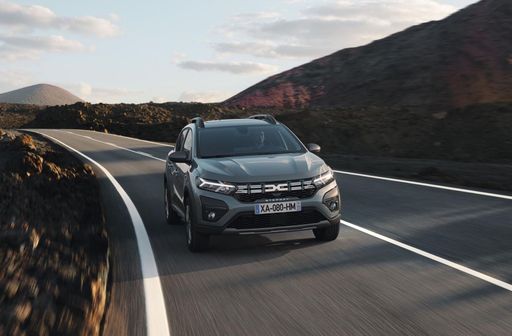
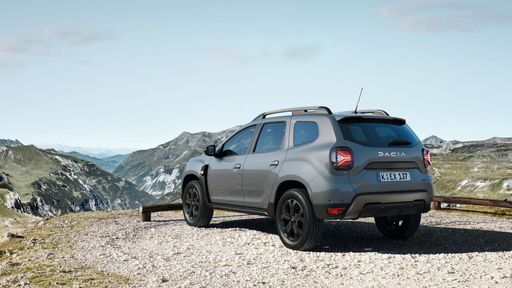
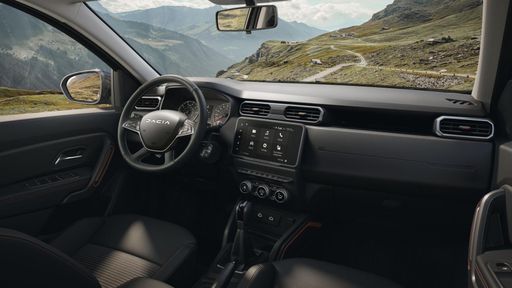
@ Dacia / Renault Group Media
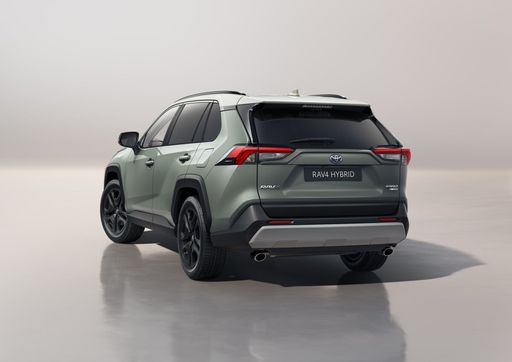
@ Toyota Motor Corporation
VS

Dacia Duster vs Toyota RAV4 – Which one offers the better deal?

Everyday use, family trips or long-distance drives – here’s where the differences show.
Discover whether Dacia Duster or Toyota RAV4 fits your lifestyle better.

Duster @ Dacia / Renault Group Media

The Battle of SUVs: Dacia Duster vs Toyota RAV4

In the bustling world of sports utility vehicles, two models stand out for their unique offerings — the Dacia Duster and the Toyota RAV4. Each brings its own set of strengths to the table, capturing the hearts of drivers across various preferences and needs. Let’s dive deeper into these two models and discover what makes each of them a compelling choice for SUV enthusiasts.
RAV4 @ Toyota Motor Corporation

Design and Dimensions

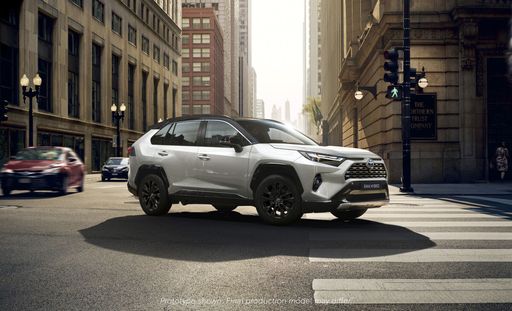
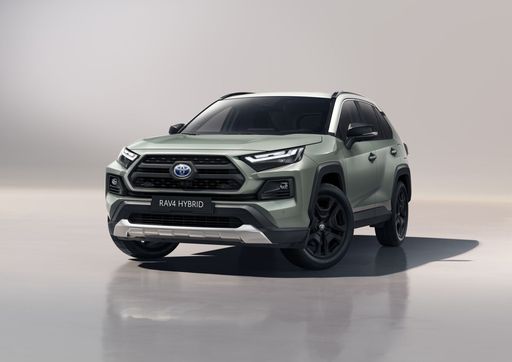
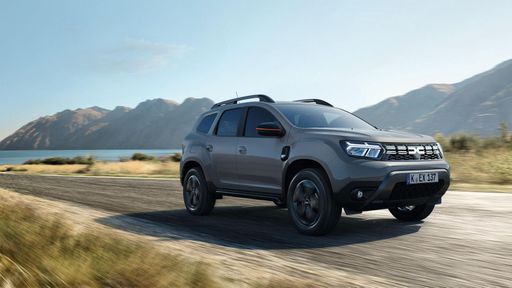
The Dacia Duster and Toyota RAV4, though both classified as SUVs, offer different designs catering to varied aesthetics. The 2024 Duster stretches 4343 mm in length, 1813 mm in width, and stands at 1656 mm tall, crafting a compact yet robust look. Meanwhile, the RAV4, with a 4600 mm length, 1855 mm width, and 1685 mm height, boasts a slightly larger profile, appealing to those who desire more presence on the road.

Duster @ Dacia / Renault Group Media

Performance and Power

Performance aficionados will find intriguing propositions in both vehicles. The Dacia Duster offers multiple engine configurations, ranging from LPG and full hybrid to petrol MHEV, with power output spanning from 91 HP to 140 HP. Its torque varies from 160 Nm to 230 Nm, providing flexible drivetrains that include front-wheel and all-wheel drive options. On the performance front, it accelerates from 0-100 km/h in 9.9 to 14 seconds, with a top speed of 180 km/h.

In contrast, the Toyota RAV4 packs a stronger punch with engine choices that include full hybrid and plug-in hybrid options, delivering between 218 HP to a whopping 306 HP. The RAV4's acceleration is notably brisk for its class, accelerating from 0-100 km/h in just 6 to 8.4 seconds. It presents the same drivetrain options as the Duster but with a focus on maximizing efficiency and power.

RAV4 @ Toyota Motor Corporation

Fuel Efficiency and Environmental Impact

For those focused on fuel economy and environmental impact, the Toyota RAV4 shines brightly. With an exceptional consumption rate of 1 L/100km in its plug-in hybrid version and an electric range of 75 km, it offers the dual advantage of driving economy and reduced emissions. Its CO2 efficiency class ranges from B, showcasing Toyota's commitment to greener driving solutions.

The Dacia Duster, while not as frugal, still offers commendable efficiency with figures between 5 to 8.1 L/100km. Its CO2 efficiency class spans from C to E, reflecting moderate eco-friendliness. For everyday drivers who crave practicality over cutting-edge eco technology, the Duster provides a satisfactory middle ground.

Duster @ Dacia / Renault Group Media

Interior and Cargo Space

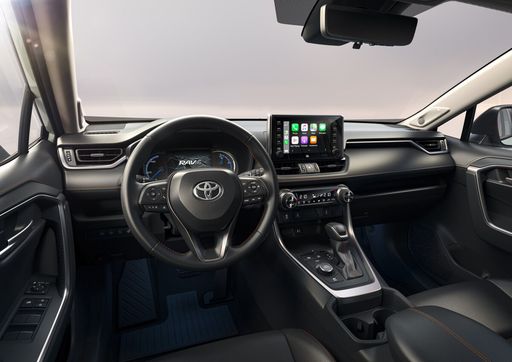
Both SUVs accommodate up to five passengers, but the differences emerge in their cargo offerings. The Dacia Duster comes with trunk capacities ranging between 430 L and 517 L, which is adequate for weekend adventures. The Toyota RAV4 surpasses this with a more generous trunk space of up to 580 L, perfect for those who prioritize cargo capacity for family trips or extensive road journeys.

RAV4 @ Toyota Motor Corporation

Price and Value Proposition

The Dacia Duster is recognized for offering great value for money, catering to budget-conscious buyers who wish to enjoy the SUV lifestyle without breaking the bank. Its straightforward approach and cost-effective options make it an attractive option for pragmatic consumers.

In contrast, the Toyota RAV4 is seen as a premium mainstream offering, delivering advanced hybrid technology, a broad feature set, and exceptional reliability. It appeals to those willing to invest more upfront for a blend of modern conveniences, exemplary efficiency, and robust performance.

Duster @ Dacia / Renault Group Media

Conclusion

Ultimately, choosing between the Dacia Duster and the Toyota RAV4 hinges on individual priorities. The Duster appeals to those seeking an economical SUV with decent performance and practical features, while the RAV4 targets drivers wanting cutting-edge hybrid technology, superior power, and enhanced cargo capacity. Both stand as strong contenders in the SUV segment, offering a testament to the diversity of choices available to today's car buyers.

Here’s where it gets real: The technical differences in detail

RAV4 @ Toyota Motor Corporation

Costs and Efficiency:

Price and efficiency are often the first things buyers look at. Here it becomes clear which model has the long-term edge – whether at the pump, the plug, or in purchase price.

Dacia Duster has a clearly advantage in terms of price – it starts at 16300 £, while the Toyota RAV4 costs 35100 £. That’s a price difference of around 18857 £.

Fuel consumption also shows a difference: Toyota RAV4 manages with 1 L and is therefore convincingly more efficient than the Dacia Duster with 4.70 L. The difference is about 3.70 L per 100 km.

Engine and Performance:

Under the bonnet, it becomes clear which model is tuned for sportiness and which one takes the lead when you hit the accelerator.

When it comes to engine power, the Toyota RAV4 has a clearly edge – offering 306 HP compared to 158 HP. That’s roughly 148 HP more horsepower.

In acceleration from 0 to 100 km/h, the Toyota RAV4 is clearly quicker – completing the sprint in 6 s, while the Dacia Duster takes 9.40 s. That’s about 3.40 s faster.

There’s no difference in top speed – both reach 180 km/h.

Space and Everyday Use:

Whether family car or daily driver – which one offers more room, flexibility and comfort?

Both vehicles offer seating for 5 people.

In curb weight, Dacia Duster is noticeable lighter – 1377 kg compared to 1745 kg. The difference is around 368 kg.

In terms of boot space, the Toyota RAV4 offers a bit more room – 580 L compared to 517 L. That’s a difference of about 63 L.

In maximum load capacity, the Toyota RAV4 performs barely noticeable better – up to 1690 L, which is about 81 L more than the Dacia Duster.

When it comes to payload, Toyota RAV4 clearly perceptible takes the win – 600 kg compared to 453 kg. That’s a difference of about 147 kg.

Who comes out on top?

Overall, the Toyota RAV4 shows itself to be leaves the rival little chance and secures the title of DriveDuel Champion.
It convinces with the more balanced overall package and proves to be the more versatile choice for everyday use.

from about £35,100
RAV4 @ Toyota Motor Corporation

Toyota RAV4

  • Engine Type : Full Hybrid, Plugin Hybrid
  • Transmission : Automatic
  • Drive Type : Front-Wheel Drive, All-Wheel Drive
  • Power HP : 218 - 306 HP
  • Consumption L/100km : 1 - 5.6 L
  • Electric Range : 75 km

Dacia Duster

5 (1)
rate

The Dacia Duster is a no-nonsense compact SUV that delivers rugged practicality and surprisingly comfortable everyday driving without fuss. It might not win any beauty contests, but its honest design, easy-to-live-with cabin and tough attitude make it a smart pick for buyers who want reliable transport without luxury frills.

details

Toyota RAV4

5 (1)
rate

The Toyota RAV4 feels like a sensible friend on the road, marrying dependable practicality with a dash of SUV personality that keeps daily driving from turning dull. Comfortable and easy to live with, it looks tough without shouting and quietly gets the job done — a sensible pick for buyers who want versatility without drama.

details
Dacia Duster
Toyota RAV4
Duster @ Dacia / Renault Group Media
RAV4 @ Toyota Motor Corporation

Costs and Consumption

Price
16300 - 24900 £
Price
35100 - 55700 £
Consumption L/100km
4.7 - 7.5 L
Consumption L/100km
1 - 5.6 L
Consumption kWh/100km
-
Consumption kWh/100km
-
Electric Range
-
Electric Range
75 km
Battery Capacity
0.60 kWh
Battery Capacity
-
co2
107 - 124 g/km
co2
22 - 128 g/km
Fuel tank capacity
50 L
Fuel tank capacity
55 L

Dimensions and Body

Body Type
SUV
Body Type
SUV
Seats
5
Seats
5
Doors
5
Doors
5
Curb weight
1377 - 1455 kg
Curb weight
1745 - 1910 kg
Trunk capacity
348 - 517 L
Trunk capacity
520 - 580 L
Length
4343 mm
Length
4600 mm
Width
1813 mm
Width
1855 mm
Height
1656 - 1659 mm
Height
1685 mm
Max trunk capacity
1414 - 1609 L
Max trunk capacity
1604 - 1690 L
Payload
450 - 453 kg
Payload
390 - 600 kg

Engine and Performance

Engine Type
Petrol MHEV, Full Hybrid, LPG
Engine Type
Full Hybrid, Plugin Hybrid
Transmission
Manuel, Automatic
Transmission
Automatic
Transmission Detail
Manual Gearbox, Automated Manual, Dual-Clutch Automatic
Transmission Detail
CVT
Drive Type
Front-Wheel Drive, All-Wheel Drive
Drive Type
Front-Wheel Drive, All-Wheel Drive
Power HP
115 - 158 HP
Power HP
218 - 306 HP
Acceleration 0-100km/h
9.4 - 11.6 s
Acceleration 0-100km/h
6 - 8.4 s
Max Speed
180 km/h
Max Speed
180 km/h
Torque
190 - 230 Nm
Torque
-
Number of Cylinders
3 - 4
Number of Cylinders
4
Power kW
84 - 116 kW
Power kW
160 - 225 kW
Engine capacity
1199 - 1789 cm3
Engine capacity
2487 cm3

General

Model Year
2025
Model Year
2024 - 2025
CO2 Efficiency Class
D, C
CO2 Efficiency Class
D, B
Brand
Dacia
Brand
Toyota
What drivetrain options does the Dacia Duster have?

The Dacia Duster is offered with Front-Wheel Drive or All-Wheel Drive.

The prices and data displayed are estimates based on German list prices and may vary by country. This information is not legally binding.