@ Dacia / Renault Group Media
@ Škoda Auto a.s. / Škoda Storyboard
VS

Dacia Jogger vs Skoda Octavia Combi – Differences & prices compared

Everyday use, family trips or long-distance drives – here’s where the differences show.
Discover whether Dacia Jogger or Skoda Octavia Combi fits your lifestyle better.

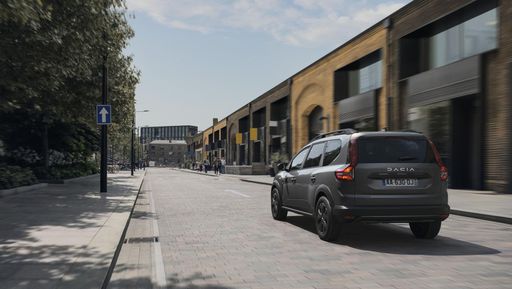
Jogger @ Dacia / Renault Group Media

The Family-Friendly Duel: Dacia Jogger vs Skoda Octavia Combi

In the realm of family vehicles, the Dacia Jogger and the Skoda Octavia Combi are two contenders that manage to captivate with their unique strengths and capabilities. Both offer space, versatility, and a touch of innovation. Here's a closer look at what sets these two models apart in the ever-competitive family car segment.
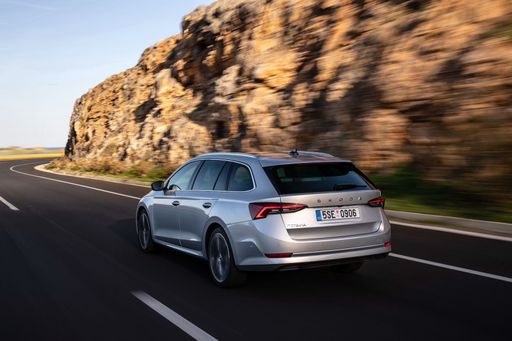
Octavia Combi @ Škoda Auto a.s. / Škoda Storyboard

Design and Dimensions

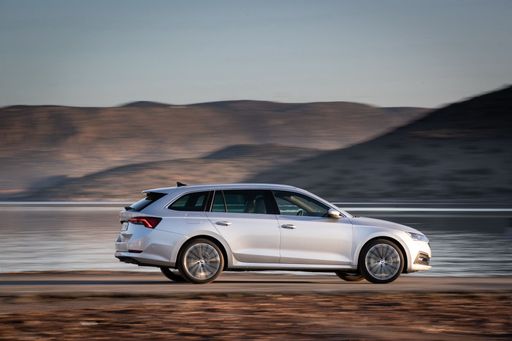
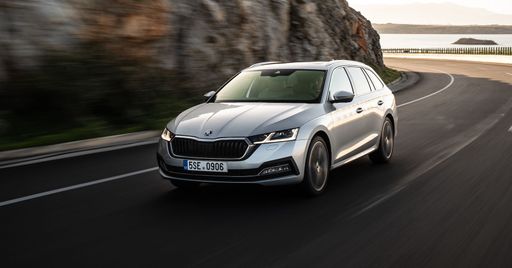
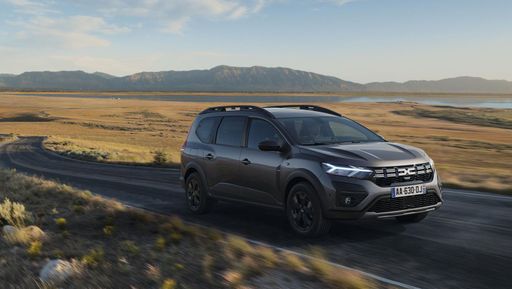
When it comes to design, both vehicles embody practicality, but with distinct styles. The Dacia Jogger, categorized as an MPV, is designed with a focus on function, boasting a length of 4547 mm and an ample width of 1784 mm. Its height of 1674 mm provides a high driving position, which many families appreciate for better road visibility.

On the other hand, the Skoda Octavia Combi, a wagon, stretches slightly longer at 4709 mm and has a narrower stance at 1829 mm in width. Its lower height, averaging around 1468 mm, gives it a sleek, aerodynamic look, a signature of Skoda’s design language.

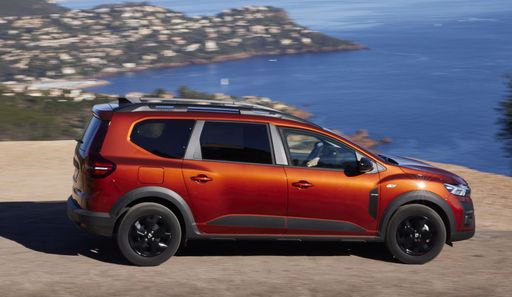
Jogger @ Dacia / Renault Group Media

Interior Space and Comfort

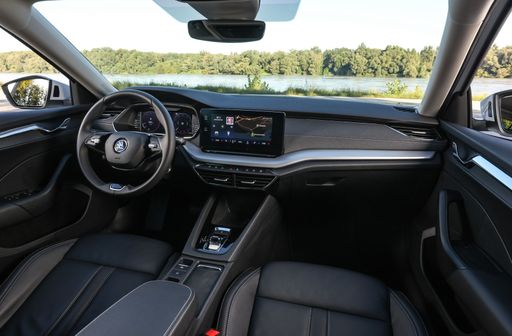
The Jogger's interior is commendable with seating flexibility for either 5 or 7 passengers, making it ideal for larger families. Its trunk capacity ranges from 160 L up to 607 L, depending on the seat configuration, ensuring ample space for travel necessities.

In comparison, the Octavia Combi, though seating for only 5, offers a generous trunk space of 640 L. This makes it a practical choice for long trips, where cargo capacity is key.

Octavia Combi @ Škoda Auto a.s. / Škoda Storyboard

Performance and Engine Choices

Engine versatility is a highlight for both models. The Dacia Jogger provides options for full hybrid, LPG, and petrol engines, with power ranging from 91 to 140 HP. Fuel economy is a strong selling point, with consumption as low as 4.7 L/100km and CO2 emissions starting at 105 g/km, ideal for the eco-conscious driver.

The Octavia Combi offers a broader range of engine types, including petrol, petrol MHEV, and diesel, with power output ranging from 116 HP to a robust 265 HP. Its fuel efficiency is equally impressive, with consumption starting at 4.4 L/100km and emissions as low as 114 g/km.

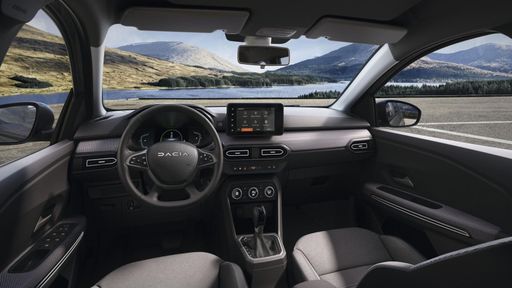
Jogger @ Dacia / Renault Group Media

Drive Dynamics and Handling

Driving dynamics differ significantly between the two. The Jogger, with its front-wheel drive configuration, combines comfort with simplicity. Its varied transmission offerings, including automatic and manual, cater to diverse driving preferences.

Skoda's Octavia Combi ups the ante with both front-wheel and all-wheel drive options. It also presents a choice between manual and dual-clutch automatic gearboxes, enriching the driving experience, particularly for those who appreciate a sporty feel.

Octavia Combi @ Škoda Auto a.s. / Škoda Storyboard

Safety and Innovation

Both vehicles come equipped with a host of safety features. The Dacia Jogger includes essentials, while prioritizing value for money. The Octavia Combi, known for its innovative edge, provides advanced safety systems and technology enhancements, reflecting Skoda’s commitment to crafting reliable, family-oriented vehicles.

Jogger @ Dacia / Renault Group Media

Conclusion

Choosing between the Dacia Jogger and the Skoda Octavia Combi depends largely on specific needs—whether it's the spacious and flexible interior of the Jogger or the sophisticated innovation of the Octavia that sways the decision. Both vehicles excel in delivering what families need most: practical transportation with a touch of style and modern convenience.

Here’s where it gets real: The technical differences in detail

Octavia Combi @ Škoda Auto a.s. / Škoda Storyboard

Costs and Efficiency:

When it comes to price and running costs, the biggest differences usually appear. This is often where you see which car fits your budget better in the long run.

Dacia Jogger has a significantly advantage in terms of price – it starts at 15400 £, while the Skoda Octavia Combi costs 24400 £. That’s a price difference of around 9000 £.

Fuel consumption also shows a difference: Skoda Octavia Combi manages with 4.40 L and is therefore hardly perceptible more efficient than the Dacia Jogger with 4.70 L. The difference is about 0.30 L per 100 km.

Engine and Performance:

Power, torque and acceleration are the classic benchmarks for car enthusiasts – and here, some clear differences start to show.

When it comes to engine power, the Skoda Octavia Combi has a decisively edge – offering 265 HP compared to 140 HP. That’s roughly 125 HP more horsepower.

In acceleration from 0 to 100 km/h, the Skoda Octavia Combi is significantly quicker – completing the sprint in 6.50 s, while the Dacia Jogger takes 9.80 s. That’s about 3.30 s faster.

In terms of top speed, the Skoda Octavia Combi performs evident better – reaching 250 km/h, while the Dacia Jogger tops out at 174 km/h. The difference is around 76 km/h.

There’s also a difference in torque: Skoda Octavia Combi pulls convincingly stronger with 370 Nm compared to 200 Nm. That’s about 170 Nm difference.

Space and Everyday Use:

Whether family car or daily driver – which one offers more room, flexibility and comfort?

Seats: Dacia Jogger offers clearly perceptible more seating capacity – 7 vs 5.

In curb weight, Dacia Jogger is barely noticeable lighter – 1251 kg compared to 1366 kg. The difference is around 115 kg.

In terms of boot space, the Skoda Octavia Combi offers barely noticeable more room – 640 L compared to 607 L. That’s a difference of about 33 L.

In maximum load capacity, the Dacia Jogger performs minimal better – up to 1819 L, which is about 119 L more than the Skoda Octavia Combi.

When it comes to payload, Dacia Jogger minimal takes the win – 582 kg compared to 534 kg. That’s a difference of about 48 kg.

Who comes out on top?

Overall, the Skoda Octavia Combi shows itself to be wins the duel decisively and secures the title of DriveDuel Champion.
It convinces with the more balanced overall package and proves to be the more versatile choice for everyday use.

from about £24,400
Octavia Combi @ Škoda Auto a.s. / Škoda Storyboard

Skoda Octavia Combi

  • Engine Type : Petrol, Petrol MHEV, Diesel
  • Transmission : Automatic, Manuel
  • Drive Type : Front-Wheel Drive, All-Wheel Drive
  • Power HP : 116 - 265 HP
  • Consumption L/100km : 4.4 - 6.9 L

Dacia Jogger

The Dacia Jogger is a no-nonsense family mover that stretches the idea of value with cavernous practicality and flexible space, perfect for buyers who need a sensible, everyday Swiss Army knife on wheels. It doesn’t try to be glamorous — instead it wins hearts with cheerful thrift, durable materials and honest engineering, giving you useful transport without the pretence.

details

Skoda Octavia Combi

The Skoda Octavia Combi is the sensible family wagon that somehow turns grocery runs and long trips into a pleasant, unshowy experience — spacious, practical and built like it prefers reliability over flash. With smart touches, clever storage and a cabin that feels grown-up rather than frugal, it’s an easy recommendation for buyers who want maximum utility without sacrificing comfort or style.

details
Dacia Jogger
Skoda Octavia Combi
Jogger @ Dacia / Renault Group Media
Octavia Combi @ Škoda Auto a.s. / Škoda Storyboard

Costs and Consumption

Price
15400 - 23400 £
Price
24400 - 42300 £
Consumption L/100km
4.7 - 7.8 L
Consumption L/100km
4.4 - 6.9 L
Consumption kWh/100km
-
Consumption kWh/100km
-
Electric Range
-
Electric Range
-
Battery Capacity
0.60 kWh
Battery Capacity
-
co2
105 - 137 g/km
co2
113 - 157 g/km
Fuel tank capacity
40 - 50 L
Fuel tank capacity
45 - 55 L

Dimensions and Body

Body Type
MPV
Body Type
Estate
Seats
5 - 7
Seats
5
Doors
5
Doors
5
Curb weight
1251 - 1460 kg
Curb weight
1366 - 1553 kg
Trunk capacity
160 - 607 L
Trunk capacity
640 L
Length
4547 mm
Length
4698 - 4709 mm
Width
1784 mm
Width
1829 mm
Height
1674 mm
Height
1455 - 1468 mm
Max trunk capacity
1807 - 1819 L
Max trunk capacity
1700 L
Payload
393 - 582 kg
Payload
471 - 534 kg

Engine and Performance

Engine Type
Full Hybrid, LPG, Petrol
Engine Type
Petrol, Petrol MHEV, Diesel
Transmission
Automatic, Manuel
Transmission
Automatic, Manuel
Transmission Detail
Automatic Gearbox, Manual Gearbox
Transmission Detail
Dual-Clutch Automatic, Manual Gearbox
Drive Type
Front-Wheel Drive
Drive Type
Front-Wheel Drive, All-Wheel Drive
Power HP
91 - 140 HP
Power HP
116 - 265 HP
Acceleration 0-100km/h
9.8 - 13.2 s
Acceleration 0-100km/h
6.5 - 10.7 s
Max Speed
167 - 174 km/h
Max Speed
203 - 250 km/h
Torque
160 - 200 Nm
Torque
220 - 370 Nm
Number of Cylinders
3 - 4
Number of Cylinders
4
Power kW
67 - 103 kW
Power kW
85 - 195 kW
Engine capacity
999 - 1598 cm3
Engine capacity
1498 - 1984 cm3

General

Model Year
2024 - 2025
Model Year
2024 - 2025
CO2 Efficiency Class
C, D
CO2 Efficiency Class
E, F, D, C
Brand
Dacia
Brand
Skoda
What drivetrain options does the Dacia Jogger have?

The Dacia Jogger is offered with Front-Wheel Drive.

The prices and data displayed are estimates based on German list prices and may vary by country. This information is not legally binding.