
 Deutschland
 France
 Nederland
 Great Britain
 Sverige
 Norge
Norge Danmark
 Suomi
Suomi Italia
 Polska
 España
VS
Dacia Spring vs Hyundai Tucson – Which one offers the better deal?
Compare performance, boot capacity, efficiency and price at a glance.
Find out which car is the better choice for you – Dacia Spring or Hyundai Tucson?
Spring
@ Dacia / Renault Group Media
Costs and Efficiency:
When it comes to price and running costs, the biggest differences usually appear. This is often where you see which car fits your budget better in the long run.
Dacia Spring has a significantly advantage in terms of price – it starts at 14500 £, while the Hyundai Tucson costs 30600 £. That’s a price difference of around 16149 £.
As for range, the Dacia Spring performs significantly better – achieving up to 228 km, about 158 km more than the Hyundai Tucson.
Tucson
@ Hyundai Motor Company
Engine and Performance:
Under the bonnet, it becomes clear which model is tuned for sportiness and which one takes the lead when you hit the accelerator.
When it comes to engine power, the Hyundai Tucson has a significantly edge – offering 252 HP compared to 65 HP. That’s roughly 187 HP more horsepower.
In acceleration from 0 to 100 km/h, the Hyundai Tucson is convincingly quicker – completing the sprint in 7.90 s, while the Dacia Spring takes 13.70 s. That’s about 5.80 s faster.
In terms of top speed, the Hyundai Tucson performs noticeable better – reaching 204 km/h, while the Dacia Spring tops out at 125 km/h. The difference is around 79 km/h.
There’s also a difference in torque: Hyundai Tucson pulls decisively stronger with 379 Nm compared to 125 Nm. That’s about 254 Nm difference.
Spring
@ Dacia / Renault Group Media
Space and Everyday Use:
Cabin size, boot volume and payload all play a role in everyday practicality. Here, comfort and flexibility make the difference.
Seats: Hyundai Tucson offers slightly more seating capacity – 5 vs 4.
In curb weight, Dacia Spring is decisively lighter – 1013 kg compared to 1542 kg. The difference is around 529 kg.
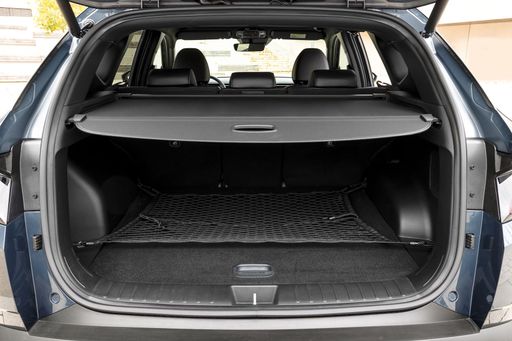
In terms of boot space, the Hyundai Tucson offers significantly more room – 620 L compared to 308 L. That’s a difference of about 312 L.
In maximum load capacity, the Hyundai Tucson performs convincingly better – up to 1799 L, which is about 795 L more than the Dacia Spring.
When it comes to payload, Hyundai Tucson decisively takes the win – 545 kg compared to 302 kg. That’s a difference of about 243 kg.
Who wins the race?
The Hyundai Tucson proves to be wins the duel decisively and therefore becomes our DriveDuel Champion!
Hyundai Tucson is the better all-rounder in this comparison.
from about £30,600
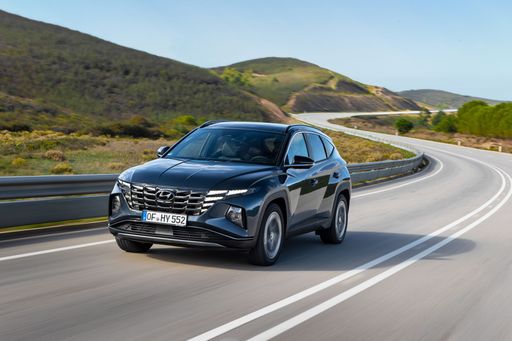 @ Hyundai Motor Company
Hyundai Tucson
Dacia Spring
The Dacia Spring stands out as an affordable and environmentally friendly option in the electric vehicle market, combining practicality with a compact design ideal for urban settings. Its minimalist interior, while basic, provides all the essential features needed for a comfortable drive, reflecting its cost-effective approach. The vehicle's performance suits city driving, making it an appealing choice for those seeking an entry-level electric car.
details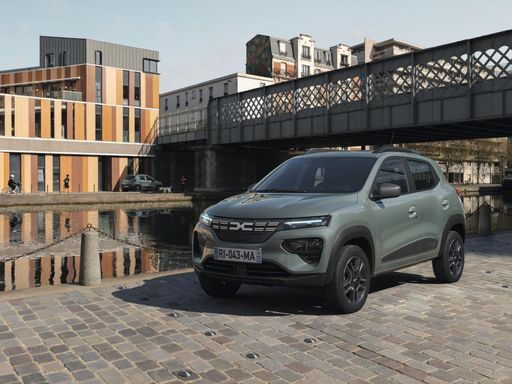 @ Dacia / Renault Group Media
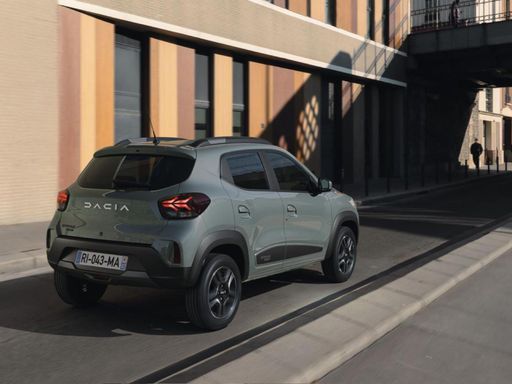 @ Dacia / Renault Group Media
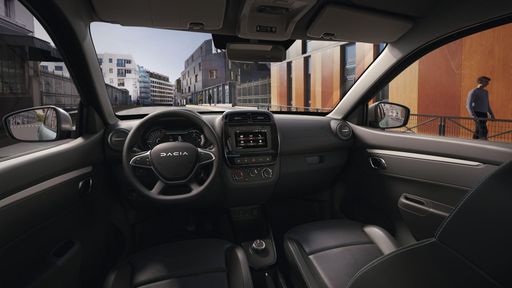 @ Dacia / Renault Group Media
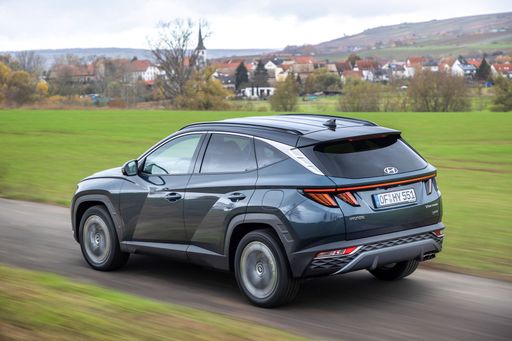
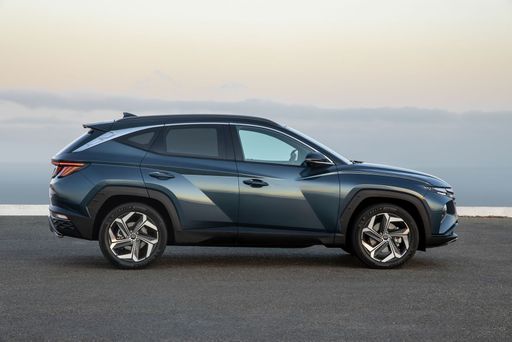
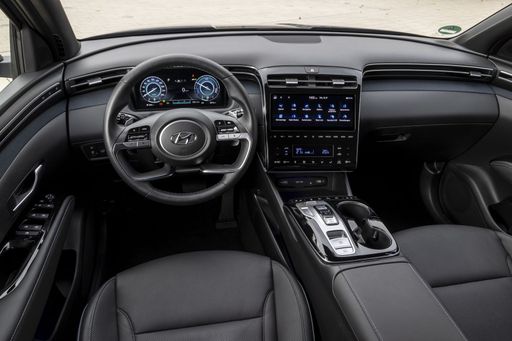
Hyundai Tucson
Hyundai Tucson marries bold, sculpted looks with a clever, roomy cabin that feels smarter than its price tag suggests. It's composed on the road, easy to live with day-to-day, and a sensible choice for buyers who want SUV style without the showroom theatrics.
details
@ Hyundai Motor Company
 @ Hyundai Motor Company
 @ Hyundai Motor Company
 @ Hyundai Motor Company
 @ Hyundai Motor Company
Dacia Spring
Hyundai Tucson
|
@ Dacia / Renault Group Media
|
@ Hyundai Motor Company
|
|
|
|
Costs and Consumption |
|
|---|---|
|
Price
14500 - 17100 £
|
Price
30600 - 46300 £
|
|
Consumption L/100km
-
|
Consumption L/100km
1 - 7.6 L
|
|
Consumption kWh/100km
13.2 - 14.1 kWh
|
Consumption kWh/100km
-
|
|
Electric Range
225 - 228 km
|
Electric Range
64 - 70 km
|
|
Battery Capacity
26.80 kWh
|
Battery Capacity
-
|
|
co2
0 g/km
|
co2
22 - 172 g/km
|
|
Fuel tank capacity
-
|
Fuel tank capacity
42 - 54 L
|
Dimensions and Body |
|
|---|---|
|
Body Type
SUV
|
Body Type
SUV
|
|
Seats
4
|
Seats
5
|
|
Doors
5
|
Doors
5
|
|
Curb weight
1013 - 1050 kg
|
Curb weight
1542 - 1889 kg
|
|
Trunk capacity
308 L
|
Trunk capacity
546 - 620 L
|
|
Length
3701 mm
|
Length
4510 - 4535 mm
|
|
Width
1583 mm
|
Width
1865 mm
|
|
Height
1519 mm
|
Height
1650 mm
|
|
Max trunk capacity
1004 L
|
Max trunk capacity
1721 - 1799 L
|
|
Payload
265 - 302 kg
|
Payload
523 - 545 kg
|
Engine and Performance |
|
|---|---|
|
Engine Type
Electric
|
Engine Type
Diesel MHEV, Plugin Hybrid, Petrol, Full Hybrid
|
|
Transmission
Automatic
|
Transmission
Automatic, Manuel
|
|
Transmission Detail
Reduction Gearbox
|
Transmission Detail
Dual-Clutch Automatic, Automatic Gearbox, Manual Gearbox
|
|
Drive Type
Front-Wheel Drive
|
Drive Type
Front-Wheel Drive, All-Wheel Drive
|
|
Power HP
44 - 65 HP
|
Power HP
136 - 252 HP
|
|
Acceleration 0-100km/h
13.7 - 19.1 s
|
Acceleration 0-100km/h
7.9 - 11.6 s
|
|
Max Speed
125 km/h
|
Max Speed
180 - 204 km/h
|
|
Torque
113 - 125 Nm
|
Torque
250 - 379 Nm
|
|
Number of Cylinders
-
|
Number of Cylinders
4
|
|
Power kW
33 - 48 kW
|
Power kW
100 - 185 kW
|
|
Engine capacity
-
|
Engine capacity
1598 cm3
|
General |
|
|---|---|
|
Model Year
2024
|
Model Year
2024 - 2025
|
|
CO2 Efficiency Class
A
|
CO2 Efficiency Class
E, B, F, D
|
|
Brand
Dacia
|
Brand
Hyundai
|
What drive types are available for the Dacia Spring?
The Dacia Spring is available as Front-Wheel Drive.
The prices and data displayed are estimates based on German list prices and may vary by country. This information is not legally binding.