VS

DS Automobiles DS 4 vs Jaguar F-Pace comparison

Compare performance (130 HP vs 575 HP), boot space and price (34,000 £ vs 56,400 £ ) at a glance. Find out which car is the better choice for you – DS Automobiles DS 4 or Jaguar F-Pace?

DS Automobiles DS 4 vs Jaguar F-Pace: Key differences

DS Automobiles DS 4

  • considerably cheaper
  • noticeably lighter
details

Jaguar F-Pace

5 (1 Reviews)
rate
  • clearly more power
  • clearly more efficient
  • considerably quicker 0–100 km/h
  • only slightly more trunk space
details

All details on performance, efficiency, range and trunk space can be found in the technical comparison below – including user reviews for both models.

By Achim Sedelmaier

DS 4

DS 4 vs Jaguar F-Pace: Compact Precision Meets Luxurious Power

When it comes to choosing a car that perfectly balances innovation, performance, and style, two names often come up: the DS 4 and the Jaguar F-Pace. Both vehicles promise an exceptional driving experience, but cater to differing tastes and needs. Let's dive into the nuances and technological advancements that set these vehicles apart.
F-Pace

Design and Dimensions

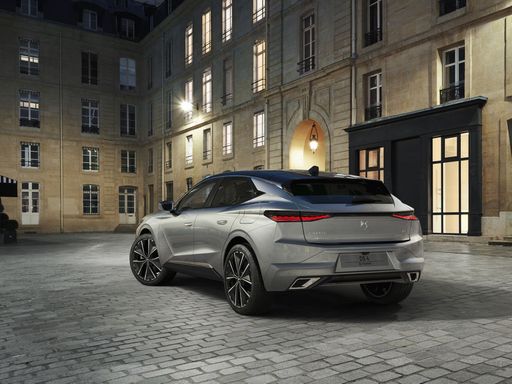
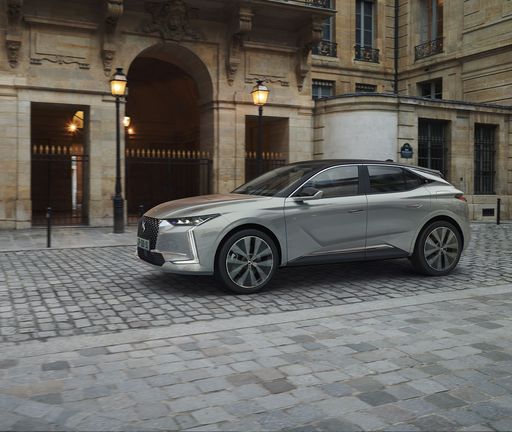
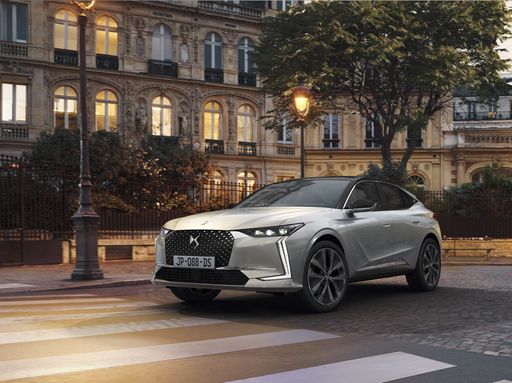
The DS 4, a sleek hatchback measuring 4400mm in length, 1830mm in width, and 1470mm in height, stands as a testament to DS Automobiles' commitment to modern elegance. Its shape is aerodynamic yet stylish, making it a perfect fit for urban settings.

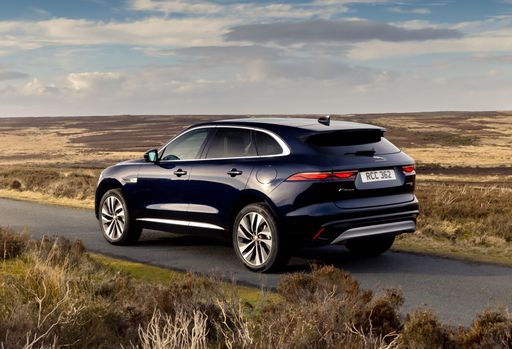
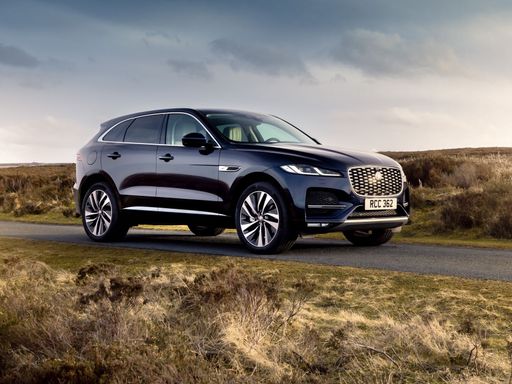
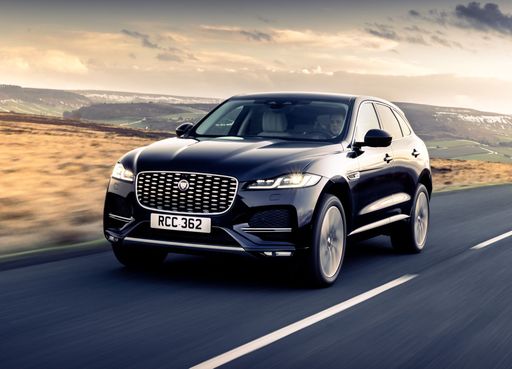
Meanwhile, the Jaguar F-Pace embodies the powerful stature of an SUV with its length of up to 4762mm, a width of 1936mm, and a towering height of up to 1670mm. Its presence is both commanding and luxurious, appealing to those who crave road dominance along with refined aesthetics.

DS 4

Engine and Performance

The DS 4 offers a dynamic range of engines, from a practical diesel to innovative petrol MHEV options. Output powers range from 130 HP to 224 HP, ensuring choices for various driving preferences. The inclusion of plug-in hybrid technology grants an electric range of 62 km, supported by a 10 kWh battery. With a top speed reaching up to 233 km/h and acceleration from 0 to 100 km/h in as little as 7.7 seconds, the DS 4 doesn't just promise efficiency but delivers surprising vigor.

Conversely, the Jaguar F-Pace provides a spectrum of powerful engines, from a modest 163 HP diesel MHEV to a thrilling 575 HP petrol option. The all-wheel drive system enhances road grip, while the inclusion of a plug-in hybrid variant offers respect for the environment with a 64-km electric range and a larger 15.4 kWh battery. Performance enthusiasts will revel in its capacity to accelerate from 0 to 100 km/h in a breathtaking 4 seconds with top speeds of up to 286 km/h.

F-Pace

Innovation and Technology

The DS 4 embraces state-of-the-art technology with an advanced automatic gearbox and dual-clutch transmission, enhancing driving smoothness and fuel economy. The car boasts CO2 emissions starting from just 32 g/km in its hybrid variant, marking it as a thoughtful choice for eco-conscious drivers.

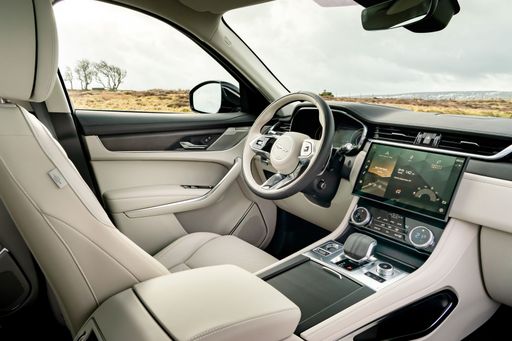
Jaguar's F-Pace, renowned for its technological prowess, features an automatic gearbox that pairs seamlessly with its potent engines. The vehicle offers a sophisticated suite of driving aids and features that place it at the forefront of luxury automotive innovation. Its plug-in hybrid variant manages a significant reduction in CO2 emissions to as low as 41 g/km, appealing to those looking for both power and responsibility.

DS 4

Interior Space and Practicality

Inside, the DS 4 provides ample space for five passengers, complemented by a trunk capacity of up to 430 liters. This makes it suitable for families and urban adventurers alike. Its payload capacity reaches up to 442 kg, allowing for considerable loading options.

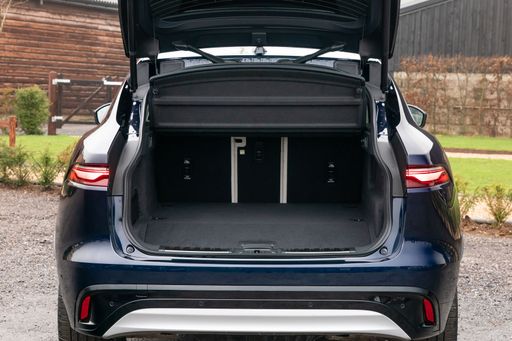
The Jaguar F-Pace also comfortably seats five, offering a spacious trunk of up to 470 liters in its hybrid variant. With a higher curb weight, the F-Pace supports a maximum payload of up to 589 kg, enhancing its suitability for those with active lifestyles or frequent long-distance travels.

F-Pace

Conclusion

In summary, choosing between the DS 4 and the Jaguar F-Pace is a matter of individual preference and need. The DS 4 appeals with its compact design, economical performance, and modern sensibilities, while the Jaguar F-Pace dazzles with its commanding presence, luxurious power, and cutting-edge technology. Both vehicles present a compelling case for their respective markets, ensuring that whichever you choose, innovation and quality are guaranteed companions on your journey.

Here’s where it gets real: The technical differences in detail

DS 4

Costs and Efficiency:

Price and efficiency are key factors when choosing a car – and this is often where the real differences emerge.

DS Automobiles DS 4 is considerably cheaper – starting at 34,000 £ , while the Jaguar F-Pace costs 56,400 £ . That’s a price difference of around 22,423 £.

Fuel consumption also shows a difference: the Jaguar F-Pace uses 1.8 L/100km and is clearly more efficient than the DS Automobiles DS 4 with 5.2 L/100km. The difference is about 3.4 L/100km.

F-Pace

Engine and Performance:

Power, torque and acceleration are the classic benchmarks for car enthusiasts – and here, some clear differences start to show.

When it comes to engine power, the Jaguar F-Pace offers clearly more power – delivering 575 HP compared to 130 HP. That’s roughly 445 HP more horsepower.

When accelerating from 0 to 100 km/h, the Jaguar F-Pace is considerably quicker – completing the sprint in 4 s, while the DS Automobiles DS 4 takes 10.9 s. That’s about 6.9 s quicker.

Looking at top speed, the Jaguar F-Pace is markedly faster – reaching 286 km/h, while the DS Automobiles DS 4 tops out at 203 km/h. The difference is around 83 km/h.

There’s also a difference in torque: the Jaguar F-Pace delivers considerably more torque with 700 Nm compared to 300 Nm. That’s about 400 Nm more.

DS 4

Space and Everyday Use:

Whether family car or daily driver – which one offers more room, flexibility and comfort?

Both vehicles offer seating for 5 people.

In terms of curb weight, DS Automobiles DS 4 is noticeably lighter – 1,558 kg compared to 1,951 kg. The difference is around 393 kg.

Looking at boot space, the Jaguar F-Pace offers only slightly more boot space – 470 L compared to 430 L. That’s a difference of about 40 L.

For maximum load capacity, the Jaguar F-Pace offers somewhat more capacity – up to 1,428 L, about 188 L more than the DS Automobiles DS 4.

When it comes to payload, the Jaguar F-Pace carries noticeably more – 589 kg compared to 442 kg. That’s a difference of about 147 kg.

Who wins the race in the data check?

The Jaguar F-Pace is far ahead overall in the objective data comparison.
This result only shows which model scores more points on paper – not which of the two cars feels right for you.

from £56,400
F-Pace

Jaguar F-Pace

  • Engine Type Diesel MHEV, Petrol MHEV, Plugin Hybrid, Petrol
  • Transmission Automatic
  • Drive Type All-Wheel Drive
  • Power HP 163 - 575 HP
  • Consumption L/100km 1.8 - 12 L/100km
  • Electric Range 64 km
DS Automobiles DS 4
Jaguar F-Pace

Costs and Consumption

View detailed analysis

Engine and Performance

View detailed analysis

Dimensions and Body

View detailed analysis

DS Automobiles DS 4

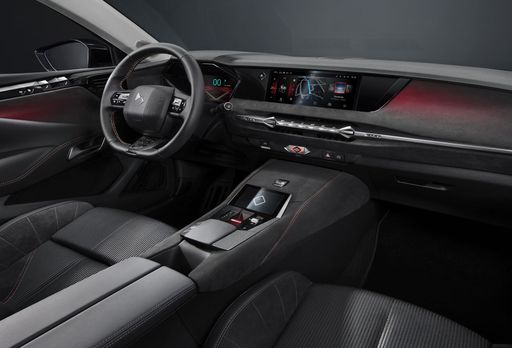
The DS 4 is a striking compact that wears couture-inspired styling like a tailored suit, and its cabin feels more boutique hotel than ordinary hatchback with premium materials and clever detailing. On the road it mixes poise with comfort, rewarding drivers who want a refined, characterful alternative to the usual suspects — and enjoy the odd admiring glance at the lights.

details

Jaguar F-Pace

Jaguar F-Pace blends the prowling presence of a sports car with the practicality of an SUV, looking elegant while rewarding drivers with lively handling. If you crave something that feels special every time you climb in and prefer style and driving flair over blending into the parking lot, the F-Pace is a classy, slightly cheeky alternative to the usual German suspects.

details
DS Automobiles DS 4
Jaguar F-Pace

Costs and Consumption

Price
34,000 - 41,700 £
Price
56,400 - 100,800 £
Consumption L/100km
5.2 L/100km
Consumption L/100km
1.8 - 12 L/100km
Consumption kWh/100km
-
Consumption kWh/100km
-
Electric Range
-
Electric Range
64 km
Battery Capacity
-
Battery Capacity
15.4 kWh
co2
137 g/km
co2
41 - 274 g/km
Fuel tank capacity
53 L
Fuel tank capacity
62 - 83 L

Dimensions and Body

Body Type
Hatchback
Body Type
SUV
Seats
5
Seats
5
Doors
5
Doors
5
Curb weight
1,558 kg
Curb weight
1,951 - 2,230 kg
Trunk capacity
430 L
Trunk capacity
354 - 470 L
Length
4,400 mm
Length
4,747 - 4,762 mm
Width
1,830 mm
Width
1,936 mm
Height
1,470 mm
Height
1,664 - 1,670 mm
Max trunk capacity
1,240 L
Max trunk capacity
1,299 - 1,428 L
Payload
442 kg
Payload
457 - 589 kg

Engine and Performance

Engine Type
Diesel
Engine Type
Diesel MHEV, Petrol MHEV, Plugin Hybrid, Petrol
Transmission
Automatic
Transmission
Automatic
Transmission Detail
Automatic Gearbox
Transmission Detail
Automatic Gearbox
Drive Type
Front-Wheel Drive
Drive Type
All-Wheel Drive
Power HP
130 HP
Power HP
163 - 575 HP
Acceleration 0-100km/h
10.9 s
Acceleration 0-100km/h
4 - 10.1 s
Max Speed
203 km/h
Max Speed
195 - 286 km/h
Torque
300 Nm
Torque
380 - 700 Nm
Number of Cylinders
4
Number of Cylinders
4 - 8
Power kW
96 kW
Power kW
120 - 423 kW
Engine capacity
1,499 cm3
Engine capacity
1,997 - 5,000 cm3

General

Model Year
2,024 - 2,025
Model Year
2024
CO2 Efficiency Class
E
CO2 Efficiency Class
G, B
Brand
DS Automobiles
Brand
Jaguar
DriveDuel uses data analysis and artificial intelligence to evaluate vehicle data and create content. Content is regularly reviewed and improved. The displayed prices are estimates based on German list prices, adjusted to the respective country’s VAT. Country-specific registration taxes are not included. This information is not legally binding.