@ DS Automobiles / Stellantis Media
@ Volkswagen AG / VW Media
VS

DS Automobiles DS 7 vs VW Tayron – Performance, range & efficiency compared

Everyday use, family trips or long-distance drives – here’s where the differences show.
Discover whether DS Automobiles DS 7 or VW Tayron fits your lifestyle better.

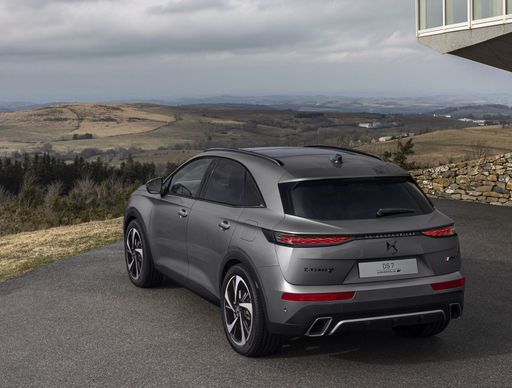
DS 7 @ DS Automobiles / Stellantis Media

The SUV market continues to expand as drivers seek practicality, style, and modern technology. Among the top contenders in this evolving segment, the DS Automobiles DS 7 Crossback and the VW Tayron emerge as strong competitors, each boasting unique characteristics to attract buyers. Let’s take an in-depth look at how these two vehicles stack up against one another in terms of technical specifications, innovation, and driving enjoyment.
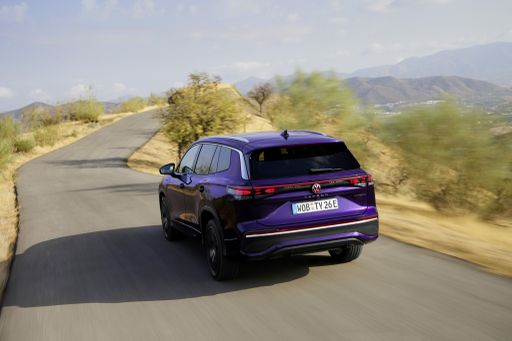
Tayron @ Volkswagen AG / VW Media

Powertrains and Performance

When it comes to engine alternatives, both the DS 7 Crossback and VW Tayron offer a range of options catering to different performance needs. The DS 7 Crossback serves up a selection of powertrains, including diesel, petrol, and plug-in hybrid engines, with power outputs ranging from 130 to 360 HP. Notably, the hybrid variant boasts an impressive electric range of up to 65 km, paired with a smooth automatic gearbox that enhances driving comfort.

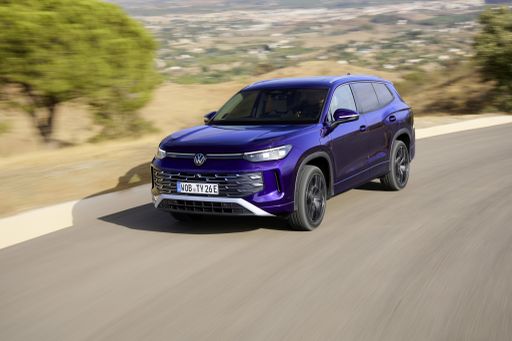
In contrast, VW's Tayron also presents a robust line-up that includes petrol MHEV, plug-in hybrid, and diesel options, yielding between 150 and 272 HP. This range allows for swift acceleration, with the Tayron achieving a 0-100 km/h time as quick as 6.1 seconds in its most powerful configuration. Yet, its electric variant offers a maximum electric range of 126 km, significantly surpassing the DS 7 Crossback, making it more suitable for electric-only commuting.

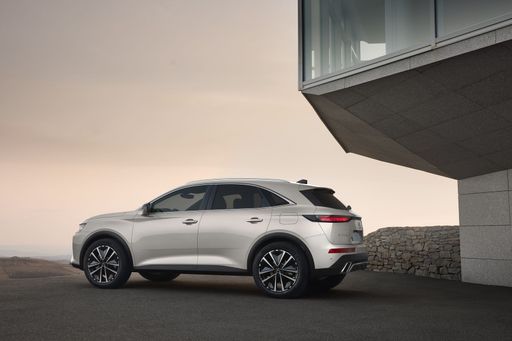
DS 7 @ DS Automobiles / Stellantis Media

Fuel Efficiency

Fuel efficiency remains a vital factor for environmentally conscious consumers. The DS 7 Crossback’s diesel engines provide impressive consumption figures as low as 5.5 L/100 km while maintaining commendable performance levels. The plug-in hybrid models, consuming around 1.3 to 1.9 L/100 km, redefine efficiency, offering a sustainable driving option without sacrificing power.

On the other hand, the Tayron displays a slightly higher fuel consumption range, with figures between 5.4 and 7.8 L/100 km depending on the engine type. However, its plug-in hybrid variants achieve strikingly low consumption, showcasing VW's dedication to electrification.

Tayron @ Volkswagen AG / VW Media

Dimensions and Interior Space

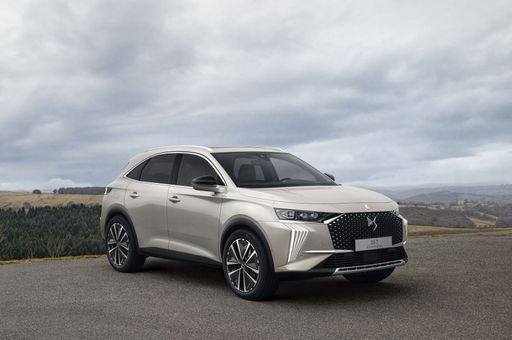
Both SUVs prioritize comfort and usability, yet they differ markedly in dimensions. The DS 7 Crossback measures 4593 mm in length and has a trunk capacity of 555 liters, providing ample space for passengers and luggage alike. Its height of 1625 mm gives it a commanding presence but maintains a sleek silhouette that is appealing for urban drivers.

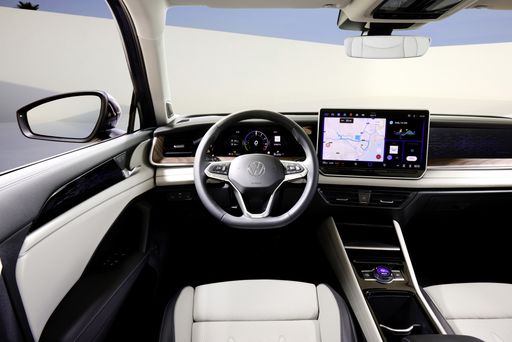
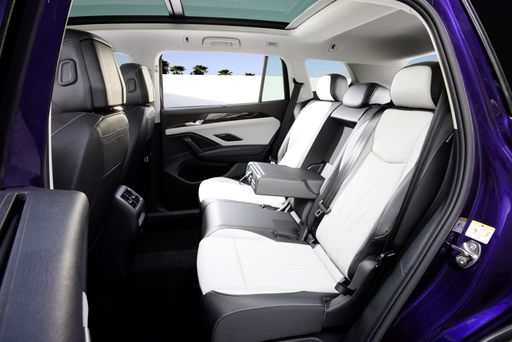
Conversely, the VW Tayron is larger, with a length of 4792 mm, significantly enhancing its trunk capacity to 885 liters. Its height of 1668 mm allows for a more spacious cabin area, ensuring that both driver and passengers enjoy a roomy experience. This additional space can be critical for families or those who require extra cargo capacity during their travels.

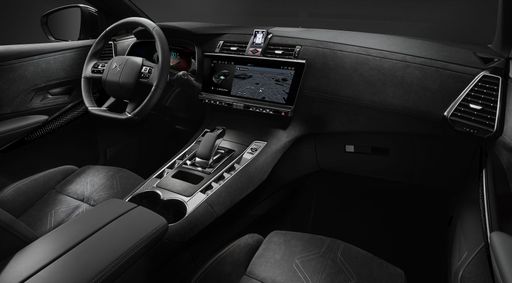
DS 7 @ DS Automobiles / Stellantis Media

Technology and Innovations

In the era of digitalization, both models are equipped with advanced technological features aimed at enhancing the driving experience. The DS 7 Crossback incorporates high-end materials and cutting-edge infotainment systems that boast touchscreen interfaces, smartphone connectivity, and top-notch sound systems. It also employs a comprehensive suite of driver assistance technologies, helping elevate safety standards.

The VW Tayron, renowned for its practicality, does not fall short in this department either. It offers a dual-clutch automatic transmission that ensures rapid gear changes, an intuitive digital cockpit, and a full suite of connectivity options. The available driver aids are competitive, providing adaptive cruise control and lane-assist features to deliver a stress-free, more secure driving experience.

Tayron @ Volkswagen AG / VW Media

Conclusion

Choosing between the DS Automobiles DS 7 Crossback and the VW Tayron ultimately depends on individual preferences and priorities. Those seeking luxury with efficient hybrid choices may gravitate towards the DS 7, while practical buyers looking for spaciousness and technology might find the Tayron more appealing.

Both vehicles represent the best of what today’s SUV segment has to offer, combining performance with comfort and modern innovation. Whether you favor the chic sophistication of the DS or the versatile practicality of the VW, you would be choosing a well-rounded SUV tailored to meet the demands of contemporary life.

Here’s where it gets real: The technical differences in detail

DS 7 @ DS Automobiles / Stellantis Media

Costs and Efficiency:

Looking at overall running costs, both models reveal some interesting differences in everyday economy.

VW Tayron has a barely noticeable advantage in terms of price – it starts at 39600 £, while the DS Automobiles DS 7 costs 41900 £. That’s a price difference of around 2268 £.

Fuel consumption also shows a difference: DS Automobiles DS 7 manages with 1.30 L and is therefore a bit more efficient than the VW Tayron with 1.50 L. The difference is about 0.20 L per 100 km.

As for range, the VW Tayron performs clearly better – achieving up to 123 km, about 58 km more than the DS Automobiles DS 7.

Tayron @ Volkswagen AG / VW Media

Engine and Performance:

Power, torque and acceleration are the classic benchmarks for car enthusiasts – and here, some clear differences start to show.

When it comes to engine power, the DS Automobiles DS 7 has a noticeable edge – offering 360 HP compared to 272 HP. That’s roughly 88 HP more horsepower.

In acceleration from 0 to 100 km/h, the DS Automobiles DS 7 is hardly perceptible quicker – completing the sprint in 5.70 s, while the VW Tayron takes 6.10 s. That’s about 0.40 s faster.

In terms of top speed, the VW Tayron performs minimal better – reaching 240 km/h, while the DS Automobiles DS 7 tops out at 235 km/h. The difference is around 5 km/h.

There’s also a difference in torque: DS Automobiles DS 7 pulls noticeable stronger with 520 Nm compared to 400 Nm. That’s about 120 Nm difference.

Space and Everyday Use:

Beyond pure performance, interior space and usability matter most in daily life. This is where you see which car is more practical and versatile.

Both vehicles offer seating for 5 people.

In curb weight, DS Automobiles DS 7 is minimal lighter – 1651 kg compared to 1682 kg. The difference is around 31 kg.

In terms of boot space, the VW Tayron offers noticeable more room – 885 L compared to 555 L. That’s a difference of about 330 L.

In maximum load capacity, the VW Tayron performs to a small extent better – up to 2090 L, which is about 340 L more than the DS Automobiles DS 7.

When it comes to payload, VW Tayron distinct takes the win – 566 kg compared to 424 kg. That’s a difference of about 142 kg.

Who wins the race?

The VW Tayron proves to be wins the duel decisively and therefore becomes our DriveDuel Champion!
VW Tayron is the better all-rounder in this comparison.

from about £39,600
Tayron @ Volkswagen AG / VW Media

VW Tayron

  • Engine Type : Petrol MHEV, Diesel, Petrol, Plugin Hybrid
  • Transmission : Automatic
  • Drive Type : Front-Wheel Drive, All-Wheel Drive
  • Power HP : 150 - 272 HP
  • Consumption L/100km : 1.5 - 8.5 L
  • Electric Range : 116 - 123 km

DS Automobiles DS 7

5 (1)
rate

The DS 7 wraps Parisian elegance into SUV practicality, with sculpted surfaces, a jewel-like grille and an interior that feels more boutique lounge than family transporter. It appeals to buyers who want style and comfort without shouting, delivering a refined ride and clever tech that make daily driving feel a little more special — and yes, it’ll turn heads in the school run.

details

VW Tayron

The VW Tayron is Volkswagen's roomy, no-nonsense SUV that pairs clean, familiar styling with a practical cabin built for families and everyday use. It rides comfortably, packs sensible tech and creature comforts, and feels like the sensible sweater of SUVs for buyers who prefer steady value over headline-grabbing drama.

details
DS Automobiles DS 7
VW Tayron
DS 7 @ DS Automobiles / Stellantis Media
Tayron @ Volkswagen AG / VW Media

Costs and Consumption

Price
41900 - 59300 £
Price
39600 - 53300 £
Consumption L/100km
1.3 - 5.5 L
Consumption L/100km
1.5 - 8.5 L
Consumption kWh/100km
-
Consumption kWh/100km
-
Electric Range
50 - 65 km
Electric Range
116 - 123 km
Battery Capacity
12.90 kWh
Battery Capacity
19.70 kWh
co2
30 - 145 g/km
co2
33 - 192 g/km
Fuel tank capacity
43 - 55 L
Fuel tank capacity
45 - 58 L

Dimensions and Body

Body Type
SUV
Body Type
SUV
Seats
5
Seats
5
Doors
5
Doors
5
Curb weight
1651 - 2002 kg
Curb weight
1682 - 1948 kg
Trunk capacity
555 L
Trunk capacity
705 - 885 L
Length
4593 mm
Length
4792 mm
Width
1891 mm
Width
1853 - 1866 mm
Height
1625 mm
Height
1666 - 1668 mm
Max trunk capacity
1750 L
Max trunk capacity
1915 - 2090 L
Payload
398 - 424 kg
Payload
489 - 566 kg

Engine and Performance

Engine Type
Diesel, Plugin Hybrid
Engine Type
Petrol MHEV, Diesel, Petrol, Plugin Hybrid
Transmission
Automatic
Transmission
Automatic
Transmission Detail
Automatic Gearbox
Transmission Detail
Dual-Clutch Automatic
Drive Type
Front-Wheel Drive, All-Wheel Drive
Drive Type
Front-Wheel Drive, All-Wheel Drive
Power HP
130 - 360 HP
Power HP
150 - 272 HP
Acceleration 0-100km/h
5.7 - 11.9 s
Acceleration 0-100km/h
6.1 - 9.7 s
Max Speed
195 - 235 km/h
Max Speed
204 - 240 km/h
Torque
300 - 520 Nm
Torque
250 - 400 Nm
Number of Cylinders
4
Number of Cylinders
4
Power kW
96 - 265 kW
Power kW
110 - 200 kW
Engine capacity
1499 - 1598 cm3
Engine capacity
1498 - 1984 cm3

General

Model Year
2024 - 2025
Model Year
2025
CO2 Efficiency Class
E, B
CO2 Efficiency Class
E, F, G, B
Brand
DS Automobiles
Brand
VW
What drive types are available for the DS Automobiles DS 7?

The DS Automobiles DS 7 is available as Front-Wheel Drive or All-Wheel Drive.

The prices and data displayed are estimates based on German list prices and may vary by country. This information is not legally binding.