VS

Fiat 600 vs Ford Focus comparison

Compare performance (156 HP vs 280 HP), boot space and price (21,000 £ vs 27,500 £ ) at a glance. Find out which car is the better choice for you – Fiat 600 or Ford Focus?

Fiat 600 vs Ford Focus: Key differences

Fiat 600

4.8 (3 Reviews)
rate
  • noticeably cheaper
  • only slightly more efficient
  • only slightly lighter
details

Ford Focus

4.6 (1 Reviews)
rate
  • significantly more power
  • considerably quicker 0–100 km/h
  • very slightly more trunk space
details

All details on performance, efficiency, range and trunk space can be found in the technical comparison below – including user reviews for both models.

By Achim Sedelmaier

600

The Battle of Versatility: Fiat 600 vs Ford Focus

In the ever-competitive automotive landscape, the Fiat 600 and Ford Focus have established themselves as standout players in the compact car segment. The 600 brings a touch of Italian flair, whereas the Focus offers a refined blend of performance and practicality. Let’s dive into the technical aspects and innovations that set these models apart.
Focus

Design and Dimensions

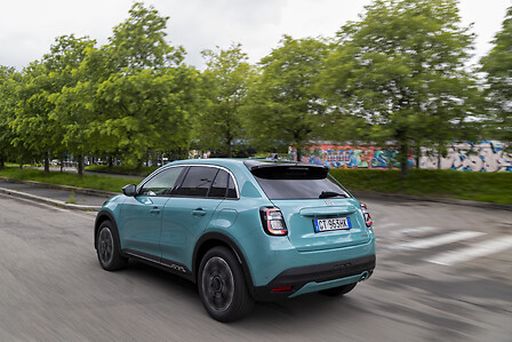
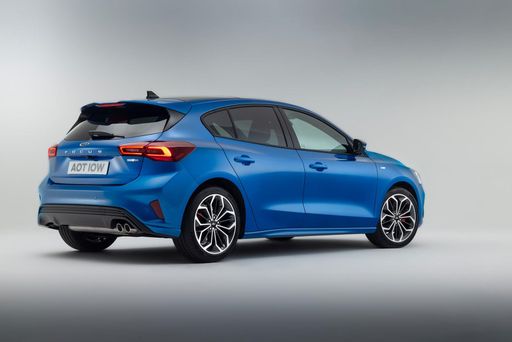
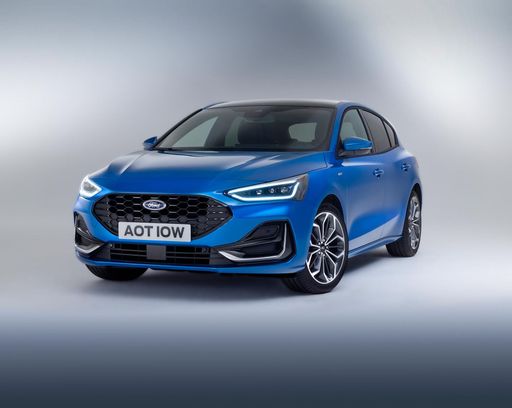
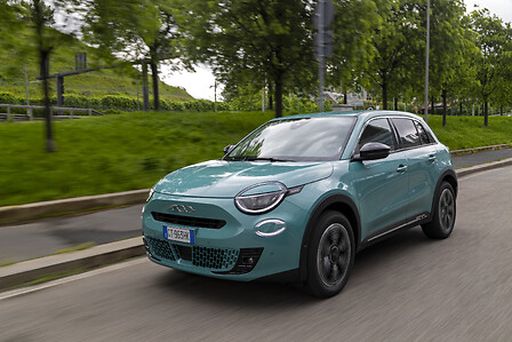
The Fiat 600, an SUV, brings a compact yet robust design. With a length of 4178 mm and a height of 1523 mm, it offers a sturdy road presence while providing a higher seating position typical of SUVs. The Focus, however, is a sleek hatchback, measuring between 4382 mm to 4397 mm in length and up to 1482 mm in height. This gives the Focus an elongated, streamlined profile, favoring agility and urban maneuverability over a commanding stance.

600

Engine and Performance

Both models offer a range of engine configurations to cater to diverse driving preferences. The Fiat 600 shines with its dual approach, offering a 1199 cm3 petrol MHEV engine, as well as fully electric options, providing power outputs between 100 HP to 156 HP and torque peaking at 260 Nm. The 600's electric variant impresses with a power kW of up to 115 kW and an all-electric range of 409 km, keeping sustainability in focus.

The Ford Focus, meanwhile, provides a broader spectrum of engines, from a turbocharged petrol engine with 125 HP to a potent 280 HP petrol performance model. It even accommodates diesel enthusiasts. The Focus achieves a top speed of up to 250 km/h with the most powerful engines, ensuring a thrilling experience for those with a need for speed.

Focus

Transmission and Drive

Both vehicles employ front-wheel drive systems, though their transmission options reflect differing philosophies. The Fiat 600 utilizes a modern dual-clutch automatic and reduction gearbox, ensuring efficient power delivery and swift automatic gear shifts. The Focus offers manual and automatic options, including a dual-clutch automatic for those who appreciate hands-on control and an engaging drive.

Efficiency and Emissions

Efficiency is crucial in today's eco-conscious world. The Fiat 600 records a petrol consumption rate of 4.8 L/100 km and an electric consumption of 15.1 kWh/100 km, with CO2 outputs as low as 0 g/km for the electric variant, falling into CO2 efficiency classes C and A, respectively. The Focus strikes a balance with petrol and diesel engines, achieving figures from 4.9 to 8 L/100 km and CO2 emissions from 117 g/km, though efficiency class ramps up to G for its high-performance models.

Practicality and Capacity

Practicality is a cornerstone for compact vehicles. Both the Fiat 600 and Ford Focus accommodate five passengers comfortably. The Fiat provides a trunk capacity up to 385 L, while the Focus offers 392 L, making both ready for weekend getaways or daily errands. The 600’s SUV design adds a sense of rugged adaptability, whereas the Focus excels in delivering an engaging urban experience.

Conclusion

The Fiat 600 and Ford Focus cater to different yet overlapping spheres of the automotive market. The Fiat 600 appeals to those seeking an electrified, compact SUV experience with Italian style and versatility at its core. Conversely, the Ford Focus represents a dynamic, sporty hatchback alternative, delivering a balance between performance, practicality, and technology. The choice between them will ultimately hinge on individual preferences, prioritizing either urban sophistication and speed or compact practicality and environmental conscientiousness.

Here’s where it gets real: The technical differences in detail

600

Costs and Efficiency:

When it comes to price and running costs, the biggest differences usually appear. This is often where you see which car fits your budget better in the long run.

Fiat 600 is noticeably cheaper – starting at 21,000 £ , while the Ford Focus costs 27,500 £ . That’s a price difference of around 6,523 £.

Fuel consumption also shows a difference: the Fiat 600 uses 4.8 L/100km and is only slightly more efficient than the Ford Focus with 4.9 L/100km. The difference is about 0.1 L/100km.

Focus

Engine and Performance:

Power, torque and acceleration are the classic benchmarks for car enthusiasts – and here, some clear differences start to show.

When it comes to engine power, the Ford Focus offers significantly more power – delivering 280 HP compared to 156 HP. That’s roughly 124 HP more horsepower.

When accelerating from 0 to 100 km/h, the Ford Focus is considerably quicker – completing the sprint in 5.7 s, while the Fiat 600 takes 8.5 s. That’s about 2.8 s quicker.

There’s also a difference in torque: the Ford Focus delivers visibly more torque with 420 Nm compared to 260 Nm. That’s about 160 Nm more.

600

Space and Everyday Use:

Whether family car or daily driver – which one offers more room, flexibility and comfort?

Both vehicles offer seating for 5 people.

In terms of curb weight, Fiat 600 is only slightly lighter – 1,265 kg compared to 1,330 kg. The difference is around 65 kg.

Looking at boot space, the Ford Focus offers very slightly more boot space – 392 L compared to 385 L. That’s a difference of about 7 L.

When it comes to payload, the Ford Focus carries barely more – 560 kg compared to 517 kg. That’s a difference of about 43 kg.

Who wins the race in the data check?

The Ford Focus holds a decisive overall lead in the objective data comparison.
This result only shows which model scores more points on paper – not which of the two cars feels right for you.

from £27,500
Focus

Ford Focus

  • Engine Type : Petrol MHEV, Diesel, Petrol
  • Transmission : Manuel, Automatic
  • Drive Type : Front-Wheel Drive
  • Power HP : 115 - 280 HP
  • Consumption L/100km : 4.9 - 8 L/100km
Fiat 600
Ford Focus

Costs and Consumption

View detailed analysis

Engine and Performance

View detailed analysis

Dimensions and Body

View detailed analysis

Fiat 600

The Fiat 600 is small, cheeky and utterly charming, a pocket-sized Italian that packs more personality than its size suggests. Ideal for city buyers who want fuss-free motoring with a playful driving character, it puts smiles ahead of spreadsheets.

details

Ford Focus

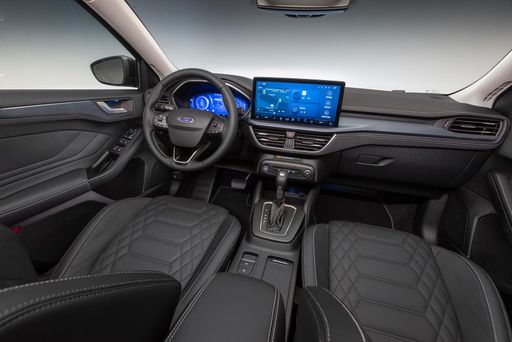
The Ford Focus remains a clever all‑rounder that balances sharp handling with everyday comfort, making it a strong choice whether your commute is city streets or country lanes. Its practical cabin and sensible running costs mean you’ll spend more time enjoying the drive and less time worrying about ownership, with a playful streak underfoot that keeps things interesting.

details
Fiat 600
Ford Focus

Costs and Consumption

Price
21,000 - 31,300 £
Price
27,500 - 42,700 £
Consumption L/100km
4.8 - 5.7 L/100km
Consumption L/100km
4.9 - 8 L/100km
Consumption kWh/100km
15.1 kWh/100km
Consumption kWh/100km
-
Electric Range
409 km
Electric Range
-
Battery Capacity
-
Battery Capacity
-
co2
0 - 129 g/km
co2
117 - 183 g/km
Fuel tank capacity
-
Fuel tank capacity
52 L

Dimensions and Body

Body Type
SUV
Body Type
Hatchback
Seats
5
Seats
5
Doors
-
Doors
5
Curb weight
1,265 - 1,595 kg
Curb weight
1,330 - 1,529 kg
Trunk capacity
360 - 385 L
Trunk capacity
392 L
Length
-
Length
4,382 - 4,397 mm
Width
1,779 mm
Width
1,825 - 1,844 mm
Height
-
Height
1,438 - 1,482 mm
Max trunk capacity
-
Max trunk capacity
1,354 L
Payload
427 - 517 kg
Payload
495 - 560 kg

Engine and Performance

Engine Type
Petrol MHEV, Electric, Petrol
Engine Type
Petrol MHEV, Diesel, Petrol
Transmission
Automatic, Manuel
Transmission
Manuel, Automatic
Transmission Detail
Dual-Clutch Automatic, Reduction Gearbox, Manual Gearbox
Transmission Detail
Manual Gearbox, Dual-Clutch Automatic, Automatic Gearbox
Drive Type
Front-Wheel Drive
Drive Type
Front-Wheel Drive
Power HP
100 - 156 HP
Power HP
115 - 280 HP
Acceleration 0-100km/h
8.5 - 10.6 s
Acceleration 0-100km/h
5.7 - 11.8 s
Max Speed
-
Max Speed
186 - 250 km/h
Torque
205 - 260 Nm
Torque
170 - 420 Nm
Number of Cylinders
3
Number of Cylinders
3 - 4
Power kW
74 - 115 kW
Power kW
85 - 206 kW
Engine capacity
1,199 cm3
Engine capacity
999 - 2,261 cm3

General

Model Year
2,025 - 2,026
Model Year
2,022 - 2,024
CO2 Efficiency Class
C, A, D
CO2 Efficiency Class
D, G
Brand
Fiat
Brand
Ford
DriveDuel uses data analysis and artificial intelligence to evaluate vehicle data and create content. Content is regularly reviewed and improved. The displayed prices are estimates based on German list prices, adjusted to the respective country’s VAT. Country-specific registration taxes are not included. This information is not legally binding.