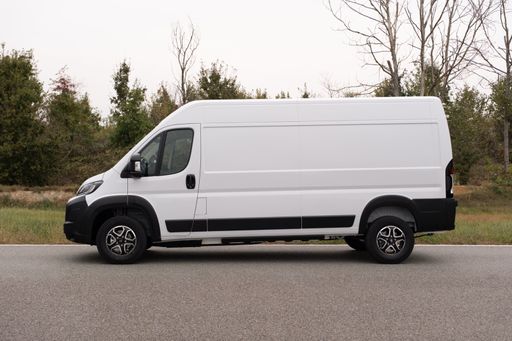
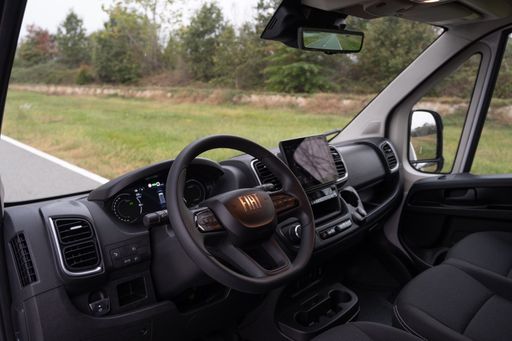
VS

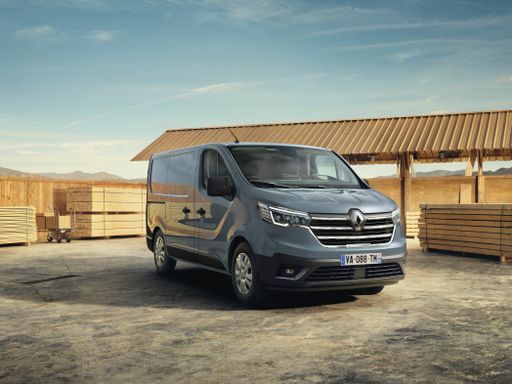
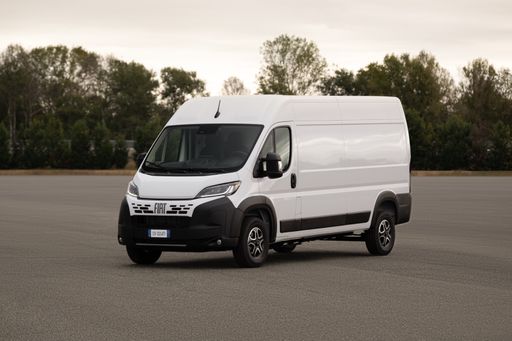
Fiat Ducato vs Renault Trafic Transporter comparison

Compare performance (140 HP vs 170 HP), boot space and price (41,200 £ vs 38,100 £ ) at a glance. Find out which car is the better choice for you – Fiat Ducato or Renault Trafic Transporter?

Fiat Ducato vs Renault Trafic Transporter: Key differences

Fiat Ducato

details

Renault Trafic Transporter

  • only slightly cheaper
  • somewhat more power
  • slightly more efficient
  • moderately lighter
details

By Achim Sedelmaier

Ducato

The Battle of the Cargo Vans: Fiat Ducato vs. Renault Trafic Transporter

When it comes to choosing a reliable cargo van, two big players often come into consideration: the Fiat Ducato and the Renault Trafic Transporter. Both vehicles promise standout performances tailored for businesses, yet each offers its unique set of features. Let's delve into the technical specifications and innovations of each model to help you make an informed decision.
Trafic Transporter

Engine Power and Performance

The Fiat Ducato proposes a versatile range of power options, offering diesel engines with power outputs ranging from 120 to a muscular 270 HP. Its electric variant, while still powerful, provides an impressive electric range of 430 km. The Ducato seems to favor more heavyweight tasks, with torque options varying between 320 and 450 Nm.

In contrast, the Renault Trafic Transporter offers diesel engines that generate between 110 and 170 HP. This range caters more towards efficiency, with top-tier power reaching a decent 380 Nm of torque. Additionally, its electric version, with a range of up to 292 km, is a worthy contender in urban settings.

Ducato

Fuel Efficiency

Fuel efficiency plays a critical role for many businesses. The Fiat Ducato consumes between 7.2 and 9.3 liters per 100 km, dependent upon the chosen engine configuration. With its large fuel tank capacity of 90 liters, the Ducato ensures fewer stops, maximizing operational efficiency.

The Renault Trafic Transporter shines in fuel efficiency, with a consumption rate ranging from 6.7 to 7.8 liters per 100 km. Its slightly smaller fuel tank of 80 liters pairs well with its efficient consumption, making long journeys cost-effective.

Design and Dimensions

Both vans come designed to handle the most demanding tasks. The Fiat Ducato features a more extensive body, with lengths varying from 5413 mm to 6678 mm and heights reaching up to 2774 mm. This expansive build complements its cargo capabilities, making it ideal for bulkier loads.

On the other hand, the Renault Trafic Transporter, with a maximum length of 5480 mm and heights peaking at 2509 mm, offers a more compact but functional design. It promises ease in urban navigation while still providing sufficient cargo space.

Seating and Comfort

Both vehicles emphasize driver comfort, with the Fiat Ducato and Renault Trafic offering seating for three passengers. The Renault Trafic offers variations with two and six-seater configurations, tailoring it for different operational needs.

Payload and Efficiency Class

The Fiat Ducato stands out with its remarkable payload capacity, supporting up to 1425 kg. Its design allows businesses dealing in heavier goods to gain a competitive edge in logistical operations.

The Renault Trafic Transporter's top payload capacity is slightly lower at 1185 kg but still positions it strongly in the market. Notably efficient, it captures attention with an 'A' class CO2 efficiency on some engine variants.

Conclusion

Ultimately, choosing between the Fiat Ducato and Renault Trafic Transporter boils down to the specific needs of your business. For those seeking more power and payload, the Fiat Ducato appears more fitting. However, for businesses prioritizing fuel efficiency and urban adaptability, the Renault Trafic Transporter presents itself as an excellent contender. Both vans bring much to the table, ensuring businesses remain agile and efficient. Whether you're expanding your fleet or starting anew, either choice can significantly enhance your logistical prowess.

Here’s where it gets real: The technical differences in detail

Ducato

Costs and Efficiency:

Looking at overall running costs, both models reveal some interesting differences in everyday economy.

Renault Trafic Transporter is only slightly cheaper – starting at 38,100 £ , while the Fiat Ducato costs 41,200 £ . That’s a price difference of around 3,060 £.

Fuel consumption also shows a difference: the Renault Trafic Transporter uses 6.8 L/100km and is slightly more efficient than the Fiat Ducato with 7.5 L/100km. The difference is about 0.7 L/100km.

Trafic Transporter

Engine and Performance:

Power, torque and acceleration say a lot about how a car feels on the road. This is where you see which model delivers more driving dynamics.

When it comes to engine power, the Renault Trafic Transporter offers somewhat more power – delivering 170 HP compared to 140 HP. That’s roughly 30 HP more horsepower.

There’s also a difference in torque: the Renault Trafic Transporter delivers very slightly more torque with 380 Nm compared to 350 Nm. That’s about 30 Nm more.

Ducato

Space and Everyday Use:

Cabin size, boot volume and payload all play a role in everyday practicality. Here, comfort and flexibility make the difference.

Seats: Renault Trafic Transporter offers more seats – 6 vs 3.

In terms of curb weight, Renault Trafic Transporter is moderately lighter – 1,848 kg compared to 2,165 kg. The difference is around 317 kg.

When it comes to payload, the Fiat Ducato carries markedly more – 2,020 kg compared to 1,222 kg. That’s a difference of about 798 kg.

Who wins the race in the data check?

The Renault Trafic Transporter stands well ahead of its rival in the objective data comparison.
This result only shows which model scores more points on paper – not which of the two cars feels right for you.

from £38,100
Trafic Transporter

Renault Trafic Transporter

  • Engine Type Electric, Diesel
  • Transmission Automatic
  • Drive Type Front-Wheel Drive
  • Power HP 122 - 170 HP
  • Consumption L/100km 6.8 - 7 L/100km
  • Consumption kWh/100km 21.2 - 22.2 kWh/100km
  • Electric Range 240 - 318 km
Fiat Ducato
Renault Trafic Transporter

Costs and Consumption

View detailed analysis

Engine and Performance

View detailed analysis

Dimensions and Body

View detailed analysis

Fiat Ducato

The Fiat Ducato is a no-nonsense workhorse that turns practicality into an artform, with a cavernous, flexible load area and predictable, car-like driving manners that make long days behind the wheel far less tedious. It’s equally at home with a tradesman’s kit or a camper conversion, offering sensible packaging, easy servicing and the sort of reliability that keeps surprises—and down-time—to a minimum.

details

Renault Trafic Transporter

The Renault Trafic is a practical, workhorse transporter that hides thoughtful cabin comfort behind a tough, utilitarian exterior, so you can tackle a busy week without sacrificing sanity. It’s a sensible choice for buyers who want reliability and clever flexibility rather than flash, with just enough character to make daily hauling feel less like a chore.

details
Fiat Ducato
Renault Trafic Transporter

Costs and Consumption

Price
41,200 - 43,900 £
Price
38,100 - 43,500 £
Consumption L/100km
7.5 - 8.2 L/100km
Consumption L/100km
6.8 - 7 L/100km
Consumption kWh/100km
-
Consumption kWh/100km
21.2 - 22.2 kWh/100km
Electric Range
-
Electric Range
240 - 318 km
Battery Capacity
-
Battery Capacity
-
co2
198 - 217 g/km
co2
0 - 184 g/km
Fuel tank capacity
-
Fuel tank capacity
-

Dimensions and Body

Body Type
Cargo Van
Body Type
Cargo Van
Seats
3
Seats
3 - 6
Doors
-
Doors
-
Curb weight
2,165 - 2,230 kg
Curb weight
1,848 - 2,075 kg
Trunk capacity
-
Trunk capacity
-
Length
-
Length
-
Width
2,050 mm
Width
1,956 mm
Height
-
Height
-
Max trunk capacity
-
Max trunk capacity
-
Payload
1,315 - 2,020 kg
Payload
899 - 1,222 kg

Engine and Performance

Engine Type
Diesel
Engine Type
Electric, Diesel
Transmission
Manuel, Automatic
Transmission
Automatic
Transmission Detail
Manual Gearbox, Automatic Gearbox
Transmission Detail
Reduction Gearbox, Automatic Gearbox
Drive Type
Front-Wheel Drive
Drive Type
Front-Wheel Drive
Power HP
140 HP
Power HP
122 - 170 HP
Acceleration 0-100km/h
-
Acceleration 0-100km/h
10.8 - 13.6 s
Max Speed
-
Max Speed
-
Torque
350 Nm
Torque
245 - 380 Nm
Number of Cylinders
4
Number of Cylinders
4
Power kW
103 kW
Power kW
90 - 125 kW
Engine capacity
2,184 cm3
Engine capacity
1,997 cm3

General

Model Year
2025
Model Year
2,023 - 2,025
CO2 Efficiency Class
G
CO2 Efficiency Class
A, G
Brand
Fiat
Brand
Renault
DriveDuel uses data analysis and artificial intelligence to evaluate vehicle data and create content. Content is regularly reviewed and improved. The displayed prices are estimates based on German list prices, adjusted to the respective country’s VAT. Country-specific registration taxes are not included. This information is not legally binding.