VS

Fiat Panda vs Suzuki Swift - Differences and prices compared

Compare performance (70 HP vs 82 HP), boot space and price (14100 £ vs 17100 £ ) at a glance. Find out which car is the better choice for you – Fiat Panda or Suzuki Swift?

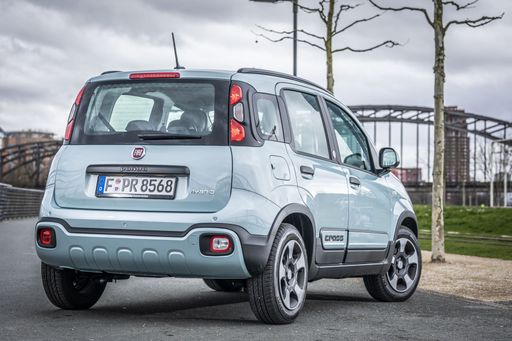
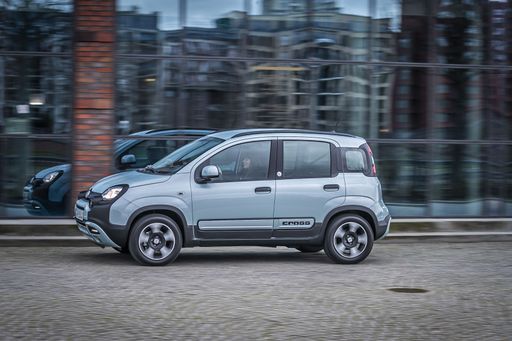
Panda

Compact Excellence: Fiat Panda vs. Suzuki Swift

In the realm of hatchbacks, the competition is fierce, with manufacturers vying to offer the best combination of performance, efficiency, and innovation. Among these contenders are the Fiat Panda and the Suzuki Swift. Both of these compact cars boast modern features and economical operations, but they cater to slightly different preferences and needs. Let's dive into the details that set them apart from each other.
Swift

Power and Performance

The Fiat Panda features a 1.0-liter, 3-cylinder petrol MHEV engine, delivering 70 HP and 51 kW of power. This engine is paired with a manual transmission and offers front-wheel drive. The Panda accelerates from 0 to 100 km/h in approximately 13.9 to 14.7 seconds and reaches a top speed of between 155 to 164 km/h. With its compact size and agile nature, it caters well to urban environments.

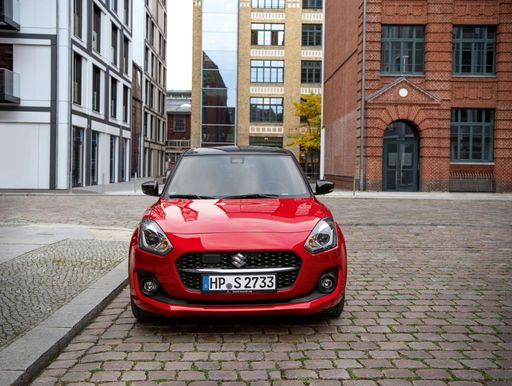
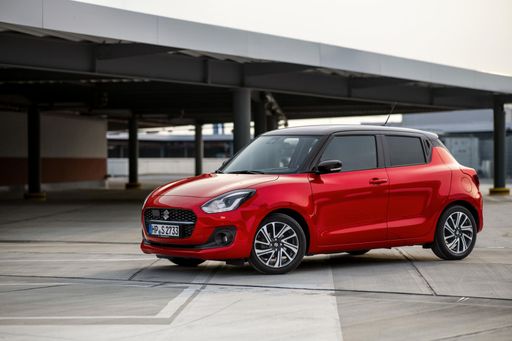
On the other hand, the Suzuki Swift's engine capacity is 1197 cm3, also a 3-cylinder petrol MHEV engine, offering a slightly higher power output of 82 HP and 61 kW. The Swift is available with both manual and automatic transmissions, and potential buyers have the choice between front-wheel drive and all-wheel drive. Swift shines in its acceleration, slightly outperforming the Panda, and can reach top speeds ranging from 160 to 170 km/h. Swift's dynamic performance caters to those who value versatility and prompt responsiveness.

Panda

Fuel Economy and Emissions

When it comes to efficiency, the Fiat Panda offers fuel consumption rates between 5 and 5.1 liters per 100 km. Correspondingly, its CO2 emissions range from 113 to 116 grams per kilometer, placing it in the C to D emissions class. The Panda's efficient fuel economy makes it financially viable for daily commuting and long drives.

The Suzuki Swift is more efficient, with consumption figures ranging from 4.4 to 4.9 liters per 100 km. Its CO2 emissions also fare better, ranging from 98 to 106 grams per kilometer, and fits squarely in the C efficiency class. The Swift's superior fuel economy and lower emissions make it a sustainable choice for environmentally conscious drivers.

Swift

Interior and Cargo Space

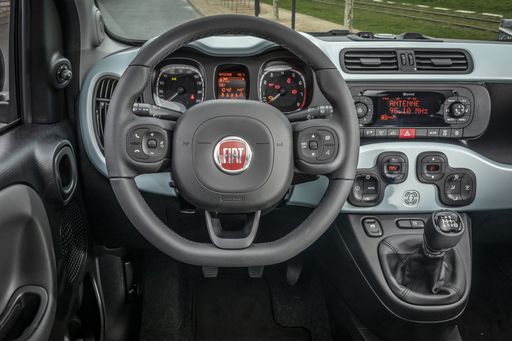
Inside, the Fiat Panda accommodates four to five passengers comfortably, featuring a trunk capacity of 225 liters. The Panda’s utilitarian design prioritizes practicality, making it an excellent choice for families and individuals who need ample interior space and adaptability.

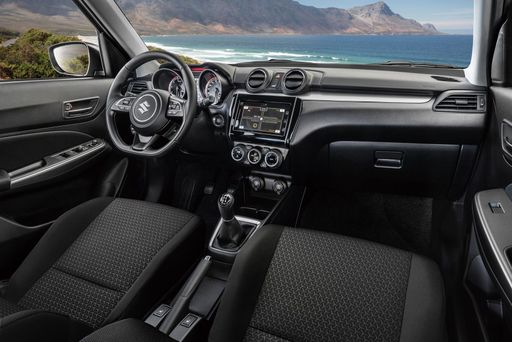
The Suzuki Swift seats five passengers and offers a slightly larger trunk capacity of 265 liters, facilitating more cargo without sacrificing passenger comfort. Its modern and sporty interior design provides the Swift with an edge in appeal, catering to those who crave style without compromising function.

Panda

Dimensions and Design

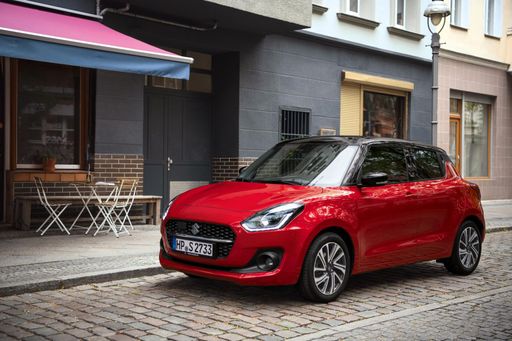
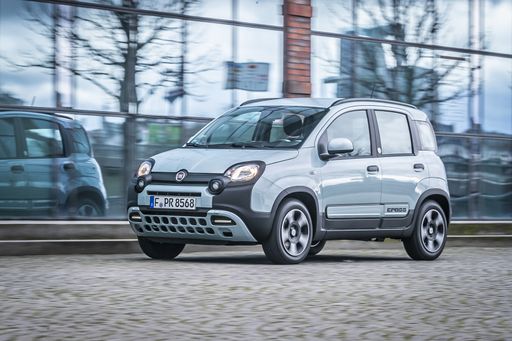
The Fiat Panda measures between 3653 to 3705 mm in length, 1643 to 1662 mm in width, and stands at a height of 1551 to 1657 mm. Its compact dimensions make city maneuvers slick, with a robust design indicative of its Italian lineage.

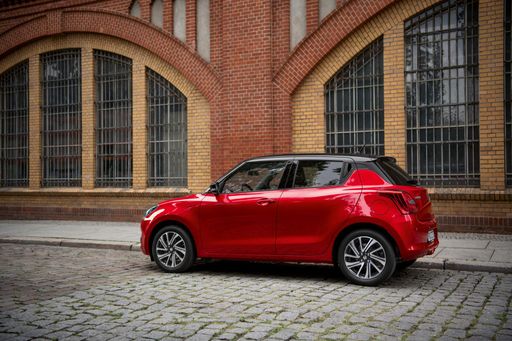
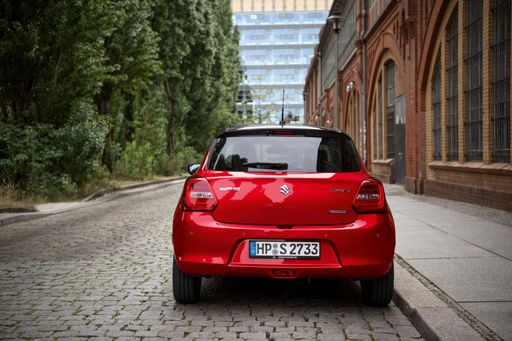
Comparatively, the Suzuki Swift is longer and wider at 3860 mm in length and 1735 mm in width, with a height ranging from 1485 to 1510 mm. The Swift's design reflects its zestful character, embodying a sporty and youthful charm that attracts a broader demographic.

Swift

Final Verdict

The Fiat Panda and Suzuki Swift each present a compelling case for themselves in the hatchback sector. The Panda impresses with its efficient fuel economy, simplistic design, and practical interior space, serving those who appreciate straightforward performance and utility. Conversely, the Suzuki Swift stands out with superior power, fuel efficiency, and a more stylized design, appealing to the performance-oriented driver seeking a blend of practicality and flair. Ultimately, the choice between the Fiat Panda and the Suzuki Swift rests on individual needs and preference combinations, but both models define the excellence of compact, innovative automotive design in 2024.

Fiat Panda

4.5 (2 Reviews)
rate

Suzuki Swift

Here’s where it gets real: The technical differences in detail

Panda

Costs and Efficiency:

Looking at overall running costs, both models reveal some interesting differences in everyday economy.

Fiat Panda has a clearly perceptible advantage in terms of price – it starts at 14100 £ , while the Suzuki Swift costs 17100 £ . That’s a price difference of around 3008 £.

Fuel consumption also shows a difference: Suzuki Swift manages with 4.40 L and is therefore a bit more efficient than the Fiat Panda with 5 L. The difference is about 0.60 L per 100 km.

Swift

Engine and Performance:

Power, torque and acceleration say a lot about how a car feels on the road. This is where you see which model delivers more driving dynamics.

When it comes to engine power, the Suzuki Swift has a somewhat edge – offering 82 HP compared to 70 HP. That’s roughly 12 HP more horsepower.

In terms of top speed, the Suzuki Swift performs minimal better – reaching 170 km/h, while the Fiat Panda tops out at 164 km/h. The difference is around 6 km/h.

There’s also a difference in torque: Suzuki Swift pulls slightly stronger with 112 Nm compared to 92 Nm. That’s about 20 Nm difference.

Space and Everyday Use:

Cabin size, boot volume and payload all play a role in everyday practicality. Here, comfort and flexibility make the difference.

Seats: Suzuki Swift offers to a small extent more seating capacity – 5 vs 4.

In curb weight, Fiat Panda is minimal lighter – 1055 kg compared to 1069 kg. The difference is around 14 kg.

In terms of boot space, the Suzuki Swift offers somewhat more room – 265 L compared to 225 L. That’s a difference of about 40 L.

In maximum load capacity, the Suzuki Swift performs to a small extent better – up to 980 L, which is about 110 L more than the Fiat Panda.

When it comes to payload, Fiat Panda a bit takes the win – 365 kg compared to 296 kg. That’s a difference of about 69 kg.

Who wins the race in the data check?

The Suzuki Swift is far ahead overall in the objective data comparison.
This result only shows which model scores more points on paper – not which of the two cars feels right for you.

Fiat Panda
Suzuki Swift

Costs and Consumption

View detailed analysis

Engine and Performance

View detailed analysis

Dimensions and Body

View detailed analysis
from about £17,100
Swift

Suzuki Swift

  • Engine Type : Petrol MHEV
  • Transmission : Manuel, Automatic
  • Drive Type : Front-Wheel Drive, All-Wheel Drive
  • Power HP : 82 HP
  • Consumption L/100km : 4.4 - 4.9 L

Fiat Panda

4.5 (2 Reviews)
rate

The Panda is a charming, no-nonsense city companion that mixes cheerful Italian flair with genuinely useful practicality, making tight streets and daily errands feel less of a chore. Its honest simplicity, clever packaging and a dash of cheeky character make it a smart, low-stress buy for people who prefer sensible perks over showroom flash.

details

Suzuki Swift

The Suzuki Swift is a cheeky little hatch that turns city streets into its playground with lively handling and a grin-inducing drive. Practical enough for daily chores, thrifty to run and kinder on your wallet than many rivals, it's a sensible pick for buyers who want fun without drama.

details
Fiat Panda
Suzuki Swift

Costs and Consumption

Price
14100 £
Price
17100 - 21200 £
Consumption L/100km
5 L
Consumption L/100km
4.4 - 4.9 L
Consumption kWh/100km
-
Consumption kWh/100km
-
Electric Range
-
Electric Range
-
Battery Capacity
-
Battery Capacity
-
co2
113 g/km
co2
98 - 110 g/km
Fuel tank capacity
38 L
Fuel tank capacity
37 L

Dimensions and Body

Body Type
Hatchback
Body Type
Hatchback
Seats
4
Seats
5
Doors
5
Doors
5
Curb weight
1055 kg
Curb weight
1069 - 1145 kg
Trunk capacity
225 L
Trunk capacity
265 L
Length
3635 mm
Length
3860 mm
Width
1643 mm
Width
1735 mm
Height
1551 mm
Height
1485 - 1510 mm
Max trunk capacity
870 L
Max trunk capacity
980 L
Payload
365 kg
Payload
282 - 296 kg

Engine and Performance

Engine Type
Petrol MHEV
Engine Type
Petrol MHEV
Transmission
Manuel
Transmission
Manuel, Automatic
Transmission Detail
Manual Gearbox
Transmission Detail
Manual Gearbox, CVT
Drive Type
Front-Wheel Drive
Drive Type
Front-Wheel Drive, All-Wheel Drive
Power HP
70 HP
Power HP
82 HP
Acceleration 0-100km/h
13.90 s
Acceleration 0-100km/h
-
Max Speed
164 km/h
Max Speed
160 - 170 km/h
Torque
92 Nm
Torque
112 Nm
Number of Cylinders
3
Number of Cylinders
3
Power kW
51 kW
Power kW
61 kW
Engine capacity
999 cm3
Engine capacity
1197 cm3

General

Model Year
2024
Model Year
2024
CO2 Efficiency Class
C
CO2 Efficiency Class
C
Brand
Fiat
Brand
Suzuki
Is the Fiat Panda offered with different drivetrains?

Available configurations include Front-Wheel Drive.

The prices shown are estimates based on German list prices, adjusted for local VAT. Local registration taxes (e.g. NoVA, BPM or CO2 malus) are not included. This information is not legally binding.