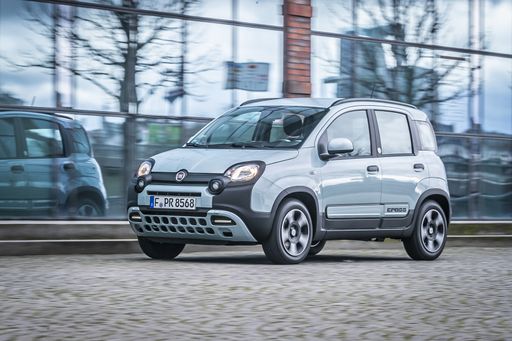
@ Fiat / Stellantis Media
@ Toyota Motor Corporation
VS

Fiat Panda vs Toyota Yaris – Which model is better for everyday use?

Compare performance, boot capacity, efficiency and price at a glance.
Find out which car is the better choice for you – Fiat Panda or Toyota Yaris?

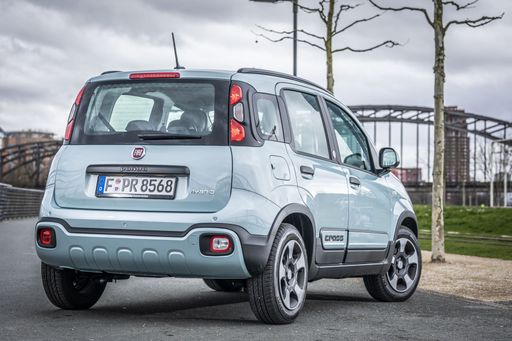
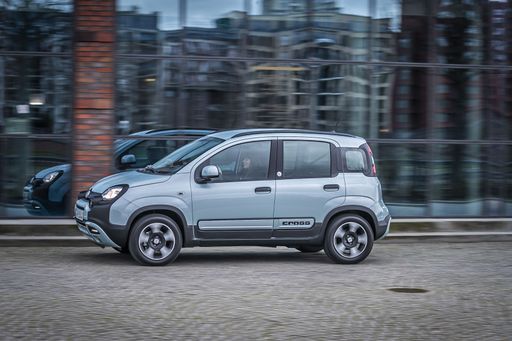
Panda @ Fiat / Stellantis Media

A Compact Showdown: Fiat Panda vs. Toyota Yaris

In the realm of compact hatchbacks, the Fiat Panda and Toyota Yaris have been household names for years. These two cars cater to city dwellers and those seeking efficiency and innovation in a small package. The 2024 models promise to continue their legacy, but how do they stack up against each other in terms of technical aspects and innovations? Let's dive into the details.
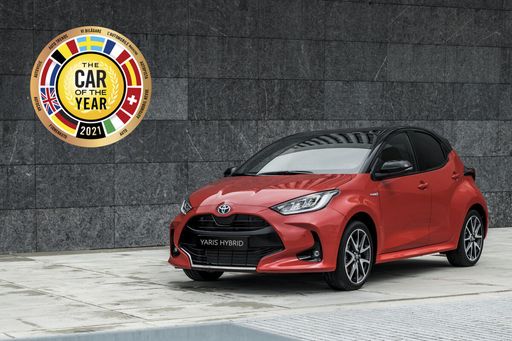
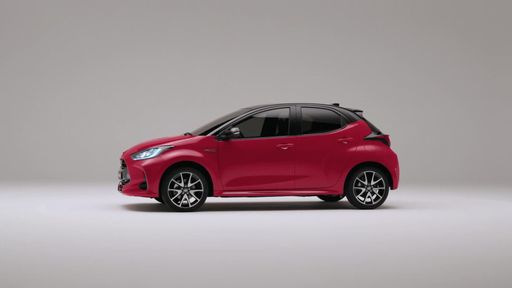
Yaris @ Toyota Motor Corporation

Design and Dimensions

The Fiat Panda sports a classic hatchback design, maintaining its reputation for a compact and practical style. The Panda is shorter, measuring between 3653 mm and 3705 mm in length, and has a narrower width ranging from 1643 mm to 1662 mm. The height varies from 1551 mm to 1657 mm, giving it a tall yet compact silhouette.

In comparison, the Toyota Yaris features a more modern aesthetic. It is longer, with lengths between 3940 mm and 3995 mm, and wider, spanning from 1745 mm to 1805 mm. The Yaris sits lower, with heights ranging from 1455 mm to 1500 mm, giving it a sporty appearance.

Panda @ Fiat / Stellantis Media

Powertrain and Performance

The Panda is powered by a 999 cm3 petrol mild hybrid (MHEV) engine, producing 70 HP (51 kW) and 92 Nm of torque. It uses a manual gearbox to drive the front wheels, achieving a respectable fuel consumption of 5 to 5.1 L/100km. The Panda accelerates from 0-100 km/h in approximately 13.9 to 14.7 seconds and has a top speed between 155 and 164 km/h. Its CO2 emissions range from 113 to 116 g/km, falling into efficiency classes C and D.

Meanwhile, the Yaris boasts a more diverse powertrain lineup, including a full hybrid and petrol options. The hybrid engine delivers 116 HP (85 kW) with a lower fuel consumption of 3.8 to 4.2 L/100km, emphasizing its eco-friendly credentials with CO2 emissions between 87 and 95 g/km (Class B). For enthusiasts, the Yaris offers petrol variants reaching up to 280 HP (206 kW), a remarkable performance leap. The Yaris accelerates from 0-100 km/h in as fast as 5.5 seconds, with a top speed of up to 230 km/h.

Yaris @ Toyota Motor Corporation

Interior Space and Comfort

The Panda provides a modest but practical interior, seating four or five persons with a trunk capacity of 225 liters. The vehicle's low curb weight of 1055 kg and a payload capacity of 365 kg underscore its suitability for urban maneuverability.

The Yaris offers more interior flexibility with a standard five-seat configuration and two trunk capacity options: 286 liters for everyday convenience. Despite its larger size and additional features, the Yaris maintains a competitive curb weight starting at 1090 kg.

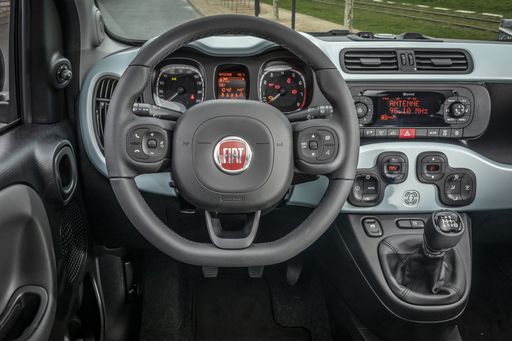
Panda @ Fiat / Stellantis Media

Technology and Innovations

While the Panda focuses more on simplicity and practicality, the Yaris steps up with advanced technological features. Hybrid versions of the Yaris integrate Toyota's latest hybrid technology, offering significant improvements in fuel efficiency and lower emissions.

The Yaris also pioneers in safety and connectivity, consistently featuring updated infotainment systems and a comprehensive set of driver-assistance technologies, catering to tech-savvy drivers looking for a blend of efficiency and modern convenience.

Conclusion: Which Compact is Right for You?

Choosing between the Fiat Panda and Toyota Yaris largely depends on your priorities. The Panda excels as a cost-effective, practical urban runabout with its compact dimensions and straightforward design. On the other hand, the Yaris provides a more diverse option lineup, offering advanced hybrid technology and a sportier demeanor for those looking to strike a balance between performance and environmental consciousness.

Ultimately, both the Panda and Yaris have something unique to offer, catering to a wide range of driving preferences and lifestyle demands in the competitive world of compact hatchbacks.

Here’s where it gets real: The technical differences in detail

Costs and Efficiency:

Price and efficiency are key factors when choosing a car – and this is often where the real differences emerge.

Fiat Panda has a decisively advantage in terms of price – it starts at 14100 £, while the Toyota Yaris costs 21900 £. That’s a price difference of around 7723 £.

Fuel consumption also shows a difference: Toyota Yaris manages with 3.80 L and is therefore noticeable more efficient than the Fiat Panda with 5 L. The difference is about 1.20 L per 100 km.

Engine and Performance:

Power, torque and acceleration say a lot about how a car feels on the road. This is where you see which model delivers more driving dynamics.

When it comes to engine power, the Toyota Yaris has a convincingly edge – offering 280 HP compared to 70 HP. That’s roughly 210 HP more horsepower.

In acceleration from 0 to 100 km/h, the Toyota Yaris is decisively quicker – completing the sprint in 5.50 s, while the Fiat Panda takes 13.90 s. That’s about 8.40 s faster.

In terms of top speed, the Toyota Yaris performs evident better – reaching 230 km/h, while the Fiat Panda tops out at 164 km/h. The difference is around 66 km/h.

There’s also a difference in torque: Toyota Yaris pulls convincingly stronger with 390 Nm compared to 92 Nm. That’s about 298 Nm difference.

Space and Everyday Use:

Whether family car or daily driver – which one offers more room, flexibility and comfort?

Seats: Toyota Yaris offers a bit more seating capacity – 5 vs 4.

In curb weight, Fiat Panda is barely noticeable lighter – 1055 kg compared to 1090 kg. The difference is around 35 kg.

In terms of boot space, the Toyota Yaris offers noticeable more room – 286 L compared to 225 L. That’s a difference of about 61 L.

In maximum load capacity, the Toyota Yaris performs hardly perceptible better – up to 935 L, which is about 65 L more than the Fiat Panda.

When it comes to payload, Toyota Yaris clearly perceptible takes the win – 525 kg compared to 365 kg. That’s a difference of about 160 kg.

Who wins the race?

The Toyota Yaris proves to be dominates this comparison and therefore becomes our DriveDuel Champion!
Toyota Yaris is the better all-rounder in this comparison.

from about £21,900
Yaris @ Toyota Motor Corporation

Toyota Yaris

  • Engine Type : Full Hybrid, Petrol
  • Transmission : Automatic, Manuel
  • Drive Type : Front-Wheel Drive, All-Wheel Drive
  • Power HP : 116 - 280 HP
  • Consumption L/100km : 3.8 - 9.5 L

Fiat Panda

5 (1)
rate

The Fiat Panda is a compact city car that brilliantly combines practical design and efficient functionality. Its boxy shape provides ample interior space and visibility, making it a favourite among urban drivers. With its reputation for reliability and affordability, the Panda continues to be a top choice for those seeking a no-frills, dependable vehicle.

details

Toyota Yaris

The Toyota Yaris is a sprightly city hatch that packs clever packaging, surprising comfort and fuel-sipping manners into a neat, easy-to-park package. It rewards sensible buyers with low running costs, friendly ergonomics and a forgiving drive, delivered with Japanese reliability and just enough personality to make errands feel a little less ordinary.

details
Fiat Panda
Toyota Yaris
Panda @ Fiat / Stellantis Media
Yaris @ Toyota Motor Corporation

Costs and Consumption

Price
14100 £
Price
21900 - 46700 £
Consumption L/100km
5 L
Consumption L/100km
3.8 - 9.5 L
Consumption kWh/100km
-
Consumption kWh/100km
-
Electric Range
-
Electric Range
-
Battery Capacity
-
Battery Capacity
-
co2
113 g/km
co2
87 - 215 g/km
Fuel tank capacity
38 L
Fuel tank capacity
36 - 50 L

Dimensions and Body

Body Type
Hatchback
Body Type
Hatchback
Seats
4
Seats
4 - 5
Doors
5
Doors
3 - 5
Curb weight
1055 kg
Curb weight
1090 - 1356 kg
Trunk capacity
225 L
Trunk capacity
141 - 286 L
Length
3635 mm
Length
3940 - 3995 mm
Width
1643 mm
Width
1745 - 1805 mm
Height
1551 mm
Height
1455 - 1500 mm
Max trunk capacity
870 L
Max trunk capacity
935 L
Payload
365 kg
Payload
289 - 525 kg

Engine and Performance

Engine Type
Petrol MHEV
Engine Type
Full Hybrid, Petrol
Transmission
Manuel
Transmission
Automatic, Manuel
Transmission Detail
Manual Gearbox
Transmission Detail
CVT, Manual Gearbox, Automatic Gearbox
Drive Type
Front-Wheel Drive
Drive Type
Front-Wheel Drive, All-Wheel Drive
Power HP
70 HP
Power HP
116 - 280 HP
Acceleration 0-100km/h
13.90 s
Acceleration 0-100km/h
5.5 - 9.7 s
Max Speed
164 km/h
Max Speed
175 - 230 km/h
Torque
92 Nm
Torque
390 Nm
Number of Cylinders
3
Number of Cylinders
3
Power kW
51 kW
Power kW
85 - 206 kW
Engine capacity
999 cm3
Engine capacity
1490 - 1618 cm3

General

Model Year
2024
Model Year
2024 - 2025
CO2 Efficiency Class
C
CO2 Efficiency Class
B, G
Brand
Fiat
Brand
Toyota
Is the Fiat Panda offered with different drivetrains?

Available configurations include Front-Wheel Drive.

The prices and data displayed are estimates based on German list prices and may vary by country. This information is not legally binding.