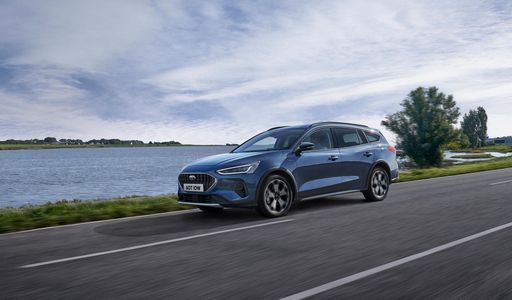
@ Ford Motor Company / Ford Media Center
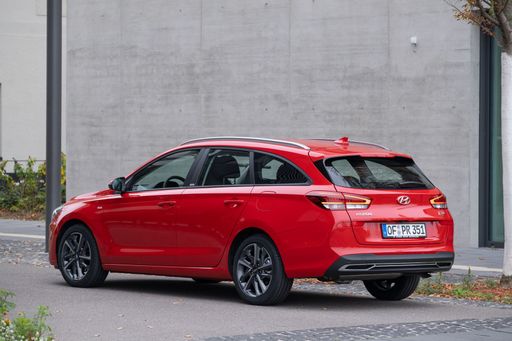
@ Hyundai Motor Company
VS

Ford Focus Turnier vs Hyundai i30 Wagon – Performance, range & efficiency compared

Two cars, one duel: Ford Focus Turnier meets Hyundai i30 Wagon.
Which one wins in performance, efficiency and value for money? Find out now!

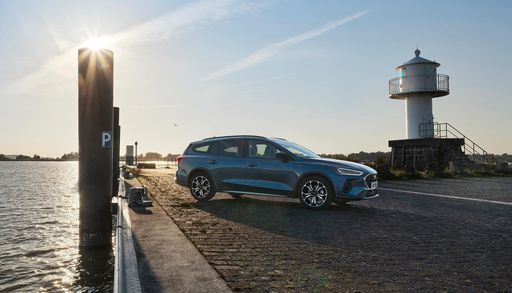
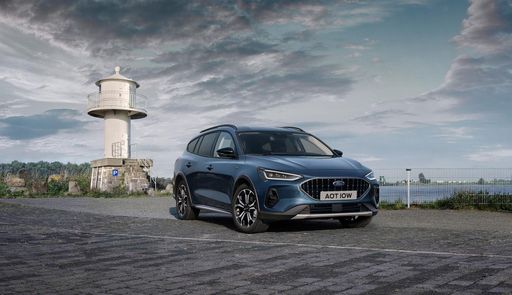
Focus Turnier @ Ford Motor Company / Ford Media Center

An In-Depth Look at Two Popular Wagons: Ford Focus Turnier vs. Hyundai i30 Kombi

In the world of wagons, two contenders stand out: the Ford Focus Turnier and the Hyundai i30 Kombi. Both models have carved out a niche for themselves by offering a blend of practicality, performance, and modern features. Let's delve into the details and compare these two popular choices to help you decide which wagon best suits your needs.
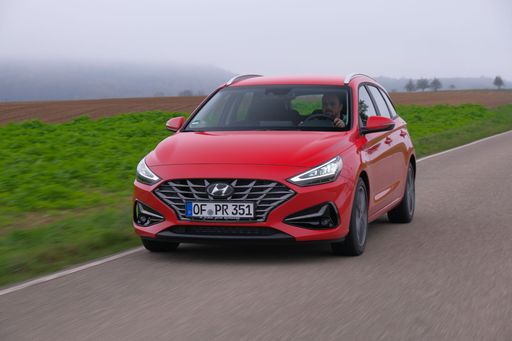
i30 Wagon @ Hyundai Motor Company

Dynamic Performance: Engine and Transmission

The Ford Focus Turnier comes equipped with a wide range of engine options, catering to a variety of preferences. Available in petrol, petrol mild hybrid (MHEV), and diesel variants, it boasts power outputs ranging from 115 HP to a sporty 280 HP. The 1.0 and 1.5-liter petrol engines, for example, deliver a balanced mix of efficiency and power, with the top tier 2.3-liter engine bringing a burst of performance. The Focus Turnier offers both manual and automatic transmissions, including a smooth dual-clutch automatic for those who prioritize driving ease.

In contrast, the Hyundai i30 Kombi provides two engine options: a standard petrol and a petrol MHEV. Power outputs for the i30 Kombi range from 100 HP to 140 HP. While not as powerful as the Turnier's top end, the i30's engines are known for their efficiency and reliability. Like the Focus, the i30 offers both manual and dual-clutch automatic gearboxes ensuring a flexible choice for drivers.

Focus Turnier @ Ford Motor Company / Ford Media Center

Efficiency and Eco-friendliness

Both vehicles take emissions and efficiency seriously. The Focus Turnier's consumption figures start from 5.3 L/100km, ensuring that even the more powerful versions remain quite efficient. Its CO2 output ranges from 120 to 183 g/km, reflecting the wide range of available engines.

The Hyundai i30 Kombi is comparable with consumption ranging from 5.6 to 5.9 L/100km and CO2 emissions between 126 and 133 g/km. While slightly behind the Ford in fuel efficiency, it still holds its own as a compact and environmentally conscientious option.

i30 Wagon @ Hyundai Motor Company

Comfort and Capacity: Interior and Cargo

On the inside, both wagons can comfortably seat five passengers. The Ford Focus Turnier edges ahead in terms of trunk capacity, offering up to 635 liters of boot space, making it a great option for families or those who frequently haul cargo. With dimensions of up to 4693 mm in length, 1844 mm in width, and a height that varies slightly across variants, the Focus manages a balance of interior spaciousness and external compactness.

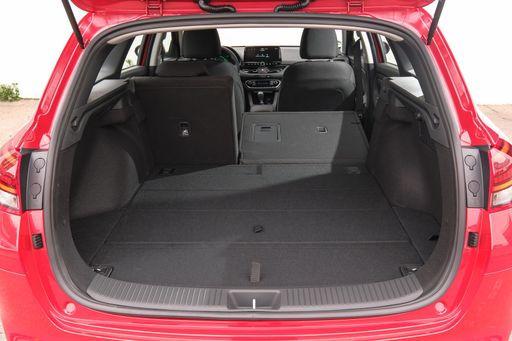
The Hyundai i30 Kombi offers a respectable 602 liters of trunk space, with dimensions slightly smaller at 4585 mm in length and 1795 mm in width. This reduction in size might appeal to those looking for a more compact wagon without significantly compromising on interior space.

Focus Turnier @ Ford Motor Company / Ford Media Center

Safety and Innovations

Both the Focus Turnier and i30 Kombi offer a suite of modern safety and technology features. While specific features can vary based on trim levels, expect both cars to come equipped with advanced safety systems such as lane-keeping assist, adaptive cruise control, and emergency braking.

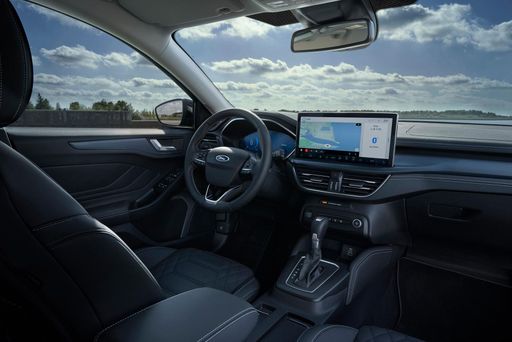
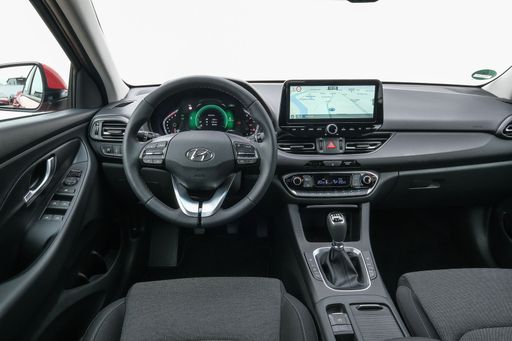
Infotainment systems are also well-developed in both models, with touchscreen controls, smartphone connectivity, and quality audio systems ensuring a comfortable and enjoyable driving experience.

i30 Wagon @ Hyundai Motor Company

Conclusion: Making the Right Choice

When deciding between the Ford Focus Turnier and the Hyundai i30 Kombi, consider what you value more: performance variety and trunk space, or the compactness and efficiency of a slightly smaller and potentially easier-to-maneuver wagon.

Both vehicles offer a robust set of features and capabilities, ensuring that drivers will find value in either choice. Ultimately, test-driving these models and considering your specific needs will be the best way to determine which wagon deserves a spot in your driveway.

Here’s where it gets real: The technical differences in detail

Focus Turnier @ Ford Motor Company / Ford Media Center

Costs and Efficiency:

When it comes to price and running costs, the biggest differences usually appear. This is often where you see which car fits your budget better in the long run.

Hyundai i30 Wagon has a somewhat advantage in terms of price – it starts at 24800 £, while the Ford Focus Turnier costs 28500 £. That’s a price difference of around 3694 £.

Fuel consumption also shows a difference: Ford Focus Turnier manages with 5 L and is therefore slightly more efficient than the Hyundai i30 Wagon with 5.70 L. The difference is about 0.70 L per 100 km.

i30 Wagon @ Hyundai Motor Company

Engine and Performance:

Under the bonnet, it becomes clear which model is tuned for sportiness and which one takes the lead when you hit the accelerator.

When it comes to engine power, the Ford Focus Turnier has a convincingly edge – offering 280 HP compared to 140 HP. That’s roughly 140 HP more horsepower.

In acceleration from 0 to 100 km/h, the Ford Focus Turnier is decisively quicker – completing the sprint in 5.80 s, while the Hyundai i30 Wagon takes 9.80 s. That’s about 4 s faster.

In terms of top speed, the Ford Focus Turnier performs evident better – reaching 250 km/h, while the Hyundai i30 Wagon tops out at 197 km/h. The difference is around 53 km/h.

There’s also a difference in torque: Ford Focus Turnier pulls evident stronger with 420 Nm compared to 253 Nm. That’s about 167 Nm difference.

Space and Everyday Use:

Cabin size, boot volume and payload all play a role in everyday practicality. Here, comfort and flexibility make the difference.

Both vehicles offer seating for 5 people.

In curb weight, Hyundai i30 Wagon is hardly perceptible lighter – 1316 kg compared to 1413 kg. The difference is around 97 kg.

In terms of boot space, the Ford Focus Turnier offers minimal more room – 635 L compared to 602 L. That’s a difference of about 33 L.

In maximum load capacity, the Ford Focus Turnier performs minimal better – up to 1653 L, which is about 3 L more than the Hyundai i30 Wagon.

When it comes to payload, Ford Focus Turnier hardly perceptible takes the win – 557 kg compared to 524 kg. That’s a difference of about 33 kg.

Who comes out on top?

Overall, the Ford Focus Turnier shows itself to be wins the duel decisively and secures the title of DriveDuel Champion.
It convinces with the more balanced overall package and proves to be the more versatile choice for everyday use.

from about £28,500
Focus Turnier @ Ford Motor Company / Ford Media Center

Ford Focus Turnier

  • Engine Type : Petrol MHEV, Diesel, Petrol
  • Transmission : Manuel, Automatic
  • Drive Type : Front-Wheel Drive
  • Power HP : 115 - 280 HP
  • Consumption L/100km : 5 - 8 L

Ford Focus Turnier

The Ford Focus Turnier elegantly combines practicality with style, offering ample space for families and adventurers alike. Its sleek design and refined interior deliver a comfortable driving experience, enhanced by cutting-edge technology. With its dynamic handling and efficient performance, it's a highly appealing choice for those seeking a reliable yet sophisticated estate vehicle.

details

Hyundai i30 Wagon

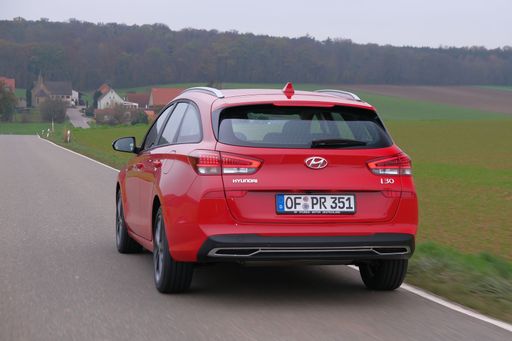
The Hyundai i30 Wagon offers a blend of practicality and style, making it a popular choice for families and those in need of extra space. Its sleek exterior and comfortable interior provide a pleasant driving experience, while advanced safety features ensure peace of mind on the road. The i30 Wagon stands out with its impressive fuel efficiency and reliability, catering to both urban and rural lifestyles.

details
Ford Focus Turnier
Hyundai i30 Wagon
Focus Turnier @ Ford Motor Company / Ford Media Center
i30 Wagon @ Hyundai Motor Company

Costs and Consumption

Price
28500 - 39900 £
Price
24800 - 30100 £
Consumption L/100km
5 - 8 L
Consumption L/100km
5.7 - 6 L
Consumption kWh/100km
-
Consumption kWh/100km
-
Electric Range
-
Electric Range
-
Battery Capacity
-
Battery Capacity
-
co2
120 - 183 g/km
co2
130 - 136 g/km
Fuel tank capacity
52 L
Fuel tank capacity
50 L

Dimensions and Body

Body Type
Estate
Body Type
Estate
Seats
5
Seats
5
Doors
5
Doors
5
Curb weight
1413 - 1563 kg
Curb weight
1316 - 1461 kg
Trunk capacity
608 - 635 L
Trunk capacity
602 L
Length
4672 - 4693 mm
Length
4585 mm
Width
1825 - 1844 mm
Width
1795 mm
Height
1459 - 1504 mm
Height
1475 mm
Max trunk capacity
1653 L
Max trunk capacity
1650 L
Payload
523 - 557 kg
Payload
439 - 524 kg

Engine and Performance

Engine Type
Petrol MHEV, Diesel, Petrol
Engine Type
Petrol, Petrol MHEV
Transmission
Manuel, Automatic
Transmission
Manuel, Automatic
Transmission Detail
Manual Gearbox, Dual-Clutch Automatic, Automatic Gearbox
Transmission Detail
Manual Gearbox, Dual-Clutch Automatic
Drive Type
Front-Wheel Drive
Drive Type
Front-Wheel Drive
Power HP
115 - 280 HP
Power HP
100 - 140 HP
Acceleration 0-100km/h
5.8 - 12.1 s
Acceleration 0-100km/h
9.8 - 13.3 s
Max Speed
184 - 250 km/h
Max Speed
178 - 197 km/h
Torque
170 - 420 Nm
Torque
172 - 253 Nm
Number of Cylinders
3 - 4
Number of Cylinders
3 - 4
Power kW
85 - 206 kW
Power kW
74 - 103 kW
Engine capacity
999 - 2261 cm3
Engine capacity
998 - 1482 cm3

General

Model Year
2023 - 2024
Model Year
2024
CO2 Efficiency Class
D, G
CO2 Efficiency Class
D, E
Brand
Ford
Brand
Hyundai
What drive types are available for the Ford Focus Turnier?

Available configurations include Front-Wheel Drive.

The prices and data displayed are estimates based on German list prices and may vary by country. This information is not legally binding.