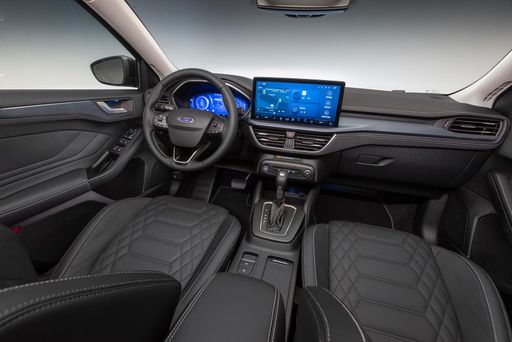
@ Ford Motor Company / Ford Media Center
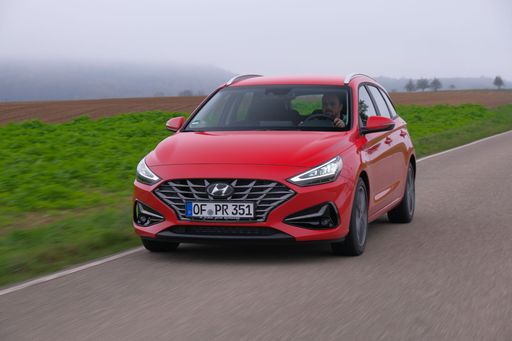
@ Hyundai Motor Company
VS

Ford Focus vs Hyundai i30 Wagon – Performance, range & efficiency compared

Everyday use, family trips or long-distance drives – here’s where the differences show.
Discover whether Ford Focus or Hyundai i30 Wagon fits your lifestyle better.

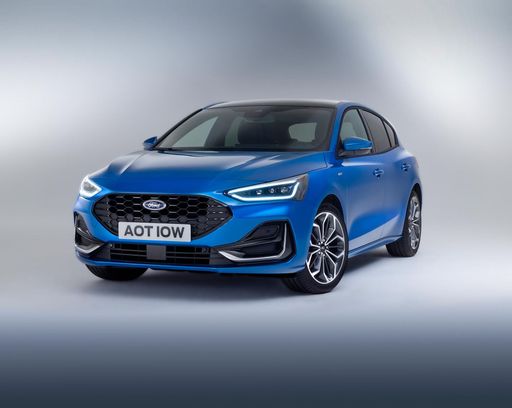
Focus @ Ford Motor Company / Ford Media Center

Ford Focus Versus Hyundai i30 Kombi: A Battle of Dynamics and Utility

Whether you're an urban commuter or a weekend wanderer, finding the perfect car is a journey in itself. For drivers caught in a conundrum between sleek performance and spacious practicality, the Ford Focus and Hyundai i30 Kombi stand out as compelling choices. Both vehicles bring unique attributes to the table, showcasing technological advancements and engineering prowess. Let's dive into a detailed comparison of these two contenders.
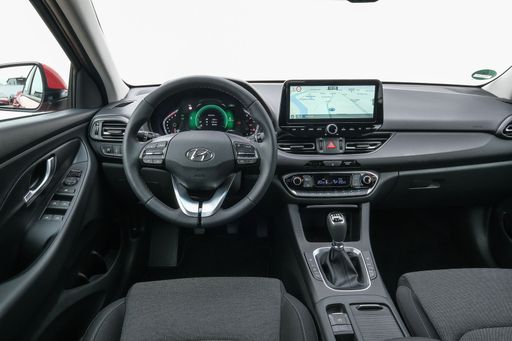
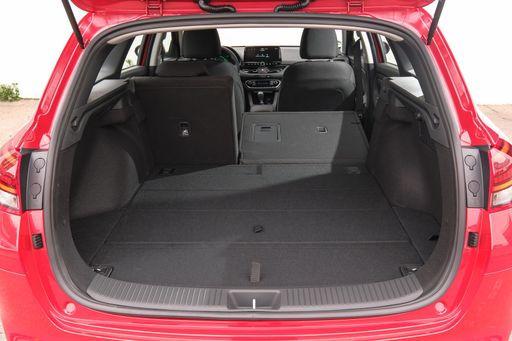
i30 Wagon @ Hyundai Motor Company

Performance and Powertrain

The Ford Focus offers a spectrum of engine options, ranging from a 125 HP petrol MHEV to a robust 280 HP petrol engine. It provides a flexible drive experience with either a manual gearbox or a sophisticated dual-clutch automatic transmission. This diversity allows for a significant performance spread, with 0-100 km/h acceleration times varying between 5.7 and 11.8 seconds.

In contrast, the Hyundai i30 Kombi focuses on efficiency with its 100 HP and 140 HP petrol engines. Like the Focus, it can also be paired with either a manual or dual-clutch automatic gearbox. The i30 Kombi takes a steadier approach to acceleration, clocking in at 9.8 to 13.3 seconds from 0-100 km/h. Nevertheless, it holds its own with a substantial max torque figure that peaks at 253 Nm, ensuring a responsive drive.

Focus @ Ford Motor Company / Ford Media Center

Fuel Efficiency and Environmental Impact

Efficiency is often key for daily drivers, and both vehicles deliver respectable figures. The Ford Focus boasts fuel consumption between 4.9 and 8 L/100km, depending on the model, while its CO2 emissions range from 117 to 183 g/km. Hyundai's i30 Kombi offers a slightly higher fuel consumption of 5.6 to 5.9 L/100km, with CO2 emissions ranging from 126 to 133 g/km.

While both cars are environmentally conscious to a degree, the Ford Focus's wider range offers drivers the flexibility to choose a variant closer to their ecological priorities.

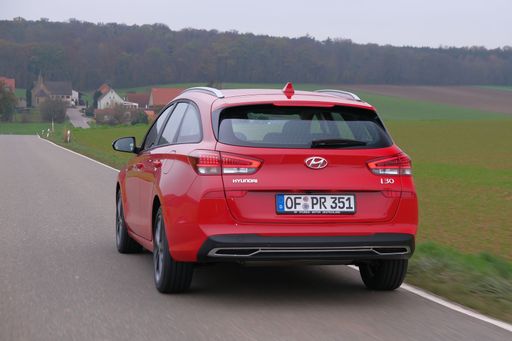
i30 Wagon @ Hyundai Motor Company

Interior and Practicality

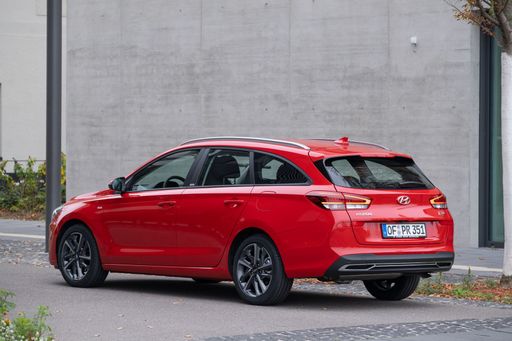
Inside, both the Ford Focus and Hyundai i30 Kombi provide comfortable seating for five passengers. The i30 Kombi shines with its impressive 602 liters of trunk space, making it a versatile option for families or adventurers needing ample cargo room. Its longer body, measured at 4585 mm, contributes to this expansive interior capacity.

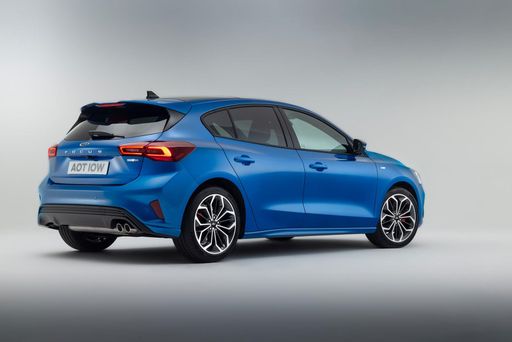
The Ford Focus, being a hatchback, has a more compact design at 4397 mm in length, accommodating a still-respectable 392 liters of trunk space. This configuration is ideal for city dwellers who face tight parking situations while still needing commuter-friendly storage.

Focus @ Ford Motor Company / Ford Media Center

Technical Innovations and Safety

Technologically, both vehicle models emphasize safety and driver assistance. Ford’s suite often includes active park assist and lane-keeping systems, while Hyundai equips its i30 Kombi with innovations like blind-spot monitoring and adaptive cruise control to enhance both safety and convenience.

While their core strategies differ, with Ford focused on driving dynamics and Hyundai prioritizing utility, each vehicle provides a compelling set of modern technologies that enhance the driving experience.

i30 Wagon @ Hyundai Motor Company

Conclusion

Ultimately, choosing between the Ford Focus and Hyundai i30 Kombi boils down to personal preferences and lifestyle requirements. If you prioritize performance and enjoy a spirited drive, the Ford Focus stands out with its dynamic range and robust power options. However, if practicality and space are your main concerns, the Hyundai i30 Kombi offers unmatched utility with ample cargo capacity and accommodating design. Both vehicles promise reliable performance and technological sophistication, making either an excellent choice for discerning drivers.

Here’s where it gets real: The technical differences in detail

Costs and Efficiency:

Looking at overall running costs, both models reveal some interesting differences in everyday economy.

Hyundai i30 Wagon has a a bit advantage in terms of price – it starts at 24800 £, while the Ford Focus costs 27500 £. That’s a price difference of around 2666 £.

Fuel consumption also shows a difference: Ford Focus manages with 4.90 L and is therefore a bit more efficient than the Hyundai i30 Wagon with 5.70 L. The difference is about 0.80 L per 100 km.

Engine and Performance:

Power, torque and acceleration are the classic benchmarks for car enthusiasts – and here, some clear differences start to show.

When it comes to engine power, the Ford Focus has a significantly edge – offering 280 HP compared to 140 HP. That’s roughly 140 HP more horsepower.

In acceleration from 0 to 100 km/h, the Ford Focus is significantly quicker – completing the sprint in 5.70 s, while the Hyundai i30 Wagon takes 9.80 s. That’s about 4.10 s faster.

In terms of top speed, the Ford Focus performs distinct better – reaching 250 km/h, while the Hyundai i30 Wagon tops out at 197 km/h. The difference is around 53 km/h.

There’s also a difference in torque: Ford Focus pulls distinct stronger with 420 Nm compared to 253 Nm. That’s about 167 Nm difference.

Space and Everyday Use:

Whether family car or daily driver – which one offers more room, flexibility and comfort?

Both vehicles offer seating for 5 people.

In curb weight, Hyundai i30 Wagon is slight lighter – 1316 kg compared to 1330 kg. The difference is around 14 kg.

In terms of boot space, the Hyundai i30 Wagon offers clearly perceptible more room – 602 L compared to 392 L. That’s a difference of about 210 L.

In maximum load capacity, the Hyundai i30 Wagon performs slightly better – up to 1650 L, which is about 296 L more than the Ford Focus.

When it comes to payload, Ford Focus slight takes the win – 560 kg compared to 524 kg. That’s a difference of about 36 kg.

Who wins the race?

The Ford Focus proves to be wins the duel decisively and therefore becomes our DriveDuel Champion!
Ford Focus is the better all-rounder in this comparison.

from about £27,500
Focus @ Ford Motor Company / Ford Media Center

Ford Focus

  • Engine Type : Petrol MHEV, Diesel, Petrol
  • Transmission : Manuel, Automatic
  • Drive Type : Front-Wheel Drive
  • Power HP : 115 - 280 HP
  • Consumption L/100km : 4.9 - 8 L

Ford Focus

The Ford Focus remains a clever all‑rounder that balances sharp handling with everyday comfort, making it a strong choice whether your commute is city streets or country lanes. Its practical cabin and sensible running costs mean you’ll spend more time enjoying the drive and less time worrying about ownership, with a playful streak underfoot that keeps things interesting.

details

Hyundai i30 Wagon

The Hyundai i30 Wagon offers a blend of practicality and style, making it a popular choice for families and those in need of extra space. Its sleek exterior and comfortable interior provide a pleasant driving experience, while advanced safety features ensure peace of mind on the road. The i30 Wagon stands out with its impressive fuel efficiency and reliability, catering to both urban and rural lifestyles.

details
Ford Focus
Hyundai i30 Wagon
Focus @ Ford Motor Company / Ford Media Center
i30 Wagon @ Hyundai Motor Company

Costs and Consumption

Price
27500 - 42700 £
Price
24800 - 30100 £
Consumption L/100km
4.9 - 8 L
Consumption L/100km
5.7 - 6 L
Consumption kWh/100km
-
Consumption kWh/100km
-
Electric Range
-
Electric Range
-
Battery Capacity
-
Battery Capacity
-
co2
117 - 183 g/km
co2
130 - 136 g/km
Fuel tank capacity
52 L
Fuel tank capacity
50 L

Dimensions and Body

Body Type
Hatchback
Body Type
Estate
Seats
5
Seats
5
Doors
5
Doors
5
Curb weight
1330 - 1529 kg
Curb weight
1316 - 1461 kg
Trunk capacity
392 L
Trunk capacity
602 L
Length
4382 - 4397 mm
Length
4585 mm
Width
1825 - 1844 mm
Width
1795 mm
Height
1438 - 1482 mm
Height
1475 mm
Max trunk capacity
1354 L
Max trunk capacity
1650 L
Payload
495 - 560 kg
Payload
439 - 524 kg

Engine and Performance

Engine Type
Petrol MHEV, Diesel, Petrol
Engine Type
Petrol, Petrol MHEV
Transmission
Manuel, Automatic
Transmission
Manuel, Automatic
Transmission Detail
Manual Gearbox, Dual-Clutch Automatic, Automatic Gearbox
Transmission Detail
Manual Gearbox, Dual-Clutch Automatic
Drive Type
Front-Wheel Drive
Drive Type
Front-Wheel Drive
Power HP
115 - 280 HP
Power HP
100 - 140 HP
Acceleration 0-100km/h
5.7 - 11.8 s
Acceleration 0-100km/h
9.8 - 13.3 s
Max Speed
186 - 250 km/h
Max Speed
178 - 197 km/h
Torque
170 - 420 Nm
Torque
172 - 253 Nm
Number of Cylinders
3 - 4
Number of Cylinders
3 - 4
Power kW
85 - 206 kW
Power kW
74 - 103 kW
Engine capacity
999 - 2261 cm3
Engine capacity
998 - 1482 cm3

General

Model Year
2022 - 2024
Model Year
2024
CO2 Efficiency Class
D, G
CO2 Efficiency Class
D, E
Brand
Ford
Brand
Hyundai
What drive types are available for the Ford Focus?

Available configurations include Front-Wheel Drive.

The prices and data displayed are estimates based on German list prices and may vary by country. This information is not legally binding.