VS

Ford Focus Turnier vs Skoda Octavia Combi comparison

Compare performance (280 HP vs 265 HP), boot space and price (28,500 £ vs 25,600 £ ) at a glance. Find out which car is the better choice for you – Ford Focus Turnier or Skoda Octavia Combi?

Ford Focus Turnier vs Skoda Octavia Combi: Key differences

Ford Focus Turnier

  • very slightly more power
  • moderately quicker 0–100 km/h

Skoda Octavia Combi

  • moderately cheaper
  • slightly more efficient
  • barely lighter
  • barely more trunk space

By Achim Sedelmaier

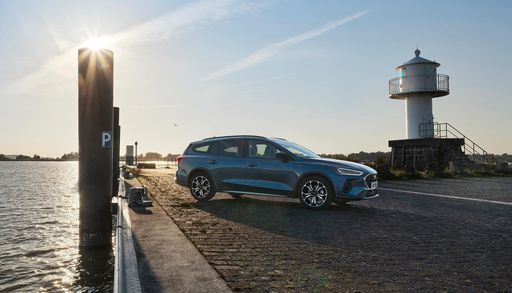
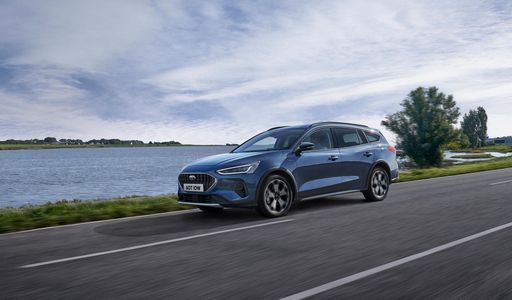
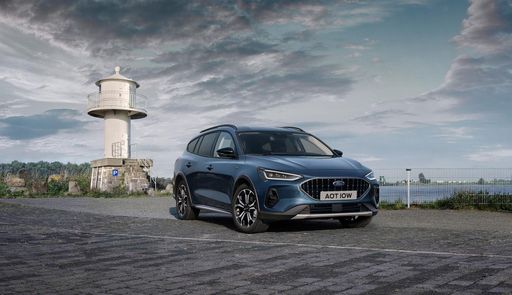
Focus Turnier

A Battle of the Estates: Ford Focus Turnier vs. Skoda Octavia Combi

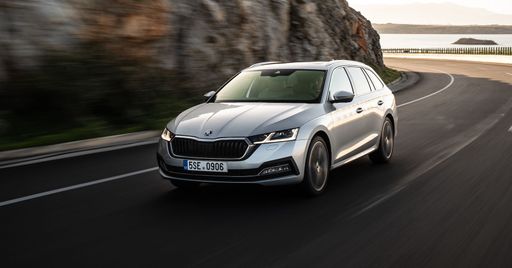
Wagons, the unsung heroes of the automotive world, combine practicality with performance, offering drivers ample space without sacrificing agility. Among the popular contenders are the Ford Focus Turnier and the Skoda Octavia Combi. In this article, we'll dive into the technical nuances, performance metrics, and cutting-edge innovations of these two stalwarts to help you make an informed choice.
Octavia Combi

Engine Options and Performance

Both the Ford Focus Turnier and the Skoda Octavia Combi offer a variety of engine types to suit different driving preferences. The Focus Turnier provides a choice of petrol, diesel, and petrol mild hybrid (MHEV) engines. Its power output ranges from 115 HP to a robust 280 HP, depending on the configuration, with torque reaching up to 420 Nm.

On the other hand, the Skoda Octavia Combi comes with petrol, diesel, and petrol MHEV options too. It offers between 116 HP and a punchy 265 HP, with torque values peaking at 370 Nm. The Octavia Combi also features front-wheel and all-wheel drive options for varied driving conditions.

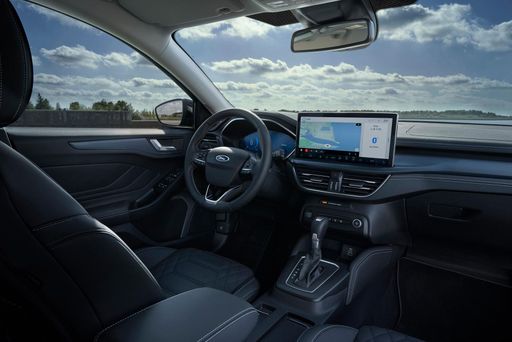
Focus Turnier

Transmission and Fuel Efficiency

For transmission, both models have manual and automatic gearboxes. The Ford Focus Turnier comes with options like a manual gearbox and a dual-clutch automatic, ensuring smooth transitions. In terms of consumption, it achieves a respectable range from 5 L/100km up to 8 L/100km, depending on the engine choice.

The Skoda Octavia Combi also provides manual and dual-clutch automatic gearboxes, keeping the driving experience flexible and refined. It impresses with a fuel consumption range from an economical 4.4 L/100km to 6.9 L/100km, catering to those who prioritize efficiency.

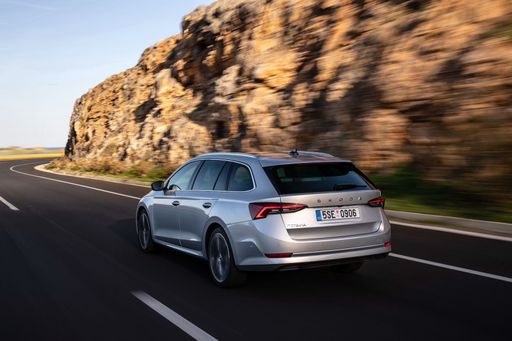
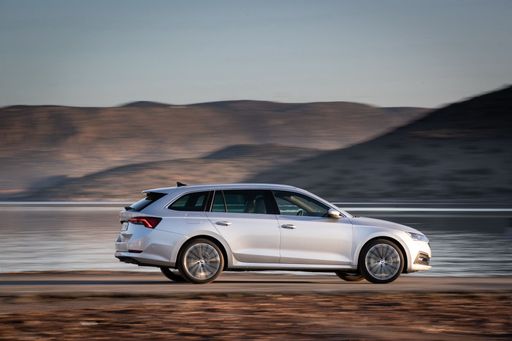
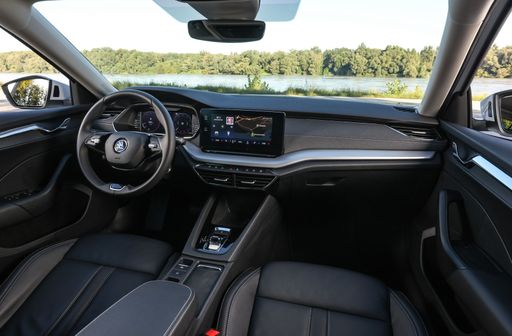
Octavia Combi

Size, Comfort, and Cargo

When it comes to size, both wagons offer spacious interiors with seating for five. The Focus Turnier has a trunk capacity of 608 to 635 liters, whereas the Octavia Combi slightly edges out with a higher capacity of 640 liters, making it a better choice for those needing more cargo space.

Lengthwise, the Turnier stretches between 4672 mm to 4693 mm, while the Octavia Combi is close at 4698 mm to 4709 mm. Their widths and heights are comparable, ensuring that both provide ample in-cabin space for comfort on longer journeys.

Focus Turnier

Innovations and Safety Features

Incorporating modern technology, both cars boast innovations, like mild hybrid engines in certain models, which enhance fuel economy while reducing emissions. CO2 efficiency ranges from D to G for the Focus Turnier and from C to F for the Octavia Combi, reflecting their commitment to lower environmental impact.

Both vehicles are equipped with advanced safety features, promoting a safe driving experience. These include emergency braking systems, adaptive cruise control, and lane-keeping assist, designed to provide peace of mind on the road.

Octavia Combi

The Verdict: Which Wagon Wins?

Your choice between the Ford Focus Turnier and the Skoda Octavia Combi should align with your needs for power, efficiency, and space. The Focus Turnier appeals to those looking for a broader engine range and a powerful punch, while the Octavia Combi lures with superior cargo capacity and fuel efficiency.

Whichever wagon you choose, both promise a blend of practicality and innovation, making them excellent choices for families and adventurers alike. Decide what matters most—be it power, efficiency, or space—and let that guide your decision in this battle of the estates.

Here’s where it gets real: The technical differences in detail

Focus Turnier

Costs and Efficiency:

Price and efficiency are key factors when choosing a car – and this is often where the real differences emerge.

Skoda Octavia Combi is moderately cheaper – starting at 25,600 £ , while the Ford Focus Turnier costs 28,500 £ . That’s a price difference of around 2,965 £.

Fuel consumption also shows a difference: the Skoda Octavia Combi uses 4.4 L/100km and is slightly more efficient than the Ford Focus Turnier with 5 L/100km. The difference is about 0.6 L/100km.

Octavia Combi

Engine and Performance:

Power, torque and acceleration say a lot about how a car feels on the road. This is where you see which model delivers more driving dynamics.

When it comes to engine power, the Ford Focus Turnier offers very slightly more power – delivering 280 HP compared to 265 HP. That’s roughly 15 HP more horsepower.

When accelerating from 0 to 100 km/h, the Ford Focus Turnier is moderately quicker – completing the sprint in 5.8 s, while the Skoda Octavia Combi takes 6.5 s. That’s about 0.7 s quicker.

There’s no difference in top speed – both reach 250 km/h.

There’s also a difference in torque: the Ford Focus Turnier delivers moderately more torque with 420 Nm compared to 370 Nm. That’s about 50 Nm more.

Focus Turnier

Space and Everyday Use:

Cabin size, boot volume and payload all play a role in everyday practicality. Here, comfort and flexibility make the difference.

Both vehicles offer seating for 5 people.

In terms of curb weight, Skoda Octavia Combi is barely lighter – 1,366 kg compared to 1,413 kg. The difference is around 47 kg.

Looking at boot space, the Skoda Octavia Combi offers barely more boot space – 640 L compared to 635 L. That’s a difference of about 5 L.

For maximum load capacity, the Skoda Octavia Combi offers very slightly more capacity – up to 1,700 L, about 47 L more than the Ford Focus Turnier.

When it comes to payload, the Ford Focus Turnier carries marginally more – 557 kg compared to 534 kg. That’s a difference of about 23 kg.

Who wins the race in the data check?

The Ford Focus Turnier is barely ahead in the objective data comparison.
This result only shows which model scores more points on paper – not which of the two cars feels right for you.

from £28,500
Focus Turnier

Ford Focus Turnier

  • Engine Type : Petrol MHEV, Diesel, Petrol
  • Transmission : Manuel, Automatic
  • Drive Type : Front-Wheel Drive
  • Power HP : 115 - 280 HP
  • Consumption L/100km : 5 - 8 L/100km
Ford Focus Turnier
Skoda Octavia Combi

Costs and Consumption

View detailed analysis

Engine and Performance

View detailed analysis

Dimensions and Body

View detailed analysis

Ford Focus Turnier

The Ford Focus Estate packs practical, family-friendly space into a compact, poised package that feels sharper and more grown-up than its price suggests. It steers with tidy composure, offers sensible interior flexibility, and is perfect for buyers who want everyday usability without turning into a moving van.

details

Skoda Octavia Combi

The Skoda Octavia Combi is the sensible family wagon that somehow turns grocery runs and long trips into a pleasant, unshowy experience — spacious, practical and built like it prefers reliability over flash. With smart touches, clever storage and a cabin that feels grown-up rather than frugal, it’s an easy recommendation for buyers who want maximum utility without sacrificing comfort or style.

details
Ford Focus Turnier
Skoda Octavia Combi

Costs and Consumption

Price
28,500 - 39,900 £
Price
25,600 - 42,300 £
Consumption L/100km
5 - 8 L/100km
Consumption L/100km
4.4 - 6.9 L/100km
Consumption kWh/100km
-
Consumption kWh/100km
-
Electric Range
-
Electric Range
-
Battery Capacity
-
Battery Capacity
-
co2
120 - 183 g/km
co2
113 - 157 g/km
Fuel tank capacity
52 L
Fuel tank capacity
45 - 55 L

Dimensions and Body

Body Type
Estate
Body Type
Estate
Seats
5
Seats
5
Doors
5
Doors
5
Curb weight
1,413 - 1,563 kg
Curb weight
1,366 - 1,553 kg
Trunk capacity
608 - 635 L
Trunk capacity
640 L
Length
4,672 - 4,693 mm
Length
4,698 - 4,709 mm
Width
1,825 - 1,844 mm
Width
1,829 mm
Height
1,459 - 1,504 mm
Height
1,455 - 1,468 mm
Max trunk capacity
1,653 L
Max trunk capacity
1,700 L
Payload
523 - 557 kg
Payload
471 - 534 kg

Engine and Performance

Engine Type
Petrol MHEV, Diesel, Petrol
Engine Type
Petrol, Petrol MHEV, Diesel
Transmission
Manuel, Automatic
Transmission
Automatic, Manuel
Transmission Detail
Manual Gearbox, Dual-Clutch Automatic, Automatic Gearbox
Transmission Detail
Dual-Clutch Automatic, Manual Gearbox
Drive Type
Front-Wheel Drive
Drive Type
Front-Wheel Drive, All-Wheel Drive
Power HP
115 - 280 HP
Power HP
116 - 265 HP
Acceleration 0-100km/h
5.8 - 12.1 s
Acceleration 0-100km/h
6.5 - 10.7 s
Max Speed
184 - 250 km/h
Max Speed
203 - 250 km/h
Torque
170 - 420 Nm
Torque
220 - 370 Nm
Number of Cylinders
3 - 4
Number of Cylinders
4
Power kW
85 - 206 kW
Power kW
85 - 195 kW
Engine capacity
999 - 2,261 cm3
Engine capacity
1,498 - 1,984 cm3

General

Model Year
2,023 - 2,024
Model Year
2,024 - 2,025
CO2 Efficiency Class
D, G
CO2 Efficiency Class
E, F, D, C
Brand
Ford
Brand
Skoda
DriveDuel uses data analysis and artificial intelligence to evaluate vehicle data and create content. Content is regularly reviewed and improved. The displayed prices are estimates based on German list prices, adjusted to the respective country’s VAT. Country-specific registration taxes are not included. This information is not legally binding.