VS

Ford Focus vs Fiat Tipo Wagon comparison

Compare performance (280 HP vs 130 HP), boot space and price (27,500 £ vs 21,000 £ ) at a glance. Find out which car is the better choice for you – Ford Focus or Fiat Tipo Wagon?

Ford Focus vs Fiat Tipo Wagon: Key differences

Ford Focus

4.6 (1 Reviews)
rate
  • substantially more power
  • considerably quicker 0–100 km/h
  • very slightly lighter
details

Fiat Tipo Wagon

4.3 (2 Reviews)
rate
  • markedly cheaper
  • only slightly more efficient
  • markedly more trunk space
details

All details on performance, efficiency, range and trunk space can be found in the technical comparison below – including user reviews for both models.

By Achim Sedelmaier

Focus

When considering a family-friendly vehicle, the choice often boils down to functionality, efficiency, and aesthetics. The Fiat Tipo Station Wagon and Ford Focus are two popular contenders in the compact segment, each boasting unique features that cater to diverse consumer needs. In this article, we'll delve into the technical aspects, innovations, and design intricacies that set these two models apart in an increasingly competitive market.
Tipo Wagon

Design and Dimensions

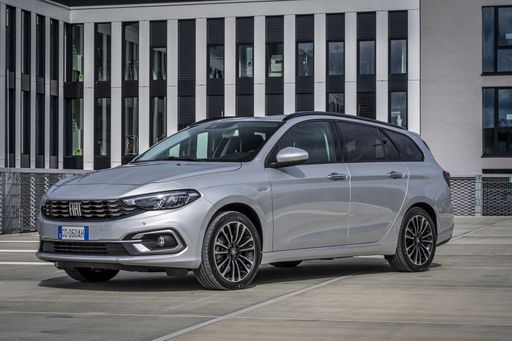
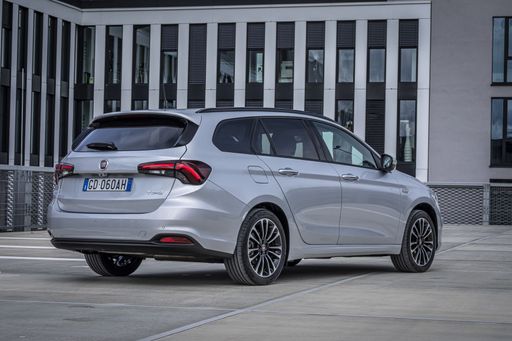
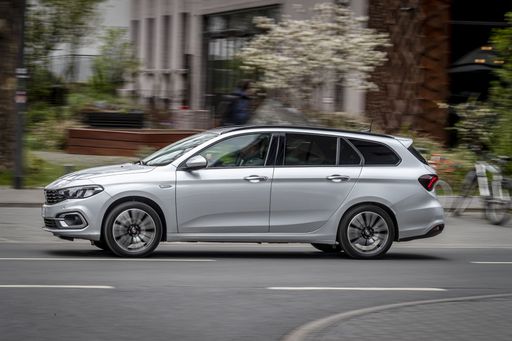
The Fiat Tipo Station Wagon retains a classic wagon silhouette, measuring 4571 mm in length, 1792 mm in width, and 1514 mm in height. This design offers a spacious interior and a generous trunk capacity of 550 liters, making it an excellent choice for families needing practical storage solutions.

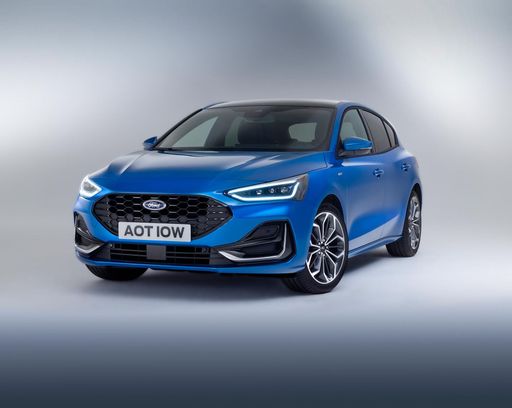
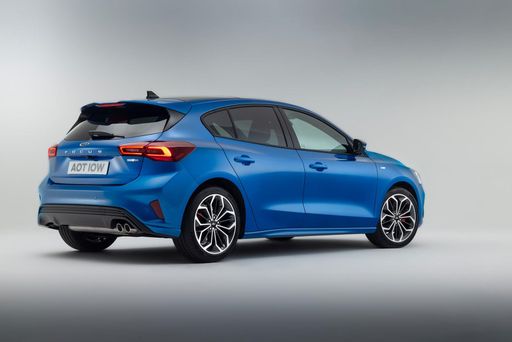
On the other hand, the Ford Focus, available as a hatchback, presents a sportier look with dimensions that vary slightly by model year, typically measuring around 4392 mm in length and 1825 mm in width. While its trunk capacity stands at 392 liters, the Focus excels in providing an engaging driving experience and modern design aesthetics.

Focus

Engine Specifications and Performance

Under the hood, the Fiat Tipo Station Wagon offers two engine options: a Petrol MHEV and a Diesel variant. The petrol engine delivers a decent 130 HP, achieving a torque of 240 Nm and allowing for a 0-100 km/h acceleration in 9.1 seconds, coupled with a maximum speed of 206 km/h. Its fuel efficiency stands at 5.4 L/100 km, making it a competitive choice for those prioritizing economy.

Conversely, the Ford Focus provides a more diverse range of engine options, with outputs ranging from 115 to an impressive 280 HP depending on the configuration. The petrol engines provide a robust driving experience, with the highest-performing variant reportedly capable of going from 0-100 km/h in just 5.7 seconds and a top speed of 250 km/h. Fuel consumption varies with engine type, with the more efficient variants achieving 5.2 L/100 km.

Tipo Wagon

Transmission and Driving Dynamics

Both models feature front-wheel drive, enhancing traction and stability on a variety of terrains. The Fiat Tipo Station Wagon is equipped with options for a dual-clutch automatic transmission or a manual gearbox, catering to the preferences of both casual and enthusiastic drivers.

In comparison, the Ford Focus offers more transmission options, including a six-speed manual and several automatic gearboxes, enhancing flexibility for the driver. This variety allows for a tailored driving experience, greatly appealing to those who enjoy customizing their vehicle’s performance.

Focus

Interior Comfort and Technology

Inside, the Fiat Tipo Station Wagon seats five comfortably, prioritizing practicality with generous legroom and a family-friendly interior layout. Its dashboard is straightforward, focusing on functionality, with essential infotainment features to ensure connectivity on the go.

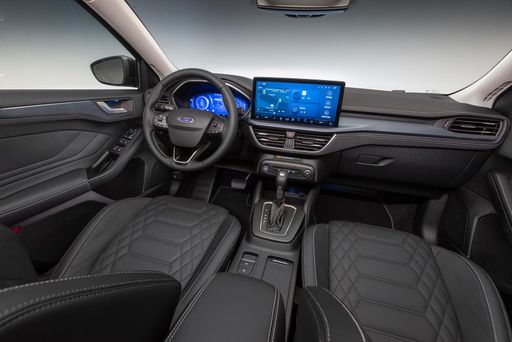
The Ford Focus, by contrast, boasts a blend of upscale materials and high-tech features, making the interior feel more premium. Connectivity options like Ford’s SYNC infotainment system are designed to seamlessly integrate smartphone functionalities, providing an enhanced user experience. The layout is intuitively designed, with controls that are easily accessible while driving.

Tipo Wagon

Safety and Innovations

Both vehicles come equipped with a variety of safety features, striving to ensure passenger safety on the roads. The Tipo has received good ratings in safety tests, featuring a suite of driver assistance technologies that include lane departure warning and automated emergency braking.

The Ford Focus takes safety a notch higher with a more comprehensive set of innovations, including adaptive cruise control, blind-spot monitoring, and a rearview camera system. Such features not only enhance safety but also contribute to a more relaxed driving experience, especially during long journeys.

Final Thoughts

In conclusion, both the Fiat Tipo Station Wagon and Ford Focus present compelling options in the compact vehicle segment, each catering to different buyer priorities. The Tipo excels in practicality and value, making it an excellent family-oriented choice, while the Ford Focus stands out for its dynamic driving experience and advanced technology. Ultimately, the choice between them will depend on individual preferences and lifestyle needs.

Here’s where it gets real: The technical differences in detail

Focus

Costs and Efficiency:

Looking at overall running costs, both models reveal some interesting differences in everyday economy.

Fiat Tipo Wagon is markedly cheaper – starting at 21,000 £ , while the Ford Focus costs 27,500 £ . That’s a price difference of around 6,523 £.

Fuel consumption also shows a difference: the Fiat Tipo Wagon uses 4.7 L/100km and is only slightly more efficient than the Ford Focus with 4.9 L/100km. The difference is about 0.2 L/100km.

Tipo Wagon

Engine and Performance:

Power, torque and acceleration are the classic benchmarks for car enthusiasts – and here, some clear differences start to show.

When it comes to engine power, the Ford Focus offers substantially more power – delivering 280 HP compared to 130 HP. That’s roughly 150 HP more horsepower.

When accelerating from 0 to 100 km/h, the Ford Focus is considerably quicker – completing the sprint in 5.7 s, while the Fiat Tipo Wagon takes 9.1 s. That’s about 3.4 s quicker.

Looking at top speed, the Ford Focus is slightly faster – reaching 250 km/h, while the Fiat Tipo Wagon tops out at 207 km/h. The difference is around 43 km/h.

There’s also a difference in torque: the Ford Focus delivers noticeably more torque with 420 Nm compared to 320 Nm. That’s about 100 Nm more.

Focus

Space and Everyday Use:

Cabin size, boot volume and payload all play a role in everyday practicality. Here, comfort and flexibility make the difference.

Both vehicles offer seating for 5 people.

In terms of curb weight, Ford Focus is very slightly lighter – 1,330 kg compared to 1,455 kg. The difference is around 125 kg.

Looking at boot space, the Fiat Tipo Wagon offers markedly more boot space – 550 L compared to 392 L. That’s a difference of about 158 L.

When it comes to payload, the Ford Focus carries moderately more – 560 kg compared to 475 kg. That’s a difference of about 85 kg.

Who wins the race in the data check?

The Ford Focus stands well ahead of its rival in the objective data comparison.
This result only shows which model scores more points on paper – not which of the two cars feels right for you.

from £27,500
Focus

Ford Focus

  • Engine Type : Petrol MHEV, Diesel, Petrol
  • Transmission : Manuel, Automatic
  • Drive Type : Front-Wheel Drive
  • Power HP : 115 - 280 HP
  • Consumption L/100km : 4.9 - 8 L/100km
Ford Focus
Fiat Tipo Wagon

Costs and Consumption

View detailed analysis

Engine and Performance

View detailed analysis

Dimensions and Body

View detailed analysis

Ford Focus

The Ford Focus remains a clever all‑rounder that balances sharp handling with everyday comfort, making it a strong choice whether your commute is city streets or country lanes. Its practical cabin and sensible running costs mean you’ll spend more time enjoying the drive and less time worrying about ownership, with a playful streak underfoot that keeps things interesting.

details

Fiat Tipo Wagon

The Fiat Tipo Estate is a no-nonsense family wagon that focuses on practicality and value, with surprisingly generous load space and comfortable seats for long trips. It won't win style awards, but its sensible kit, simple controls and low running costs make it a smart, unfussy choice for buyers who want function over flash.

details
Ford Focus
Fiat Tipo Wagon

Costs and Consumption

Price
27,500 - 42,700 £
Price
21,000 - 27,000 £
Consumption L/100km
4.9 - 8 L/100km
Consumption L/100km
4.7 - 5.4 L/100km
Consumption kWh/100km
-
Consumption kWh/100km
-
Electric Range
-
Electric Range
-
Battery Capacity
-
Battery Capacity
-
co2
117 - 183 g/km
co2
122 - 125 g/km
Fuel tank capacity
52 L
Fuel tank capacity
50 L

Dimensions and Body

Body Type
Hatchback
Body Type
Estate
Seats
5
Seats
5
Doors
5
Doors
5
Curb weight
1,330 - 1,529 kg
Curb weight
1,455 - 1,470 kg
Trunk capacity
392 L
Trunk capacity
550 L
Length
4,382 - 4,397 mm
Length
4,571 mm
Width
1,825 - 1,844 mm
Width
1,792 mm
Height
1,438 - 1,482 mm
Height
1,514 mm
Max trunk capacity
1,354 L
Max trunk capacity
-
Payload
495 - 560 kg
Payload
475 kg

Engine and Performance

Engine Type
Petrol MHEV, Diesel, Petrol
Engine Type
Petrol MHEV, Diesel
Transmission
Manuel, Automatic
Transmission
Automatic, Manuel
Transmission Detail
Manual Gearbox, Dual-Clutch Automatic, Automatic Gearbox
Transmission Detail
Dual-Clutch Automatic, Manual Gearbox
Drive Type
Front-Wheel Drive
Drive Type
Front-Wheel Drive
Power HP
115 - 280 HP
Power HP
130 HP
Acceleration 0-100km/h
5.7 - 11.8 s
Acceleration 0-100km/h
9.1 - 10.1 s
Max Speed
186 - 250 km/h
Max Speed
206 - 207 km/h
Torque
170 - 420 Nm
Torque
240 - 320 Nm
Number of Cylinders
3 - 4
Number of Cylinders
4
Power kW
85 - 206 kW
Power kW
96 kW
Engine capacity
999 - 2,261 cm3
Engine capacity
1,469 - 1,598 cm3

General

Model Year
2,022 - 2,024
Model Year
2024
CO2 Efficiency Class
D, G
CO2 Efficiency Class
D
Brand
Ford
Brand
Fiat
DriveDuel uses data analysis and artificial intelligence to evaluate vehicle data and create content. Content is regularly reviewed and improved. The displayed prices are estimates based on German list prices, adjusted to the respective country’s VAT. Country-specific registration taxes are not included. This information is not legally binding.