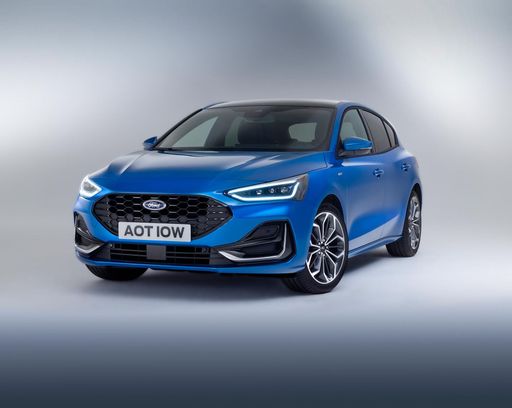
@ Ford Motor Company / Ford Media Center
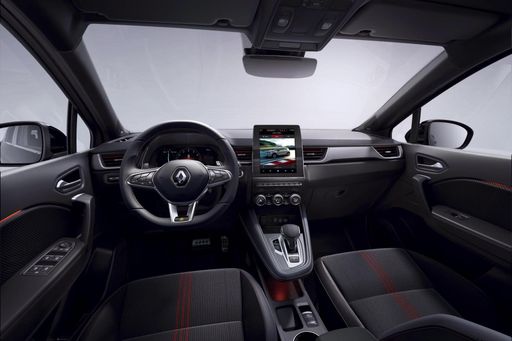
@ Renault Group Media
VS

Ford Focus vs Renault Captur – Which one offers the better deal?

Two cars, one duel: Ford Focus meets Renault Captur.
Which one wins in performance, efficiency and value for money? Find out now!

Focus @ Ford Motor Company / Ford Media Center

Ford Focus vs Renault Captur: Battle of Compact Vehicles

The automotive market is continuously evolving, with new models showcasing innovative technology and capabilities. In this article, we will dive into a comprehensive comparison of the Ford Focus and the Renault Captur, two popular choices among those seeking practicality combined with style. This comparison will focus on technical aspects, performance, and innovative features that set these two vehicles apart.
Captur @ Renault Group Media

Body and Design

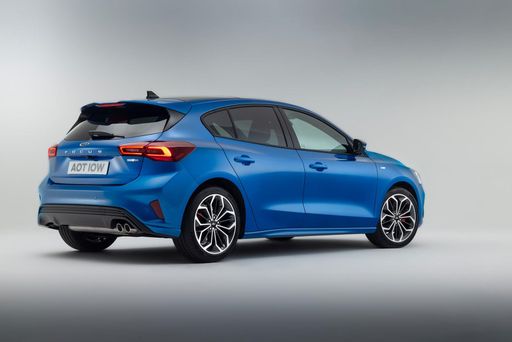
When it comes to body type, the Ford Focus is predominantly celebrated as a hatchback, offering a sporty and compact design that appeals to urban drivers. Its sleek lines not only enhance aesthetics but also contribute to aerodynamic efficiency.

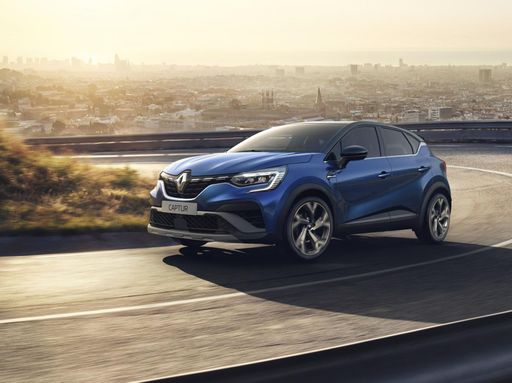
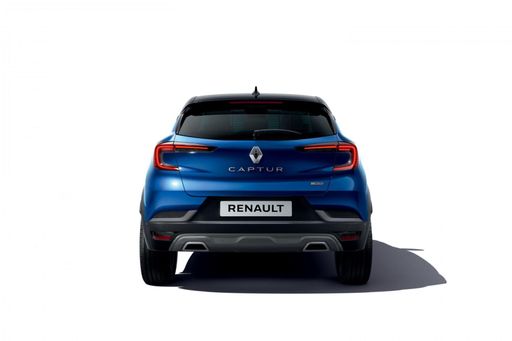
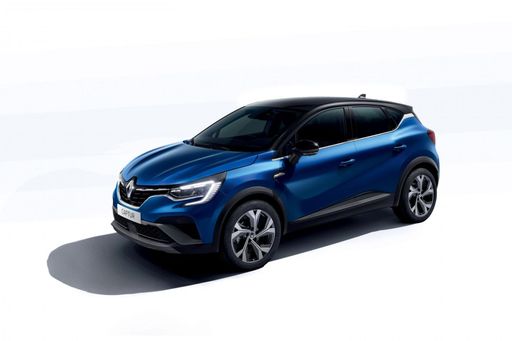
In contrast, the Renault Captur embraces the SUV body type, providing a higher driving position and added practicality with its spacious interior. Designed with a striking front grill and contemporary curves, the Captur projects a modern and youthful feel.

Focus @ Ford Motor Company / Ford Media Center

Engine Options and Performance

The Ford Focus offers versatility with various engine configurations, including petrol MHEV, diesel, and standard petrol engines ranging from 115 to a powerful 280 HP. This model features a range of transmission options, including manual and dual-clutch automatic gearboxes, offering drivers a tailored experience. The Focus achieves an impressive acceleration of 0-100 km/h in as little as 5.7 seconds, complemented by a maximum speed of 250 km/h.

On the other hand, the Renault Captur boasts a diverse lineup of engine types, including full hybrid and LPG options alongside traditional petrol engines. With power outputs ranging from 91 to 158 HP, the Captur's performance is suitable for both urban commuting and occasional road trips. It also features a range of transmission options, including an automatic gearbox and manual configurations, with acceleration times from 0-100 km/h starting at 8.5 seconds.

Captur @ Renault Group Media

Fuel Efficiency and Emissions

Economy is a notable consideration for both vehicles. The Ford Focus shows respectable fuel consumption figures, ranging from 4.9 to 8 L/100km. Its minor CO2 emissions vary between 117 and 183 g/km, making it competitive in terms of environmental impact.

Meanwhile, the Renault Captur excels in fuel efficiency with consumption figures peaking at 6 L/100km and as low as 4.7 L/100km for hybrid models. Captur's CO2 emissions range from 106 to 139 g/km, positioning it as an eco-friendlier option in this comparison.

Focus @ Ford Motor Company / Ford Media Center

Interior and Technology

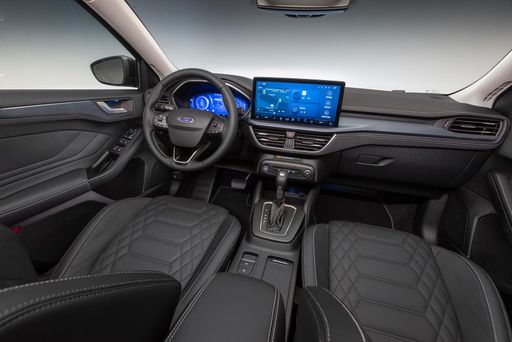
Both vehicles offer impressive interiors, but their approaches differ. The Ford Focus is known for its driver-focused cockpit and high-quality materials. With abundant legroom, a boot capacity of 392 L, and intuitive infotainment systems, it successfully balances comfort and practicality.

The Renault Captur, with its SUV stature, offers an elevated driving position and 422 L of trunk capacity, making it suitable for families and active individuals alike. The Captur integrates modern technology perhaps best represented by its multimedia system, which enhances user experience and connectivity on the road.

Captur @ Renault Group Media

Innovative Features

The Ford Focus rides on the latest platform featuring advanced driver-assistance systems, including lane-keeping assistance and adaptive cruise control, reinforcing safety and convenience.

On the contrary, the Renault Captur shines with its hybrid technology and connected features, such as a customizable digital instrument cluster and an array of smartphone apps that enhance connectivity and navigation.

Final Thoughts: Which One to Choose?

When comparing the Ford Focus and Renault Captur, your choice ultimately depends on your priorities. If you prefer a sporty hatchback with dynamic performance and refined technology, the Ford Focus may be your ideal match. However, if you're looking for versatility and eco-friendly options with the benefits of an SUV, the Renault Captur stands out as an excellent choice.

In conclusion, both vehicles demonstrate unique advantages in terms of design, performance, and technology. We recommend taking both for a test drive to see which aligns with your driving style and lifestyle needs.

Here’s where it gets real: The technical differences in detail

Costs and Efficiency:

Price and efficiency are often the first things buyers look at. Here it becomes clear which model has the long-term edge – whether at the pump, the plug, or in purchase price.

Renault Captur has a distinct advantage in terms of price – it starts at 21100 £, while the Ford Focus costs 27500 £. That’s a price difference of around 6386 £.

Fuel consumption also shows a difference: Renault Captur manages with 4.50 L and is therefore slight more efficient than the Ford Focus with 4.90 L. The difference is about 0.40 L per 100 km.

Engine and Performance:

Under the bonnet, it becomes clear which model is tuned for sportiness and which one takes the lead when you hit the accelerator.

When it comes to engine power, the Ford Focus has a significantly edge – offering 280 HP compared to 143 HP. That’s roughly 137 HP more horsepower.

In acceleration from 0 to 100 km/h, the Ford Focus is decisively quicker – completing the sprint in 5.70 s, while the Renault Captur takes 8.90 s. That’s about 3.20 s faster.

In terms of top speed, the Ford Focus performs distinct better – reaching 250 km/h, while the Renault Captur tops out at 180 km/h. The difference is around 70 km/h.

There’s also a difference in torque: Ford Focus pulls distinct stronger with 420 Nm compared to 265 Nm. That’s about 155 Nm difference.

Space and Everyday Use:

Whether family car or daily driver – which one offers more room, flexibility and comfort?

Both vehicles offer seating for 5 people.

In curb weight, Renault Captur is hardly perceptible lighter – 1323 kg compared to 1330 kg. The difference is around 7 kg.

In terms of boot space, the Renault Captur offers barely noticeable more room – 422 L compared to 392 L. That’s a difference of about 30 L.

In maximum load capacity, the Renault Captur performs barely noticeable better – up to 1363 L, which is about 9 L more than the Ford Focus.

When it comes to payload, Ford Focus to a small extent takes the win – 560 kg compared to 453 kg. That’s a difference of about 107 kg.

Who comes out on top?

Overall, the Ford Focus shows itself to be outperforms in nearly all aspects and secures the title of DriveDuel Champion.
It convinces with the more balanced overall package and proves to be the more versatile choice for everyday use.

from about £27,500
Focus @ Ford Motor Company / Ford Media Center

Ford Focus

  • Engine Type : Petrol MHEV, Diesel, Petrol
  • Transmission : Manuel, Automatic
  • Drive Type : Front-Wheel Drive
  • Power HP : 115 - 280 HP
  • Consumption L/100km : 4.9 - 8 L

Ford Focus

The Ford Focus remains a clever all‑rounder that balances sharp handling with everyday comfort, making it a strong choice whether your commute is city streets or country lanes. Its practical cabin and sensible running costs mean you’ll spend more time enjoying the drive and less time worrying about ownership, with a playful streak underfoot that keeps things interesting.

details

Renault Captur

5 (1)
rate

The Renault Captur is a cheeky little crossover that pairs city-friendly agility with a roomy, well-thought-out cabin and enough style to turn heads at the lights. It’s a sensible choice for buyers who want practical versatility and a dash of personality on their daily drives, without taking itself too seriously.

details
Ford Focus
Renault Captur
Focus @ Ford Motor Company / Ford Media Center
Captur @ Renault Group Media

Costs and Consumption

Price
27500 - 42700 £
Price
21100 - 28300 £
Consumption L/100km
4.9 - 8 L
Consumption L/100km
4.5 - 6 L
Consumption kWh/100km
-
Consumption kWh/100km
-
Electric Range
-
Electric Range
-
Battery Capacity
-
Battery Capacity
-
co2
117 - 183 g/km
co2
102 - 137 g/km
Fuel tank capacity
52 L
Fuel tank capacity
48 L

Dimensions and Body

Body Type
Hatchback
Body Type
SUV
Seats
5
Seats
5
Doors
5
Doors
5
Curb weight
1330 - 1529 kg
Curb weight
1323 - 1514 kg
Trunk capacity
392 L
Trunk capacity
326 - 422 L
Length
4382 - 4397 mm
Length
4239 mm
Width
1825 - 1844 mm
Width
1797 mm
Height
1438 - 1482 mm
Height
1575 mm
Max trunk capacity
1354 L
Max trunk capacity
1276 - 1363 L
Payload
495 - 560 kg
Payload
376 - 453 kg

Engine and Performance

Engine Type
Petrol MHEV, Diesel, Petrol
Engine Type
Full Hybrid, Petrol, Petrol MHEV
Transmission
Manuel, Automatic
Transmission
Automatic, Manuel
Transmission Detail
Manual Gearbox, Dual-Clutch Automatic, Automatic Gearbox
Transmission Detail
Automatic Gearbox, Manual Gearbox, Dual-Clutch Automatic
Drive Type
Front-Wheel Drive
Drive Type
Front-Wheel Drive
Power HP
115 - 280 HP
Power HP
115 - 143 HP
Acceleration 0-100km/h
5.7 - 11.8 s
Acceleration 0-100km/h
8.9 - 12.3 s
Max Speed
186 - 250 km/h
Max Speed
180 km/h
Torque
170 - 420 Nm
Torque
160 - 265 Nm
Number of Cylinders
3 - 4
Number of Cylinders
3 - 4
Power kW
85 - 206 kW
Power kW
84 - 116 kW
Engine capacity
999 - 2261 cm3
Engine capacity
1199 - 1789 cm3

General

Model Year
2022 - 2024
Model Year
2025
CO2 Efficiency Class
D, G
CO2 Efficiency Class
C, D, E
Brand
Ford
Brand
Renault
What drive types are available for the Ford Focus?

Available configurations include Front-Wheel Drive.

The prices and data displayed are estimates based on German list prices and may vary by country. This information is not legally binding.