VS

Ford Focus vs Mercedes GLS comparison

Compare performance (280 HP vs 404 HP), boot space and price (27,500 £ vs 92,700 £ ) at a glance. Find out which car is the better choice for you – Ford Focus or Mercedes GLS?

Ford Focus vs Mercedes GLS: Key differences

Ford Focus

4.6 (1 Reviews)
rate
  • substantially cheaper
  • substantially more efficient
  • clearly lighter
  • very slightly more trunk space
details

Mercedes GLS

  • clearly more power
  • marginally quicker 0–100 km/h
details

All details on performance, efficiency, range and trunk space can be found in the technical comparison below – including user reviews for both models.

By Achim Sedelmaier

Focus

Head-to-Head Comparison: Ford Focus Vs. Mercedes GLS

In the realm of automobiles, comparing a compact hatchback like the Ford Focus with a luxury SUV such as the Mercedes GLS might seem like an attempt to draw parallels between David and Goliath. Yet, despite their contrasting sizes and market segments, both models are equipped with a distinct blend of technical sophistication and modern innovation that appeal to a diverse audience of car enthusiasts. Let's dive into the details and see how these vehicles stack up in terms of performance, features, and efficiency.
GLS

Design and Dimensions: Size Matters

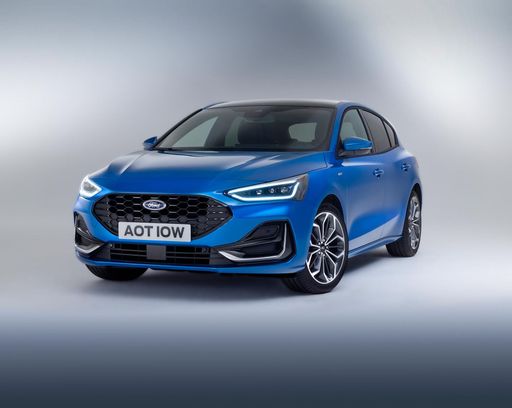
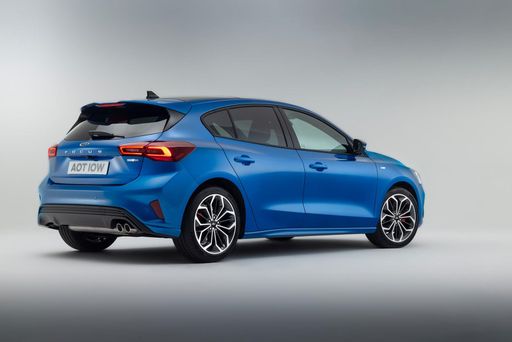
First up, the design and dimensions. The Ford Focus, distinctly a hatchback, features compact dimensions with a length ranging between 4,382 mm to 4,397 mm, a width of 1,825 mm to 1,844 mm, and a height between 1,438 mm to 1,482 mm. Its modest size makes it perfect for city driving and tight parking spots, offering practicality and maneuverability.

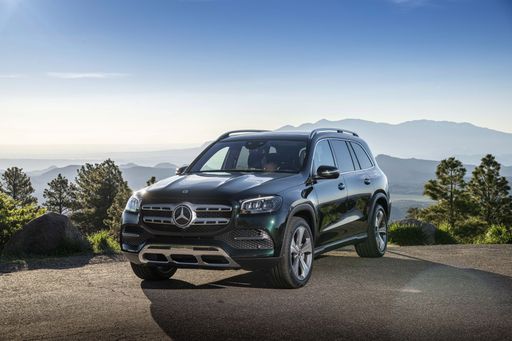
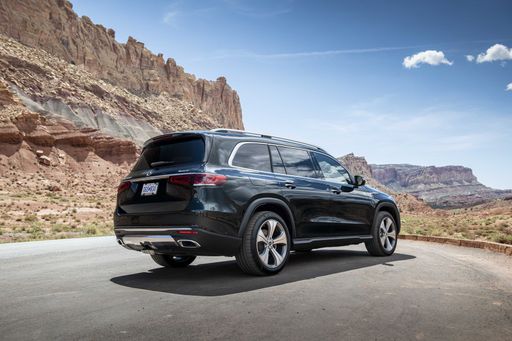
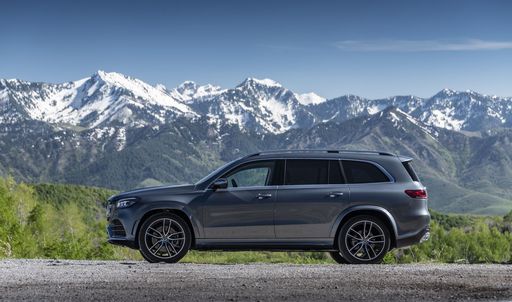
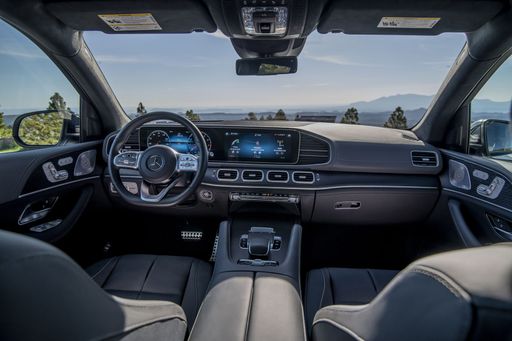
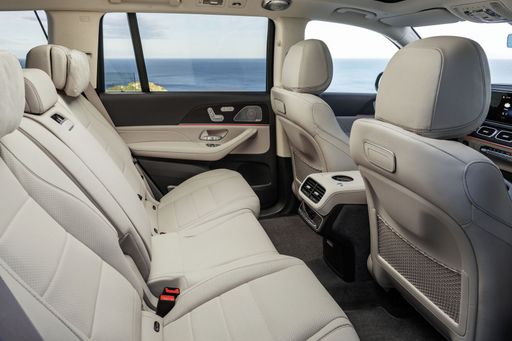
On the flip side, the Mercedes GLS is the epitome of opulence with its commanding SUV presence. With a length of over 5,200 mm, a width of 1,956 mm, and a height upwards of 1,782 mm, it dominates the road. This expansive SUV doesn't just offer acres of space but also makes a definitive statement on luxury and comfort.

Focus

Engine and Performance: Power Under the Hood

The Ford Focus offers versatility with engine choices ranging from petrol, diesel, to petrol MHEV, delivering power outputs between 115 HP and 280 HP. For those seeking spirited drives, its 2261 cm3 engine variant delivers a punchy performance with a 0-100 km/h acceleration of 5.7 seconds, reaching up to 250 km/h with a torque of 420 Nm. These numbers are impressive for a car designed to zip through urban jungles.

In contrast, the Mercedes GLS offers sheer power and refinement with its selection of diesel and petrol MHEV engines, ranging from 333 HP to a monstrous 634 HP. The acceleration figures for the GLS are equally impressive as its massive engines propel it from 0 to 100 km/h in a thrilling 4.2 seconds, thanks partially to its torque figures peaking at 850 Nm. This robust performance ensures it feels just as confident on highways as it does off the beaten path.

GLS

Transmission and Drive Types: Precision and Control

The Ford Focus offers both manual and automatic transmissions, providing flexibility for drivers who either prefer hands-on control or seamless automatic shifting. Its front-wheel-drive configuration complements its nimble and responsive handling, making it a suitable companion for everyday commutes and spontaneous weekend getaways.

The Mercedes GLS comes exclusively with an automatic transmission, ensuring smooth power delivery which is crucial for maintaining the luxurious drive experience. Its all-wheel-drive system ensures stability and grip, even under adverse conditions, making it an ideal choice for those seeking adventure beyond paved roads.

Focus

Efficiency and Eco-friendliness: Balancing Performance with Sustainability

While power is a significant factor, efficiency cannot be overlooked. The Focus provides a commendable balance with consumption rates of 4.9 to 8 L/100km, making it an economical choice for budget-conscious drivers. Its CO2 emissions range from 117 g/km to 183 g/km, landing it in the efficiency classes of D to G.

The GLS, with its more substantial engines, sees higher consumption rates between 7.9 L/100km to 13.7 L/100km. Though it performs excellently in luxury and power, its CO2 emissions of 207 g/km to 310 g/km place it in the G efficiency class, reflecting its greater environmental footprint.

GLS

Seating and Interior Features: Comfort and Space

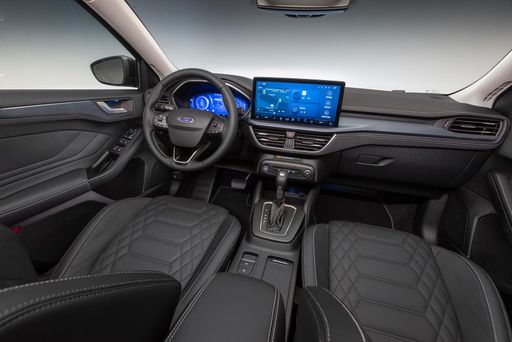
The Ford Focus accommodates five passengers, promising a comfortable ride with a generous trunk capacity of 392 L for your cargo needs, making it suitable for small families or individuals needing extra space.

On the other hand, the GLS offers a more capacious interior, capable of seating seven, with a trunk capacity of 355 L. Although the trunk is slightly smaller, the overall availability of space within the cabin compensates generously, ensuring that long journeys are taken in utmost comfort and style.

In conclusion, both vehicles cater to different market niches. The Ford Focus is an excellent choice for drivers prioritizing efficiency, compact size, and urban agility. Meanwhile, the Mercedes GLS serves those who crave luxury, power, and extensive space. Whichever path you choose, each vehicle promises a unique automotive experience.

Here’s where it gets real: The technical differences in detail

Focus

Costs and Efficiency:

Price and efficiency are often the first things buyers look at. Here it becomes clear which model has the long-term edge – whether at the pump, the plug, or in purchase price.

Ford Focus is substantially cheaper – starting at 27,500 £ , while the Mercedes GLS costs 92,700 £ . That’s a price difference of around 65,148 £.

Fuel consumption also shows a difference: the Ford Focus uses 4.9 L/100km and is substantially more efficient than the Mercedes GLS with 7.9 L/100km. The difference is about 3 L/100km.

GLS

Engine and Performance:

Under the bonnet, it becomes clear which model is tuned for sportiness and which one takes the lead when you hit the accelerator.

When it comes to engine power, the Mercedes GLS offers clearly more power – delivering 404 HP compared to 280 HP. That’s roughly 124 HP more horsepower.

When accelerating from 0 to 100 km/h, the Mercedes GLS is marginally quicker – completing the sprint in 5.6 s, while the Ford Focus takes 5.7 s. That’s about 0.1 s quicker.

There’s also a difference in torque: the Mercedes GLS delivers substantially more torque with 750 Nm compared to 420 Nm. That’s about 330 Nm more.

Focus

Space and Everyday Use:

Whether family car or daily driver – which one offers more room, flexibility and comfort?

Seats: Mercedes GLS offers more seats – 7 vs 5.

In terms of curb weight, Ford Focus is clearly lighter – 1,330 kg compared to 2,580 kg. The difference is around 1,250 kg.

Looking at boot space, the Ford Focus offers very slightly more boot space – 392 L compared to 355 L. That’s a difference of about 37 L.

When it comes to payload, the Mercedes GLS carries clearly more – 820 kg compared to 560 kg. That’s a difference of about 260 kg.

Who wins the race in the data check?

The Ford Focus is decisively ahead in the objective data comparison.
This result only shows which model scores more points on paper – not which of the two cars feels right for you.

from £27,500
Focus

Ford Focus

  • Engine Type Petrol MHEV, Diesel, Petrol
  • Transmission Manuel, Automatic
  • Drive Type Front-Wheel Drive
  • Power HP 115 - 280 HP
  • Consumption L/100km 4.9 - 8 L/100km
Ford Focus
Mercedes GLS

Costs and Consumption

View detailed analysis

Engine and Performance

View detailed analysis

Dimensions and Body

View detailed analysis

Ford Focus

The Ford Focus remains a clever all‑rounder that balances sharp handling with everyday comfort, making it a strong choice whether your commute is city streets or country lanes. Its practical cabin and sensible running costs mean you’ll spend more time enjoying the drive and less time worrying about ownership, with a playful streak underfoot that keeps things interesting.

details

Mercedes GLS

The GLS — usually just called the GLS — is Mercedes' flagship SUV, wrapping limousine-like comfort and commanding road presence into a smart, family-ready package. It pampers occupants with a hushed cabin, premium materials and intuitive tech, while still managing to feel confident and a little indulgent on the daily commute.

details
Ford Focus
Mercedes GLS

Costs and Consumption

Price
27,500 - 42,700 £
Price
92,700 - 104,600 £
Consumption L/100km
4.9 - 8 L/100km
Consumption L/100km
7.9 - 9.9 L/100km
Consumption kWh/100km
-
Consumption kWh/100km
-
Electric Range
-
Electric Range
-
Battery Capacity
-
Battery Capacity
-
co2
117 - 183 g/km
co2
206 - 226 g/km
Fuel tank capacity
52 L
Fuel tank capacity
-

Dimensions and Body

Body Type
Hatchback
Body Type
SUV
Seats
5
Seats
7
Doors
5
Doors
-
Curb weight
1,330 - 1,529 kg
Curb weight
2,580 - 2,670 kg
Trunk capacity
392 L
Trunk capacity
355 L
Length
4,382 - 4,397 mm
Length
-
Width
1,825 - 1,844 mm
Width
1,956 mm
Height
1,438 - 1,482 mm
Height
-
Max trunk capacity
1,354 L
Max trunk capacity
-
Payload
495 - 560 kg
Payload
810 - 820 kg

Engine and Performance

Engine Type
Petrol MHEV, Diesel, Petrol
Engine Type
Petrol MHEV, Diesel MHEV
Transmission
Manuel, Automatic
Transmission
Automatic
Transmission Detail
Manual Gearbox, Dual-Clutch Automatic, Automatic Gearbox
Transmission Detail
Automatic Gearbox
Drive Type
Front-Wheel Drive
Drive Type
All-Wheel Drive
Power HP
115 - 280 HP
Power HP
336 - 404 HP
Acceleration 0-100km/h
5.7 - 11.8 s
Acceleration 0-100km/h
5.6 - 6.2 s
Max Speed
186 - 250 km/h
Max Speed
-
Torque
170 - 420 Nm
Torque
560 - 750 Nm
Number of Cylinders
3 - 4
Number of Cylinders
6
Power kW
85 - 206 kW
Power kW
247 - 297 kW
Engine capacity
999 - 2,261 cm3
Engine capacity
2,989 - 2,999 cm3

General

Model Year
2,022 - 2,024
Model Year
2026
CO2 Efficiency Class
D, G
CO2 Efficiency Class
G
Brand
Ford
Brand
Mercedes-Benz
DriveDuel uses data analysis and artificial intelligence to evaluate vehicle data and create content. Content is regularly reviewed and improved. The displayed prices are estimates based on German list prices, adjusted to the respective country’s VAT. Country-specific registration taxes are not included. This information is not legally binding.