VS

Ford Kuga vs Skoda Kamiq comparison

Compare performance (243 HP vs 150 HP), boot space and price (34,200 £ vs 22,300 £ ) at a glance. Find out which car is the better choice for you – Ford Kuga or Skoda Kamiq?

Ford Kuga vs Skoda Kamiq: Key differences

Ford Kuga

4.3 (7 Reviews)
rate
  • markedly more power
  • clearly more efficient
  • somewhat quicker 0–100 km/h
details

Skoda Kamiq

5 (5 Reviews)
rate
  • significantly cheaper
  • markedly lighter
details

All details on performance, efficiency, range and trunk space can be found in the technical comparison below – including user reviews for both models.

By Achim Sedelmaier

Kuga

Ford Kuga VS Skoda Kamiq — practical compact-SUV comparison

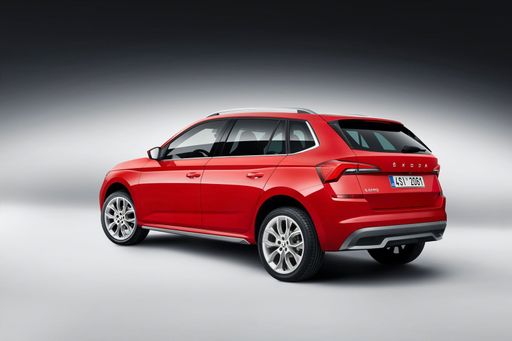
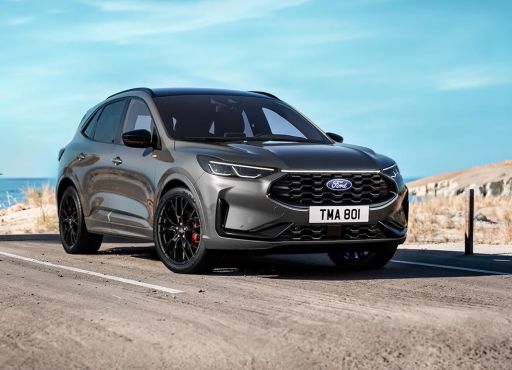
Ford Kuga VS Skoda Kamiq pits a driver‑oriented, tech‑heavy compact SUV against a quietly spacious, no‑nonsense rival. The Ford Kuga comes across as the more engaging car to drive and the one that packs the latest infotainment into its cockpit, while the Skoda Kamiq trades sparkle for roomy practicality and simple ergonomics. Both are sensible family options, but they answer different everyday questions: which feels sharper behind the wheel versus which makes daily life easier. Read on to see how those differences translate into city runs, motorway cruises and family practicality.
Kamiq

Character and driving dynamics

The Ford Kuga leans into agility and a direct steering feel that gives drivers confidence on twisty roads, whereas the Skoda Kamiq prefers a calm, composed demeanor that rewards relaxed driving. In the Kuga you get a more involved chassis and quicker responses, but that sportier setup can feel firmer over poor surfaces; the Kamiq soaks up bumps and keeps body movements gently controlled, at the cost of cornering enthusiasm. Power delivery also feels different in daily life: the Kuga’s electrified drivetrains can sound eager under load, while the Kamiq’s conventional engines and gearbox aim for smoothness even if the dual‑clutch sometimes hesitates in slow manoeuvres. Choose the Kuga if you want a compact SUV that behaves like a small driver’s car, or the Kamiq if you value a relaxed, predictable ride.

Kuga

Comfort and long‑distance behavior

On long trips the Ford Kuga rewards with low wind and tyre noise and a planted highway presence, yet its firmer suspension and occasional hybrid droning under hard acceleration make it feel less lounge‑like than expected. The Skoda Kamiq, by contrast, delivers a more restful long‑distance experience thanks to a comfort‑biased setup and very steady straight‑line manners, which helps reduce fatigue on long motorway runs. Both cabins are quiet at cruising speeds, but the Kuga’s sharper suspension transmits more texture over broken surfaces while the Kamiq trades a touch of body roll for better absorption of big bumps. If motorway serenity and steady comfort top your list, the Kamiq nudges ahead; if you prefer composed stability with a sportier edge, the Kuga fits better.

Kamiq

Usability, cabin feel and perceived quality

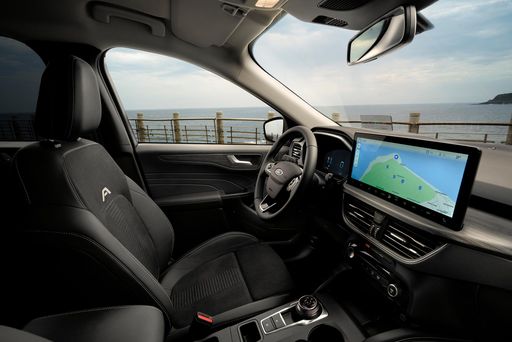
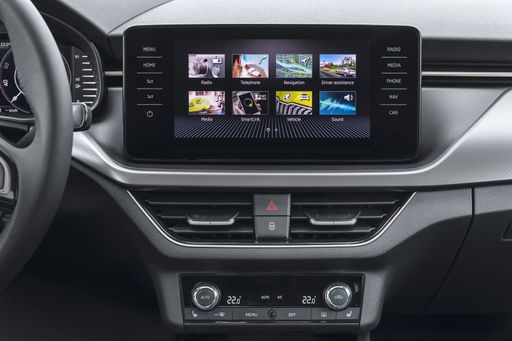
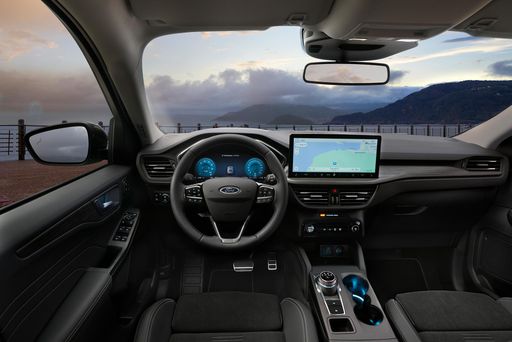
The Ford Kuga’s interior shouts tech-first with a large Sync screen and modern connectivity, but that digital focus comes with touch‑only climate controls and a simpler, function‑forward material mix that won’t please buyers after a plush cabin. The Skoda Kamiq emphasises straightforward ergonomics and physical knobs, which feels safer and more intuitive in daily use, even though many surfaces remain hard plastic and the overall finish is deliberately utilitarian. Infotainment responsiveness is a mixed bag for both: the Kuga generally offers smoother smartphone integration while the Kamiq can feel occasionally laggy depending on trim and software. In short, the Kuga trades tactile refinement for digital convenience, and the Kamiq swaps touchscreen gloss for tactile, practical controls.

Kuga

Practicality and family usability

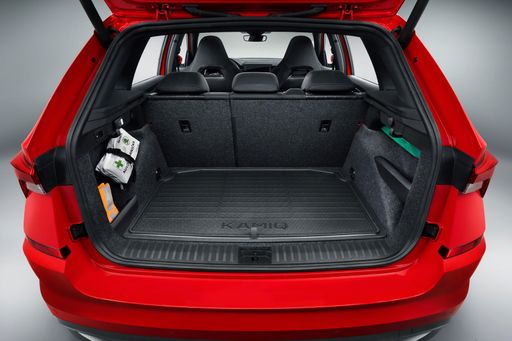
Practical differences matter: the Ford Kuga scores with a sliding rear bench that improves flexibility for families and luggage configuration, but its plug‑in hybrid packaging can eat into boot space. The Skoda Kamiq doesn’t offer a sliding rear seat but surprises with class‑leading rear legroom and clever storage touches that make day‑to‑day family life easier, plus a trunk shape that’s straightforward to load. If you regularly carry tall passengers or need modular rear space, the Kuga’s versatility is valuable; if maximum usable rear space, simple loading and city parking are priorities, the Kamiq is the more pragmatic choice. Both cars have sensible cabin layouts, but they approach family life from different angles: Kuga for flexibility, Kamiq for predictability.

Kamiq

Who each car suits and the trade‑offs to consider

Buyers who prize driving engagement, hybrid efficiency in urban use and a techy cockpit will likely be drawn to the Ford Kuga, accepting firmer suspension and a more workmanlike interior as trade‑offs. Those who want the most sensible interior space, easy everyday ergonomics and a quieter, more relaxed motorway companion will find the Skoda Kamiq a better fit, at the cost of less dynamic character and no electrified powertrain option. Think of the Kuga as the more driver‑focused, flexible family SUV and the Kamiq as the calm, roomy city‑and‑commuter choice. The following technical comparison breaks down the mechanical and equipment differences that underpin these real‑world impressions, so you can match spec to lifestyle.

Here’s where it gets real: The technical differences in detail

Kuga

Costs and Efficiency:

Looking at overall running costs, both models reveal some interesting differences in everyday economy.

Skoda Kamiq is significantly cheaper – starting at 22,300 £ , while the Ford Kuga costs 34,200 £ . That’s a price difference of around 11,974 £.

Fuel consumption also shows a difference: the Ford Kuga uses 2.8 L/100km and is clearly more efficient than the Skoda Kamiq with 5.3 L/100km. The difference is about 2.5 L/100km.

Kamiq

Engine and Performance:

Power, torque and acceleration say a lot about how a car feels on the road. This is where you see which model delivers more driving dynamics.

When it comes to engine power, the Ford Kuga offers markedly more power – delivering 243 HP compared to 150 HP. That’s roughly 93 HP more horsepower.

When accelerating from 0 to 100 km/h, the Ford Kuga is somewhat quicker – completing the sprint in 7.3 s, while the Skoda Kamiq takes 8.1 s. That’s about 0.8 s quicker.

There’s also a difference in torque: the Skoda Kamiq delivers barely more torque with 250 Nm compared to 240 Nm. That’s about 10 Nm more.

Kuga

Space and Everyday Use:

Beyond pure performance, interior space and usability matter most in daily life. This is where you see which car is more practical and versatile.

Both vehicles offer seating for 5 people.

In terms of curb weight, Skoda Kamiq is markedly lighter – 1,231 kg compared to 1,526 kg. The difference is around 295 kg.

When it comes to payload, the Ford Kuga carries only slightly more – 550 kg compared to 539 kg. That’s a difference of about 11 kg.

Who wins the race in the data check?

The Ford Kuga is decisively ahead in the objective data comparison.
This result only shows which model scores more points on paper – not which of the two cars feels right for you.

from £34,200
Kuga

Ford Kuga

  • Engine Type Petrol, Full Hybrid, Plugin Hybrid
  • Transmission Manuel, Automatic
  • Drive Type Front-Wheel Drive, All-Wheel Drive
  • Power HP 150 - 243 HP
  • Consumption L/100km 2.8 - 6.8 L/100km
  • Electric Range 68 km
Ford Kuga
Skoda Kamiq

Costs and Consumption

View detailed analysis

Engine and Performance

View detailed analysis

Dimensions and Body

View detailed analysis

Ford Kuga

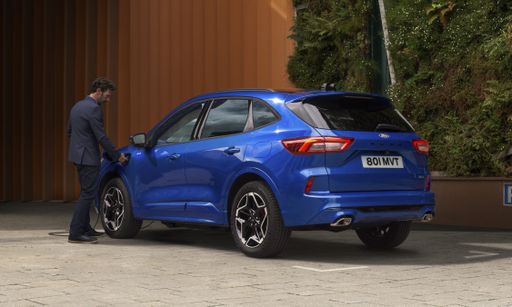
The Ford Kuga is a practical and comfortable compact SUV that balances everyday usability with a composed ride and adaptable interior. It offers sensible tech and safety features, making it a solid choice for families or anyone seeking a versatile, easy-to-live-with crossover.

details

Skoda Kamiq

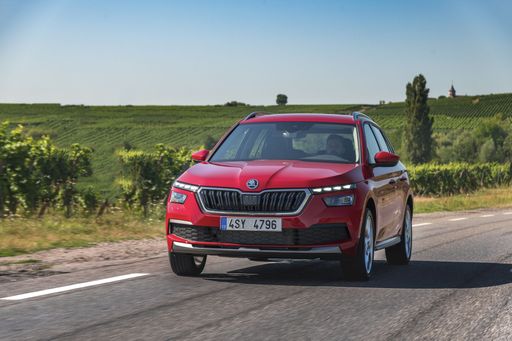
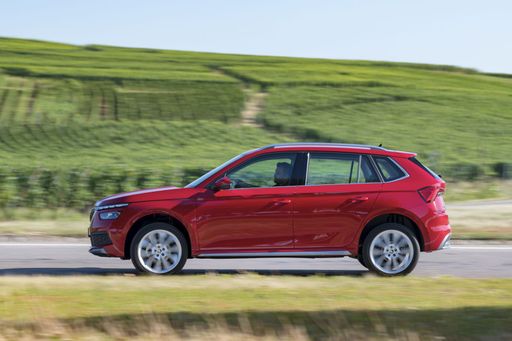
The Skoda Kamiq is a practical, well-built small crossover that mixes city-friendly manners with surprisingly versatile interior space and clever storage solutions. It offers a comfortable ride, user-friendly technology and solid value, making it a sensible choice for everyday driving.

details
Ford Kuga
Skoda Kamiq

Costs and Consumption

Price
34,200 - 46,300 £
Price
22,300 - 32,700 £
Consumption L/100km
2.8 - 6.8 L/100km
Consumption L/100km
5.3 - 5.7 L/100km
Consumption kWh/100km
-
Consumption kWh/100km
-
Electric Range
68 km
Electric Range
-
Battery Capacity
-
Battery Capacity
-
co2
55 - 154 g/km
co2
121 - 128 g/km
Fuel tank capacity
-
Fuel tank capacity
-

Dimensions and Body

Body Type
SUV
Body Type
SUV
Seats
5
Seats
5
Doors
-
Doors
-
Curb weight
1,526 - 1,859 kg
Curb weight
1,231 - 1,340 kg
Trunk capacity
-
Trunk capacity
400 L
Length
-
Length
-
Width
1,882 mm
Width
1,793 mm
Height
-
Height
-
Max trunk capacity
-
Max trunk capacity
-
Payload
541 - 550 kg
Payload
439 - 539 kg

Engine and Performance

Engine Type
Petrol, Full Hybrid, Plugin Hybrid
Engine Type
Petrol
Transmission
Manuel, Automatic
Transmission
Manuel, Automatic
Transmission Detail
Manual Gearbox, CVT, Automatic Gearbox
Transmission Detail
Manual Gearbox, Dual-Clutch Automatic
Drive Type
Front-Wheel Drive, All-Wheel Drive
Drive Type
Front-Wheel Drive
Power HP
150 - 243 HP
Power HP
95 - 150 HP
Acceleration 0-100km/h
7.3 - 9.9 s
Acceleration 0-100km/h
8.1 - 11 s
Max Speed
-
Max Speed
-
Torque
240 Nm
Torque
175 - 250 Nm
Number of Cylinders
3 - 4
Number of Cylinders
3 - 4
Power kW
111 - 178 kW
Power kW
70 - 110 kW
Engine capacity
1,496 - 2,488 cm3
Engine capacity
999 - 1,498 cm3

General

Model Year
2025
Model Year
2025
CO2 Efficiency Class
E, D, B
CO2 Efficiency Class
D
Brand
Ford
Brand
Skoda
DriveDuel uses data analysis and artificial intelligence to evaluate vehicle data and create content. Content is regularly reviewed and improved. The displayed prices are estimates based on German list prices, adjusted to the respective country’s VAT. Country-specific registration taxes are not included. This information is not legally binding.