
 Deutschland
 France
 Nederland
 Great Britain
 Sverige
 Norge
Norge Danmark
 Suomi
Suomi Italia
 Polska
 España
VS
Ford Mustang Coupe vs Hyundai Tucson - Differences and prices compared
Compare performance (453 HP vs 288 HP), boot space and price (51800 £ vs 20900 £ ) at a glance. Find out which car is the better choice for you – Ford Mustang Coupe or Hyundai Tucson?
Tucson
Costs and Efficiency:
Price and efficiency are key factors when choosing a car – and this is often where the real differences emerge.
Hyundai Tucson has a decisively advantage in terms of price – it starts at 20900 £ , while the Ford Mustang Coupe costs 51800 £ . That’s a price difference of around 30874 £.
Fuel consumption also shows a difference: Hyundai Tucson manages with 2.70 L and is therefore convincingly more efficient than the Ford Mustang Coupe with 12 L. The difference is about 9.30 L per 100 km.
Tucson
Engine and Performance:
Under the bonnet, it becomes clear which model is tuned for sportiness and which one takes the lead when you hit the accelerator.
When it comes to engine power, the Ford Mustang Coupe has a evident edge – offering 453 HP compared to 288 HP. That’s roughly 165 HP more horsepower.
In acceleration from 0 to 100 km/h, the Ford Mustang Coupe is convincingly quicker – completing the sprint in 4.40 s, while the Hyundai Tucson takes 7.50 s. That’s about 3.10 s faster.
In terms of top speed, the Ford Mustang Coupe performs evident better – reaching 263 km/h, while the Hyundai Tucson tops out at 204 km/h. The difference is around 59 km/h.
There’s also a difference in torque: Ford Mustang Coupe pulls evident stronger with 540 Nm compared to 379 Nm. That’s about 161 Nm difference.
Ad · Affiliate
As an Amazon Associate, we earn from qualifying purchases.
Tucson
Space and Everyday Use:
Whether family car or daily driver – which one offers more room, flexibility and comfort?
Seats: Hyundai Tucson offers a bit more seating capacity – 5 vs 4.
In curb weight, Hyundai Tucson is to a small extent lighter – 1542 kg compared to 1808 kg. The difference is around 266 kg.
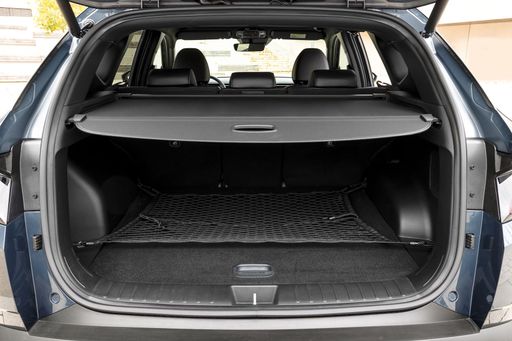
In terms of boot space, the Hyundai Tucson offers noticeable more room – 620 L compared to 381 L. That’s a difference of about 239 L.
When it comes to payload, Hyundai Tucson clearly perceptible takes the win – 545 kg compared to 334 kg. That’s a difference of about 211 kg.
Who wins the race?
The Hyundai Tucson proves to be leaves the rival little chance and therefore becomes our DriveDuel Champion!
Hyundai Tucson is the better all-rounder in this comparison.
from about £20,900
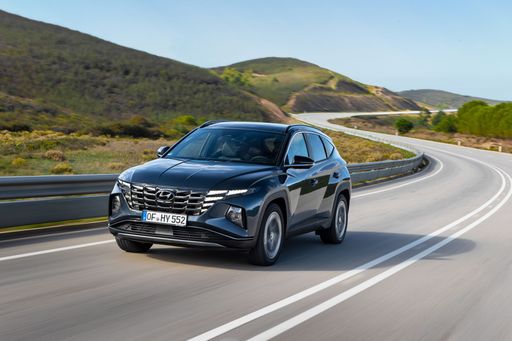
Hyundai Tucson
Ford Mustang Coupe
Hyundai Tucson
Costs and Consumption
View detailed analysis
View detailed analysis
Engine and Performance
View detailed analysis
View detailed analysis
Dimensions and Body
View detailed analysis
View detailed analysis
Ford Mustang Coupe
The Ford Mustang Coupe wears its muscle on its sleeve, delivering a raw, grin-inducing driving experience that turns everyday roads into a little theater of noise and swagger. Inside it's surprisingly livable for regular use, so if you want headline-grabbing looks and a proper driver's car without pretending to be a luxury cruiser, the Mustang coupe is a very entertaining choice.
detailsHyundai Tucson
5 (2 Reviews)
Hyundai Tucson marries bold, sculpted looks with a clever, roomy cabin that feels smarter than its price tag suggests. It's composed on the road, easy to live with day-to-day, and a sensible choice for buyers who want SUV style without the showroom theatrics.
details
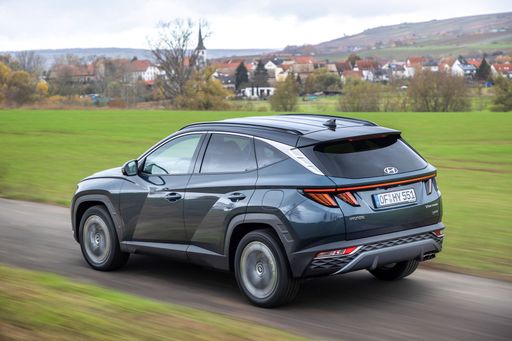
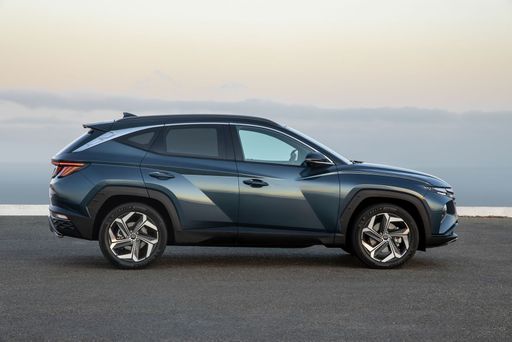
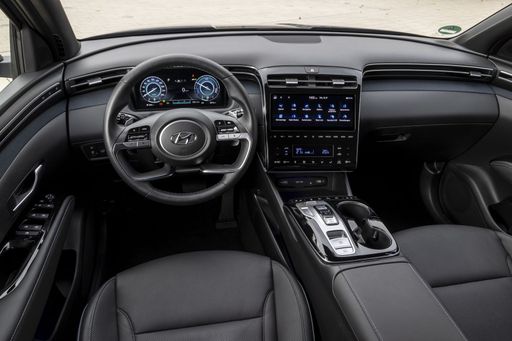
Ford Mustang Coupe
Hyundai Tucson
Costs and Consumption |
|
|---|---|
|
Price
51800 - 65600 £
|
Price
20900 - 47900 £
|
|
Consumption L/100km
12 - 12.4 L
|
Consumption L/100km
2.7 - 7.6 L
|
|
Consumption kWh/100km
-
|
Consumption kWh/100km
-
|
|
Electric Range
-
|
Electric Range
63 - 70 km
|
|
Battery Capacity
-
|
Battery Capacity
-
|
|
co2
275 - 282 g/km
|
co2
62 - 172 g/km
|
|
Fuel tank capacity
61 L
|
Fuel tank capacity
52 - 54 L
|
Dimensions and Body |
|
|---|---|
|
Body Type
Coupe
|
Body Type
SUV
|
|
Seats
4
|
Seats
5
|
|
Doors
2
|
Doors
5
|
|
Curb weight
1808 - 1837 kg
|
Curb weight
1542 - 1893 kg
|
|
Trunk capacity
381 L
|
Trunk capacity
546 - 620 L
|
|
Length
4810 - 4819 mm
|
Length
4525 - 4535 mm
|
|
Width
1916 - 1917 mm
|
Width
1865 mm
|
|
Height
1398 - 1404 mm
|
Height
1650 mm
|
|
Max trunk capacity
-
|
Max trunk capacity
1795 - 1799 L
|
|
Payload
327 - 334 kg
|
Payload
518 - 545 kg
|
Engine and Performance |
|
|---|---|
|
Engine Type
Petrol
|
Engine Type
Petrol, Full Hybrid, Plugin Hybrid, Diesel MHEV
|
|
Transmission
Manuel, Automatic
|
Transmission
Manuel, Automatic
|
|
Transmission Detail
Manual Gearbox, Automatic Gearbox
|
Transmission Detail
Manual Gearbox, Dual-Clutch Automatic, Automatic Gearbox
|
|
Drive Type
Rear-Wheel Drive
|
Drive Type
Front-Wheel Drive, All-Wheel Drive
|
|
Power HP
446 - 453 HP
|
Power HP
136 - 288 HP
|
|
Acceleration 0-100km/h
4.4 - 5.3 s
|
Acceleration 0-100km/h
7.5 - 11.6 s
|
|
Max Speed
250 - 263 km/h
|
Max Speed
196 - 204 km/h
|
|
Torque
540 Nm
|
Torque
250 - 379 Nm
|
|
Number of Cylinders
8
|
Number of Cylinders
4
|
|
Power kW
328 - 334 kW
|
Power kW
100 - 212 kW
|
|
Engine capacity
5038 cm3
|
Engine capacity
1598 cm3
|
General |
|
|---|---|
|
Model Year
2024
|
Model Year
2025
|
|
CO2 Efficiency Class
G
|
CO2 Efficiency Class
F, D, E, B
|
|
Brand
Ford
|
Brand
Hyundai
|
What drive types are available for the Ford Mustang Coupe?
The Ford Mustang Coupe is offered with Rear-Wheel Drive.
The prices shown are estimates based on German list prices, adjusted for local VAT. Local registration taxes (e.g. NoVA, BPM or CO2 malus) are not included. This information is not legally binding.