
 Deutschland
 France
 Nederland
 Great Britain
 Sverige
 Danmark
 Suomi
Suomi Italia
 Polska
 Česko
Česko España
VS
Ford Mustang Coupe vs Porsche Cayenne comparison
Compare performance (453 HP vs 1,156 HP), boot space and price (51,800 £ vs 90,200 £ ) at a glance. Find out which car is the better choice for you – Ford Mustang Coupe or Porsche Cayenne?
Mustang Coupe
Costs and Efficiency:
When it comes to price and running costs, the biggest differences usually appear. This is often where you see which car fits your budget better in the long run.
Ford Mustang Coupe is clearly cheaper – starting at 51,800 £ , while the Porsche Cayenne costs 90,200 £ . That’s a price difference of around 38,400 £.
Fuel consumption also shows a difference: the Porsche Cayenne uses 4 L/100km and is significantly more efficient than the Ford Mustang Coupe with 12 L/100km. The difference is about 8 L/100km.
Cayenne
Engine and Performance:
Power, torque and acceleration are the classic benchmarks for car enthusiasts – and here, some clear differences start to show.
When it comes to engine power, the Porsche Cayenne offers significantly more power – delivering 1,156 HP compared to 453 HP. That’s roughly 703 HP more horsepower.
When accelerating from 0 to 100 km/h, the Porsche Cayenne is significantly quicker – completing the sprint in 2.5 s, while the Ford Mustang Coupe takes 4.4 s. That’s about 1.9 s quicker.
There’s also a difference in torque: the Porsche Cayenne delivers clearly more torque with 1,500 Nm compared to 540 Nm. That’s about 960 Nm more.
Space and Everyday Use:
Whether family car or daily driver – which one offers more room, flexibility and comfort?
Seats: Porsche Cayenne offers more seats – 5 vs 4.
In terms of curb weight, Ford Mustang Coupe is slightly lighter – 1,808 kg compared to 2,130 kg. The difference is around 322 kg.
When it comes to payload, the Porsche Cayenne carries clearly more – 705 kg compared to 334 kg. That’s a difference of about 371 kg.
Who wins the race in the data check?
The Porsche Cayenne is clearly superior overall in the objective data comparison.
This result only shows which model scores more points on paper – not which of the two cars feels right for you.
from £90,200
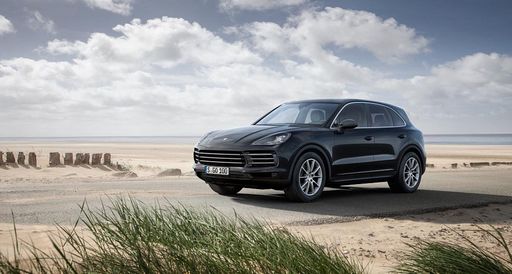
Porsche Cayenne
Ford Mustang Coupe
Porsche Cayenne
Costs and Consumption
View detailed analysis
View detailed analysis
Engine and Performance
View detailed analysis
View detailed analysis
Dimensions and Body
View detailed analysis
View detailed analysis
Ford Mustang Coupe
The Ford Mustang Coupe wears its muscle on its sleeve, delivering a raw, grin-inducing driving experience that turns everyday roads into a little theater of noise and swagger. Inside it's surprisingly livable for regular use, so if you want headline-grabbing looks and a proper driver's car without pretending to be a luxury cruiser, the Mustang coupe is a very entertaining choice.
details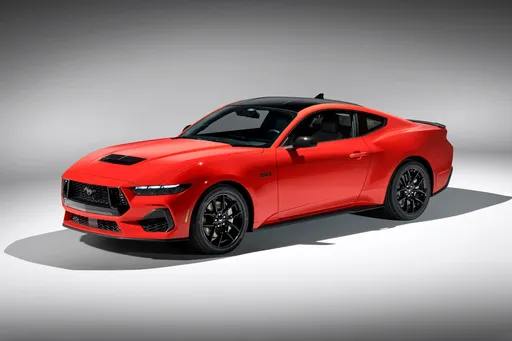
Porsche Cayenne
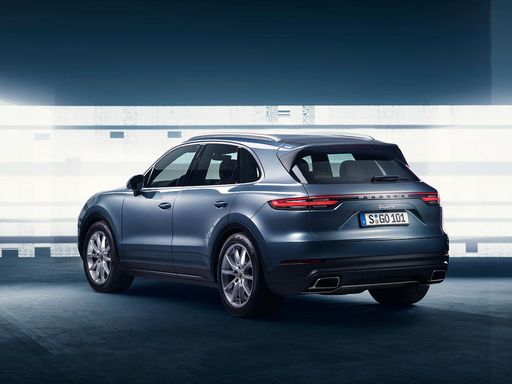
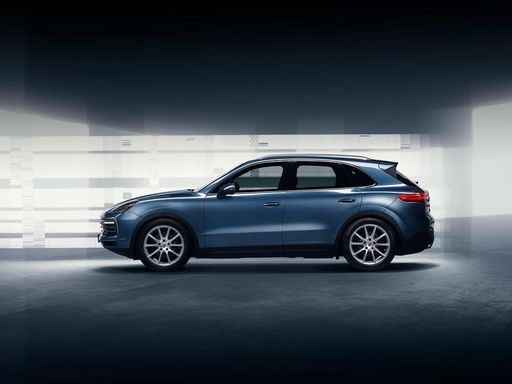
Few SUVs blend athletic poise and Teutonic precision like the Porsche Cayenne, putting genuine sports‑car feeling into a roomy, everyday package. If you want a practical family hauler that still makes you grin every time you merge, the Cayenne delivers — turning errands into an excuse for a spirited drive.
details
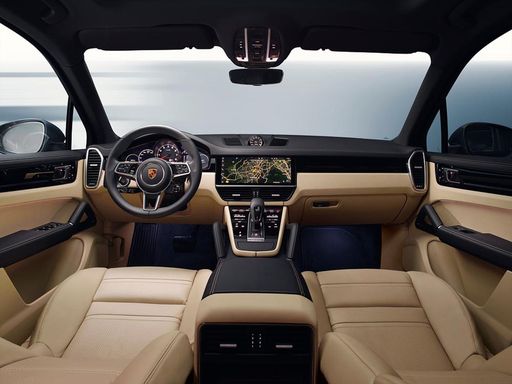
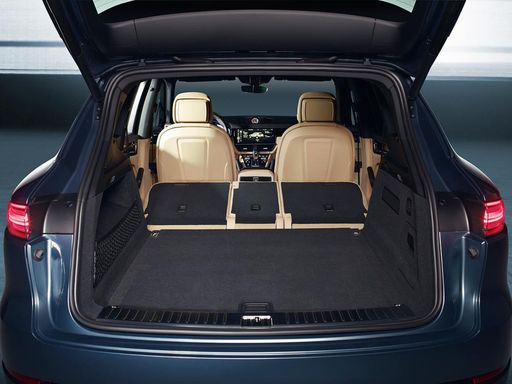
Ford Mustang Coupe
Porsche Cayenne
Costs and Consumption |
|
|---|---|
|
Price
51,800 - 65,600 £
|
Price
90,200 - 144,400 £
|
|
Consumption L/100km
12 - 12.4 L/100km
|
Consumption L/100km
4 - 11 L/100km
|
|
Consumption kWh/100km
-
|
Consumption kWh/100km
18.9 - 20.6 kWh/100km
|
|
Electric Range
-
|
Electric Range
74 - 668 km
|
|
Battery Capacity
-
|
Battery Capacity
-
|
|
co2
275 - 282 g/km
|
co2
0 - 249 g/km
|
|
Fuel tank capacity
-
|
Fuel tank capacity
-
|
Dimensions and Body |
|
|---|---|
|
Body Type
Coupe
|
Body Type
SUV
|
|
Seats
4
|
Seats
4 - 5
|
|
Doors
-
|
Doors
-
|
|
Curb weight
1,808 - 1,837 kg
|
Curb weight
2,130 - 2,725 kg
|
|
Trunk capacity
-
|
Trunk capacity
434 - 781 L
|
|
Length
-
|
Length
-
|
|
Width
1,916 - 1,917 mm
|
Width
1,980 - 1,983 mm
|
|
Height
-
|
Height
-
|
|
Max trunk capacity
-
|
Max trunk capacity
-
|
|
Payload
327 - 334 kg
|
Payload
525 - 705 kg
|
Engine and Performance |
|
|---|---|
|
Engine Type
Petrol
|
Engine Type
Petrol, Plug-in Hybrid, Electric
|
|
Transmission
Manual, Automatic
|
Transmission
Automatic
|
|
Transmission Detail
Manual Gearbox, Automatic Gearbox
|
Transmission Detail
Automatic Gearbox, Reduction Gearbox
|
|
Drive Type
Rear-Wheel Drive
|
Drive Type
All-Wheel Drive
|
|
Power HP
446 - 453 HP
|
Power HP
353 - 1,156 HP
|
|
Acceleration 0-100km/h
4.4 - 5.3 s
|
Acceleration 0-100km/h
2.5 - 6 s
|
|
Max Speed
-
|
Max Speed
-
|
|
Torque
540 Nm
|
Torque
500 - 1,500 Nm
|
|
Number of Cylinders
8
|
Number of Cylinders
6
|
|
Power kW
328 - 334 kW
|
Power kW
260 - 850 kW
|
|
Engine capacity
5,038 cm3
|
Engine capacity
2,995 cm3
|
General |
|
|---|---|
|
Model Year
2025
|
Model Year
2,025 - 2,026
|
|
CO2 Efficiency Class
G
|
CO2 Efficiency Class
G, B, A
|
|
Brand
Ford
|
Brand
Porsche
|
DriveDuel uses data analysis and artificial intelligence to evaluate vehicle data and create content. Content is regularly reviewed and improved.
The displayed prices are estimates based on German list prices, adjusted to the respective country’s VAT. Country-specific registration taxes are not included. This information is not legally binding.