VS

Ford Tourneo Connect vs Toyota Proace City Compact Van comparison

Compare performance (150 HP vs 136 HP), boot space and price (27,300 £ vs 22,400 £ ) at a glance. Find out which car is the better choice for you – Ford Tourneo Connect or Toyota Proace City Compact Van?

Ford Tourneo Connect vs Toyota Proace City Compact Van: Key differences

Ford Tourneo Connect

4.9 (1 Reviews)
rate
  • marginally more power
  • significantly more efficient
  • barely quicker 0–100 km/h
details

Toyota Proace City Compact Van

  • visibly cheaper
  • clearly more electric range
  • moderately lighter
details

By Achim Sedelmaier

Tourneo Connect

Ford Tourneo Connect vs Toyota Proace City Compact Van: Battle of the Versatile Workhorses

In the ever-expanding world of versatile vehicles, two names have emerged as standouts: the Ford Tourneo Connect and the Toyota Proace City Compact Van. Both vehicles offer impressive features and innovations, making them highly competitive in the compact van segment. Let's dive into their technical aspects and see which one has the edge.

Proace City Compact Van

Engine Performance and Efficiency

The Ford Tourneo Connect boasts a variety of engine options, including petrol, diesel, and plugin hybrid. This flexibility allows you to choose between power outputs ranging from 102 to 150 HP with torque figures between 220 and 350 Nm. It provides both manual and automatic transmissions, including a dual-clutch automatic option, and typically operates with front-wheel drive. Depending on the configuration, its fuel consumption varies between an efficient 5.4 L/100km to 7 L/100km, with a particularly noteworthy plugin hybrid consumption of 0.5 L/100km.

On the other hand, the Toyota Proace City Compact Van offers electric, diesel, and petrol engines, making it a strong contender for those prioritizing eco-conscious choices or traditional fuel types. Its power outputs range from 102 to 136 HP, with torque outputs between 205 and 300 Nm. Toyota also provides automatic and manual transmissions to fit different driving preferences. The electric variant stands out with a range of up to 337 km and consumption of 18.5 kWh/100km. Diesel and petrol options demonstrate a consumption rate between 5.4 and 6.6 L/100km.


Tourneo Connect

Dimensions and Capacity

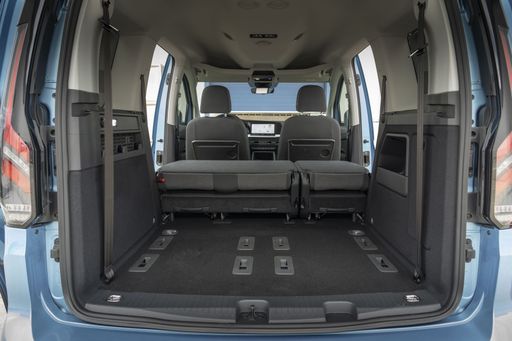
Size does matter when it comes to transporting cargo and passengers efficiently. The Tourneo Connect measures between 4500 mm and 4868 mm in length, accommodating a trunk capacity from 1213 to 1720 liters, with a curb weight ranging from 1542 to 1709 kg. It provides ample seating for five passengers while maintaining a payload capacity between 578 and 618 kg, making it versatile for both personal and professional applications.

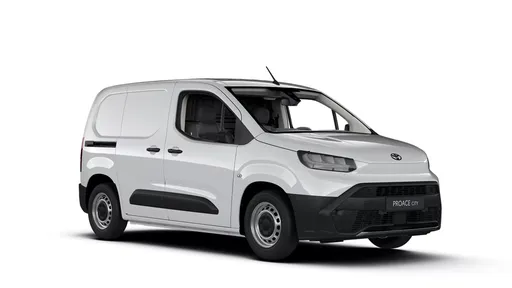
Meanwhile, the Proace City Compact Van ranges from 4401 mm to 4751 mm in length, with a curb weight between 1358 and 1837 kg. It offers seating options for up to five passengers and has an impressive payload capacity that tops out at 921 kg. The van is built to handle various cargo needs, enhancing its appeal as a robust work vehicle.

Innovation and Environmental Considerations

Innovations in vehicle efficiency and environmental responsibility are becoming essential. The Tourneo Connect's plugin hybrid option is a forward-thinking solution, showcasing Ford's commitment to reducing carbon footprint with CO2 emissions as low as 10 g/km. Its battery capacity stands at 19.7 kWh, further enhancing its eco-friendly appeal.

Toyota matches this with an all-electric variant of the Proace City, offering zero emissions and qualifying for an A-class CO2 efficiency rating. With a top speed of 135 km/h for the electric model, it still promises competent urban performance without sacrificing environmental responsibility.

Verdict

Choosing between the Ford Tourneo Connect and the Toyota Proace City Compact Van depends largely on individual needs. The Tourneo Connect offers a wide spectrum of powertrains, including a cutting-edge plugin hybrid, making it a formidable option for those balancing power with efficiency. The Proace City shines with its all-electric option and substantial cargo capabilities, ideal for businesses prioritizing sustainability and transportation needs.

Ultimately, both models excel in different areas, providing distinct advantages in functionality, efficiency, and technological innovations. The choice hinges on whether the buyer's focus lies in advanced hybrid technology or all-electric efficiency tailored for diverse payload demands.

Here’s where it gets real: The technical differences in detail

Tourneo Connect

Costs and Efficiency:

Looking at overall running costs, both models reveal some interesting differences in everyday economy.

Toyota Proace City Compact Van is visibly cheaper – starting at 22,400 £ , while the Ford Tourneo Connect costs 27,300 £ . That’s a price difference of around 4,989 £.

Fuel consumption also shows a difference: the Ford Tourneo Connect uses 0.5 L/100km and is significantly more efficient than the Toyota Proace City Compact Van with 5.2 L/100km. The difference is about 4.7 L/100km.

As for electric range, the Toyota Proace City Compact Van offers clearly more range – reaching up to 337 km, about 218 km more than the Ford Tourneo Connect.

Proace City Compact Van

Engine and Performance:

Power, torque and acceleration are the classic benchmarks for car enthusiasts – and here, some clear differences start to show.

When it comes to engine power, the Ford Tourneo Connect offers marginally more power – delivering 150 HP compared to 136 HP. That’s roughly 14 HP more horsepower.

When accelerating from 0 to 100 km/h, the Ford Tourneo Connect is barely quicker – completing the sprint in 10.1 s, while the Toyota Proace City Compact Van takes 11.1 s. That’s about 1 s quicker.

There’s also a difference in torque: the Ford Tourneo Connect delivers slightly more torque with 350 Nm compared to 300 Nm. That’s about 50 Nm more.

Tourneo Connect

Space and Everyday Use:

Cabin size, boot volume and payload all play a role in everyday practicality. Here, comfort and flexibility make the difference.

Both vehicles offer seating for 5 people.

In terms of curb weight, Toyota Proace City Compact Van is moderately lighter – 1,358 kg compared to 1,542 kg. The difference is around 184 kg.

When it comes to payload, the Toyota Proace City Compact Van carries a bit more – 921 kg compared to 818 kg. That’s a difference of about 103 kg.

Who wins the race in the data check?

The Ford Tourneo Connect is decisively ahead in the objective data comparison.
This result only shows which model scores more points on paper – not which of the two cars feels right for you.

from £27,300
Tourneo Connect

Ford Tourneo Connect

  • Engine Type : Plugin Hybrid, Petrol, Diesel
  • Transmission : Automatic, Manuel
  • Drive Type : Front-Wheel Drive, All-Wheel Drive
  • Power HP : 102 - 150 HP
  • Consumption L/100km : 0.5 - 6.9 L/100km
  • Electric Range : 116 - 119 km
Ford Tourneo Connect
Toyota Proace City Compact Van

Costs and Consumption

View detailed analysis

Engine and Performance

View detailed analysis

Dimensions and Body

View detailed analysis

Ford Tourneo Connect

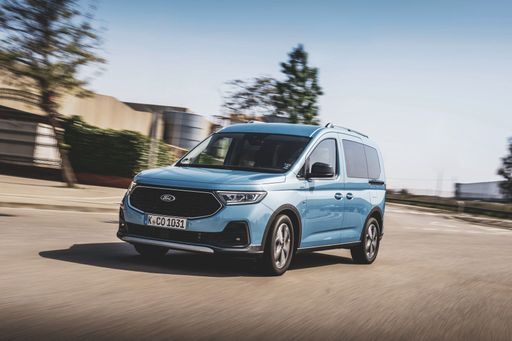
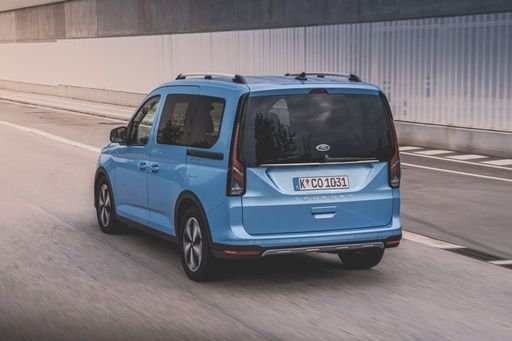
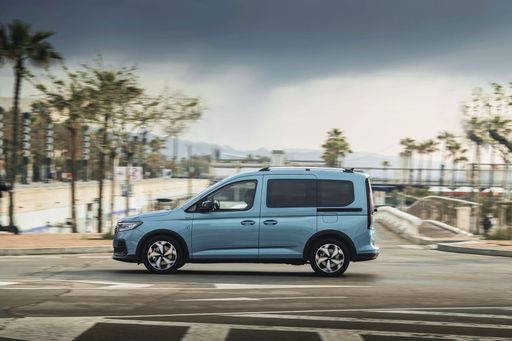
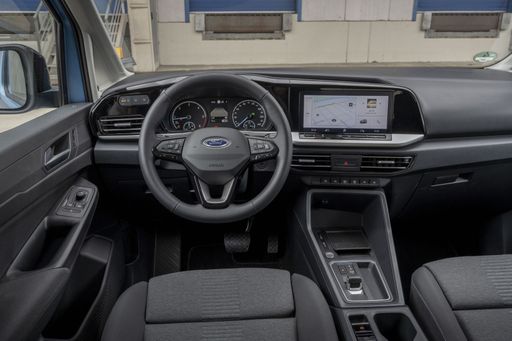
The Ford Tourneo Connect is a practical, surprisingly polished people-mover that balances family-friendly flexibility with car-like driving manners. With clever storage, sliding doors and a bright, airy cabin it’s a smart choice for buyers who want sensible versatility without sacrificing everyday comfort — and it’s oddly enjoyable to drive for its size.

details

Toyota Proace City Compact Van

The Toyota Proace City Compact Van is a city-savvy workhorse that packs surprising practicality and smart packaging into a friendly, easy-to-drive package. It’s the kind of van that gets the job done without fuss — reliable, economical and just sensible enough to make fleet managers smile.

details
Ford Tourneo Connect
Toyota Proace City Compact Van

Costs and Consumption

Price
27,300 - 41,900 £
Price
22,400 - 37,300 £
Consumption L/100km
0.5 - 6.9 L/100km
Consumption L/100km
5.2 - 6.6 L/100km
Consumption kWh/100km
-
Consumption kWh/100km
18.5 kWh/100km
Electric Range
116 - 119 km
Electric Range
337 km
Battery Capacity
-
Battery Capacity
-
co2
11 - 164 g/km
co2
0 - 149 g/km
Fuel tank capacity
-
Fuel tank capacity
-

Dimensions and Body

Body Type
High Roof Estate
Body Type
Cargo Van
Seats
5
Seats
3 - 5
Doors
-
Doors
-
Curb weight
1,542 - 1,781 kg
Curb weight
1,358 - 1,837 kg
Trunk capacity
1,213 - 1,720 L
Trunk capacity
-
Length
-
Length
-
Width
1,855 mm
Width
1,848 mm
Height
-
Height
-
Max trunk capacity
-
Max trunk capacity
-
Payload
563 - 818 kg
Payload
560 - 921 kg

Engine and Performance

Engine Type
Plugin Hybrid, Petrol, Diesel
Engine Type
Electric, Petrol, Diesel
Transmission
Automatic, Manuel
Transmission
Automatic, Manuel
Transmission Detail
Dual-Clutch Automatic, Manual Gearbox
Transmission Detail
Reduction Gearbox, Manual Gearbox, Automatic Gearbox
Drive Type
Front-Wheel Drive, All-Wheel Drive
Drive Type
Front-Wheel Drive
Power HP
102 - 150 HP
Power HP
102 - 136 HP
Acceleration 0-100km/h
10.1 - 13.5 s
Acceleration 0-100km/h
11.1 - 13.2 s
Max Speed
-
Max Speed
-
Torque
220 - 350 Nm
Torque
205 - 300 Nm
Number of Cylinders
4
Number of Cylinders
3 - 4
Power kW
75 - 110 kW
Power kW
75 - 100 kW
Engine capacity
1,498 - 1,968 cm3
Engine capacity
1,199 - 1,499 cm3

General

Model Year
2,024 - 2,025
Model Year
2,025 - 2,026
CO2 Efficiency Class
B, E, F
CO2 Efficiency Class
A, E
Brand
Ford
Brand
Toyota
DriveDuel uses data analysis and artificial intelligence to evaluate vehicle data and create content. Content is regularly reviewed and improved. The displayed prices are estimates based on German list prices, adjusted to the respective country’s VAT. Country-specific registration taxes are not included. This information is not legally binding.