VS

Ford Tourneo Courier vs Nissan Townstar Compact Van comparison

Compare performance (136 HP vs 122 HP), boot space and price (21,800 £ vs 37,500 £ ) at a glance. Find out which car is the better choice for you – Ford Tourneo Courier or Nissan Townstar Compact Van?

Ford Tourneo Courier vs Nissan Townstar Compact Van: Key differences

Ford Tourneo Courier

  • clearly cheaper
  • somewhat more power
  • moderately more efficient
  • somewhat more electric range
  • markedly lighter
details

Nissan Townstar Compact Van

details

By Achim Sedelmaier

Tourneo Courier

A Tale of Two Vans: Ford Tourneo Courier vs. Nissan Townstar Furgoneta Compacta

In the bustling world of automotive transport, the Ford Tourneo Courier and the Nissan Townstar Furgoneta Compacta represent the pinnacle of practicality and modern flair. This comparison aims to unravel the finer details and technological advancements that set these two vehicles apart. Whether you’re hauling cargo or ferrying passengers, the intricacies of each van’s offerings will be pivotal in your decision-making process. Let's delve into the technical specifications and innovative features that characterize these distinguished models.
Townstar Compact Van

Engine Power and Performance

The Ford Tourneo Courier equips drivers with a choice between petrol and electric engines, delivering a power range of 125 HP from its petrol variant and 136 HP for the electric. A nimble 3-cylinder engine complements its prowess, promoting both economy and efficiency on the road. With torque figures reaching up to 290 Nm, it manages to strike a balance between driveability and stamina.

On the other hand, the Nissan Townstar Furgoneta Compacta is no slouch, offering a slightly more robust petrol engine with 130 HP and a 122 HP electric variant. The Townstar’s 4-cylinder setup promises more traditional grunt with a torque spread peaking at 245 Nm, giving it a slight edge in terms of raw turning force over its Ford counterpart.

Tourneo Courier

Transmission and Drivetrain

Both vehicles feature front-wheel drive configurations, a commonality that ensures stability and control in compact urban settings. The Ford Tourneo Courier provides versatility with both manual and automatic gearboxes, allowing drivers to choose their preferred mode of control. Likewise, the Nissan Townstar opts for manual and reduction gearboxes, which cater well to both dynamic driving conditions and energy efficiency.

Townstar Compact Van

Dimensions and Payload Capacity

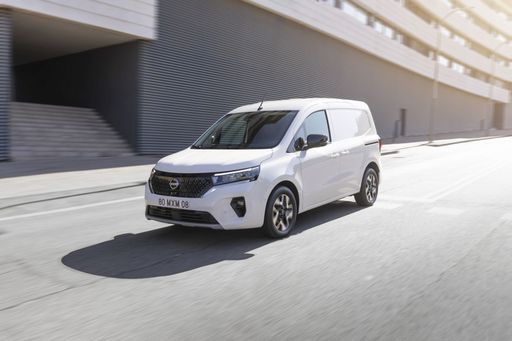
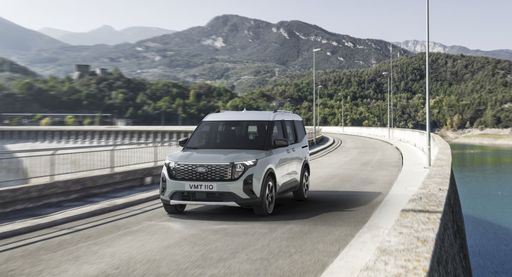
Spanning a length of 4337 mm, the Tourneo Courier is a compact vessel meant for maneuverability. The model's payload capacity of up to 483 kg and a trunk of 570 L make it ideal for smaller loads. In contrast, the Townstar stretches to a greater length of up to 4910 mm. This translates into superior cargo provision with a maximum payload of 777 kg, elevating its status among commercial users seeking substantial carrying capability.

Tourneo Courier

Electric Range and Environmental Efficiency

Electric models of both vehicles cater to the environmentally conscious driver. The Ford Tourneo Courier boasts an electric range of 296 km thanks to its 43.5 kWh battery. This, combined with a commendable CO2 efficiency class of A, highlights Ford's dedication to sustainability.

The Townstar responds with an electric driving distance of up to 301 km on a slightly larger 45 kWh battery, slightly nudging ahead in the realm of range. Furthermore, its efficiency credentials are underscored by an equivalent high CO2 efficiency class, advocating for an eco-friendlier footprint.

Townstar Compact Van

Interior and Comfort Features

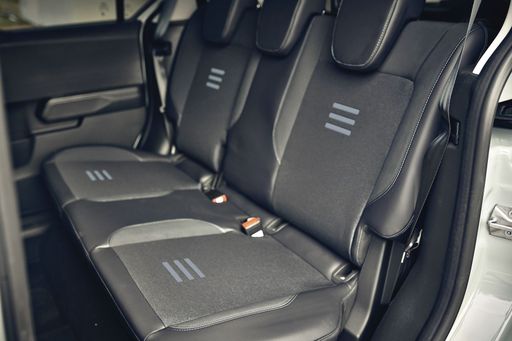
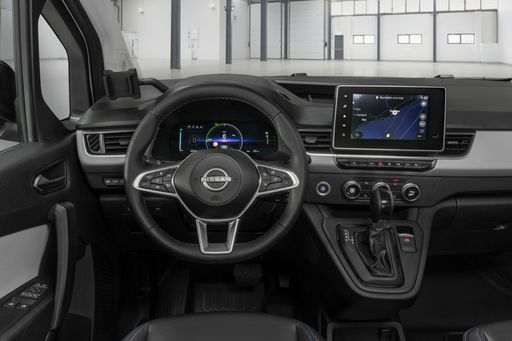
The Ford Tourneo Courier offers passenger seating for five, emphasizing comfort and versatility for family journeys or team outings. Meanwhile, the Nissan Townstar Furgoneta Compacta targets the cargo market with a seating arrangement for two, focusing on maximizing space for cargo rather than passenger volume.

Tourneo Courier

Conclusion

The Ford Tourneo Courier vs. Nissan Townstar Furgoneta Compacta debate centers on whether one requires passenger accommodation with commendable economy or extensive cargo capacity with robust performance. The Tourneo holds an edge for versatile family transport while the Townstar is tailored towards more demanding cargo tasks. Ultimately, preferences will be dictated by your specific transport needs, weighing the detailed advantages of length, capacity, and eco credentials inherent in both models.

In this competitive landscape, both brands channel innovation and practicality, ensuring any decision made will be of value, both environmentally and functionally.

Here’s where it gets real: The technical differences in detail

Tourneo Courier

Costs and Efficiency:

Price and efficiency are key factors when choosing a car – and this is often where the real differences emerge.

Ford Tourneo Courier is clearly cheaper – starting at 21,800 £ , while the Nissan Townstar Compact Van costs 37,500 £ . That’s a price difference of around 15,650 £.

In terms of energy consumption, the Ford Tourneo Courier is moderately more efficient: consuming 17.9 kWh/100km compared to 20.9 kWh/100km for the Nissan Townstar Compact Van. That’s a difference of about 3 kWh/100km.

As for electric range, the Ford Tourneo Courier offers somewhat more range – reaching up to 320 km, about 57 km more than the Nissan Townstar Compact Van.

Townstar Compact Van

Engine and Performance:

Power, torque and acceleration are the classic benchmarks for car enthusiasts – and here, some clear differences start to show.

When it comes to engine power, the Ford Tourneo Courier offers somewhat more power – delivering 136 HP compared to 122 HP. That’s roughly 14 HP more horsepower.

There’s also a difference in torque: the Ford Tourneo Courier delivers slightly more torque with 290 Nm compared to 245 Nm. That’s about 45 Nm more.

Tourneo Courier

Space and Everyday Use:

Whether family car or daily driver – which one offers more room, flexibility and comfort?

Both vehicles offer seating for 5 people.

In terms of curb weight, Ford Tourneo Courier is markedly lighter – 1,517 kg compared to 1,908 kg. The difference is around 391 kg.

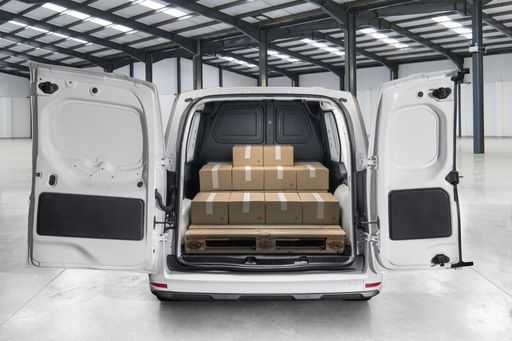
When it comes to payload, the Nissan Townstar Compact Van carries visibly more – 642 kg compared to 483 kg. That’s a difference of about 159 kg.

Who wins the race in the data check?

The Ford Tourneo Courier stands well ahead of its rival in the objective data comparison.
This result only shows which model scores more points on paper – not which of the two cars feels right for you.

from £21,800
Tourneo Courier

Ford Tourneo Courier

  • Engine Type : Petrol, Electric
  • Transmission : Manuel, Automatic
  • Drive Type : Front-Wheel Drive
  • Power HP : 125 - 136 HP
  • Consumption L/100km : 6.6 - 6.7 L/100km
  • Consumption kWh/100km : 17.9 kWh/100km
  • Electric Range : 320 km
Ford Tourneo Courier
Nissan Townstar Compact Van

Costs and Consumption

View detailed analysis

Engine and Performance

View detailed analysis

Dimensions and Body

View detailed analysis

Ford Tourneo Courier

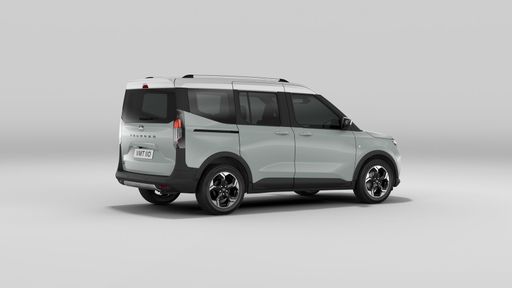
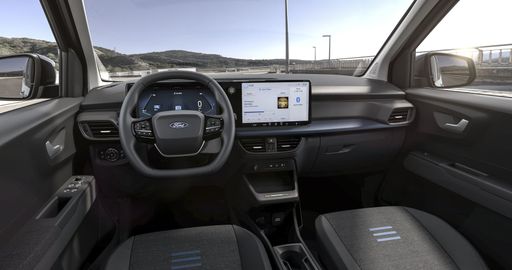
The Ford Tourneo Courier is a cheeky, compact people carrier that turns urban errands into a pleasure, thanks to a spacious, cleverly packaged cabin and genuinely practical storage everywhere you look. It drives with reassuringly car-like manners, so the ride is comfy for school runs and shopping trips, and sensible touches like fold-flat seats, a high driving position and plentiful cubbies make it a smart, fuss-free choice for small families and weekend haulers.

details

Nissan Townstar Compact Van

The Nissan Townstar is a smart, no-nonsense compact van that makes city running and tight deliveries feel almost effortless thanks to tidy packaging and clever storage. It keeps things sensible on the wallet and the road, offering a comfortable driving position and useful tech without flashy frills — the kind of workhorse you'll actually enjoy parking at the kerb.

details
Ford Tourneo Courier
Nissan Townstar Compact Van

Costs and Consumption

Price
21,800 - 35,000 £
Price
37,500 £
Consumption L/100km
6.6 - 6.7 L/100km
Consumption L/100km
-
Consumption kWh/100km
17.9 kWh/100km
Consumption kWh/100km
20.9 kWh/100km
Electric Range
320 km
Electric Range
263 km
Battery Capacity
-
Battery Capacity
-
co2
0 - 151 g/km
co2
0 g/km
Fuel tank capacity
-
Fuel tank capacity
-

Dimensions and Body

Body Type
High Roof Estate
Body Type
Cargo Van
Seats
5
Seats
5
Doors
-
Doors
-
Curb weight
1,517 - 1,545 kg
Curb weight
1,908 kg
Trunk capacity
570 L
Trunk capacity
-
Length
-
Length
-
Width
1,800 - 1,813 mm
Width
1,860 mm
Height
-
Height
-
Max trunk capacity
-
Max trunk capacity
-
Payload
480 - 483 kg
Payload
642 kg

Engine and Performance

Engine Type
Petrol, Electric
Engine Type
Electric
Transmission
Manuel, Automatic
Transmission
Automatic
Transmission Detail
Manual Gearbox, Dual-Clutch Automatic, Reduction Gearbox
Transmission Detail
Reduction Gearbox
Drive Type
Front-Wheel Drive
Drive Type
Front-Wheel Drive
Power HP
125 - 136 HP
Power HP
122 HP
Acceleration 0-100km/h
-
Acceleration 0-100km/h
-
Max Speed
-
Max Speed
-
Torque
170 - 290 Nm
Torque
245 Nm
Number of Cylinders
3
Number of Cylinders
-
Power kW
92 - 100 kW
Power kW
90 kW
Engine capacity
998 cm3
Engine capacity
-

General

Model Year
2,024 - 2,026
Model Year
2025
CO2 Efficiency Class
E, A
CO2 Efficiency Class
A
Brand
Ford
Brand
Nissan
DriveDuel uses data analysis and artificial intelligence to evaluate vehicle data and create content. Content is regularly reviewed and improved. The displayed prices are estimates based on German list prices, adjusted to the respective country’s VAT. Country-specific registration taxes are not included. This information is not legally binding.