VS

Ford Transit Bus vs Fiat Ducato comparison

Compare performance (150 HP vs 270 HP), boot space and price (50,500 £ vs 34,300 £ ) at a glance. Find out which car is the better choice for you – Ford Transit Bus or Fiat Ducato?

Ford Transit Bus vs Fiat Ducato: Key differences

Ford Transit Bus

details

Fiat Ducato

  • substantially cheaper
  • clearly more power
  • visibly more efficient
  • a bit lighter
details

By Achim Sedelmaier

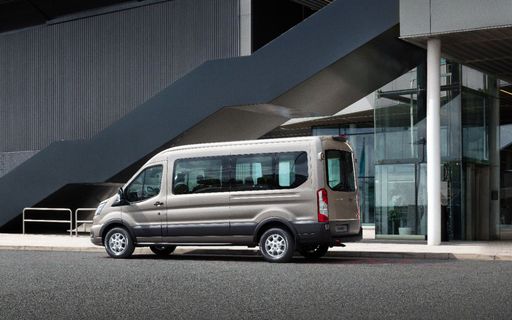
Transit Bus

Fiat Ducato vs Ford Transit: A Comprehensive Comparison

In the world of automotive transport solutions, the Fiat Ducato and the Ford Transit Bus stand out as leading options for businesses and transport services. Each offers distinctive features and technical innovations catering to different needs. Let’s dive into a detailed comparison to determine which model might be the best fit for you.
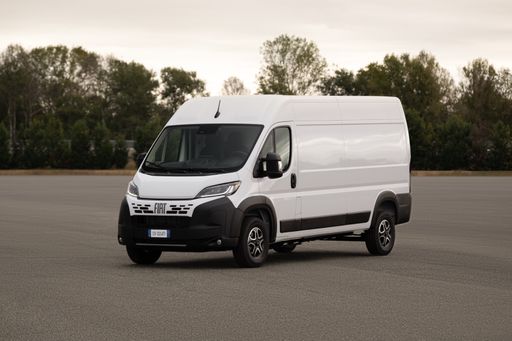
Ducato

Engine Variants and Performance

The Fiat Ducato brings versatility to the table with a choice between diesel and electric engines. Diesel engines range from 120 to 180 HP, while the electric version kicks it up to 270 HP. The vehicle is designed with a front-wheel drive architecture and offers both manual and automatic transmissions. This variety extends to a reduction gearbox for those requiring high torque and control over rough terrains.

In comparison, the Ford Transit Bus is equipped exclusively with diesel engines offering power outputs of either 130 or 150 HP. This model strictly comes with an automatic gearbox, optimized for ease of use and smooth transitions, especially in urban settings.

Transit Bus

Fuel Efficiency and Environmental Impact

Eco-conscious consumers may lean towards the Fiat Ducato, which presents a broader range of consumption from 7.2 to 9.3 L/100km and offers an electric model with a 430 km range on a full charge. This positions it as a favorable option for those aiming to cut down emissions, with CO2 outputs excelling at 0 g/km for the electric model.

The Ford Transit Bus, however, has its own strengths as a reliable diesel option with consumption figures around 9.4 to 9.5 L/100km. Nevertheless, its emissions output registers between 245 to 248 g/km, which could be a consideration if environmental concerns are a priority.

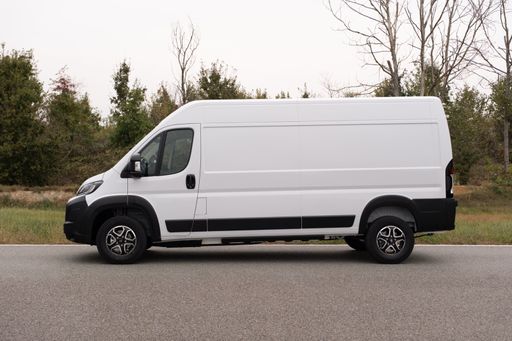
Ducato

Capacity and Payload

When it comes to capacity, the Fiat Ducato proves adaptable with multiple dimensions tailored for cargo transport, offering a payload capacity ranging from 560 to 1425 kg depending on the configuration. The various dimensions (length from 5413 mm to 6678 mm) ensure it can adapt to different transport needs.

The Ford Transit Bus serves as a people mover, accommodating 8 to 9 passengers. Its payload ranges from 789 to 1162 kg, characterizing it as a robust option for transit services. The consistent dimensions of length at 5531 mm and width at 2059 mm facilitate ease in city commuting.

Transit Bus

Build and Design

The Fiat Ducato is available in different heights (2254 mm to 2774 mm) and widths, allowing for comprehensive customization tailored to specific transportation requirements. Its robust structure is accentuated by a curb weight varying from 2075 kg to a hefty 2940 kg.

On the other hand, the Ford Transit Bus maintains a height around 2530 mm to 2533 mm and features a curb weight of approximately 2311 kg to 2385 kg. This relatively lighter construction facilitates improved fuel efficiency despite its larger passenger capacity.

Ducato

Final Verdict

Ultimately, the choice between the Fiat Ducato and the Ford Transit Bus boils down to specific needs and preferences. If efficiency, variety, and environmental impact are significant factors, the Ducato serves as a potent contender with its innovative electric options. In contrast, if a reliable passenger transport solution is the priority, coupled with the ease of an automatic gearbox, the Ford Transit Bus emerges as a practical choice.

Here’s where it gets real: The technical differences in detail

Transit Bus

Costs and Efficiency:

Price and efficiency are key factors when choosing a car – and this is often where the real differences emerge.

Fiat Ducato is substantially cheaper – starting at 34,300 £ , while the Ford Transit Bus costs 50,500 £ . That’s a price difference of around 16,177 £.

Fuel consumption also shows a difference: the Fiat Ducato uses 7.5 L/100km and is visibly more efficient than the Ford Transit Bus with 9.4 L/100km. The difference is about 1.9 L/100km.

Ducato

Engine and Performance:

Power, torque and acceleration say a lot about how a car feels on the road. This is where you see which model delivers more driving dynamics.

When it comes to engine power, the Fiat Ducato offers clearly more power – delivering 270 HP compared to 150 HP. That’s roughly 120 HP more horsepower.

There’s also a difference in torque: the Fiat Ducato delivers somewhat more torque with 450 Nm compared to 390 Nm. That’s about 60 Nm more.

Transit Bus

Space and Everyday Use:

Whether family car or daily driver – which one offers more room, flexibility and comfort?

Seats: Ford Transit Bus offers more seats – 9 vs 3.

In terms of curb weight, Fiat Ducato is a bit lighter – 2,125 kg compared to 2,338 kg. The difference is around 213 kg.

When it comes to payload, the Fiat Ducato carries substantially more – 2,020 kg compared to 1,162 kg. That’s a difference of about 858 kg.

Who wins the race in the data check?

The Fiat Ducato stands well ahead of its rival in the objective data comparison.
This result only shows which model scores more points on paper – not which of the two cars feels right for you.

from £34,300
Ducato

Fiat Ducato

  • Engine Type : Diesel, Electric
  • Transmission : Manuel, Automatic
  • Drive Type : Front-Wheel Drive
  • Power HP : 120 - 270 HP
  • Consumption L/100km : 7.5 - 9 L/100km
  • Electric Range : 430 km
Ford Transit Bus
Fiat Ducato

Costs and Consumption

View detailed analysis

Engine and Performance

View detailed analysis

Dimensions and Body

View detailed analysis

Ford Transit Bus

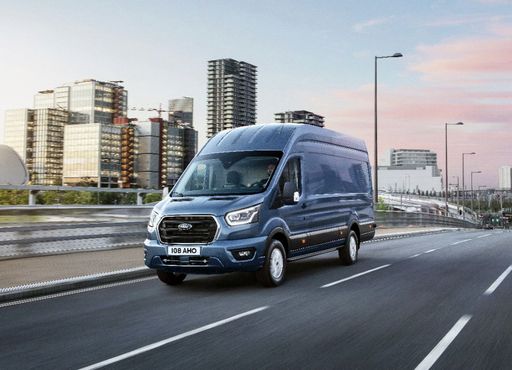
The Ford Transit is the reliable people-mover operators turn to when they need space, stamina and sensible running costs without fuss. It doesn't try to be glamorous, but its practical interior, flexible layouts and honest character make it a smart, stress-free choice for shuttle services and group transport.

details

Fiat Ducato

The Fiat Ducato is a no-nonsense workhorse that turns practicality into an artform, with a cavernous, flexible load area and predictable, car-like driving manners that make long days behind the wheel far less tedious. It’s equally at home with a tradesman’s kit or a camper conversion, offering sensible packaging, easy servicing and the sort of reliability that keeps surprises—and down-time—to a minimum.

details
Ford Transit Bus
Fiat Ducato

Costs and Consumption

Price
50,500 - 52,900 £
Price
34,300 - 57,800 £
Consumption L/100km
9.4 - 9.5 L/100km
Consumption L/100km
7.5 - 9 L/100km
Consumption kWh/100km
-
Consumption kWh/100km
-
Electric Range
-
Electric Range
430 km
Battery Capacity
-
Battery Capacity
-
co2
245 - 248 g/km
co2
0 - 233 g/km
Fuel tank capacity
70 L
Fuel tank capacity
90 L

Dimensions and Body

Body Type
Bus
Body Type
Cargo Van
Seats
9
Seats
3
Doors
4
Doors
4
Curb weight
2,338 - 2,385 kg
Curb weight
2,125 - 2,940 kg
Trunk capacity
0 L
Trunk capacity
-
Length
5,531 - 5,981 mm
Length
5,413 - 6,678 mm
Width
2,059 mm
Width
2,050 - 2,100 mm
Height
2,530 - 2,533 mm
Height
2,254 - 2,774 mm
Max trunk capacity
-
Max trunk capacity
10,000 - 17,000 L
Payload
1,115 - 1,162 kg
Payload
560 - 2,020 kg

Engine and Performance

Engine Type
Diesel
Engine Type
Diesel, Electric
Transmission
Automatic
Transmission
Manuel, Automatic
Transmission Detail
Automatic Gearbox
Transmission Detail
Manual Gearbox, Automatic Gearbox, Reduction Gearbox
Drive Type
Front-Wheel Drive
Drive Type
Front-Wheel Drive
Power HP
130 - 150 HP
Power HP
120 - 270 HP
Acceleration 0-100km/h
-
Acceleration 0-100km/h
-
Max Speed
-
Max Speed
90 - 165 km/h
Torque
360 - 390 Nm
Torque
320 - 450 Nm
Number of Cylinders
4
Number of Cylinders
4
Power kW
96 - 110 kW
Power kW
88 - 200 kW
Engine capacity
1,996 cm3
Engine capacity
2,184 cm3

General

Model Year
2024
Model Year
2,023 - 2,025
CO2 Efficiency Class
G
CO2 Efficiency Class
G, A
Brand
Ford
Brand
Fiat
DriveDuel uses data analysis and artificial intelligence to evaluate vehicle data and create content. Content is regularly reviewed and improved. The displayed prices are estimates based on German list prices, adjusted to the respective country’s VAT. Country-specific registration taxes are not included. This information is not legally binding.