VS

Ford Transit Connect vs SEAT Leon comparison

Compare performance (122 HP vs 272 HP), boot space and price (30,800 £ vs 24,800 £ ) at a glance. Find out which car is the better choice for you – Ford Transit Connect or SEAT Leon?

Ford Transit Connect vs SEAT Leon: Key differences

Ford Transit Connect

details

SEAT Leon

4.4 (2 Reviews)
rate
  • clearly cheaper
  • clearly more power
  • substantially quicker 0–100 km/h
  • slightly lighter
details

All details on performance, efficiency, range and trunk space can be found in the technical comparison below – including user reviews for both models.

By Achim Sedelmaier

Transit Connect

The Showdown: Ford Transit Connect vs SEAT León

When it comes to versatility and style in the automotive world, two vehicles stand out for their unique offerings: the Ford Transit Connect and the SEAT León. Each serves its target audience well, but they stand on opposite sides of the automotive spectrum—one as a functional cargo van and the other as a sporty hatchback. This article will delve into the technical aspects, innovations, and overall performance of these two models.
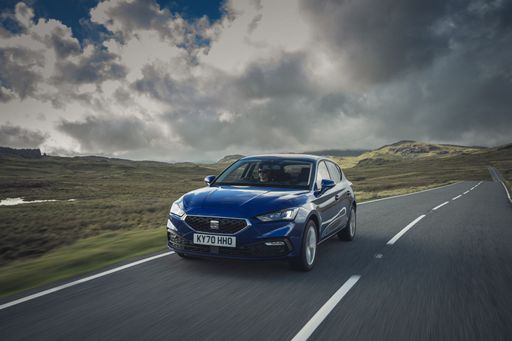
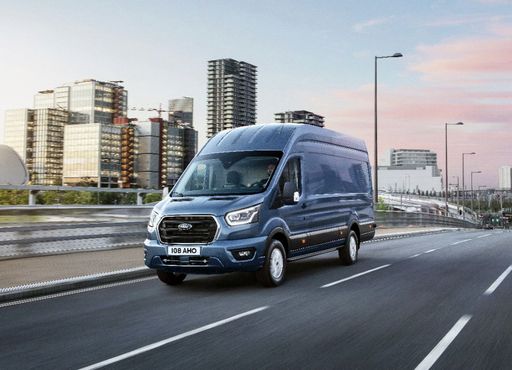
Leon

Body Types: Functional Versus Stylish

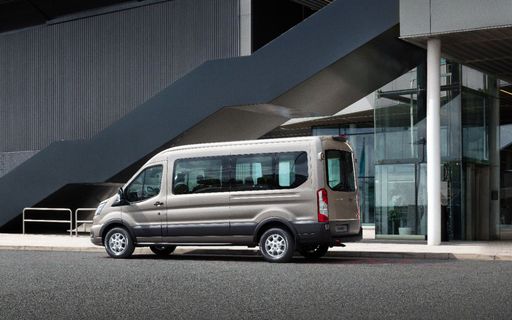
The Ford Transit Connect is designed primarily as a cargo van, boasting practicality and space for businesses or families needing extra utility. Its robust build allows for a maximum payload of up to 521 kg, depending on the configuration, making it an ideal choice for transporting goods or larger items. With the ability to seat either two or five passengers, it also balances functionality with convenience.

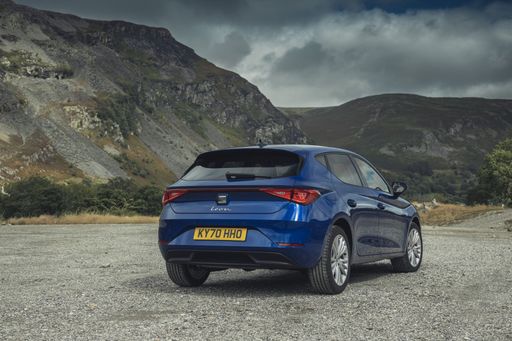
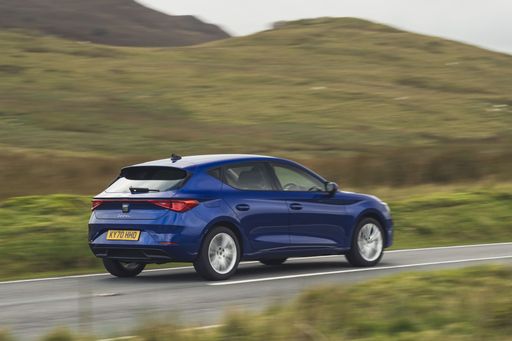
On the other hand, the SEAT León, as a hatchback, focuses on sporty aesthetics and compact efficiency. With a sleek design that appeals to younger drivers and those looking for a personal vehicle, the León is not just about appearance; its trunk capacity offers 380 liters, providing ample space for everyday use.

Transit Connect

Power and Performance

Under the hood, the Ford Transit Connect offers several engine options, including diesel and plug-in hybrid variants. With power outputs ranging from 102 to 150 HP and torque figures peaking at 350 Nm, the Transit Connect promises solid performance tailored for varying needs. The acceleration from 0-100 km/h is respectable, with the fastest variant clocking in at 11.4 seconds. The maximum speed goes up to 186 km/h, which is decent for a vehicle of its class.

In comparison, the SEAT León presents a broader range of engine options, including petrol, mild-hybrid, and diesel variants. Power outputs are even more impressive, ranging from 110 to a staggering 272 HP in its sportier iterations. With its top model achieving an acceleration of 7.7 seconds from 0-100 km/h and a maximum speed of 220 km/h, the León clearly targets performance-oriented drivers with a penchant for speed.

Leon

Technological Innovations

Both vehicles are equipped with modern technologies aimed at enhancing the driving experience. The Ford Transit Connect features advanced driver-assistance systems, including a rearview camera, parking assist, and optional adaptive cruise control, making it a safer choice for urban driving and delivery tasks.

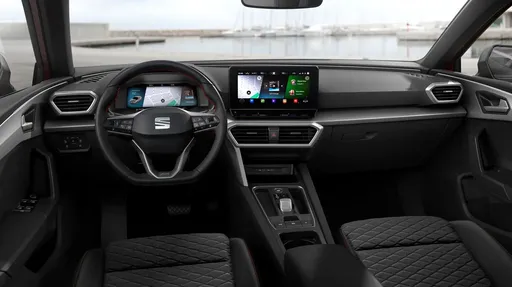
The SEAT León does not shy away from technology either, boasting features such as a digital cockpit, advanced infotainment systems, and connectivity options such as Apple CarPlay and Android Auto. It presents a convenient driving experience, especially for the tech-savvy generation.

Transit Connect

Fuel Efficiency and Environmental Impact

Fuel efficiency is a significant consideration in both vehicles. The Ford Transit Connect’s fuel tank can hold up to 50 liters, with powertrain configurations that allow for reasonable consumption figures. This, combined with available hybrid options, offsets its environmental impact to some extent.

In contrast, the SEAT León is designed with efficiency in mind, featuring multiple configurations that allow it to achieve consumption figures as low as 4.5 L/100 km. The available hybrid variant can travel up to 133 km in electric mode alone, demonstrating a commitment to reducing carbon footprints.

Leon

Conclusion: Which One is for You?

Choosing between the Ford Transit Connect and the SEAT León ultimately comes down to your specific needs. If you require a robust and practical vehicle for transport and business purposes, the Transit Connect is hard to beat with its cargo capabilities and thoughtful driver-assistance technologies.

On the flip side, if you seek a sporty, stylish vehicle that offers cutting-edge technology and impressive performance, the SEAT León is poised to deliver—the choice between utility and agility makes this comparison truly compelling. Each model shines in its respective segment, proving that in the world of automobiles, there’s something for everyone.

Here’s where it gets real: The technical differences in detail

Transit Connect

Costs and Efficiency:

Price and efficiency are often the first things buyers look at. Here it becomes clear which model has the long-term edge – whether at the pump, the plug, or in purchase price.

SEAT Leon is clearly cheaper – starting at 24,800 £ , while the Ford Transit Connect costs 30,800 £ . That’s a price difference of around 5,999 £.

Leon

Engine and Performance:

Power, torque and acceleration are the classic benchmarks for car enthusiasts – and here, some clear differences start to show.

When it comes to engine power, the SEAT Leon offers clearly more power – delivering 272 HP compared to 122 HP. That’s roughly 150 HP more horsepower.

When accelerating from 0 to 100 km/h, the SEAT Leon is substantially quicker – completing the sprint in 7.7 s, while the Ford Transit Connect takes 11.4 s. That’s about 3.7 s quicker.

There’s also a difference in torque: the SEAT Leon delivers somewhat more torque with 360 Nm compared to 320 Nm. That’s about 40 Nm more.

Transit Connect

Space and Everyday Use:

Cabin size, boot volume and payload all play a role in everyday practicality. Here, comfort and flexibility make the difference.

Seats: SEAT Leon offers more seats – 5 vs 2.

In terms of curb weight, SEAT Leon is slightly lighter – 1,344 kg compared to 1,575 kg. The difference is around 231 kg.

When it comes to payload, the Ford Transit Connect carries noticeably more – 780 kg compared to 521 kg. That’s a difference of about 259 kg.

Who wins the race in the data check?

The SEAT Leon is far ahead overall in the objective data comparison.
This result only shows which model scores more points on paper – not which of the two cars feels right for you.

from £24,800
Leon

SEAT Leon

  • Engine Type Petrol, Petrol MHEV, Plugin Hybrid, Diesel
  • Transmission Manuel, Automatic
  • Drive Type Front-Wheel Drive
  • Power HP 116 - 272 HP
  • Consumption L/100km 1.2 - 5.5 L/100km
  • Electric Range 133 km
Ford Transit Connect
SEAT Leon

Costs and Consumption

View detailed analysis

Engine and Performance

View detailed analysis

Dimensions and Body

View detailed analysis

Ford Transit Connect

The Ford Transit Connect is the go-to compact workhorse for urban professionals who need cargo space without driving a full-size van. It balances practicality and everyday manners with clever storage ideas and a surprisingly comfortable ride, making it a sensible choice for small businesses and families who value function over flair.

details

SEAT Leon

SEAT Leon pairs sharp, modern styling with a cabin that's sensible and slightly sporty, making it an appealing choice for buyers who want flair without fuss. It drives with eager composure and offers a neat balance of comfort and agility, so you get everyday usability with a wink of fun.

details
Ford Transit Connect
SEAT Leon

Costs and Consumption

Price
30,800 - 35,300 £
Price
24,800 - 36,800 £
Consumption L/100km
-
Consumption L/100km
1.2 - 5.5 L/100km
Consumption kWh/100km
-
Consumption kWh/100km
-
Electric Range
-
Electric Range
133 km
Battery Capacity
-
Battery Capacity
-
co2
-
co2
28 - 126 g/km
Fuel tank capacity
-
Fuel tank capacity
-

Dimensions and Body

Body Type
Cargo Van
Body Type
Hatchback
Seats
2
Seats
5
Doors
-
Doors
-
Curb weight
1,575 - 1,620 kg
Curb weight
1,344 - 1,657 kg
Trunk capacity
-
Trunk capacity
270 - 380 L
Length
-
Length
-
Width
1,855 mm
Width
1,799 mm
Height
-
Height
-
Max trunk capacity
-
Max trunk capacity
-
Payload
775 - 780 kg
Payload
473 - 521 kg

Engine and Performance

Engine Type
Diesel
Engine Type
Petrol, Petrol MHEV, Plugin Hybrid, Diesel
Transmission
Manuel
Transmission
Manuel, Automatic
Transmission Detail
Manual Gearbox
Transmission Detail
Manual Gearbox, Dual-Clutch Automatic
Drive Type
All-Wheel Drive
Drive Type
Front-Wheel Drive
Power HP
122 HP
Power HP
116 - 272 HP
Acceleration 0-100km/h
11.4 - 11.8 s
Acceleration 0-100km/h
7.7 - 10.5 s
Max Speed
-
Max Speed
-
Torque
320 Nm
Torque
220 - 360 Nm
Number of Cylinders
4
Number of Cylinders
4
Power kW
90 kW
Power kW
85 - 200 kW
Engine capacity
1,968 cm3
Engine capacity
1,498 - 1,968 cm3

General

Model Year
2025
Model Year
2,024 - 2,026
CO2 Efficiency Class
-
CO2 Efficiency Class
D, B
Brand
Ford
Brand
SEAT
DriveDuel uses data analysis and artificial intelligence to evaluate vehicle data and create content. Content is regularly reviewed and improved. The displayed prices are estimates based on German list prices, adjusted to the respective country’s VAT. Country-specific registration taxes are not included. This information is not legally binding.