VS

Kia XCeed vs SEAT Leon comparison

Compare performance (180 HP vs 272 HP), boot space and price (23,100 £ vs 24,500 £ ) at a glance. Find out which car is the better choice for you – Kia XCeed or SEAT Leon?

Kia XCeed vs SEAT Leon: Key differences

Kia XCeed

4.5 (3 Reviews)
rate
  • very slightly cheaper
  • slightly more trunk space
details

SEAT Leon

4.4 (2 Reviews)
rate
  • visibly more power
  • significantly more efficient
  • somewhat quicker 0–100 km/h
  • marginally lighter
details

All details on performance, efficiency, range and trunk space can be found in the technical comparison below – including user reviews for both models.

By Achim Sedelmaier

XCeed

In the world of compact cars, two models stand out for their unique blend of style, performance, and technology: the Kia XCeed and the SEAT León. Both vehicles offer a captivating driving experience, but which one should you choose? Let’s delve into a detailed comparison covering technical aspects and innovations.
Leon

Design and Body Type

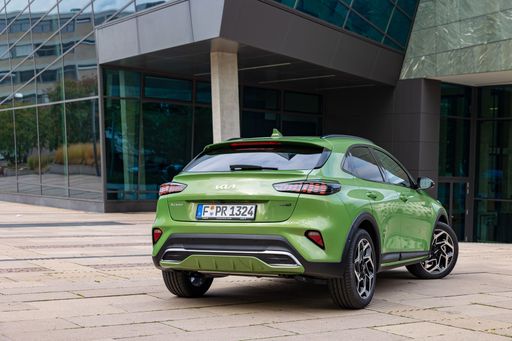
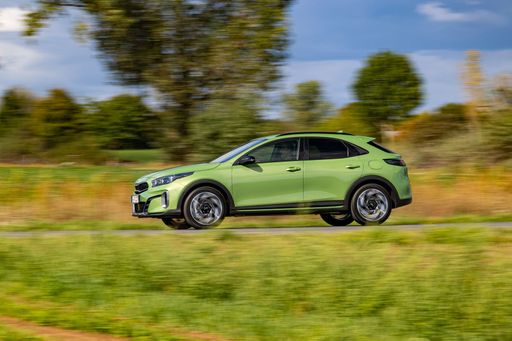
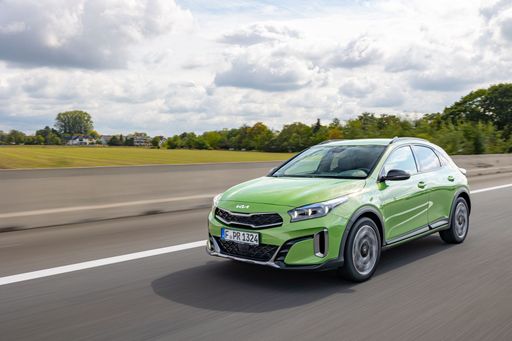
The Kia XCeed presents itself as an SUV, with a modern and rugged design that appeals to those seeking a sporty yet practical vehicle. Its dimensions—4395 mm in length, 1826 mm in width, and 1495 mm in height—couple with a spacious trunk capacity of 426 liters, making it an ideal choice for both city commuting and weekend getaways.

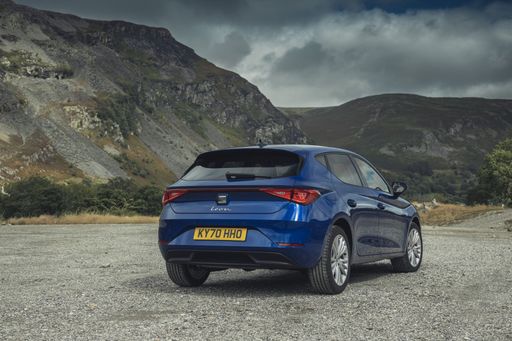
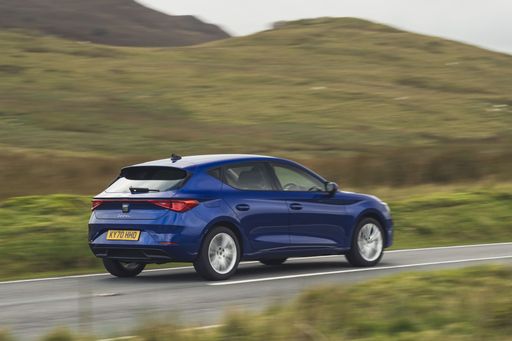
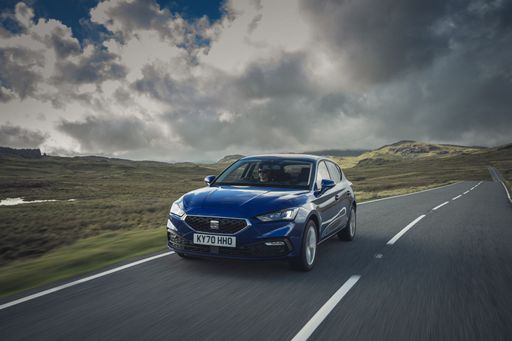
On the other hand, the SEAT León embraces the classic hatchback format. Measuring slightly shorter at 4368 mm in length, but wider at 1799 mm, the León offers striking lines and an athletic stance. Despite its smaller trunk capacity of 380 liters, it still provides ample space for everyday needs.

XCeed

Performance and Engine Options

Under the hood, the Kia XCeed houses different petrol engine options: a 100 HP three-cylinder and a more powerful 140 HP four-cylinder engine. Both engines are mated to either a manual or dual-clutch automatic transmission, assuring smooth driving dynamics. The XCeed achieves a respectable acceleration of 0-100 km/h in as quick as 10.2 seconds and a top speed of 195 km/h. Fuel consumption hovers around 6.3 to 6.5 L/100km, with CO2 emissions ranging from 143 to 148 g/km.

In comparison, the SEAT León offers a broader range of engine choices that include petrol, diesel, plug-in hybrid, and MHEV technologies. With power outputs varying from 110 HP to a staggering 272 HP, the León can accelerate from 0-100 km/h in as little as 7.7 seconds, showcasing its sporty pedigree. Notably, the León’s lower consumption figures, reaching up to 4.5 L/100km in diesel variants and 0.4 L for the plug-in hybrid, exemplify SEAT’s commitment to efficiency.

Leon

Technology and Innovations

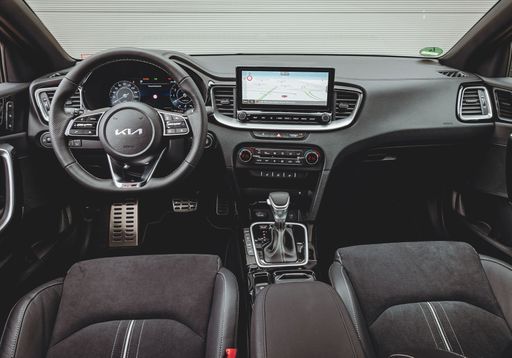
Both the Kia XCeed and SEAT León come equipped with modern technological innovations designed to enhance the driving experience. The XCeed features a smooth infotainment system with touchscreen capabilities, offering seamless connectivity options. Kia’s safety suite includes adaptive cruise control and lane-keeping assistance, ensuring peace of mind on the road.

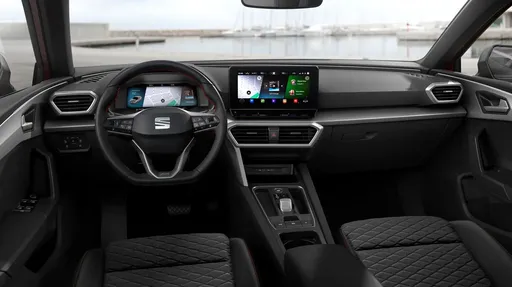
Meanwhile, the SEAT León takes technology a notch higher with its advanced digital cockpit, which presents vital information directly in the driver’s line of sight. The León also integrates impressive driver assistance features, including a comprehensive array of safety systems. Notably, the plug-in hybrid variant stands out with an electric range of 133 km, highlighting its versatility and independence from traditional fuels.

XCeed

Comfort and Practicality

Comfort levels inside both vehicles are commendable, with seating for five adults. The XCeed excels in providing extra headroom and legroom, true to its SUV identity, while the León offers a sportier cabin layout, emphasizing driver engagement. Both models are designed keeping in mind the needs of modern drivers, ensuring practicality without sacrificing aesthetics or comfort.

Leon

Final Thoughts

Choosing between the Kia XCeed and the SEAT León ultimately depends on individual preferences and driving needs. If you lean towards a compact SUV with versatility and practicality, the XCeed presents a compelling option. However, for those seeking a high-performance hatchback loaded with innovative technology, the León is hard to beat.

In conclusion, both the Kia XCeed and SEAT León represent the best of what the compact car market has to offer. With impressive specifications and features, it comes down to personal taste and lifestyle. Test driving both models may very well be the best way to determine which one truly fits your driving aspirations.

Here’s where it gets real: The technical differences in detail

XCeed

Costs and Efficiency:

Looking at overall running costs, both models reveal some interesting differences in everyday economy.

Kia XCeed is very slightly cheaper – starting at 23,100 £ , while the SEAT Leon costs 24,500 £ . That’s a price difference of around 1,320 £.

Fuel consumption also shows a difference: the SEAT Leon uses 1.2 L/100km and is significantly more efficient than the Kia XCeed with 6.3 L/100km. The difference is about 5.1 L/100km.

Leon

Engine and Performance:

Power, torque and acceleration say a lot about how a car feels on the road. This is where you see which model delivers more driving dynamics.

When it comes to engine power, the SEAT Leon offers visibly more power – delivering 272 HP compared to 180 HP. That’s roughly 92 HP more horsepower.

When accelerating from 0 to 100 km/h, the SEAT Leon is somewhat quicker – completing the sprint in 7.7 s, while the Kia XCeed takes 8.5 s. That’s about 0.8 s quicker.

There’s also a difference in torque: the SEAT Leon delivers markedly more torque with 360 Nm compared to 265 Nm. That’s about 95 Nm more.

XCeed

Space and Everyday Use:

Beyond pure performance, interior space and usability matter most in daily life. This is where you see which car is more practical and versatile.

Both vehicles offer seating for 5 people.

In terms of curb weight, SEAT Leon is marginally lighter – 1,344 kg compared to 1,351 kg. The difference is around 7 kg.

Looking at boot space, the Kia XCeed offers slightly more boot space – 426 L compared to 380 L. That’s a difference of about 46 L.

When it comes to payload, the SEAT Leon carries only slightly more – 521 kg compared to 485 kg. That’s a difference of about 36 kg.

Who wins the race in the data check?

The SEAT Leon stands well ahead of its rival in the objective data comparison.
This result only shows which model scores more points on paper – not which of the two cars feels right for you.

from £24,500
Leon

SEAT Leon

  • Engine Type : Petrol, Petrol MHEV, Plugin Hybrid, Diesel
  • Transmission : Manuel, Automatic
  • Drive Type : Front-Wheel Drive
  • Power HP : 116 - 272 HP
  • Consumption L/100km : 1.2 - 5.5 L/100km
  • Electric Range : 133 km
Kia XCeed
SEAT Leon

Costs and Consumption

View detailed analysis

Engine and Performance

View detailed analysis

Dimensions and Body

View detailed analysis

Kia XCeed

Kia XCeed blends hatchback agility with a coupe-like stance, wrapping practical space in a handsome, modern package that punches above its class in style. It’s an easygoing everyday companion — comfy, well-equipped and priced to make sensible buyers smile — with just enough spark to keep weekend drives interesting.

details

SEAT Leon

SEAT Leon pairs sharp, modern styling with a cabin that's sensible and slightly sporty, making it an appealing choice for buyers who want flair without fuss. It drives with eager composure and offers a neat balance of comfort and agility, so you get everyday usability with a wink of fun.

details
Kia XCeed
SEAT Leon

Costs and Consumption

Price
23,100 - 33,000 £
Price
24,500 - 36,400 £
Consumption L/100km
6.3 - 6.8 L/100km
Consumption L/100km
1.2 - 5.5 L/100km
Consumption kWh/100km
-
Consumption kWh/100km
-
Electric Range
-
Electric Range
133 km
Battery Capacity
-
Battery Capacity
19.7 kWh
co2
143 - 155 g/km
co2
27 - 126 g/km
Fuel tank capacity
-
Fuel tank capacity
40 - 45 L

Dimensions and Body

Body Type
SUV
Body Type
Hatchback
Seats
5
Seats
5
Doors
-
Doors
5
Curb weight
1,351 - 1,419 kg
Curb weight
1,344 - 1,657 kg
Trunk capacity
426 L
Trunk capacity
270 - 380 L
Length
-
Length
4,368 mm
Width
1,826 mm
Width
1,799 mm
Height
-
Height
1,442 - 1,460 mm
Max trunk capacity
-
Max trunk capacity
1,187 - 1,301 L
Payload
471 - 485 kg
Payload
473 - 521 kg

Engine and Performance

Engine Type
Petrol, Petrol MHEV
Engine Type
Petrol, Petrol MHEV, Plugin Hybrid, Diesel
Transmission
Manuel, Automatic
Transmission
Manuel, Automatic
Transmission Detail
Manual Gearbox, Dual-Clutch Automatic
Transmission Detail
Manual Gearbox, Dual-Clutch Automatic
Drive Type
Front-Wheel Drive
Drive Type
Front-Wheel Drive
Power HP
115 - 180 HP
Power HP
116 - 272 HP
Acceleration 0-100km/h
8.5 - 12.2 s
Acceleration 0-100km/h
7.7 - 10.5 s
Max Speed
-
Max Speed
197 - 220 km/h
Torque
200 - 265 Nm
Torque
220 - 360 Nm
Number of Cylinders
3 - 4
Number of Cylinders
4
Power kW
85 - 132 kW
Power kW
85 - 200 kW
Engine capacity
998 - 1,598 cm3
Engine capacity
1,498 - 1,968 cm3

General

Model Year
2,025 - 2,026
Model Year
2,024 - 2,026
CO2 Efficiency Class
E
CO2 Efficiency Class
D, B
Brand
Kia
Brand
SEAT
DriveDuel uses data analysis and artificial intelligence to evaluate vehicle data and create content. Content is regularly reviewed and improved. The displayed prices are estimates based on German list prices, adjusted to the respective country’s VAT. Country-specific registration taxes are not included. This information is not legally binding.