VS

Kia XCeed vs Skoda Kamiq comparison

Compare performance (180 HP vs 150 HP), boot space and price (23,100 £ vs 22,300 £ ) at a glance. Find out which car is the better choice for you – Kia XCeed or Skoda Kamiq?

Kia XCeed vs Skoda Kamiq: Key differences

Kia XCeed

4.5 (3 Reviews)
rate
  • somewhat more power
  • only slightly more trunk space
details

Skoda Kamiq

4.9 (7 Reviews)
rate
  • only slightly cheaper
  • a bit more efficient
  • very slightly quicker 0–100 km/h
  • marginally lighter
details

All details on performance, efficiency, range and trunk space can be found in the technical comparison below – including user reviews for both models.

By Achim Sedelmaier

XCeed

Overview: Kia XCeed VS Skoda Kamiq

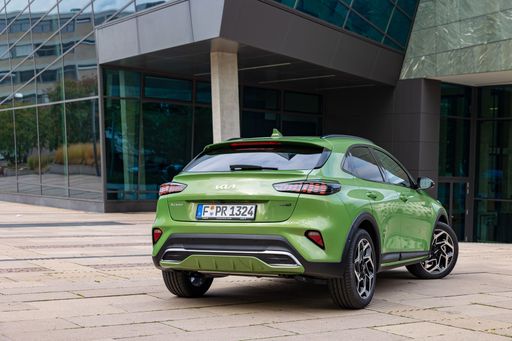
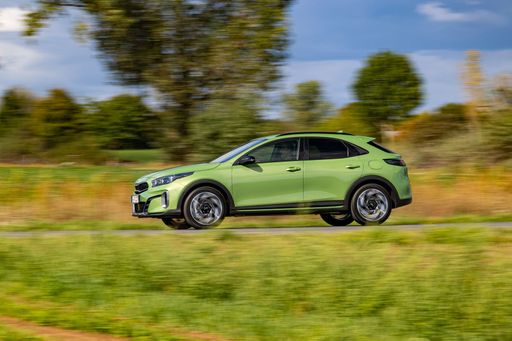
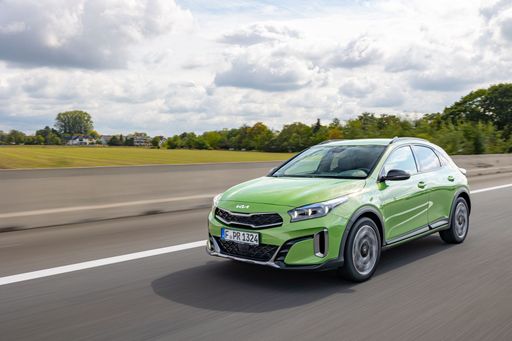
Kia XCeed VS Skoda Kamiq pits a comfort-minded crossover against a space-focused small SUV, and the differences are practical more than philosophical. The Kia XCeed feels like a well-equipped, quietly composed car that leans on material quality and handy tech to sell its case. The Skoda Kamiq trades a touch of tactile polish for noticeably more rear space, clever practical details and lower everyday running costs. Choosing between the Kia XCeed and Skoda Kamiq is therefore about whether you prioritise cabin polish and highway serenity or interior room, visibility and frugal operation.
Kamiq

Cabin feel and perceived quality

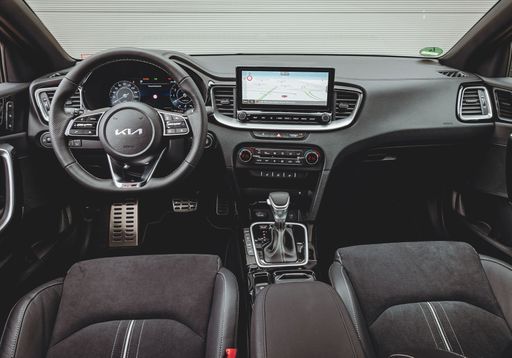
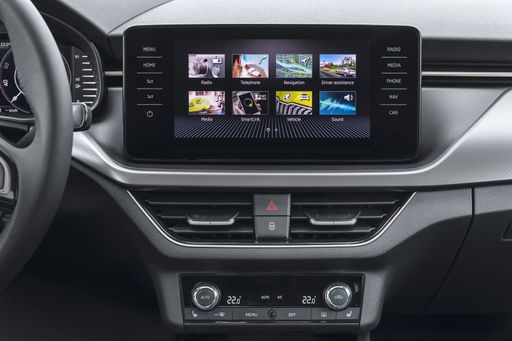
The Kia XCeed presents a slightly more upscale cabin with soft-touch surfaces and a denser, quieter atmosphere that reads premium in daily use. The Skoda Kamiq, by contrast, feels more utilitarian: hard plastics are more visible but the layout is straightforward and deliberately practical. In the XCeed you get a tighter, slightly cosier cockpit with a mix of touchscreen and real buttons that feels engineered for comfort; in the Kamiq you get large windows, simple rotary climate controls and an airy, more functional space. That contrast means the Kia XCeed feels like a small step up in perceived quality while the Skoda Kamiq rewards people who value usability over showroom shine.

XCeed

Comfort and long-distance behavior

On long runs the Kia XCeed excels at masking road noise and smoothing long undulations, so motorway hours feel less tiring for driver and front passenger. The Skoda Kamiq is equally composed at speed and gives a stable, predictable ride, but it communicates road inputs a bit more directly and leans more in corners. The XCeed's suspension setup can feel firmer on bigger wheels or sharper bumps, whereas the Kamiq’s softer, more forgiving posture keeps passengers comfortable though it sacrifices a little dynamic precision. For buyers who spend lots of time on the motorway the Kia XCeed edges ahead for serenity; for those who need calm, predictable behavior plus generous rear comfort the Skoda Kamiq is often the better companion.

Kamiq

Practicality and everyday usability

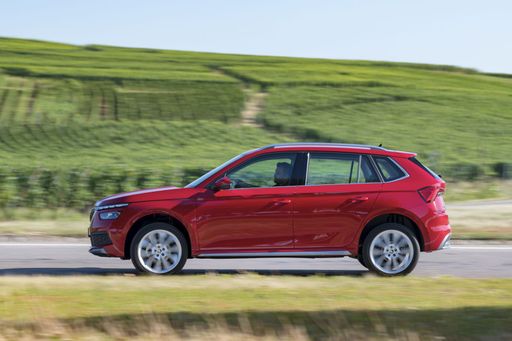
Practical differences are where the Skoda Kamiq really shows its strengths: rear legroom, easy visibility and a raft of small, useful features make daily life with passengers or kids less fussy. The Kia XCeed packs a well-shaped boot that’s very usable for most needs and front-seat ergonomics that are hard to beat, but its rear cabin can feel darker and a touch tighter. Visibility out of the Kamiq is generally superior for city parking and lane changes, while the XCeed leans on cameras and sensors to compensate for a more sloping rear screen. If you load the car often or carry taller passengers the Skoda Kamiq will feel more accommodating; if you prioritise front-seat comfort and a tidy, practical boot the Kia XCeed holds its own.

XCeed

Driving character and running costs

The Kia XCeed tends to favour a livelier driving impression when you ask for it: more thrust is available and the car feels willing under acceleration, but that liveliness usually comes with higher fuel use in real-world driving. The Skoda Kamiq takes a steadier, more economical approach — it’s less about sparkle and more about delivering good mileage and a relaxed commute. Gearbox manners differ too: the XCeed’s set-up feels smoother when hustled, while the Kamiq’s transmission can occasionally feel hesitant at low speeds. Put simply, the Kia XCeed suits drivers who want a bit more pep and refinement at the expense of efficiency, whereas the Skoda Kamiq suits those who want to keep running costs low and driving uncomplicated.

Kamiq

Buyer fit and how to choose before the specs

Pick the Kia XCeed if you prioritise a quieter cabin, richer perceived materials and generous standard equipment that make daily commuting and long trips more comfortable. Choose the Skoda Kamiq if you need maximum rear space, easier visibility in town, clever practical touches and lower everyday fuel bills. Families and people who regularly carry rear-seat passengers will likely appreciate the Kamiq’s room and simplicity, while solo drivers or couples who value comfort, infotainment polish and a longer warranty may prefer the XCeed. Read on to the technical comparison to see how these real-world differences map to engines, weights and boot volumes so you can match the facts to the fit that felt right here.

Here’s where it gets real: The technical differences in detail

XCeed

Costs and Efficiency:

Looking at overall running costs, both models reveal some interesting differences in everyday economy.

Skoda Kamiq is only slightly cheaper – starting at 22,300 £ , while the Kia XCeed costs 23,100 £ . That’s a price difference of around 866 £.

Fuel consumption also shows a difference: the Skoda Kamiq uses 5.3 L/100km and is a bit more efficient than the Kia XCeed with 6.3 L/100km. The difference is about 1 L/100km.

Kamiq

Engine and Performance:

Under the bonnet, it becomes clear which model is tuned for sportiness and which one takes the lead when you hit the accelerator.

When it comes to engine power, the Kia XCeed offers somewhat more power – delivering 180 HP compared to 150 HP. That’s roughly 30 HP more horsepower.

When accelerating from 0 to 100 km/h, the Skoda Kamiq is very slightly quicker – completing the sprint in 8.1 s, while the Kia XCeed takes 8.5 s. That’s about 0.4 s quicker.

There’s also a difference in torque: the Kia XCeed delivers marginally more torque with 265 Nm compared to 250 Nm. That’s about 15 Nm more.

XCeed

Space and Everyday Use:

Beyond pure performance, interior space and usability matter most in daily life. This is where you see which car is more practical and versatile.

Both vehicles offer seating for 5 people.

In terms of curb weight, Skoda Kamiq is marginally lighter – 1,231 kg compared to 1,351 kg. The difference is around 120 kg.

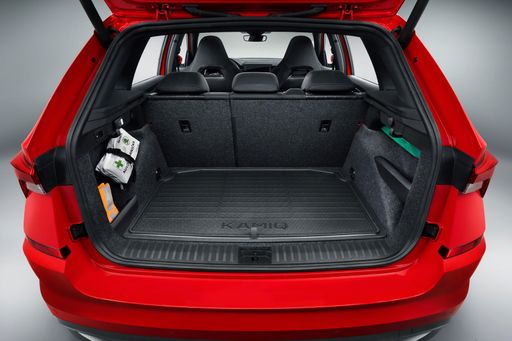
Looking at boot space, the Kia XCeed offers only slightly more boot space – 426 L compared to 400 L. That’s a difference of about 26 L.

When it comes to payload, the Skoda Kamiq carries slightly more – 539 kg compared to 485 kg. That’s a difference of about 54 kg.

Who wins the race in the data check?

The Skoda Kamiq holds a slight edge in the objective data comparison.
This result only shows which model scores more points on paper – not which of the two cars feels right for you.

from £22,300
Kamiq

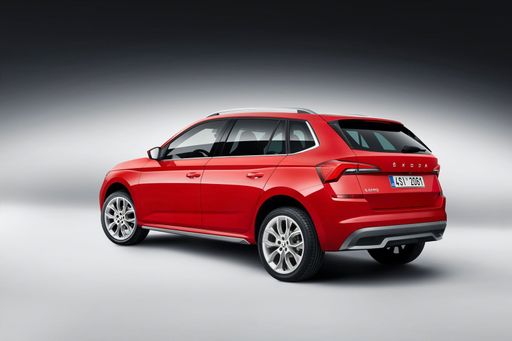
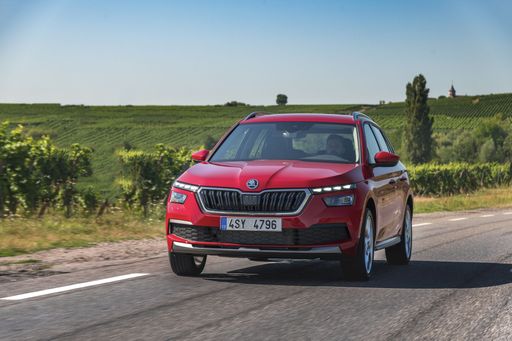
Skoda Kamiq

  • Engine Type Petrol
  • Transmission Manuel, Automatic
  • Drive Type Front-Wheel Drive
  • Power HP 95 - 150 HP
  • Consumption L/100km 5.3 - 5.7 L/100km
Kia XCeed
Skoda Kamiq

Costs and Consumption

View detailed analysis

Engine and Performance

View detailed analysis

Dimensions and Body

View detailed analysis

Kia XCeed

Kia XCeed blends hatchback agility with a coupe-like stance, wrapping practical space in a handsome, modern package that punches above its class in style. It’s an easygoing everyday companion — comfy, well-equipped and priced to make sensible buyers smile — with just enough spark to keep weekend drives interesting.

details

Skoda Kamiq

The Skoda Kamiq is a practical, well-built small crossover that mixes city-friendly manners with surprisingly versatile interior space and clever storage solutions. It offers a comfortable ride, user-friendly technology and solid value, making it a sensible choice for everyday driving.

details
Kia XCeed
Skoda Kamiq

Costs and Consumption

Price
23,100 - 33,000 £
Price
22,300 - 32,700 £
Consumption L/100km
6.3 - 6.8 L/100km
Consumption L/100km
5.3 - 5.7 L/100km
Consumption kWh/100km
-
Consumption kWh/100km
-
Electric Range
-
Electric Range
-
Battery Capacity
-
Battery Capacity
-
co2
143 - 155 g/km
co2
121 - 128 g/km
Fuel tank capacity
-
Fuel tank capacity
-

Dimensions and Body

Body Type
SUV
Body Type
SUV
Seats
5
Seats
5
Doors
-
Doors
-
Curb weight
1,351 - 1,419 kg
Curb weight
1,231 - 1,340 kg
Trunk capacity
380 - 426 L
Trunk capacity
400 L
Length
-
Length
-
Width
1,826 mm
Width
1,793 mm
Height
-
Height
-
Max trunk capacity
-
Max trunk capacity
-
Payload
471 - 485 kg
Payload
439 - 539 kg

Engine and Performance

Engine Type
Petrol, Petrol MHEV
Engine Type
Petrol
Transmission
Manuel, Automatic
Transmission
Manuel, Automatic
Transmission Detail
Manual Gearbox, Dual-Clutch Automatic
Transmission Detail
Manual Gearbox, Dual-Clutch Automatic
Drive Type
Front-Wheel Drive
Drive Type
Front-Wheel Drive
Power HP
115 - 180 HP
Power HP
95 - 150 HP
Acceleration 0-100km/h
8.5 - 12.2 s
Acceleration 0-100km/h
8.1 - 11 s
Max Speed
-
Max Speed
-
Torque
200 - 265 Nm
Torque
175 - 250 Nm
Number of Cylinders
3 - 4
Number of Cylinders
3 - 4
Power kW
85 - 132 kW
Power kW
70 - 110 kW
Engine capacity
998 - 1,598 cm3
Engine capacity
999 - 1,498 cm3

General

Model Year
2,025 - 2,026
Model Year
2025
CO2 Efficiency Class
E
CO2 Efficiency Class
D
Brand
Kia
Brand
Skoda
DriveDuel uses data analysis and artificial intelligence to evaluate vehicle data and create content. Content is regularly reviewed and improved. The displayed prices are estimates based on German list prices, adjusted to the respective country’s VAT. Country-specific registration taxes are not included. This information is not legally binding.