
 Deutschland
 France
 Nederland
 Great Britain
 Sverige
 Norge
Norge Danmark
 Suomi
Suomi Italia
 Polska
 España
VS
Ford Transit Transporter vs Jeep Renegade – Which model is better for everyday use?
Two cars, one duel: Ford Transit Transporter meets Jeep Renegade.
Which one wins in performance, efficiency and value for money? Find out now!
Transit Transporter
@ Ford Motor Company / Ford Media Center
Costs and Efficiency:
Looking at overall running costs, both models reveal some interesting differences in everyday economy.
Jeep Renegade has a convincingly advantage in terms of price – it starts at 26700 £, while the Ford Transit Transporter costs 39900 £. That’s a price difference of around 13276 £.
Fuel consumption also shows a difference: Jeep Renegade manages with 2.10 L and is therefore convincingly more efficient than the Ford Transit Transporter with 7.90 L. The difference is about 5.80 L per 100 km.
As for range, the Ford Transit Transporter performs convincingly better – achieving up to 317 km, about 281 km more than the Jeep Renegade.
Renegade
@ Jeep / Stellantis Media
Engine and Performance:
Power, torque and acceleration are the classic benchmarks for car enthusiasts – and here, some clear differences start to show.
When it comes to engine power, the Ford Transit Transporter has a to a small extent edge – offering 269 HP compared to 240 HP. That’s roughly 29 HP more horsepower.
In terms of top speed, the Jeep Renegade performs distinct better – reaching 199 km/h, while the Ford Transit Transporter tops out at 120 km/h. The difference is around 79 km/h.
There’s also a difference in torque: Ford Transit Transporter pulls significantly stronger with 430 Nm compared to 240 Nm. That’s about 190 Nm difference.
Transit Transporter
@ Ford Motor Company / Ford Media Center
Space and Everyday Use:
Beyond pure performance, interior space and usability matter most in daily life. This is where you see which car is more practical and versatile.
Seats: Ford Transit Transporter offers to a small extent more seating capacity – 6 vs 5.
In curb weight, Jeep Renegade is decisively lighter – 1420 kg compared to 2074 kg. The difference is around 654 kg.
In maximum load capacity, the Ford Transit Transporter performs significantly better – up to 14100 L, which is about 12803 L more than the Jeep Renegade.
When it comes to payload, Ford Transit Transporter convincingly takes the win – 2607 kg compared to 570 kg. That’s a difference of about 2037 kg.
Who comes out on top?
Overall, the Jeep Renegade shows itself to be edges out slightly and secures the title of DriveDuel Champion.
It convinces with the more balanced overall package and proves to be the more versatile choice for everyday use.
from about £26,700
 @ Jeep / Stellantis Media
Jeep Renegade
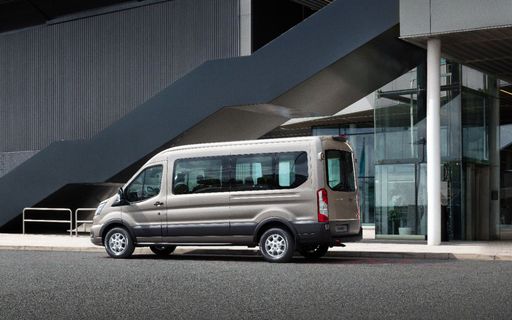
Ford Transit Transporter
The Ford Transit Transporter has long been a staple in the commercial vehicle sector, renowned for its reliability and versatility. It offers a comfortable cabin with a modern design that enhances the driving experience, making long journeys more enjoyable. With a focus on practicality, the Transit provides ample cargo space, meeting the demands of businesses and individual users alike.
details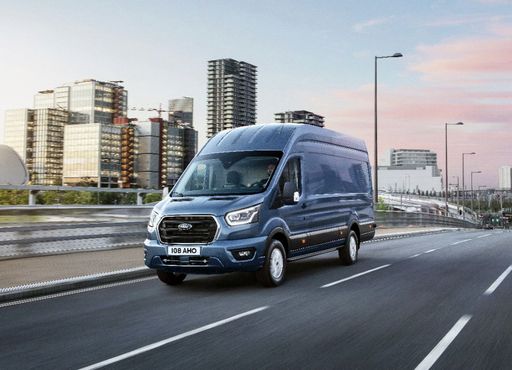 @ Ford Motor Company / Ford Media Center
 @ Ford Motor Company / Ford Media Center
 @ Ford Motor Company / Ford Media Center
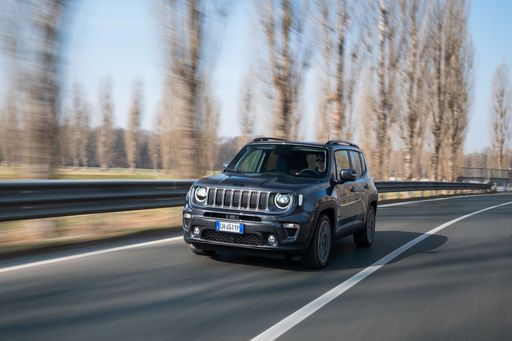
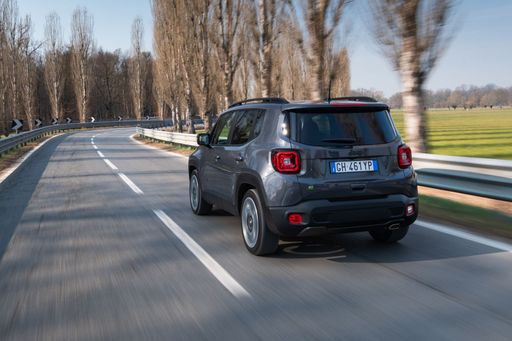
Jeep Renegade
The Jeep Renegade wears its chunky, boxy looks like a badge of character, blending genuine off-road swagger with city-friendly manners so it feels at home on a muddy trail or a tight urban lane. Inside you'll find a surprisingly practical cabin with rugged touches and clever storage, making it a sensible choice for buyers who want a compact SUV with personality rather than just another anonymous crossover.
details
@ Jeep / Stellantis Media
 @ Jeep / Stellantis Media
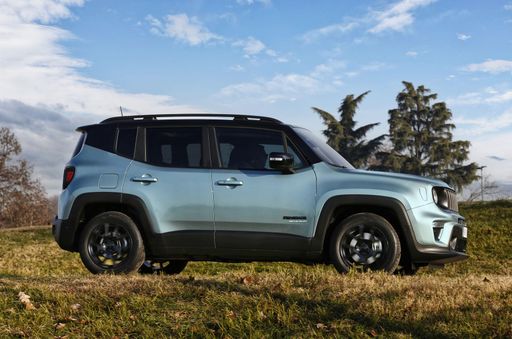 @ Jeep / Stellantis Media
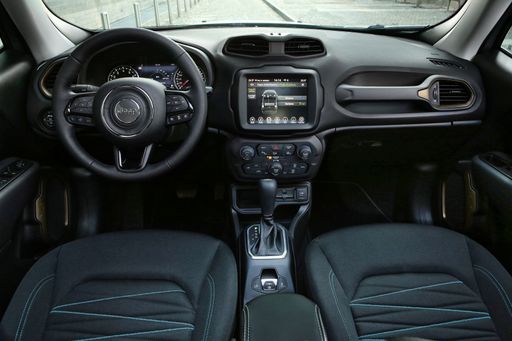 @ Jeep / Stellantis Media
 @ Jeep / Stellantis Media
Ford Transit Transporter
Jeep Renegade
|
@ Ford Motor Company / Ford Media Center
|
@ Jeep / Stellantis Media
|
|
|
|
Costs and Consumption |
|
|---|---|
|
Price
39900 - 69100 £
|
Price
26700 - 39200 £
|
|
Consumption L/100km
7.9 - 10.3 L
|
Consumption L/100km
2.1 - 5.5 L
|
|
Consumption kWh/100km
21.3 - 32 kWh
|
Consumption kWh/100km
-
|
|
Electric Range
247 - 317 km
|
Electric Range
36 km
|
|
Battery Capacity
68 kWh
|
Battery Capacity
-
|
|
co2
0 - 270 g/km
|
co2
48 - 125 g/km
|
|
Fuel tank capacity
70 L
|
Fuel tank capacity
36 - 48 L
|
Dimensions and Body |
|
|---|---|
|
Body Type
Cargo Van
|
Body Type
SUV
|
|
Seats
3 - 6
|
Seats
5
|
|
Doors
4
|
Doors
5
|
|
Curb weight
2074 - 2765 kg
|
Curb weight
1420 - 1770 kg
|
|
Trunk capacity
-
|
Trunk capacity
330 - 351 L
|
|
Length
5531 - 6704 mm
|
Length
4236 mm
|
|
Width
2059 mm
|
Width
1805 mm
|
|
Height
2530 - 2778 mm
|
Height
1684 - 1718 mm
|
|
Max trunk capacity
9300 - 14100 L
|
Max trunk capacity
1277 - 1297 L
|
|
Payload
735 - 2607 kg
|
Payload
545 - 570 kg
|
Engine and Performance |
|
|---|---|
|
Engine Type
Diesel, Electric
|
Engine Type
Petrol MHEV, Plugin Hybrid
|
|
Transmission
Manuel, Automatic
|
Transmission
Automatic
|
|
Transmission Detail
Manual Gearbox, Automatic Gearbox, Reduction Gearbox
|
Transmission Detail
Dual-Clutch Automatic, Automatic Gearbox
|
|
Drive Type
Front-Wheel Drive, Rear-Wheel Drive, All-Wheel Drive
|
Drive Type
Front-Wheel Drive, All-Wheel Drive
|
|
Power HP
105 - 269 HP
|
Power HP
130 - 240 HP
|
|
Acceleration 0-100km/h
-
|
Acceleration 0-100km/h
7.1 - 9.7 s
|
|
Max Speed
120 km/h
|
Max Speed
191 - 199 km/h
|
|
Torque
310 - 430 Nm
|
Torque
240 Nm
|
|
Number of Cylinders
4
|
Number of Cylinders
4
|
|
Power kW
77 - 198 kW
|
Power kW
96 - 177 kW
|
|
Engine capacity
1996 cm3
|
Engine capacity
1332 - 1469 cm3
|
General |
|
|---|---|
|
Model Year
2019 - 2024
|
Model Year
2024
|
|
CO2 Efficiency Class
G, A
|
CO2 Efficiency Class
D, B
|
|
Brand
Ford
|
Brand
Jeep
|
What drivetrain options does the Ford Transit Transporter have?
Available configurations include Front-Wheel Drive, Rear-Wheel Drive or All-Wheel Drive.
The prices and data displayed are estimates based on German list prices and may vary by country. This information is not legally binding.