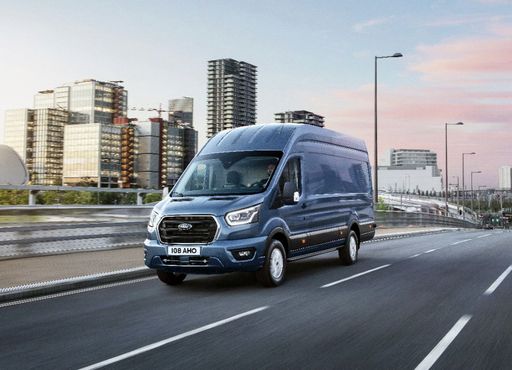
Ford Transit Transporter Cargo Van, starting at 39900 £

The Ford Transit Transporter Cargo Van impresses with 269 HP 402 km and an attractive starting price of 39900 £ . Here are all the details at a glance.

from about £39,900
Transit Transporter

Ford Transit Transporter

  • Engine Type : Diesel, Electric
  • Transmission : Manuel, Automatic
  • Drive Type : Front-Wheel Drive, Rear-Wheel Drive, All-Wheel Drive
  • Power HP : 105 - 269 HP
  • Consumption L/100km : 7.9 - 10.3 L
  • Consumption kWh/100km : 21.3 - 32 kWh
  • Electric Range : 247 - 402 km

Street Cred and Workman’s Charm

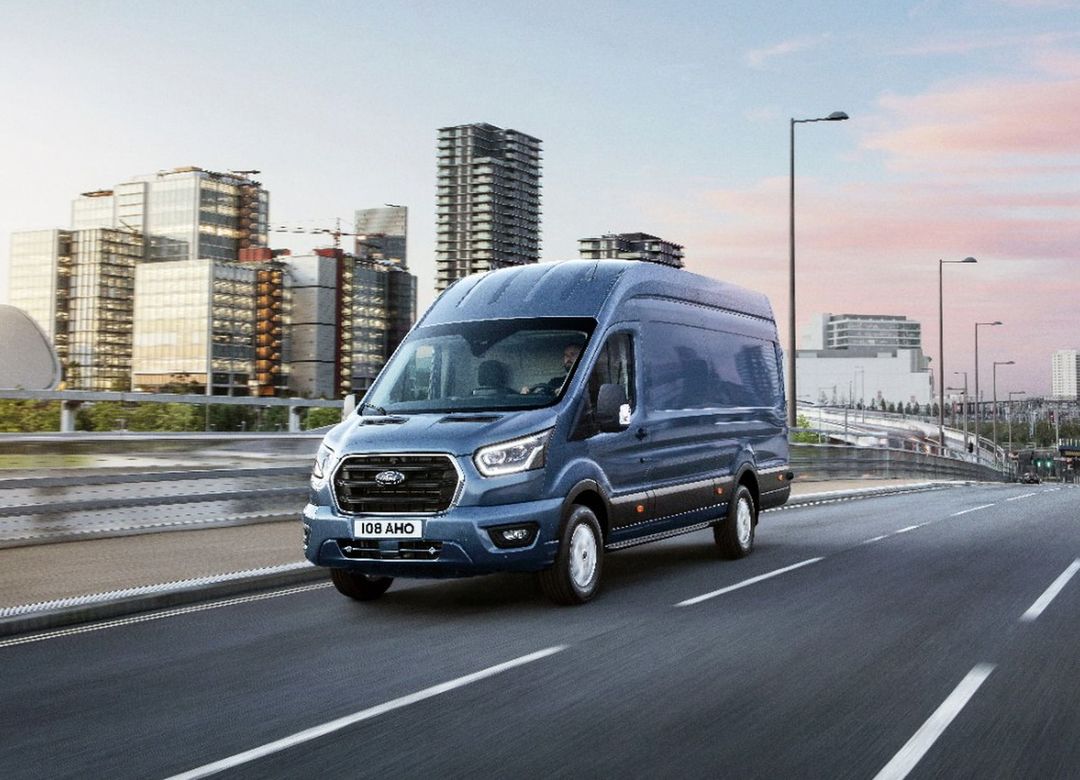
The Ford Transit Transporter presents a purposeful, no-nonsense look that immediately reads "work ready" while still feeling modern thanks to a bold grille and upright stance; it never tries to be pretty, just practical. Roof and body-height choices give it presence in town or on the motorway, with lengths ranging roughly from 5.5 m to 6.7 m and widths around 2.06 m, so it fills a driveway and a loading bay equally well. High-roof variants and squared-off rear corners make the silhouette functional rather than flashy, which is exactly what most buyers want from a light commercial vehicle. Practical exterior details — wide sliding doors and large mirrors — are designed to shave time off every stop, not win design awards.
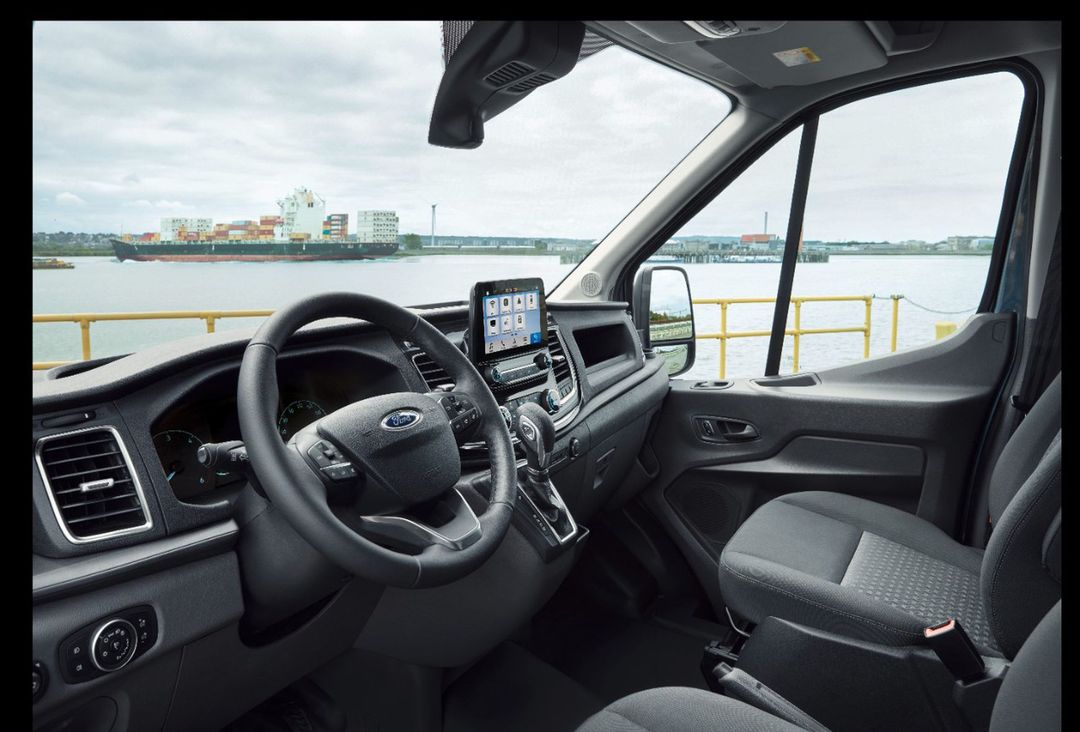
Driver’s Cockpit That Works, Not Wastes Time

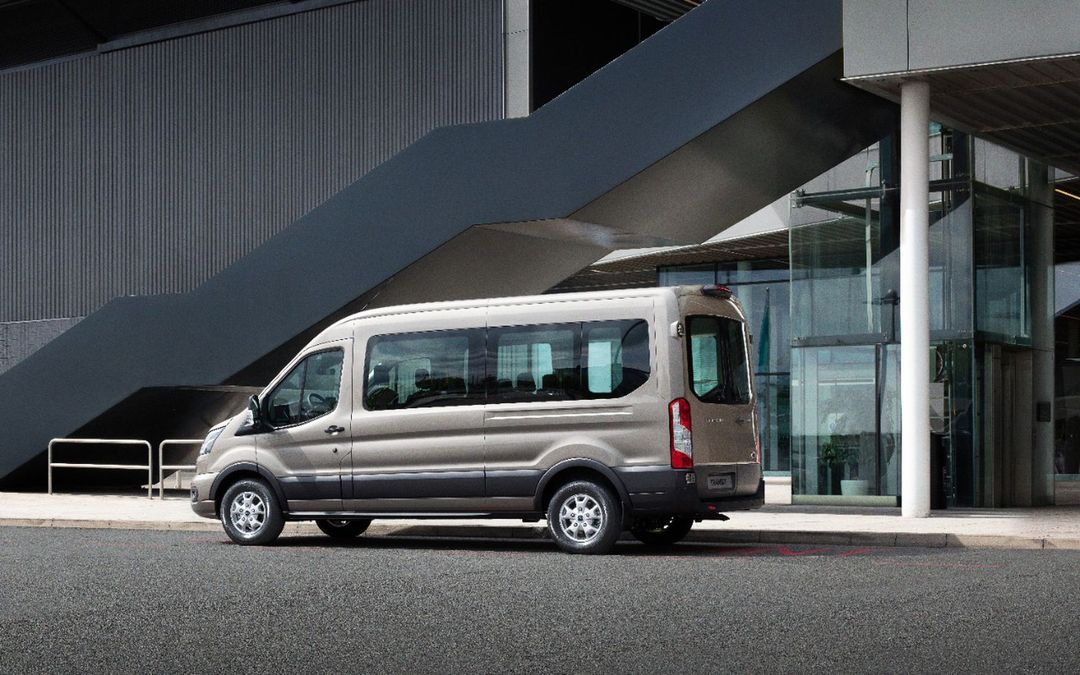
The interior leans heavily on durability with hard-wearing plastics and logically arranged switches that survive toolboxes and coffee spills better than glossy trim. Seating is configurable for crew or cargo use, with options for 3 or 6 seats depending on the body style, and plenty of cubbies for paperwork and phones up front. Ergonomics favour long shifts: the driving position is high and commanding, visibility is good, and the controls are within easy reach even when the van is packed. Comfort levels depend on trim — basic models are utilitarian, while higher-spec cabs add more supportive seats and better materials.

Volume and Payload: It Can Carry the Job

Cargo capacity is a headline figure for the Transit Transporter, with maximum load volumes reaching up to around 14,100 litres in the tallest/longest permutations and payloads that can climb into the mid-tons depending on spec. That means the van is equally at home carrying palletised goods, dry-lining kit for a tradesman, or conversion for specialist bodies; shorter L2 variants suit urban trades, longer L3/L4 versions suit logistics. Load floor heights, wide rear doors and sliding sides make day-to-day loading efficient, while payload figures (shown up to roughly 2,600 kg on heavy-duty spec) matter when every kilo translates to revenue. If tight parking is common, the shorter and lower roof choices are the pragmatic pick; for maximising cargo the L3/L4 high-roof versions are more useful.

Driving: Built For Purpose, Not the Autobahn

Driving manners are predictable and secure rather than sporting — steering is tuned for stability under load and the Transit feels composed even with a full cargo bay, while the maximum permitted speeds and gearing keep highway cruising calm. Multiple drivetrains are on offer, including front-, rear- and all-wheel drive setups, and engines range from modest 105 hp diesels up to punchier 165 hp EcoBlue units; electric E-Transit versions offer 184 or 269 hp equivalents for near-silent operation and strong low-end torque. Ride comfort depends on load and wheelbase: short-wheelbase models are nimbler around town, long-wheelbase variants feel more boat-like laden but more stable at speed. Overall, the van prioritises duty-cycle reliability and driver visibility over agility or refinement.

Running Costs and Real-World Range

Fuel consumption for the 2.0 EcoBlue diesels sits typically around 7.9–8.6 L/100 km for common front-wheel-drive specs, rising toward 10.2–10.3 L/100 km for AWD or heavier rear-drive setups, so long-distance operators should specify the engine and drivetrain to match their route. The electric E‑Transit uses a battery (around 68 kWh nominal) and WLTP-style ranges vary across the line, roughly between 247 and 317 km depending on length and configuration, with consumption figures often shown in the mid-20s kWh/100 km. In practice that means diesel models remain the default for long daily mileage and mixed routes, while electric versions excel for urban rounds and low-emission zones where predictable daily distance fits the battery range. Total cost of ownership will hinge on utilisation pattern, payload and duty cycle rather than headline purchase price.

Safety Tech and Onboard Smarts

The Transit Transporter carries modern assistance systems aimed at reducing driver fatigue and run costs: lane-keeping aids, adaptive cruise controls and parking sensors or cameras are commonly available across trims, making tight manoeuvres and motorway work less stressful. Infotainment is built around Ford’s SYNC setup with touchscreen operation, smartphone integration and navigation options, useful for route planning and fleet telematics integration. Equipment levels vary with trim — fleets often specify essentials like rear cameras and telematics, while higher-trim vans add comfort and convenience features for driver retention. Overall, the electronics package is there to make a hard week of stops easier rather than to dazzle.

Who Should Buy a Transit Transporter?

The Transit Transporter suits tradespeople, fleet operators and delivery companies that need a configurable, rugged workhorse available in multiple lengths, roof heights and drivetrains. A wide roster of current versions covers the 2.0 EcoBlue diesels in roughly 105/130/165 hp guises and the E‑Transit electric models with about 184 or 269 hp, plus front-, rear- and all-wheel-drive choices to match routes and upfits. Choose diesel for long-distance, high-payload work and the electric for urban fleets with predictable daily ranges and low-emission priorities. For anyone who values load space, configurability and proven serviceability over flash, the Transit Transporter is a practical, work-focused choice.

Costs and Consumption

Price
39900 - 73000 £
Consumption L/100km
7.9 - 10.3 L
Consumption kWh/100km
21.3 - 32 kWh
Electric Range
247 - 402 km
Battery Capacity
68 kWh
co2
0 - 270 g/km
Fuel tank capacity
70 L

Dimensions and Body

Body Type
Cargo Van
Seats
3 - 6
Doors
4
Curb weight
2074 - 2765 kg
Trunk capacity
-
Length
5531 - 6704 mm
Width
2059 mm
Height
2530 - 2778 mm
Max trunk capacity
9300 - 14100 L
Payload
735 - 2607 kg

Engine and Performance

Engine Type
Diesel, Electric
Transmission
Manuel, Automatic
Transmission Detail
Manual Gearbox, Automatic Gearbox, Reduction Gearbox
Drive Type
Front-Wheel Drive, Rear-Wheel Drive, All-Wheel Drive
Power HP
105 - 269 HP
Acceleration 0-100km/h
-
Max Speed
120 km/h
Torque
310 - 430 Nm
Number of Cylinders
4
Power kW
77 - 198 kW
Engine capacity
1996 cm3

General

Model Year
2019 - 2024
CO2 Efficiency Class
G, A
Brand
Ford
What drivetrain options does the Ford Transit Transporter have?

Available configurations include Front-Wheel Drive, Rear-Wheel Drive or All-Wheel Drive.

The prices shown are estimates based on German list prices, adjusted for local VAT. Local registration taxes (e.g. NoVA, BPM or CO2 malus) are not included. This information is not legally binding.