@ Honda Motor Co., Ltd.
@ Hyundai Motor Company
VS

Honda Civic vs Hyundai IONIQ 5 – Which model is better for everyday use?

Both models have their strengths – but which one suits you more?
Compare performance, efficiency, price and space directly: Honda Civic or Hyundai IONIQ 5?

Honda Civic

Hyundai IONIQ 5

5 (1 Reviews)
rate
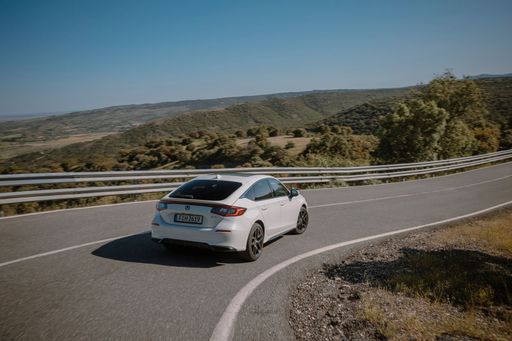
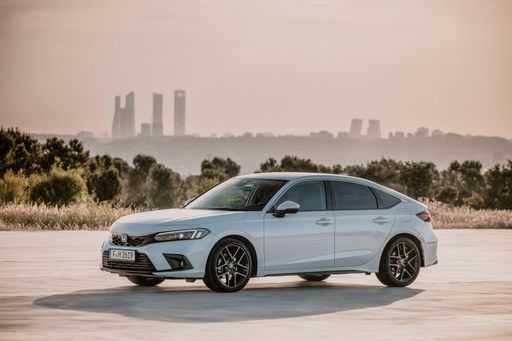
Civic @ Honda Motor Co., Ltd.

The Modern Evolution of the Compact Car: Honda Civic vs Hyundai IONIQ 5

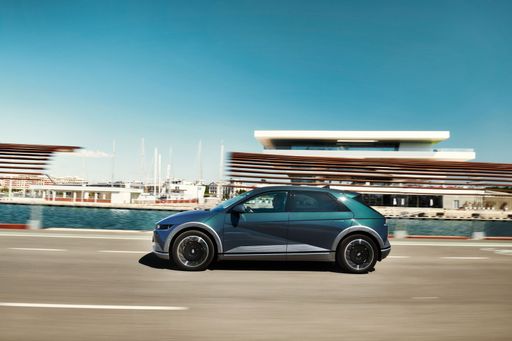
The automotive industry is experiencing a radical transformation as high-efficiency hybrids and groundbreaking electric vehicles reshape our expectations. Two key players in this revolution, the Honda Civic and the Hyundai IONIQ 5, offer unique propositions for modern drivers. Today, we delve into the intricate details and technological innovations these vehicles bring to the table.
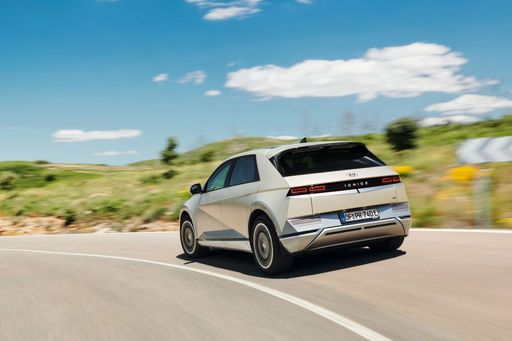
IONIQ 5 @ Hyundai Motor Company

Performance and Drivetrain

The Honda Civic, available in both petrol and full hybrid configurations, stands as a testament to the fusion of tradition and innovation. It offers a range of engine powers from 184 HP to a surprising 329 HP, ensuring a robust performance that can satisfy both the casual driver and those with a penchant for speed. The Civic comes equipped with either a manual gearbox or a CVT automatic transmission, driving power to the front wheels.

On the other hand, the Hyundai IONIQ 5 is an all-electric marvel. Boasting a power range of 170 HP to a staggering 609 HP, the IONIQ 5 harnesses electricity to deliver a thrilling performance with options for rear-wheel or all-wheel drive. Its reduction gearbox ensures seamless power distribution and a serene driving experience. With a torque increase, the IONIQ 5 accelerates smoothly from 0-100 km/h in a jaw-dropping 3.5 seconds with its most powerful variant.

Civic @ Honda Motor Co., Ltd.

Efficiency and Range

The Honda Civic's hybrid variant puts forth impressive fuel economy, with consumption figures as low as 4.7 liters per 100 km, while its petrol counterpart still maintains efficiency with a maximum consumption of 8.2 liters per 100 km. A moderate CO2 output up to 186 g/km is notable, keeping it within the C to G efficiency classes.

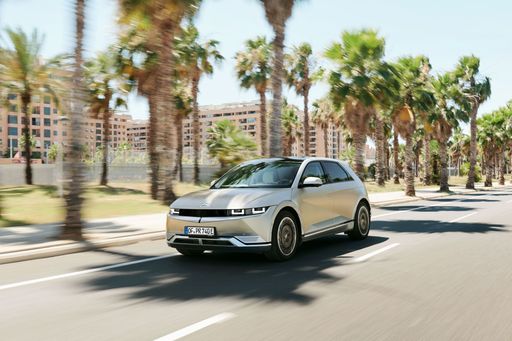
Hyundai's electric SUV, the IONIQ 5, embarks on a zero-emission journey, flaunting a commendable CO2 efficiency class A rating. It offers a robust electric range between 440 km and 570 km, depending on the battery option—63 kWh or 84 kWh. The energy consumption ranges from 15.6 kWh to 21.2 kWh per 100 km, marking it as a leader in efficiency in the electric realm.

IONIQ 5 @ Hyundai Motor Company

Design and Dimensions

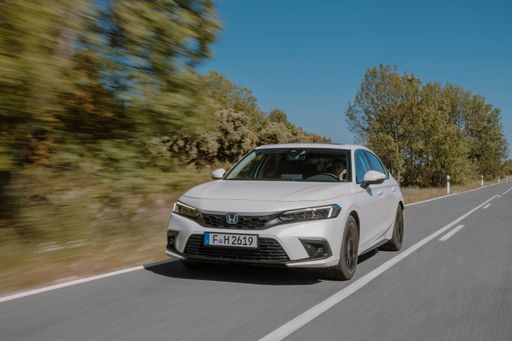
The Honda Civic continues to embrace its hatchback roots with a sleek, aerodynamic design. With a length ranging from 4551 mm to 4594 mm and a width of 1890 mm, the Civic maintains a sporty compact silhouette—perfect for urban environments and dynamic styling enthusiasts. Its height reaches just over 1400 mm, capturing that eternal, sleek charm.

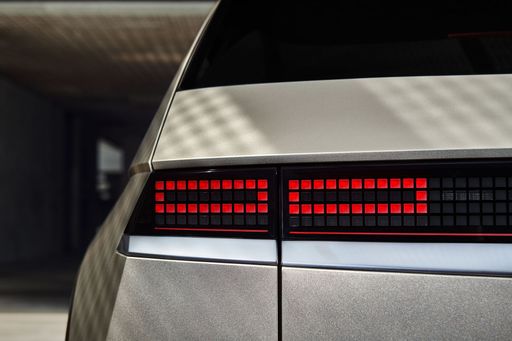
In contrast, the Hyundai IONIQ 5 adopts a futuristic SUV design that stands out with its geometric lines and daring aesthetics. With a length up to 4715 mm and height up to 1605 mm, it commands a strong road presence. Despite its larger frame, it offers a similar width to the Civic, promoting stability and a robust look.

Civic @ Honda Motor Co., Ltd.

Interior and Practicality

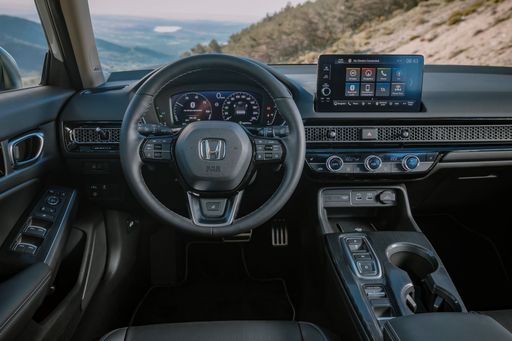
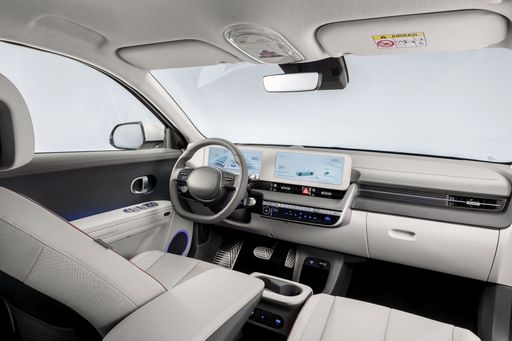
Inside the Honda Civic, you'll find a practical layout accommodating up to five seats and sufficient trunk capacity, varying slightly around 404 to 410 liters. It promises a comfortable ride with emphasis on innovation and technology like intuitive displays and driver-centric controls.

The Hyundai IONIQ 5, however, takes interior space to unprecedented levels. Its generous trunk offers between 480 and 520 liters, and with a bigger cabin size, it ensures a comfortable experience enhanced by cutting-edge technology, including advanced infotainment systems and spacious seating configurations.

IONIQ 5 @ Hyundai Motor Company

Conclusion

Both vehicles underline the rapid evolution of the automobile, yet cater to diverse driving desires. The Honda Civic retains its place as a reliable and versatile option for those who prefer a blend of classic and modern hybrid efficiency. Meanwhile, the Hyundai IONIQ 5 steps into the forefront of electric innovation, offering a mesmerizing performance and future-forward design for those who embrace electrical efficiency and sophistication.

Here’s where it gets real: The technical differences in detail

Civic @ Honda Motor Co., Ltd.

Costs and Efficiency:

Price and efficiency are often the first things buyers look at. Here it becomes clear which model has the long-term edge – whether at the pump, the plug, or in purchase price.

Honda Civic has a slightly advantage in terms of price – it starts at 32500 £, while the Hyundai IONIQ 5 costs 38500 £. That’s a price difference of around 6000 £.

IONIQ 5 @ Hyundai Motor Company

Engine and Performance:

Under the bonnet, it becomes clear which model is tuned for sportiness and which one takes the lead when you hit the accelerator.

When it comes to engine power, the Hyundai IONIQ 5 has a convincingly edge – offering 650 HP compared to 184 HP. That’s roughly 466 HP more horsepower.

In acceleration from 0 to 100 km/h, the Hyundai IONIQ 5 is decisively quicker – completing the sprint in 3.50 s, while the Honda Civic takes 7.80 s. That’s about 4.30 s faster.

In terms of top speed, the Hyundai IONIQ 5 performs evident better – reaching 260 km/h, while the Honda Civic tops out at 180 km/h. The difference is around 80 km/h.

There’s also a difference in torque: Hyundai IONIQ 5 pulls convincingly stronger with 770 Nm compared to 315 Nm. That’s about 455 Nm difference.

Space and Everyday Use:

Cabin size, boot volume and payload all play a role in everyday practicality. Here, comfort and flexibility make the difference.

Both vehicles offer seating for 5 people.

In curb weight, Honda Civic is distinct lighter – 1517 kg compared to 1955 kg. The difference is around 438 kg.

In terms of boot space, the Hyundai IONIQ 5 offers evident more room – 520 L compared to 410 L. That’s a difference of about 110 L.

In maximum load capacity, the Hyundai IONIQ 5 performs clearly perceptible better – up to 1580 L, which is about 360 L more than the Honda Civic.

When it comes to payload, Hyundai IONIQ 5 evident takes the win – 530 kg compared to 397 kg. That’s a difference of about 133 kg.

Who comes out on top?

Overall, the Hyundai IONIQ 5 shows itself to be outperforms in nearly all aspects and secures the title of DriveDuel Champion.
It convinces with the more balanced overall package and proves to be the more versatile choice for everyday use.

Honda Civic
Hyundai IONIQ 5

Costs and Consumption

View detailed analysis

Engine and Performance

View detailed analysis

Dimensions and Body

View detailed analysis
from about £38,500
IONIQ 5 @ Hyundai Motor Company

Hyundai IONIQ 5

  • Engine Type : Electric
  • Transmission : Automatic
  • Drive Type : Rear-Wheel Drive, All-Wheel Drive
  • Power HP : 170 - 650 HP
  • Consumption kWh/100km : 15.6 - 21.2 kWh
  • Electric Range : 440 - 570 km

Honda Civic

The Honda Civic mixes practical daily usability with a surprisingly engaging driving character, wrapping clever interior design and dependable engineering in a tidy, modern package. It’s a smart buy for drivers who want sensible reliability, a bit of fun behind the wheel, and a shape that never looks like it’s trying too hard.

details

Hyundai IONIQ 5

5 (1 Reviews)
rate

The Hyundai IONIQ 5 looks like a spaceship that moved into suburbia, pairing bold retro‑futuristic styling with a roomy, cleverly laid-out cabin that makes long trips surprisingly comfortable. Its electric character delivers instant, silky acceleration and low running costs, making it a smart, slightly cheeky pick for buyers who want tech, practicality and personality without the drama.

details
Honda Civic
Hyundai IONIQ 5
Civic @ Honda Motor Co., Ltd.
IONIQ 5 @ Hyundai Motor Company

Costs and Consumption

Price
32500 - 35500 £
Price
38500 - 64200 £
Consumption L/100km
4.7 - 5 L
Consumption L/100km
-
Consumption kWh/100km
-
Consumption kWh/100km
15.6 - 21.2 kWh
Electric Range
-
Electric Range
440 - 570 km
Battery Capacity
-
Battery Capacity
63 - 84 kWh
co2
108 - 114 g/km
co2
0 g/km
Fuel tank capacity
40 L
Fuel tank capacity
-

Dimensions and Body

Body Type
Hatchback
Body Type
SUV
Seats
5
Seats
5
Doors
5
Doors
5
Curb weight
1517 - 1533 kg
Curb weight
1955 - 2275 kg
Trunk capacity
404 - 410 L
Trunk capacity
480 - 520 L
Length
4560 mm
Length
4655 - 4715 mm
Width
1890 mm
Width
1890 - 1940 mm
Height
1408 mm
Height
1585 - 1605 mm
Max trunk capacity
1187 - 1220 L
Max trunk capacity
1540 - 1580 L
Payload
348 - 397 kg
Payload
385 - 530 kg

Engine and Performance

Engine Type
Full Hybrid
Engine Type
Electric
Transmission
Automatic
Transmission
Automatic
Transmission Detail
CVT
Transmission Detail
Reduction Gearbox
Drive Type
Front-Wheel Drive
Drive Type
Rear-Wheel Drive, All-Wheel Drive
Power HP
184 HP
Power HP
170 - 650 HP
Acceleration 0-100km/h
7.8 - 8.1 s
Acceleration 0-100km/h
3.5 - 8.5 s
Max Speed
180 km/h
Max Speed
185 - 260 km/h
Torque
315 Nm
Torque
350 - 770 Nm
Number of Cylinders
4
Number of Cylinders
-
Power kW
135 kW
Power kW
125 - 478 kW
Engine capacity
1993 cm3
Engine capacity
-

General

Model Year
2025
Model Year
2024 - 2025
CO2 Efficiency Class
C
CO2 Efficiency Class
A
Brand
Honda
Brand
Hyundai
What drivetrain options does the Honda Civic have?

The Honda Civic is offered with Front-Wheel Drive.

The prices and data displayed are estimates based on German list prices and may vary by country. This information is not legally binding.

do not click