@ Hyundai Motor Company
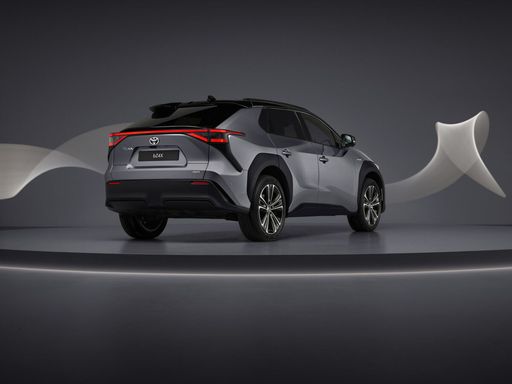
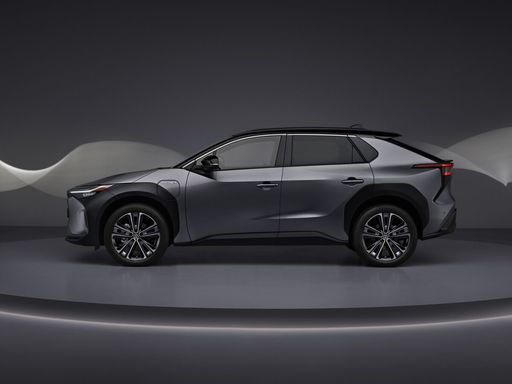
@ Toyota Motor Corporation
VS

Hyundai IONIQ 5 vs Toyota bZ4X – Which model is better for everyday use?

Compare performance, boot capacity, efficiency and price at a glance.
Find out which car is the better choice for you – Hyundai IONIQ 5 or Toyota bZ4X?

Hyundai IONIQ 5

Toyota bZ4X

IONIQ 5 @ Hyundai Motor Company

The Battle of Electric Titans: Hyundai IONIQ 5 vs. Toyota bZ4X

In an automotive era increasingly dominated by electrification, car manufacturers are pushing the boundaries of innovation, presenting us with equidistant choices between performance, efficiency, and style. Two noteworthy contenders in the electric SUV segment are the Hyundai IONIQ 5 and Toyota bZ4X. Both models have embraced futuristic design and cutting-edge technology, delivering a tantalizing glimpse into the future of electric mobility. But how do they stack up against each other?
bZ4X @ Toyota Motor Corporation

Design and Dimensions

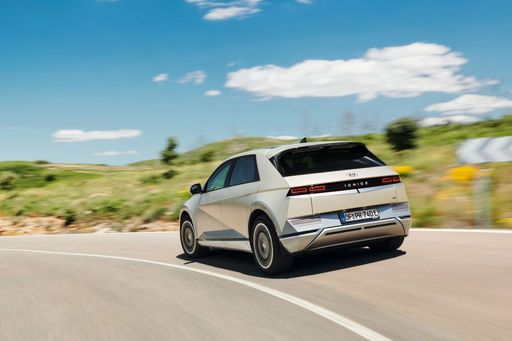
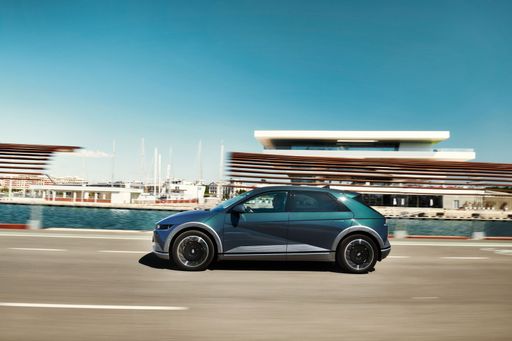
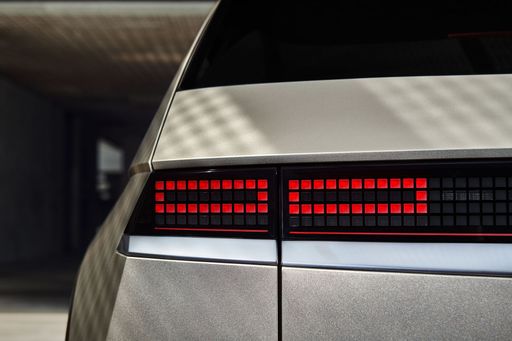
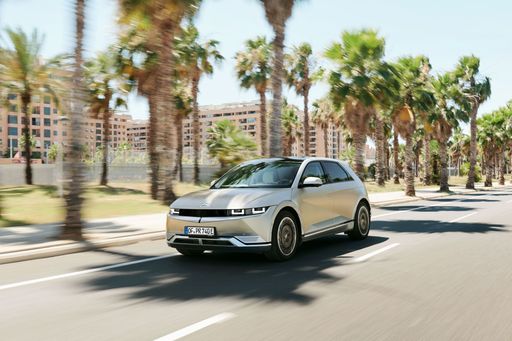
Hyundai's IONIQ 5 is nothing short of a design revolution. Its sharp lines and bold surface creases echo a blend of retro charm and forward-thinking aesthetics. Measuring between 4655mm and 4715mm in length, 1890mm to 1940mm in width, and a height around 1605mm, it sports an avant-garde look without compromising practicality.

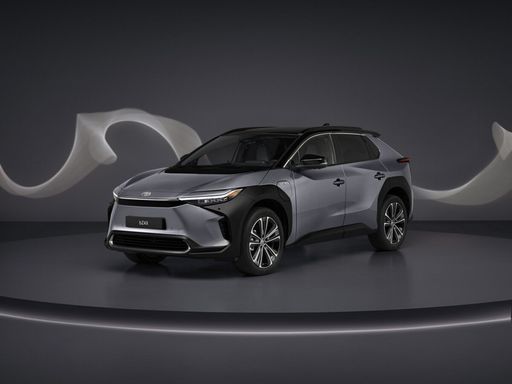
The Toyota bZ4X, on the other hand, offers a subtle yet modern take on the electric SUV. Slightly larger at 4690mm in length and 1860mm in width, it stands at 1600mm tall, harmonizing aerodynamic fluidity with robust SUV proportions. Smooth lines and a minimalist approach characterize its design ethos.

IONIQ 5 @ Hyundai Motor Company

Performance and Power

The battle of force and speed sees the IONIQ 5 offering a varied power portfolio, ranging from 170 HP to an impressive 609 HP, translating to a swift 0-100 km/h time between 8.5 seconds and a heart-racing 3.5 seconds. Rear-Wheel and All-Wheel Drive options ensure versatility for different driving preferences.

Toyota's bZ4X may not reach the upper performance limits of its Hyundai counterpart but still boasts respectable figures. With power options of 204 HP and 218 HP, it accelerates from 0 to 100 km/h in 7.5 seconds or 6.9 seconds, driven by both Front-Wheel and All-Wheel configurations.

bZ4X @ Toyota Motor Corporation

Range and Efficiency

When it comes to range, efficiency stands paramount. The IONIQ 5 promises an electric range of up to 570 km and a consumption rate as low as 15.6 kWh/100km to 21.2 kWh/100km, backed by battery capacities ranging from 63 kWh to 84 kWh.

The bZ4X provides a competitive electric range, reaching up to 513 km between charges and an efficient consumption rate starting at 14.4 kWh/100km. It strikes a balance between performance and consumption, making it economical for daily commutes and long hauls alike.

IONIQ 5 @ Hyundai Motor Company

Interior and Cargo

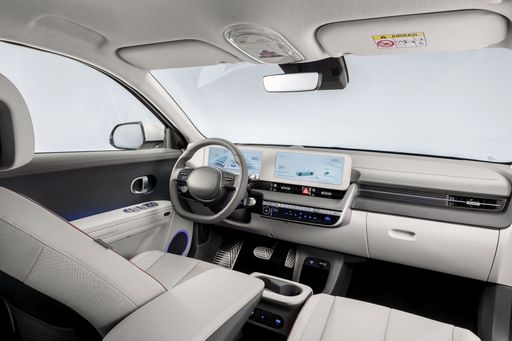
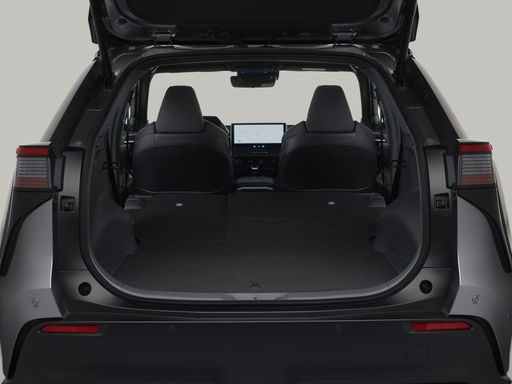
Inside, both SUVs accommodate five passengers comfortably. The IONIQ 5 sits occupants in a spacious cabin, thanks to its minimalist interior design. It features a trunk capacity between 480 L to 520 L, accommodating a range of storage needs.

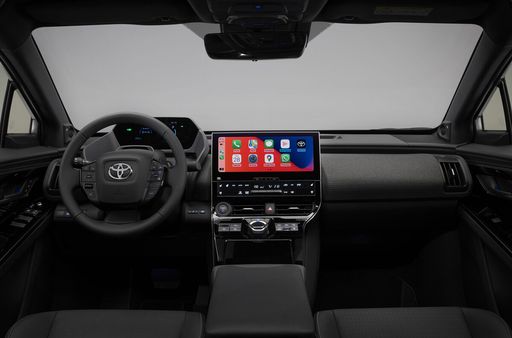
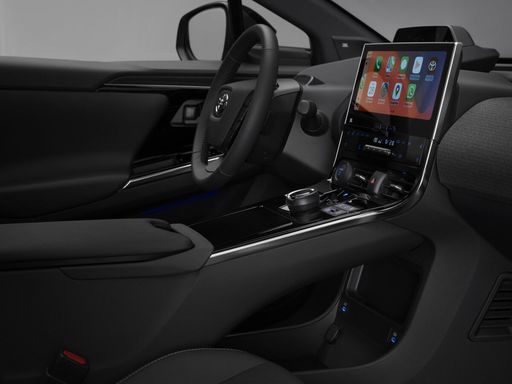
Meanwhile, the bZ4X focuses on intuitiveness and simplicity, with a trunk capacity of 452 L, slightly less than its competitor but practical for everyday tasks. Both models emphasize sustainability, reflecting broader industry trends towards eco-friendly materials and designs.

bZ4X @ Toyota Motor Corporation

Conclusion

In comparing the Hyundai IONIQ 5 and Toyota bZ4X, each holds distinct advantages. The IONIQ 5 offers blistering performance and innovative design, ideal for those wanting a dynamic driving experience. Conversely, the bZ4X presents a blend of efficiency and practicality, appealing to eco-conscious urban dwellers.

Your choice between these contenders will hinge on personal preferences: ultimate performance and a bold design from Hyundai or Toyota's efficient, well-rounded, and subtle approach to electric driving.

Here’s where it gets real: The technical differences in detail

IONIQ 5 @ Hyundai Motor Company

Costs and Efficiency:

Looking at overall running costs, both models reveal some interesting differences in everyday economy.

Toyota bZ4X has a barely noticeable advantage in terms of price – it starts at 36800 £, while the Hyundai IONIQ 5 costs 38500 £. That’s a price difference of around 1714 £.

In terms of energy consumption, the advantage goes to the Toyota bZ4X: with 13.50 kWh per 100 km, it’s to a small extent more efficient than the Hyundai IONIQ 5 with 15.60 kWh. That’s a difference of about 2.10 kWh.

As for range, the Hyundai IONIQ 5 performs slight better – achieving up to 570 km, about 2 km more than the Toyota bZ4X.

bZ4X @ Toyota Motor Corporation

Engine and Performance:

Power, torque and acceleration are the classic benchmarks for car enthusiasts – and here, some clear differences start to show.

When it comes to engine power, the Hyundai IONIQ 5 has a significantly edge – offering 650 HP compared to 343 HP. That’s roughly 307 HP more horsepower.

In acceleration from 0 to 100 km/h, the Hyundai IONIQ 5 is clearly quicker – completing the sprint in 3.50 s, while the Toyota bZ4X takes 5.10 s. That’s about 1.60 s faster.

In terms of top speed, the Hyundai IONIQ 5 performs evident better – reaching 260 km/h, while the Toyota bZ4X tops out at 160 km/h. The difference is around 100 km/h.

There’s also a difference in torque: Hyundai IONIQ 5 pulls clearly stronger with 770 Nm compared to 338 Nm. That’s about 432 Nm difference.

IONIQ 5 @ Hyundai Motor Company

Space and Everyday Use:

Whether family car or daily driver – which one offers more room, flexibility and comfort?

Both vehicles offer seating for 5 people.

In curb weight, Hyundai IONIQ 5 is barely noticeable lighter – 1955 kg compared to 1970 kg. The difference is around 15 kg.

In terms of boot space, the Hyundai IONIQ 5 offers a bit more room – 520 L compared to 452 L. That’s a difference of about 68 L.

When it comes to payload, Hyundai IONIQ 5 barely noticeable takes the win – 530 kg compared to 495 kg. That’s a difference of about 35 kg.

Who wins the race?

The Hyundai IONIQ 5 proves to be leaves the rival little chance and therefore becomes our DriveDuel Champion!
Hyundai IONIQ 5 is the better all-rounder in this comparison.

Hyundai IONIQ 5
Toyota bZ4X

Costs and Consumption

View detailed analysis

Engine and Performance

View detailed analysis

Dimensions and Body

View detailed analysis
from about £38,500
IONIQ 5 @ Hyundai Motor Company

Hyundai IONIQ 5

  • Engine Type : Electric
  • Transmission : Automatic
  • Drive Type : Rear-Wheel Drive, All-Wheel Drive
  • Power HP : 170 - 650 HP
  • Consumption kWh/100km : 15.6 - 21.2 kWh
  • Electric Range : 440 - 570 km

Hyundai IONIQ 5

The Hyundai IONIQ 5 looks like a spaceship that moved into suburbia, pairing bold retro‑futuristic styling with a roomy, cleverly laid-out cabin that makes long trips surprisingly comfortable. Its electric character delivers instant, silky acceleration and low running costs, making it a smart, slightly cheeky pick for buyers who want tech, practicality and personality without the drama.

details

Toyota bZ4X

The Toyota bZ4X is a fresh, roomy electric crossover that pairs Toyota’s trademark reliability with bold, angular styling and a cabin designed for everyday comfort. It may not chase headlines like some flashier rivals, but for buyers who want sensible electric motoring with practical packaging and a relaxed, confident ride, it’s an easy, pleasant choice.

details
Hyundai IONIQ 5
Toyota bZ4X
IONIQ 5 @ Hyundai Motor Company
bZ4X @ Toyota Motor Corporation

Costs and Consumption

Price
38500 - 64200 £
Price
36800 - 48000 £
Consumption L/100km
-
Consumption L/100km
-
Consumption kWh/100km
15.6 - 21.2 kWh
Consumption kWh/100km
13.5 - 16.2 kWh
Electric Range
440 - 570 km
Electric Range
444 - 568 km
Battery Capacity
63 - 84 kWh
Battery Capacity
-
co2
0 g/km
co2
0 g/km
Fuel tank capacity
-
Fuel tank capacity
-

Dimensions and Body

Body Type
SUV
Body Type
SUV
Seats
5
Seats
5
Doors
5
Doors
5
Curb weight
1955 - 2275 kg
Curb weight
1970 - 2180 kg
Trunk capacity
480 - 520 L
Trunk capacity
452 L
Length
4655 - 4715 mm
Length
4690 mm
Width
1890 - 1940 mm
Width
1860 mm
Height
1585 - 1605 mm
Height
1600 - 1650 mm
Max trunk capacity
1540 - 1580 L
Max trunk capacity
-
Payload
385 - 530 kg
Payload
375 - 495 kg

Engine and Performance

Engine Type
Electric
Engine Type
Electric
Transmission
Automatic
Transmission
Automatic
Transmission Detail
Reduction Gearbox
Transmission Detail
Reduction Gearbox
Drive Type
Rear-Wheel Drive, All-Wheel Drive
Drive Type
Front-Wheel Drive, All-Wheel Drive
Power HP
170 - 650 HP
Power HP
167 - 343 HP
Acceleration 0-100km/h
3.5 - 8.5 s
Acceleration 0-100km/h
5.1 - 8.6 s
Max Speed
185 - 260 km/h
Max Speed
140 - 160 km/h
Torque
350 - 770 Nm
Torque
265 - 338 Nm
Number of Cylinders
-
Number of Cylinders
-
Power kW
125 - 478 kW
Power kW
123 - 252 kW
Engine capacity
-
Engine capacity
-

General

Model Year
2024 - 2025
Model Year
2024 - 2025
CO2 Efficiency Class
A
CO2 Efficiency Class
A
Brand
Hyundai
Brand
Toyota
What drive types are available for the Hyundai IONIQ 5?

The Hyundai IONIQ 5 is available as Rear-Wheel Drive or All-Wheel Drive.

The prices and data displayed are estimates based on German list prices and may vary by country. This information is not legally binding.