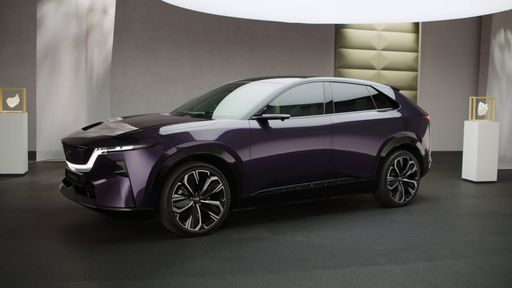
VS

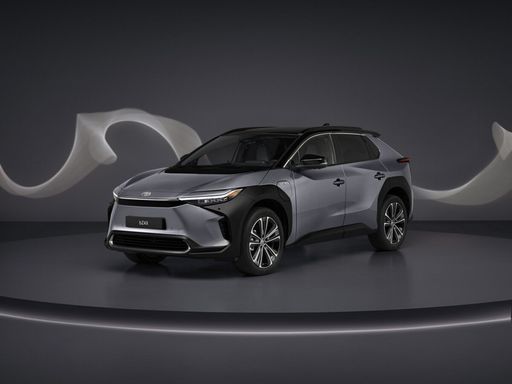
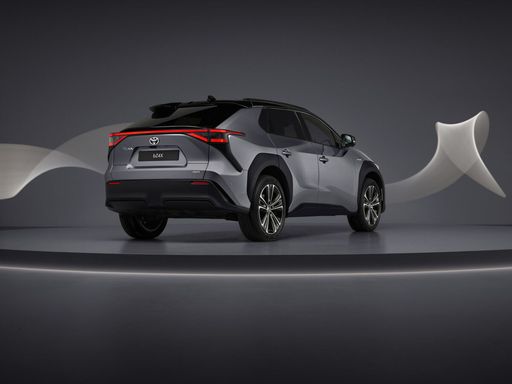
Toyota bZ4X vs Mazda CX-6e comparison

Compare performance (380 HP vs 258 HP), boot space and price (36,800 £ vs 42,800 £ ) at a glance. Find out which car is the better choice for you – Toyota bZ4X or Mazda CX-6e?

Toyota bZ4X vs Mazda CX-6e: Key differences

Toyota bZ4X

4.6 (9 Reviews)
rate
  • somewhat cheaper
  • visibly more power
  • markedly more efficient
  • moderately more electric range
  • considerably quicker 0–100 km/h
  • moderately lighter
details

Mazda CX-6e

  • very slightly more trunk space
details

All details on performance, efficiency, range and trunk space can be found in the technical comparison below – including user reviews for both models.

By Achim Sedelmaier

bZ4X

Head-to-head: Toyota bZ4X VS Mazda CX-6e — what to expect

Toyota bZ4X and Mazda CX-6e sit in the same electric‑SUV theatre but play very different parts: the bZ4X leans into quiet, confidence‑first packaging while the CX‑6e trades some conservative engineering for richer cabin feel and equipment. The bZ4X presents as a calm, long‑distance cruiser with a simple, utilitarian control layout that prioritizes everyday usability. The CX‑6e, by contrast, aims to impress in the moment with a high‑grade interior, a dramatic widescreen cockpit and a pack‑heavy feature list. This comparison will focus on how those character differences translate into real owner life rather than spec sheets or headline numbers.
CX-6e

Driving character and long‑distance behavior

The Toyota bZ4X drives like a mature highway companion: subdued, well‑insulated and engineered to keep occupants relaxed on long runs. The Mazda CX‑6e feels a touch lighter and more composed in typical urban and country driving, but it doesn’t deliver the same shove for fast overtakes or effortless motorway acceleration that some buyers will notice in the bZ4X. If you value predictable, undemanding highway behavior and low cabin noise, the bZ4X leans clearly toward that comfort envelope; if you prefer a slightly more engaging, European‑tuned ride and sharper steering response, the CX‑6e will suit you better. Neither is a track weapon — the differences matter in everyday merging, long trips and how tiring a day‑long run becomes.

bZ4X

Comfort, cabin feel and perceived quality

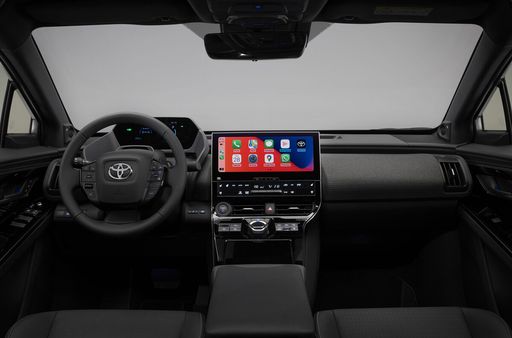
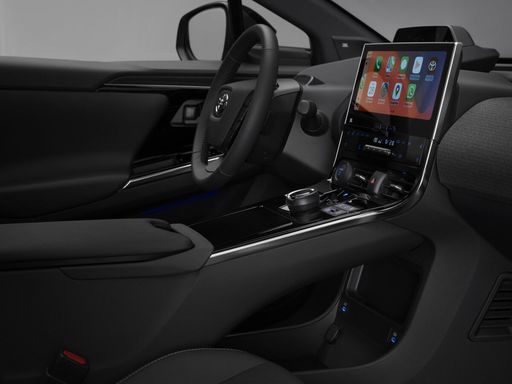
Inside, the Toyota bZ4X favors practicality and acoustic comfort: extra sound deadening, roomy rear legroom and tactile physical controls for core functions make it a stress‑free place to spend hours. The Mazda CX‑6e trades some of that clinical simplicity for a richer, more premium ambience — better materials, a sweeping panoramic roof and a widescreen cockpit that gives the cabin a showroom feel. The CX‑6e’s display‑led interface can impress visually but also distract, whereas the bZ4X’s approach is deliberately conservative and easy to live with. For buyers who judge cars by how polished the cabin feels, the CX‑6e scores higher; for those who value low fatigue and straightforward ergonomics, the bZ4X is the calmer choice.

Practicality and everyday usability

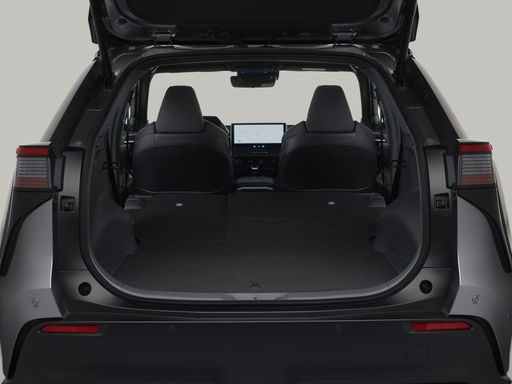
Both SUVs are designed for family life, but they reach that goal in different ways: the Mazda CX‑6e adds practical touches like a front luggage compartment and a generally well‑shaped load area, making packing and weekend trips simpler in real use. The Toyota bZ4X offers outstanding rear legroom and a higher usable payload, which helps when carrying people and heavy kit, but its boot packaging is a little compromised by intruding wheel arches and it misses some small storage niceties. Expect the CX‑6e to feel cleverer in day‑to‑day stowage, while the bZ4X rewards occupants with superior rear passenger comfort and robust load‑carrying capacity. If family practicality is your top priority, compare how you actually pack suitcases and child seats rather than relying on headline volumes.

City friendliness, tech and visibility

Urban drivers will notice that the Mazda CX‑6e is a wider, more camera‑and‑screen‑centric car which helps with parking aids and visibility tech but can be awkward in narrow, old‑town streets and requires some time to master its gesture‑heavy interface. The Toyota bZ4X trades digital bravado for simpler controls and a relaxed chassis that soaks up city bumps, yet it brings annoyances like limited rear visibility and the omission of a rear wiper that can frustrate in wet conditions. Both offer useful driver aids, but Mazda’s 360° cameras and head‑up display feel more modern, while Toyota’s systems are deliberately less fussy and easier to operate on the fly. In short: Mazda is tech‑forward but demands attention; Toyota is straightforward but asks you to accept a few everyday compromises.

Which buyer each car actually fits — trade‑offs to weigh before the tech sheet

Choose the Toyota bZ4X if your priorities are serene long‑distance comfort, generous rear space for family passengers and a no‑nonsense cabin that makes day‑to‑day life easier; it’s a fit for buyers who prize predictability and low stress over headline flash. Opt for the Mazda CX‑6e if you want a more refined interior, strong standard equipment and clever packaging such as a frunk, and you’re willing to live with a heavily display‑driven interface and limited AWD choice at launch. The decision between Toyota bZ4X and Mazda CX‑6e is about trade‑offs — silence and rear‑room versus material quality and gadgetry — so look next at the technical comparison to see how range, charging behavior and power delivery convert those differences into real ownership consequences.

Here’s where it gets real: The technical differences in detail

bZ4X

Costs and Efficiency:

Price and efficiency are often the first things buyers look at. Here it becomes clear which model has the long-term edge – whether at the pump, the plug, or in purchase price.

Toyota bZ4X is somewhat cheaper – starting at 36,800 £ , while the Mazda CX-6e costs 42,800 £ . That’s a price difference of around 6,000 £.

In terms of energy consumption, the Toyota bZ4X is markedly more efficient: consuming 13.5 kWh/100km compared to 18.9 kWh/100km for the Mazda CX-6e. That’s a difference of about 5.4 kWh/100km.

As for electric range, the Toyota bZ4X offers moderately more range – reaching up to 591 km, about 107 km more than the Mazda CX-6e.

CX-6e

Engine and Performance:

Under the bonnet, it becomes clear which model is tuned for sportiness and which one takes the lead when you hit the accelerator.

When it comes to engine power, the Toyota bZ4X offers visibly more power – delivering 380 HP compared to 258 HP. That’s roughly 122 HP more horsepower.

When accelerating from 0 to 100 km/h, the Toyota bZ4X is considerably quicker – completing the sprint in 4.4 s, while the Mazda CX-6e takes 7.9 s. That’s about 3.5 s quicker.

There’s also a difference in torque: the Toyota bZ4X delivers somewhat more torque with 338 Nm compared to 290 Nm. That’s about 48 Nm more.

bZ4X

Space and Everyday Use:

Cabin size, boot volume and payload all play a role in everyday practicality. Here, comfort and flexibility make the difference.

Both vehicles offer seating for 5 people.

In terms of curb weight, Toyota bZ4X is moderately lighter – 1,900 kg compared to 2,205 kg. The difference is around 305 kg.

Looking at boot space, the Mazda CX-6e offers very slightly more boot space – 468 L compared to 452 L. That’s a difference of about 16 L.

When it comes to payload, the Toyota bZ4X carries markedly more – 565 kg compared to 385 kg. That’s a difference of about 180 kg.

Who wins the race in the data check?

The Toyota bZ4X is far ahead overall in the objective data comparison.
This result only shows which model scores more points on paper – not which of the two cars feels right for you.

from £36,800
bZ4X

Toyota bZ4X

  • Engine Type : Electric
  • Transmission : Automatic
  • Drive Type : Front-Wheel Drive, All-Wheel Drive
  • Power HP : 167 - 380 HP
  • Consumption kWh/100km : 13.5 - 16.6 kWh/100km
  • Electric Range : 444 - 591 km
Toyota bZ4X
Mazda CX-6e

Costs and Consumption

View detailed analysis

Engine and Performance

View detailed analysis

Dimensions and Body

View detailed analysis

Toyota bZ4X

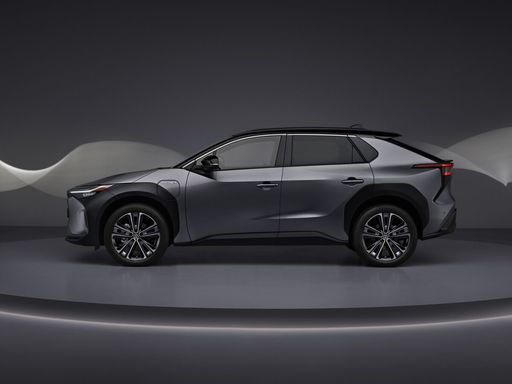
The Toyota bZ4X is a fresh, roomy electric crossover that pairs Toyota’s trademark reliability with bold, angular styling and a cabin designed for everyday comfort. It may not chase headlines like some flashier rivals, but for buyers who want sensible electric motoring with practical packaging and a relaxed, confident ride, it’s an easy, pleasant choice.

details

Mazda CX-6e

The Mazda CX-6e blends Mazda’s flowing coupe‑SUV silhouette with electric propulsion to deliver a surprisingly engaging and polished driving experience that feels more premium than its price suggests. Inside, the cabin is quietly refined and ergonomically smart, with modern tech and practical space that make it a stylish, sensible choice for drivers who want EV manners without the fanfare.

details
Toyota bZ4X
Mazda CX-6e

Costs and Consumption

Price
36,800 - 51,000 £
Price
42,800 - 45,400 £
Consumption L/100km
-
Consumption L/100km
-
Consumption kWh/100km
13.5 - 16.6 kWh/100km
Consumption kWh/100km
18.9 - 19.4 kWh/100km
Electric Range
444 - 591 km
Electric Range
468 - 484 km
Battery Capacity
-
Battery Capacity
-
co2
0 g/km
co2
0 g/km
Fuel tank capacity
-
Fuel tank capacity
-

Dimensions and Body

Body Type
SUV
Body Type
SUV
Seats
5
Seats
5
Doors
-
Doors
-
Curb weight
1,900 - 2,180 kg
Curb weight
2,205 kg
Trunk capacity
452 L
Trunk capacity
468 L
Length
-
Length
-
Width
1,860 mm
Width
1,935 mm
Height
-
Height
-
Max trunk capacity
-
Max trunk capacity
-
Payload
375 - 565 kg
Payload
385 kg

Engine and Performance

Engine Type
Electric
Engine Type
Electric
Transmission
Automatic
Transmission
Automatic
Transmission Detail
Reduction Gearbox
Transmission Detail
Reduction Gearbox
Drive Type
Front-Wheel Drive, All-Wheel Drive
Drive Type
Rear-Wheel Drive
Power HP
167 - 380 HP
Power HP
258 HP
Acceleration 0-100km/h
4.4 - 8.6 s
Acceleration 0-100km/h
7.9 s
Max Speed
-
Max Speed
-
Torque
268 - 338 Nm
Torque
290 Nm
Number of Cylinders
-
Number of Cylinders
-
Power kW
123 - 280 kW
Power kW
190 kW
Engine capacity
-
Engine capacity
-

General

Model Year
2,025 - 2,026
Model Year
2026
CO2 Efficiency Class
A
CO2 Efficiency Class
A
Brand
Toyota
Brand
Mazda
DriveDuel uses data analysis and artificial intelligence to evaluate vehicle data and create content. Content is regularly reviewed and improved. The displayed prices are estimates based on German list prices, adjusted to the respective country’s VAT. Country-specific registration taxes are not included. This information is not legally binding.