VS

Tesla Model Y vs Mazda CX-6e comparison

Compare performance (460 HP vs 258 HP), boot space and price (34,300 £ vs 42,800 £ ) at a glance. Find out which car is the better choice for you – Tesla Model Y or Mazda CX-6e?

Tesla Model Y vs Mazda CX-6e: Key differences

Tesla Model Y

4.5 (5 Reviews)
rate
  • visibly cheaper
  • clearly more power
  • considerably more efficient
  • noticeably more electric range
  • significantly quicker 0–100 km/h
  • a bit lighter
  • substantially more trunk space
details

Mazda CX-6e

details

All details on performance, efficiency, range and trunk space can be found in the technical comparison below – including user reviews for both models.

By Achim Sedelmaier

Model Y

Tesla Model Y VS Mazda CX-6e: which electric SUV fits your life?

Tesla Model Y VS Mazda CX-6e is a match-up between two different takes on the modern electric SUV: one built around software, range and packaging, the other around tactile quality, comfort and traditional driving cues. The Tesla Model Y presents itself as a tech-first family hauler with huge usable space and a tightly integrated charging ecosystem that simplifies longer trips. The Mazda CX-6e leans into material quality, a composed ride and a more familiar cabin experience that will please buyers who value feel over gadgetry. This comparison looks beyond specs to how each car behaves day-to-day, who will enjoy living with it, and where each one forces compromises. Read on for practical contrasts that matter when you park, pack, charge and drive.
CX-6e

Driving character: thrust and tactility

The Tesla Model Y feels immediate and decisive on throttle inputs, with one‑pedal driving and strong acceleration that makes motorway overtakes effortless and confident; that character suits people who like a brisk, electric driving experience. The Mazda CX-6e is noticeably more restrained and tuned toward composure, offering a steering and ride balance that rewards calm cruising rather than instant performance theatrics. Tesla’s setup tends to be firmer and transmits road imperfections more directly, so drivers seeking a pillowy ride might prefer the CX-6e’s gentler damping. Conversely, if you value shove, rapid pace and an integrated powertrain that simplifies long-distance planning, the Model Y will feel more useful on fast roads.

Model Y

Comfort and cabin feel: minimalist tech versus tactile warmth

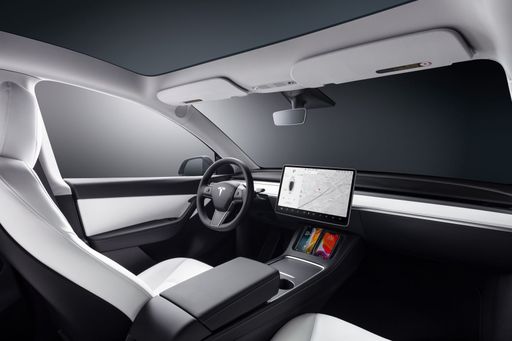
Inside, the Tesla Model Y continues the minimalist, screen-centric approach that puts most controls under a large central display and gives the interior a clean, modern look—materials have improved but some tactile details still fall short of luxury benchmarks. The Mazda CX-6e counters with a warmer, more tactile cabin where switchgear, upholstery and trim convey a more traditionally premium atmosphere that many buyers will find reassuring. Both cars are quiet at speed, though the Model Y’s electric drivetrain and aero efficiency make long motorway runs feel particularly relaxed. For passengers, the Model Y offers very generous rear room, while the CX-6e trades a bit of that volume for better seat comfort and a more conventional interior layout.

Practicality and family use: packaging that reveals priorities

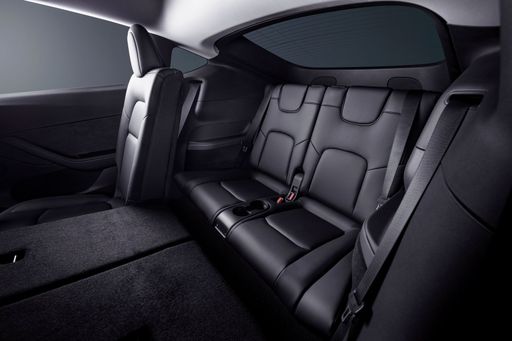
The Tesla Model Y is packaged around usability: a very large load area and additional front storage make hauling bulky items and family gear easier, and optional seating configurations expand flexibility for larger families. The Mazda CX-6e provides sensible everyday cargo space with smart touches and the extra front storage that EV buyers appreciate, but its boot is more conservative in shape and capacity compared with the Tesla. Both cars make child seats and rear access straightforward, yet the Model Y’s sheer rear legroom gives it an advantage for taller passengers on long trips. Mazda counters with useful towing capability and a layout that feels purposefully finished for owners who put a premium on perceived quality alongside utility.

City friendliness and daily usability: cameras, screens and visibility

In urban driving the Tesla Model Y’s camera systems and driver aids ease parking and low-speed maneuvers, but its large footprint, limited rear glass and pronounced turning circle make tight garages and narrow streets more challenging. The Mazda CX-6e is broad but engineered with city use in mind: lighter steering, helpful cameras and familiar physical controls make short trips and daily chores less fatiguing for many drivers. Tech-wise, Tesla’s software ecosystem and over-the-air updates create a seamless charging and navigation experience that rewards long-distance planning, whereas the CX-6e offers better smartphone integration and a more conventional human‑machine interface that some buyers will find less intrusive. If you live in crammed urban environments, the practical width of the Mazda and its camera aids may beat the Model Y’s scale, but if intercity travel and charging convenience matter most, Tesla’s ecosystem is a strong real-world advantage.

Buyer fit and how to decide — and what the detailed numbers will tell you next

Choose the Tesla Model Y if your priorities are low running cost in daily use, long-range confidence, maximum cargo flexibility and a tech ecosystem that simplifies longer journeys; its packaging and powertrain make it a practical long-distance family tool. Opt for the Mazda CX-6e if you prefer a more traditional, tactile cabin, a gentler ride for everyday comfort, strong warranty peace of mind and a well-equipped car that feels classier at first touch. Both demand trade-offs: the Model Y asks you to live with a screen-first ergonomics and firmer suspension, while the CX-6e asks you to accept a more modest boot and the lack of an all-wheel-drive option at launch. Below we break these real-world impressions into the technical comparison so you can see how the measurable differences translate to your daily life and long trips.

Here’s where it gets real: The technical differences in detail

Model Y

Costs and Efficiency:

Price and efficiency are key factors when choosing a car – and this is often where the real differences emerge.

Tesla Model Y is visibly cheaper – starting at 34,300 £ , while the Mazda CX-6e costs 42,800 £ . That’s a price difference of around 8,571 £.

In terms of energy consumption, the Tesla Model Y is considerably more efficient: consuming 12.7 kWh/100km compared to 18.9 kWh/100km for the Mazda CX-6e. That’s a difference of about 6.2 kWh/100km.

As for electric range, the Tesla Model Y offers noticeably more range – reaching up to 657 km, about 173 km more than the Mazda CX-6e.

CX-6e

Engine and Performance:

Power, torque and acceleration say a lot about how a car feels on the road. This is where you see which model delivers more driving dynamics.

When it comes to engine power, the Tesla Model Y offers clearly more power – delivering 460 HP compared to 258 HP. That’s roughly 202 HP more horsepower.

When accelerating from 0 to 100 km/h, the Tesla Model Y is significantly quicker – completing the sprint in 3.5 s, while the Mazda CX-6e takes 7.9 s. That’s about 4.4 s quicker.

There’s also a difference in torque: the Tesla Model Y delivers substantially more torque with 660 Nm compared to 290 Nm. That’s about 370 Nm more.

Model Y

Space and Everyday Use:

Cabin size, boot volume and payload all play a role in everyday practicality. Here, comfort and flexibility make the difference.

Seats: Tesla Model Y offers more seats – 7 vs 5.

In terms of curb weight, Tesla Model Y is a bit lighter – 1,953 kg compared to 2,205 kg. The difference is around 252 kg.

Looking at boot space, the Tesla Model Y offers substantially more boot space – 822 L compared to 468 L. That’s a difference of about 354 L.

When it comes to payload, the Tesla Model Y carries a bit more – 472 kg compared to 385 kg. That’s a difference of about 87 kg.

Who wins the race in the data check?

The Tesla Model Y is decisively ahead in the objective data comparison.
This result only shows which model scores more points on paper – not which of the two cars feels right for you.

from £34,300
Model Y

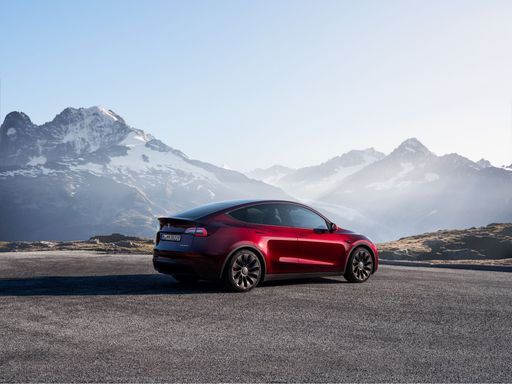
Tesla Model Y

  • Engine Type : Electric
  • Transmission : Automatic
  • Drive Type : All-Wheel Drive, Rear-Wheel Drive
  • Power HP : 299 - 460 HP
  • Consumption kWh/100km : 12.7 - 16.2 kWh/100km
  • Electric Range : 534 - 657 km
Tesla Model Y
Mazda CX-6e

Costs and Consumption

View detailed analysis

Engine and Performance

View detailed analysis

Dimensions and Body

View detailed analysis

Tesla Model Y

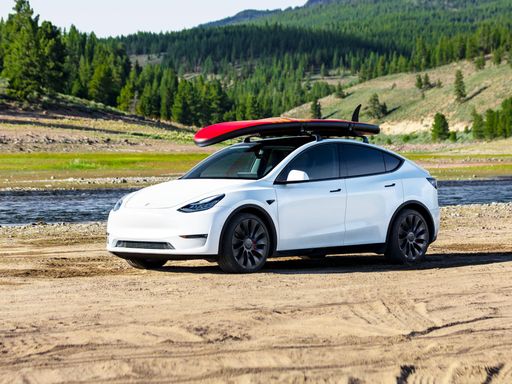
The Tesla Model Y is a tech‑forward family SUV that marries blistering efficiency with enormous interior space, calm motorway manners and the obvious convenience of Tesla’s charging ecosystem and over‑the‑air updates. Its minimalist, screen‑centric cabin and rather firm ride — plus limited rear visibility and the absence of Apple CarPlay/Android Auto — are trade‑offs that will bother buyers who prioritise comfort or traditional ergonomics.

details

Mazda CX-6e

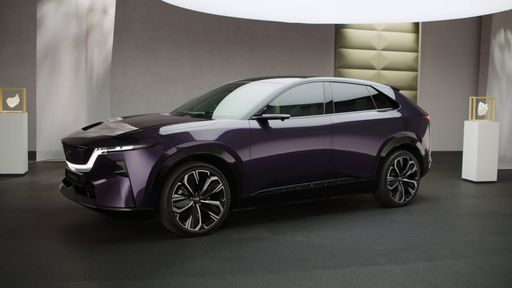
The Mazda CX-6e blends Mazda’s flowing coupe‑SUV silhouette with electric propulsion to deliver a surprisingly engaging and polished driving experience that feels more premium than its price suggests. Inside, the cabin is quietly refined and ergonomically smart, with modern tech and practical space that make it a stylish, sensible choice for drivers who want EV manners without the fanfare.

details
Tesla Model Y
Mazda CX-6e

Costs and Consumption

Price
34,300 - 53,100 £
Price
42,800 - 45,400 £
Consumption L/100km
-
Consumption L/100km
-
Consumption kWh/100km
12.7 - 16.2 kWh/100km
Consumption kWh/100km
18.9 - 19.4 kWh/100km
Electric Range
534 - 657 km
Electric Range
468 - 484 km
Battery Capacity
64.5 - 83 kWh
Battery Capacity
-
co2
0 g/km
co2
0 g/km
Fuel tank capacity
-
Fuel tank capacity
-

Dimensions and Body

Body Type
SUV
Body Type
SUV
Seats
5 - 7
Seats
5
Doors
5
Doors
-
Curb weight
1,953 - 2,108 kg
Curb weight
2,205 kg
Trunk capacity
822 L
Trunk capacity
468 L
Length
4,790 - 4,797 mm
Length
-
Width
1,920 - 1,921 mm
Width
1,935 mm
Height
1,621 - 1,624 mm
Height
-
Max trunk capacity
2,118 - 2,138 L
Max trunk capacity
-
Payload
435 - 472 kg
Payload
385 kg

Engine and Performance

Engine Type
Electric
Engine Type
Electric
Transmission
Automatic
Transmission
Automatic
Transmission Detail
Reduction Gearbox
Transmission Detail
Reduction Gearbox
Drive Type
All-Wheel Drive, Rear-Wheel Drive
Drive Type
Rear-Wheel Drive
Power HP
299 - 460 HP
Power HP
258 HP
Acceleration 0-100km/h
3.5 - 7.2 s
Acceleration 0-100km/h
7.9 s
Max Speed
201 km/h
Max Speed
-
Torque
420 - 660 Nm
Torque
290 Nm
Number of Cylinders
-
Number of Cylinders
-
Power kW
220 - 338 kW
Power kW
190 kW
Engine capacity
-
Engine capacity
-

General

Model Year
2,025 - 2,026
Model Year
2026
CO2 Efficiency Class
A
CO2 Efficiency Class
A
Brand
Tesla
Brand
Mazda
DriveDuel uses data analysis and artificial intelligence to evaluate vehicle data and create content. Content is regularly reviewed and improved. The displayed prices are estimates based on German list prices, adjusted to the respective country’s VAT. Country-specific registration taxes are not included. This information is not legally binding.