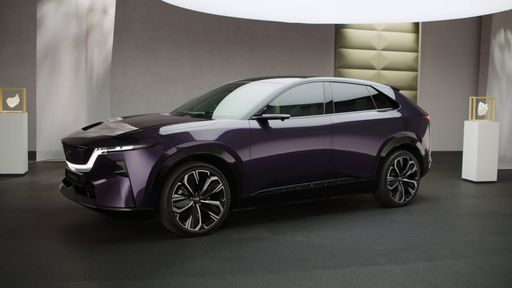
VS

XPeng G6 vs Mazda CX-6e comparison

Compare performance (487 HP vs 258 HP), boot space and price (37,400 £ vs 42,800 £ ) at a glance. Find out which car is the better choice for you – XPeng G6 or Mazda CX-6e?

XPeng G6 vs Mazda CX-6e: Key differences

XPeng G6

5 (3 Reviews)
rate
  • somewhat cheaper
  • substantially more power
  • very slightly more efficient
  • barely more electric range
  • clearly quicker 0–100 km/h
  • barely lighter
  • a bit more trunk space
details

Mazda CX-6e

details

All details on performance, efficiency, range and trunk space can be found in the technical comparison below – including user reviews for both models.

By Achim Sedelmaier

G6

Head-to-head: XPeng G6 and Mazda CX-6e

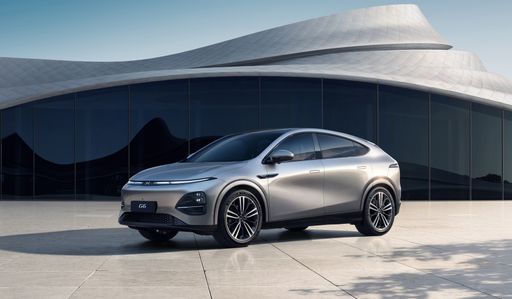
The XPeng G6 and Mazda CX-6e present two very different answers to the promise of an electric mid-size SUV, and this is the place to read the real-world trade-offs of the matchup. Think of the comparison as XPeng G6 VS Mazda CX-6e — one leans on charging and space, the other on polish and a calm driving experience. Buyers won’t be choosing based on a single headline figure; they’ll be weighing how charging behavior, cabin feel and packaging affect daily life. Below I’ll break those contrasts down into the moments that matter: parking, long trips, family use and the things that become annoyances after a few months.
CX-6e

Character and driving feel

The XPeng G6 drives like an electric car built around performance and motorway efficiency: brisk off the line and confidence-inspiring for overtakes, but its steering is deliberately muted and the chassis favors composed stability over engagement. The Mazda CX-6e trades outright thrust for a more measured, precise steering feel and a suspension tuned toward relaxed cruising; it rewards drivers who prefer a predictable, low‑stress experience. In traffic and on tight country lanes you’ll notice the CX-6e’s poise and better feedback, whereas the XPeng G6 shines on highways where rapid charging and straight-line acceleration change the way you plan trips. Neither car is aimed at enthusiastic corner carving, but they approach that lack of sportiness in different ways — one by performance hardware, the other by refinement.

G6

Cabin, controls and perceived quality

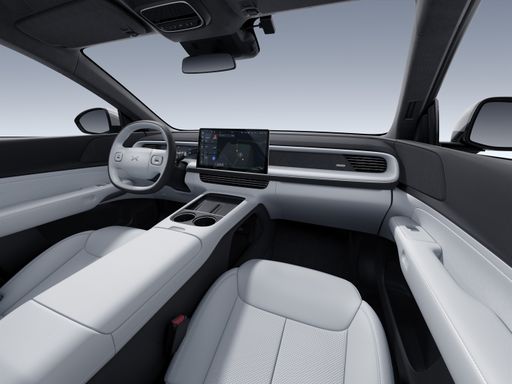
Inside, the Mazda CX-6e presents a traditionally premium cabin with tactile materials and a calm, orderly layout that feels immediately familiar and reassuring. The XPeng G6 looks more high‑tech, with a modern motif and a focus on digital presentation, but much of that functionality is tucked into menus which can feel less intuitive in daily use. Both are screen-heavy, yet their execution is different: Mazda’s giant display gives a striking visual impression but carries gesture controls that some find distracting; XPeng’s system is feature-rich but rewards patience rather than instant ergonomics. If perceived quality and a quiet, composed cockpit matter more than gadget count, the CX-6e will usually feel nicer at first contact.

Comfort and long-distance usability

For long distances the XPeng G6 is tailored to reduce total travel time: ultra-fast public charging and a large cabin make motorway stints efficient and tolerable, provided you accept a firmer reaction to rough surfaces. The Mazda CX-6e is quieter and gentler over uneven tarmac, which translates to less fatigue on long drives even if it requires more frequent or slightly longer charging stops. Seat comfort and rear‑seat space are both strong points for family travel in either car, but XPeng’s rear space feels more generous for taller passengers. If your priorities are low fatigue and a cushioned ride, the CX-6e leans into that; if you prioritise quick pit-stops and straight-line urgency, the G6 is built around those use-cases.

Practicality and everyday usability

Practical differences are concrete: the XPeng G6 offers a very usable rear area and overall cargo flexibility, though its coupé-like roofline reduces vertical loading for tall items, and visibility out the back is compromised. The Mazda CX-6e compensates with smart touches like an extra front storage area and a flat, well-shaped load bay, yet its boot volume is less generous than some rivals and the car’s width can make tight urban parking more demanding. In the city, XPeng’s camera systems and light steering help with manoeuvres despite poorer rear sightlines, while Mazda’s good all-round cameras and parking aids offset its broader footprint. Everyday ownership also comes down to things like service intervals, warranty and how you use the car — towing or regular bulky loads tilt the balance differently toward Mazda’s usable frunk and trailer capability.

Who each car really fits — next step before the specs

If you’re a frequent long-distance driver who values short charging stops, roomy rear seats and a strong equipment list for the money, the XPeng G6 will check more boxes. If you prize interior finesse, a relaxed ride, and a cockpit that feels immediately premium, the Mazda CX-6e will appeal more. Both have touchscreen-centric controls, so ergonomics will be a personal taste call rather than an objective win; visibility, city width and service habits are the small inconveniences that tend to decide buyers. Below this editorial comparison you’ll find the technical section that breaks down charging, range, powertrain and packaging in detail to help match those real-world impressions to the hard numbers.

Here’s where it gets real: The technical differences in detail

G6

Costs and Efficiency:

Price and efficiency are often the first things buyers look at. Here it becomes clear which model has the long-term edge – whether at the pump, the plug, or in purchase price.

XPeng G6 is somewhat cheaper – starting at 37,400 £ , while the Mazda CX-6e costs 42,800 £ . That’s a price difference of around 5,477 £.

In terms of energy consumption, the XPeng G6 is very slightly more efficient: consuming 17.3 kWh/100km compared to 18.9 kWh/100km for the Mazda CX-6e. That’s a difference of about 1.6 kWh/100km.

As for electric range, the XPeng G6 offers barely more range – reaching up to 525 km, about 41 km more than the Mazda CX-6e.

CX-6e

Engine and Performance:

Under the bonnet, it becomes clear which model is tuned for sportiness and which one takes the lead when you hit the accelerator.

When it comes to engine power, the XPeng G6 offers substantially more power – delivering 487 HP compared to 258 HP. That’s roughly 229 HP more horsepower.

When accelerating from 0 to 100 km/h, the XPeng G6 is clearly quicker – completing the sprint in 4.1 s, while the Mazda CX-6e takes 7.9 s. That’s about 3.8 s quicker.

There’s also a difference in torque: the XPeng G6 delivers substantially more torque with 660 Nm compared to 290 Nm. That’s about 370 Nm more.

G6

Space and Everyday Use:

Cabin size, boot volume and payload all play a role in everyday practicality. Here, comfort and flexibility make the difference.

Both vehicles offer seating for 5 people.

In terms of curb weight, XPeng G6 is barely lighter – 2,065 kg compared to 2,205 kg. The difference is around 140 kg.

Looking at boot space, the XPeng G6 offers a bit more boot space – 571 L compared to 468 L. That’s a difference of about 103 L.

When it comes to payload, the XPeng G6 carries somewhat more – 475 kg compared to 385 kg. That’s a difference of about 90 kg.

Who wins the race in the data check?

The XPeng G6 holds a decisive overall lead in the objective data comparison.
This result only shows which model scores more points on paper – not which of the two cars feels right for you.

from £37,400
G6

XPeng G6

  • Engine Type : Electric
  • Transmission : Automatic
  • Drive Type : Rear-Wheel Drive, All-Wheel Drive
  • Power HP : 252 - 487 HP
  • Consumption kWh/100km : 17.3 - 18.4 kWh/100km
  • Electric Range : 455 - 525 km
XPeng G6
Mazda CX-6e

Costs and Consumption

View detailed analysis

Engine and Performance

View detailed analysis

Dimensions and Body

View detailed analysis

XPeng G6

The XPeng G6 looks like a sleeker, tech-rich alternative to conventional electric SUVs, with an interior that feels modern, airy and purposefully designed for everyday comfort. On the road it’s composed and surprisingly engaging, giving drivers a smart mix of calm refinement and a playful streak — not bad for a car that quietly challenges the usual premium suspects.

details

Mazda CX-6e

The Mazda CX-6e blends Mazda’s flowing coupe‑SUV silhouette with electric propulsion to deliver a surprisingly engaging and polished driving experience that feels more premium than its price suggests. Inside, the cabin is quietly refined and ergonomically smart, with modern tech and practical space that make it a stylish, sensible choice for drivers who want EV manners without the fanfare.

details
XPeng G6
Mazda CX-6e

Costs and Consumption

Price
37,400 - 44,200 £
Price
42,800 - 45,400 £
Consumption L/100km
-
Consumption L/100km
-
Consumption kWh/100km
17.3 - 18.4 kWh/100km
Consumption kWh/100km
18.9 - 19.4 kWh/100km
Electric Range
455 - 525 km
Electric Range
468 - 484 km
Battery Capacity
-
Battery Capacity
-
co2
0 g/km
co2
0 g/km
Fuel tank capacity
-
Fuel tank capacity
-

Dimensions and Body

Body Type
SUV
Body Type
SUV
Seats
5
Seats
5
Doors
-
Doors
-
Curb weight
2,065 - 2,220 kg
Curb weight
2,205 kg
Trunk capacity
571 L
Trunk capacity
468 L
Length
-
Length
-
Width
1,920 mm
Width
1,935 mm
Height
-
Height
-
Max trunk capacity
-
Max trunk capacity
-
Payload
470 - 475 kg
Payload
385 kg

Engine and Performance

Engine Type
Electric
Engine Type
Electric
Transmission
Automatic
Transmission
Automatic
Transmission Detail
Reduction Gearbox
Transmission Detail
Reduction Gearbox
Drive Type
Rear-Wheel Drive, All-Wheel Drive
Drive Type
Rear-Wheel Drive
Power HP
252 - 487 HP
Power HP
258 HP
Acceleration 0-100km/h
4.1 - 6.9 s
Acceleration 0-100km/h
7.9 s
Max Speed
-
Max Speed
-
Torque
440 - 660 Nm
Torque
290 Nm
Number of Cylinders
-
Number of Cylinders
-
Power kW
185 - 358 kW
Power kW
190 kW
Engine capacity
-
Engine capacity
-

General

Model Year
2025
Model Year
2026
CO2 Efficiency Class
A
CO2 Efficiency Class
A
Brand
XPeng
Brand
Mazda
DriveDuel uses data analysis and artificial intelligence to evaluate vehicle data and create content. Content is regularly reviewed and improved. The displayed prices are estimates based on German list prices, adjusted to the respective country’s VAT. Country-specific registration taxes are not included. This information is not legally binding.