VS

Honda CR-V vs Mercedes E Class Wagon - Differences and prices compared

Compare performance (184 HP vs 585 HP), boot space and price (42800 £ vs 52600 £ ) at a glance. Find out which car is the better choice for you – Honda CR-V or Mercedes E Class Wagon?

CR-V

Honda CR-V vs Mercedes E-Klass T-Modell: A Clash of Practicalities and Luxuries

The Honda CR-V and Mercedes E-Klass T-Modell stand as epitomes of versatility and luxury, respectively. Both 2024 models redefine their segments with advanced engineering and elegance, offering unique experiences tailored to distinct clientele. In this comparative analysis, we'll delve into the realm of technical specifications, innovations, and performance metrics that set these models apart.
E Class Wagon

Power and Performance

The Honda CR-V is offered in full hybrid and plug-in hybrid variants, generating 184 HP paired with a CVT transmission. It provides a smooth acceleration, reaching 0-100 km/h in around 9.5 seconds. In contrast, the Mercedes E-Klass T-Modell offers a spectrum of engine options, including diesel, plug-in hybrid, and petrol mild hybrid variants, delivering power up to 585 HP. With automatic gearbox transmission, it sprints from 0-100 km/h as fast as 4.1 seconds in its higher performance configurations. This impressive power spectrum ensures that whether for urban driving or high-speed cruising, the E-Klass T-Modell caters to diverse driving expectations.

CR-V

Efficiency and Range

Efficiency stands as a cornerstone for modern vehicles, and both models excel here in their own right. The CR-V plug-in hybrid achieves as low as 0.8 L/100km fuel consumption, with an electric range of up to 79 km. On the other hand, the E-Klass shines with an impressive electric range of up to 110 km in its hybrid forms, maintaining a fuel efficiency as low as 0.6 L/100km. Whether it’s the environmental vigilance of the CR-V or the technological prowess of the E-Klass, both vehicles represent significant strides in automotive efficiency.

E Class Wagon

Space and Practicality

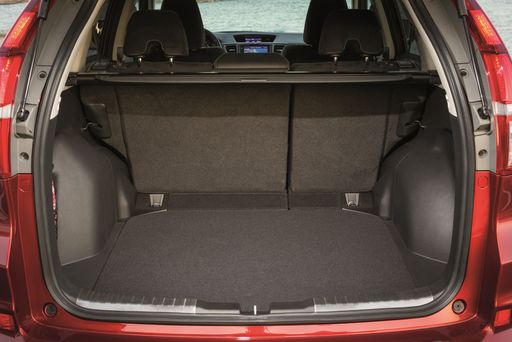
Both models offer seating for five, but their real-world utility diverges slightly owing to their body styles. The CR-V, with its SUV frame, boasts a maximum trunk capacity of 617 liters, promising practicality for families on the move. The Mercedes E-Klass T-Modell, a wagon designed for refined utility, offers up to 615 liters of cargo space, blending the line between luxury and practicality.

CR-V

Dimensions and Aesthetics

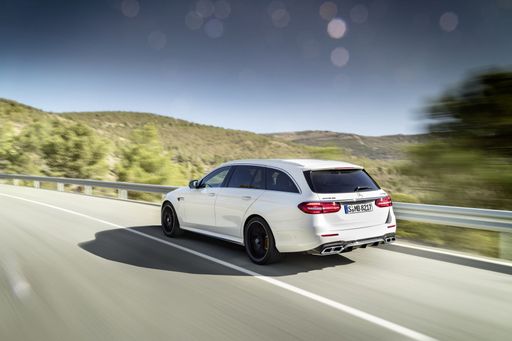
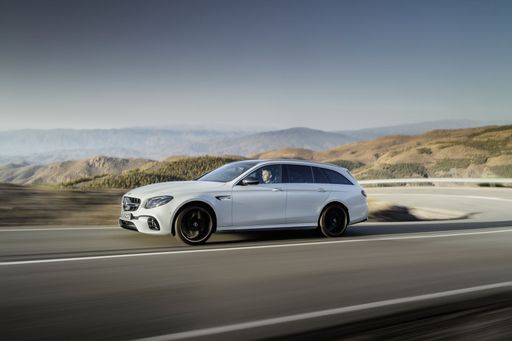
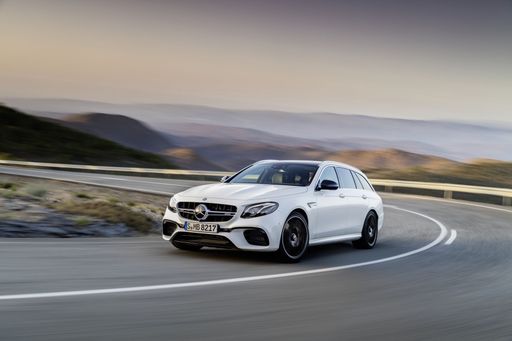
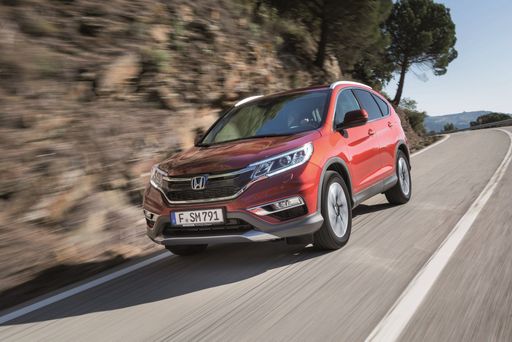
In terms of size, the CR-V stands at 4706 mm in length, 1866 mm in width, and up to 1684 mm in height. Its robust stature exudes confidence on the road. Meanwhile, the E-Klass T-Modell stretches elegantly longer at 4959 mm, with a typical width of 1880 mm and a sleeker height around 1470 mm. This luxurious wagon's aesthetic is the embodiment of sophistication and style on four wheels.

E Class Wagon

Technical Innovations

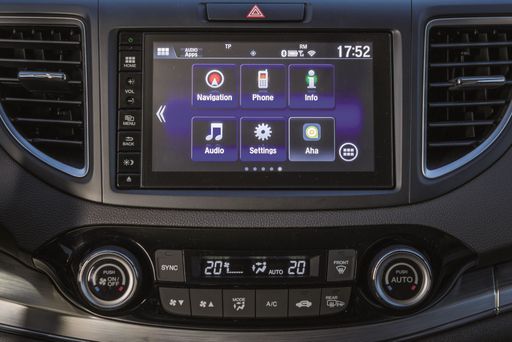
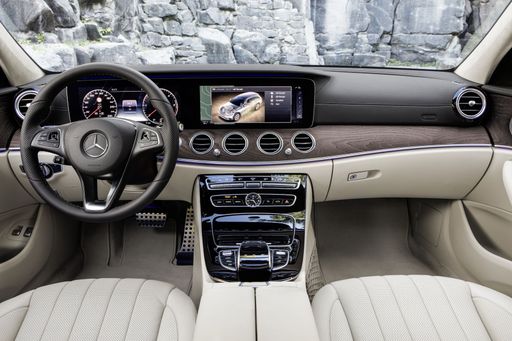
Both vehicles come jam-packed with modern technical innovations. The Honda CR-V integrates Honda Sensing Suite features like adaptive cruise control, collision mitigation braking, and a comprehensive infotainment system that enhances the driving experience. Conversely, the Mercedes E-Klass T-Modell incorporates advanced MBUX with an extensive touchscreen display, augmented reality navigation, and cutting-edge driver assistance systems for a smaller leap closer to autonomous driving.

CR-V

Conclusion: A Matter of Preference

Ultimately, choosing between the Honda CR-V and the Mercedes E-Klass T-Modell is akin to deciding between astute practicality and opulent luxury. The CR-V stands as a beacon of efficiency and innovation in an SUV package perfect for active families. In contrast, the E-Klass T-Modell offers a ride that indulges the senses, combining luxury, cutting-edge technology, and impressive power. For those seeking a utilitarian hybrid SUV, the CR-V is a compelling option, whereas the E-Klass T-Modell is irresistibly alluring to those who desire a grand blend of power and prestige.

Honda CR-V

5 (1 Reviews)
rate

Mercedes E Class Wagon

Here’s where it gets real: The technical differences in detail

E Class Wagon

Costs and Efficiency:

Price and efficiency are key factors when choosing a car – and this is often where the real differences emerge.

Honda CR-V has a noticeable advantage in terms of price – it starts at 42800 £ , while the Mercedes E Class Wagon costs 52600 £ . That’s a price difference of around 9861 £.

Fuel consumption also shows a difference: Mercedes E Class Wagon manages with 1.70 L and is therefore significantly more efficient than the Honda CR-V with 2.60 L. The difference is about 0.90 L per 100 km.

As for electric range, the Mercedes E Class Wagon performs evident better – achieving up to 109 km, about 31 km more than the Honda CR-V.

Engine and Performance:

Under the bonnet, it becomes clear which model is tuned for sportiness and which one takes the lead when you hit the accelerator.

When it comes to engine power, the Mercedes E Class Wagon has a significantly edge – offering 585 HP compared to 184 HP. That’s roughly 401 HP more horsepower.

In acceleration from 0 to 100 km/h, the Mercedes E Class Wagon is convincingly quicker – completing the sprint in 4.10 s, while the Honda CR-V takes 9 s. That’s about 4.90 s faster.

There’s also a difference in torque: Mercedes E Class Wagon pulls significantly stronger with 750 Nm compared to 335 Nm. That’s about 415 Nm difference.

Space and Everyday Use:

Beyond pure performance, interior space and usability matter most in daily life. This is where you see which car is more practical and versatile.

Both vehicles offer seating for 5 people.

In curb weight, Honda CR-V is minimal lighter – 1821 kg compared to 1900 kg. The difference is around 79 kg.

In terms of boot space, the Honda CR-V offers slight more room – 617 L compared to 615 L. That’s a difference of about 2 L.

When it comes to payload, Mercedes E Class Wagon clearly perceptible takes the win – 645 kg compared to 475 kg. That’s a difference of about 170 kg.

Who wins the race in the data check?

The Mercedes E Class Wagon is decisively ahead in the objective data comparison.
This result only shows which model scores more points on paper – not which of the two cars feels right for you.

Honda CR-V
Mercedes E Class Wagon

Costs and Consumption

View detailed analysis

Engine and Performance

View detailed analysis

Dimensions and Body

View detailed analysis
from about £52,600
E Class Wagon

Mercedes E Class Wagon

  • Engine Type : Petrol MHEV, Plugin Hybrid, Diesel MHEV
  • Transmission : Automatic
  • Drive Type : All-Wheel Drive, Rear-Wheel Drive
  • Power HP : 186 - 585 HP
  • Consumption L/100km : 1.7 - 7.9 L
  • Electric Range : 97 - 109 km

Honda CR-V

5 (1 Reviews)
rate

The Honda CR-V blends sensible practicality with a polished feel, offering roomy interiors and a confident ride that keeps commutes and weekend escapes equally comfortable. Its unshowy styling and reliable reputation make it a smart, low‑drama choice for buyers who want versatility without fuss — the kind of car that quietly makes everyday life a little easier.

details

Mercedes E Class Wagon

The E‑Class Estate blends executive elegance with genuine everyday practicality, wrapping luxury materials and a serene ride in a wagon silhouette that never looks apologetic. It’s the perfect choice for buyers who need grown-up luggage space without sacrificing comfort, refinement or a touch of driving enjoyment.

details
Honda CR-V
Mercedes E Class Wagon

Costs and Consumption

Price
42800 - 52100 £
Price
52600 - 121800 £
Consumption L/100km
2.6 - 6.7 L
Consumption L/100km
1.7 - 7.9 L
Consumption kWh/100km
-
Consumption kWh/100km
-
Electric Range
78 km
Electric Range
97 - 109 km
Battery Capacity
-
Battery Capacity
21.20 kWh
co2
59 - 152 g/km
co2
44 - 181 g/km
Fuel tank capacity
-
Fuel tank capacity
50 - 66 L

Dimensions and Body

Body Type
SUV
Body Type
Estate
Seats
5
Seats
5
Doors
-
Doors
5
Curb weight
1821 - 1988 kg
Curb weight
1900 - 2435 kg
Trunk capacity
579 - 617 L
Trunk capacity
460 - 615 L
Length
-
Length
4949 - 4959 mm
Width
1866 mm
Width
1880 mm
Height
-
Height
1469 - 1497 mm
Max trunk capacity
-
Max trunk capacity
1675 - 1830 L
Payload
439 - 475 kg
Payload
540 - 645 kg

Engine and Performance

Engine Type
Full Hybrid, Plugin Hybrid
Engine Type
Petrol MHEV, Plugin Hybrid, Diesel MHEV
Transmission
Automatic
Transmission
Automatic
Transmission Detail
CVT
Transmission Detail
Automatic Gearbox
Drive Type
Front-Wheel Drive, All-Wheel Drive
Drive Type
All-Wheel Drive, Rear-Wheel Drive
Power HP
184 HP
Power HP
186 - 585 HP
Acceleration 0-100km/h
9 - 9.5 s
Acceleration 0-100km/h
4.1 - 8.8 s
Max Speed
-
Max Speed
213 - 250 km/h
Torque
335 Nm
Torque
320 - 750 Nm
Number of Cylinders
4
Number of Cylinders
4 - 6
Power kW
135 kW
Power kW
137 - 430 kW
Engine capacity
1993 cm3
Engine capacity
1993 - 2999 cm3

General

Model Year
2025
Model Year
2024 - 2025
CO2 Efficiency Class
D, E, B
CO2 Efficiency Class
G, E, F, B, D
Brand
Honda
Brand
Mercedes-Benz
What drivetrain options does the Honda CR-V have?

The Honda CR-V is available as Front-Wheel Drive or All-Wheel Drive.

The prices shown are estimates based on German list prices, adjusted for local VAT. Local registration taxes (e.g. NoVA, BPM or CO2 malus) are not included. This information is not legally binding.