@ Ford Motor Company / Ford Media Center
@ Honda Motor Co., Ltd.
VS

Ford Kuga vs Honda CR-V – Differences & prices compared

Both models have their strengths – but which one suits you more?
Compare performance, efficiency, price and space directly: Ford Kuga or Honda CR-V?

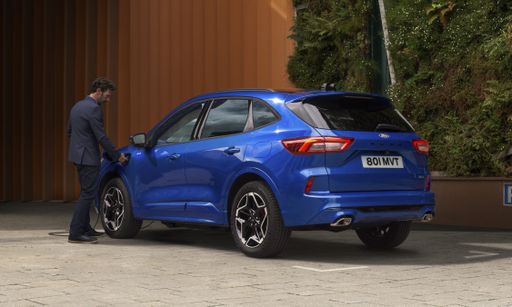
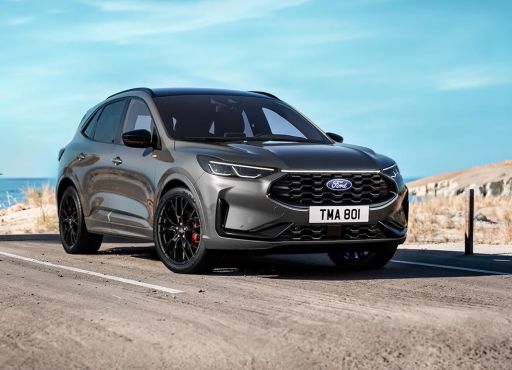
Kuga @ Ford Motor Company / Ford Media Center

Ford Kuga vs. Honda CR-V: An In-Depth Comparison

When it comes to the SUVs market, two names frequently pop up: the Ford Kuga and the Honda CR-V. Both vehicles offer a compelling blend of practicality, technology, and performance, but how do they compare? This article will delve into the technical aspects and innovations of both models to help you make an informed decision.
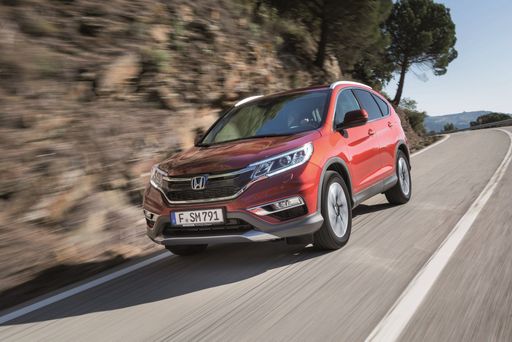
CR-V @ Honda Motor Co., Ltd.

Engine Options and Performance

The Ford Kuga kicks off the competition with a range of engine types, including petrol, full hybrid, and plug-in hybrid options. The Kuga's petrol engines deliver power ranging from 150 to 243 HP, with torque figures peaking at 240 Nm. It offers various transmission options, including manual and automatic, with a choice between front-wheel and all-wheel drive. Acceleration is impressive, with times of 7.3 to 9.5 seconds for 0-100 km/h, depending on the variant.

On the other hand, the Honda CR-V provides a robust lineup as well, primarily featuring full hybrid and plug-in hybrid engine choices. It boasts a power output of up to 184 HP, generating a significant torque of 335 Nm, highlighting its efficiency. With a CVT transmission and front or all-wheel drive capabilities, the CR-V also achieves similar acceleration figures ranging from 9.0 to 9.5 seconds.

Kuga @ Ford Motor Company / Ford Media Center

Fuel Economy and Emissions

Fuel efficiency is a crucial factor for many SUV buyers. The Ford Kuga shines here with consumption figures from 5.3 to 6.4 L/100 km across its range, attaining CO2 emissions as low as 122 g/km. The Kuga's plug-in hybrid version offers a remarkable electric range of 69 km, making it an attractive choice for urban driving.

On the Honda CR-V front, the fuel consumption ranges from 6.0 to 6.7 L/100 km, with CO2 emissions also competitive at around 135 g/km. Its plug-in hybrid variant tops the electric range, reaching 79 km, which can be a game changer for those looking to reduce their gasoline reliance.

CR-V @ Honda Motor Co., Ltd.

Dimensions and Practicality

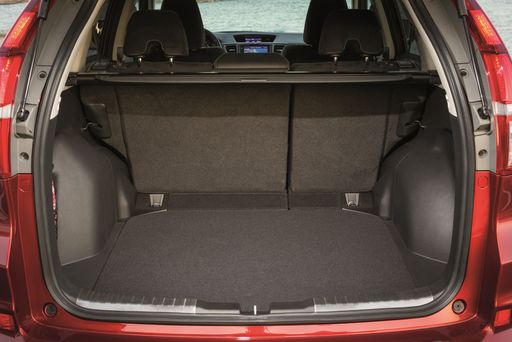
When it comes to size, the Honda CR-V is slightly longer at 4706 mm compared to the Ford Kuga, which measures between 4604 to 4645 mm. Both SUVs feature a spacious five-seat configuration, but the CR-V offers superior trunk capacity, with 579 to 617 L compared to Kuga’s maximum of 412 L. This makes the CR-V more appealing for families or those needing extra storage space.

In terms of height, the Kuga provides a range of 1673 to 1681 mm, while the CR-V stands at about 1684 mm, enabling more headroom for passengers. The width of both vehicles is comparable, with the Kuga measuring 1882 mm and the CR-V slightly narrower at 1866 mm.

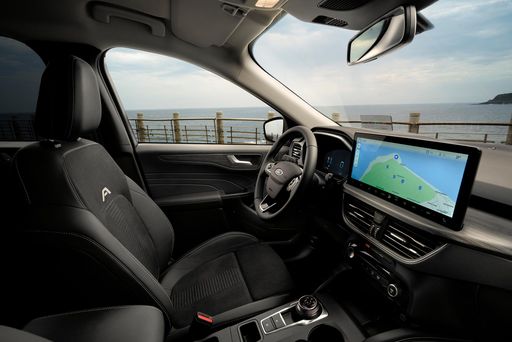
Kuga @ Ford Motor Company / Ford Media Center

Interior and Technological Innovations

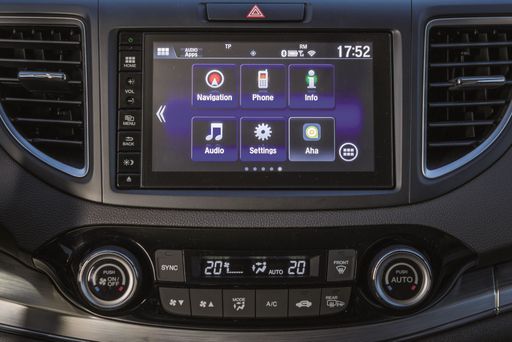
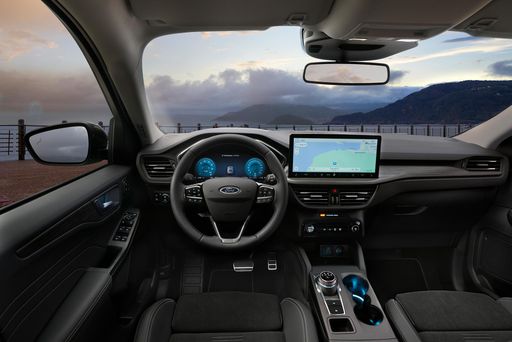
Both vehicles showcase their commitment to technology and comfort. The Ford Kuga is equipped with Ford’s latest SYNC infotainment system, offering advanced connectivity options, including smartphone integration. Furthermore, Kuga provides numerous safety features, ensuring peace of mind for drivers and passengers alike.

The Honda CR-V, on the other hand, features its own advanced infotainment system, integrating Apple CarPlay and Android Auto functionality. The CR-V’s safety suite also includes Honda Sensing Technologies, which provide a range of driver assistance features designed to enhance safety and convenience on the road.

CR-V @ Honda Motor Co., Ltd.

Conclusion: Which SUV Should You Choose?

Choosing between the Ford Kuga and the Honda CR-V ultimately comes down to your preferences and lifestyle needs. The Kuga garners attention for its dynamic performance and multiple engine options, while the CR-V excels in trunk space, hybrid efficiency, and advanced safety technologies. Both models present strong cases in their respective categories, making either choice dependent on personal priorities in vehicle functionality and design.

Here’s where it gets real: The technical differences in detail

Costs and Efficiency:

When it comes to price and running costs, the biggest differences usually appear. This is often where you see which car fits your budget better in the long run.

Ford Kuga has a evident advantage in terms of price – it starts at 34200 £, while the Honda CR-V costs 42800 £. That’s a price difference of around 8529 £.

Fuel consumption also shows a difference: Honda CR-V manages with 0.90 L and is therefore decisively more efficient than the Ford Kuga with 2.80 L. The difference is about 1.90 L per 100 km.

As for range, the Honda CR-V performs somewhat better – achieving up to 79 km, about 11 km more than the Ford Kuga.

Engine and Performance:

Power, torque and acceleration say a lot about how a car feels on the road. This is where you see which model delivers more driving dynamics.

When it comes to engine power, the Ford Kuga has a clearly perceptible edge – offering 243 HP compared to 184 HP. That’s roughly 59 HP more horsepower.

In acceleration from 0 to 100 km/h, the Ford Kuga is distinct quicker – completing the sprint in 7.30 s, while the Honda CR-V takes 9 s. That’s about 1.70 s faster.

In terms of top speed, the Ford Kuga performs slight better – reaching 200 km/h, while the Honda CR-V tops out at 195 km/h. The difference is around 5 km/h.

There’s also a difference in torque: Honda CR-V pulls evident stronger with 335 Nm compared to 240 Nm. That’s about 95 Nm difference.

Space and Everyday Use:

Beyond pure performance, interior space and usability matter most in daily life. This is where you see which car is more practical and versatile.

Both vehicles offer seating for 5 people.

In curb weight, Ford Kuga is to a small extent lighter – 1526 kg compared to 1821 kg. The difference is around 295 kg.

In terms of boot space, the Honda CR-V offers clearly perceptible more room – 617 L compared to 412 L. That’s a difference of about 205 L.

In maximum load capacity, the Honda CR-V performs slightly better – up to 1710 L, which is about 176 L more than the Ford Kuga.

When it comes to payload, Ford Kuga somewhat takes the win – 550 kg compared to 475 kg. That’s a difference of about 75 kg.

Who comes out on top?

Overall, the Honda CR-V shows itself to be dominates this comparison and secures the title of DriveDuel Champion.
It convinces with the more balanced overall package and proves to be the more versatile choice for everyday use.

from about £42,800
CR-V @ Honda Motor Co., Ltd.

Honda CR-V

  • Engine Type : Plugin Hybrid, Full Hybrid
  • Transmission : Automatic
  • Drive Type : Front-Wheel Drive, All-Wheel Drive
  • Power HP : 184 HP
  • Consumption L/100km : 0.9 - 6.7 L
  • Electric Range : 79 km

Ford Kuga

3.5 (2)
rate

The Kuga is Ford’s adaptable family SUV that blends usable space with a surprisingly lively driving character, making daily commutes and weekend escapes equally enjoyable. With smart interior packaging, an easy-to-use infotainment setup and composed road manners, it’s a sensible choice for buyers who want a bit of fun without the fuss.

details

Honda CR-V

5 (1)
rate

The Honda CR-V blends sensible practicality with a polished feel, offering roomy interiors and a confident ride that keeps commutes and weekend escapes equally comfortable. Its unshowy styling and reliable reputation make it a smart, low‑drama choice for buyers who want versatility without fuss — the kind of car that quietly makes everyday life a little easier.

details
Ford Kuga
Honda CR-V
Kuga @ Ford Motor Company / Ford Media Center
CR-V @ Honda Motor Co., Ltd.

Costs and Consumption

Price
34200 - 46300 £
Price
42800 - 52100 £
Consumption L/100km
2.8 - 6.8 L
Consumption L/100km
0.9 - 6.7 L
Consumption kWh/100km
-
Consumption kWh/100km
-
Electric Range
68 km
Electric Range
79 km
Battery Capacity
1.1 - 14.4 kWh
Battery Capacity
-
co2
55 - 154 g/km
co2
19 - 152 g/km
Fuel tank capacity
42 - 54 L
Fuel tank capacity
46 - 57 L

Dimensions and Body

Body Type
SUV
Body Type
SUV
Seats
5
Seats
5
Doors
5
Doors
5
Curb weight
1526 - 1859 kg
Curb weight
1821 - 1988 kg
Trunk capacity
412 L
Trunk capacity
579 - 617 L
Length
4604 - 4645 mm
Length
4706 mm
Width
1882 mm
Width
1866 mm
Height
1673 - 1681 mm
Height
1673 - 1684 mm
Max trunk capacity
1534 L
Max trunk capacity
1634 - 1710 L
Payload
541 - 550 kg
Payload
439 - 475 kg

Engine and Performance

Engine Type
Petrol, Full Hybrid, Plugin Hybrid
Engine Type
Plugin Hybrid, Full Hybrid
Transmission
Manuel, Automatic
Transmission
Automatic
Transmission Detail
Manual Gearbox, CVT, Automatic Gearbox
Transmission Detail
CVT
Drive Type
Front-Wheel Drive, All-Wheel Drive
Drive Type
Front-Wheel Drive, All-Wheel Drive
Power HP
150 - 243 HP
Power HP
184 HP
Acceleration 0-100km/h
7.3 - 9.9 s
Acceleration 0-100km/h
9 - 9.5 s
Max Speed
195 - 200 km/h
Max Speed
187 - 195 km/h
Torque
240 Nm
Torque
335 Nm
Number of Cylinders
3 - 4
Number of Cylinders
4
Power kW
111 - 178 kW
Power kW
135 kW
Engine capacity
1496 - 2488 cm3
Engine capacity
1993 cm3

General

Model Year
2025
Model Year
2024 - 2025
CO2 Efficiency Class
E, D, B
CO2 Efficiency Class
B, D, E
Brand
Ford
Brand
Honda
What drivetrain options does the Ford Kuga have?

The Ford Kuga is available as Front-Wheel Drive or All-Wheel Drive.

The prices and data displayed are estimates based on German list prices and may vary by country. This information is not legally binding.